Goya (Francisco de Goya y Lucientes)
Francisco de Goya y Lucientes stands among the defining printmakers of the late eighteenth and early nineteenth centuries, and his etchings and aquatints remain central to his legacy as a chronicler of courts, bullrings, and the darker corners of human folly. This archive gathers 402 sheets, dominated by etching combined with burnished aquatint and often extended with drypoint or burin, across subjects ranging from the bullfighting scenes of La Tauromaquia to the satirical visions of Los Caprichos. The plates date from 1775 onward, with impressions up to 1881, so later printings from the original copper plates are represented alongside earlier ones.
402 works in the collection · All public domain (CC0)
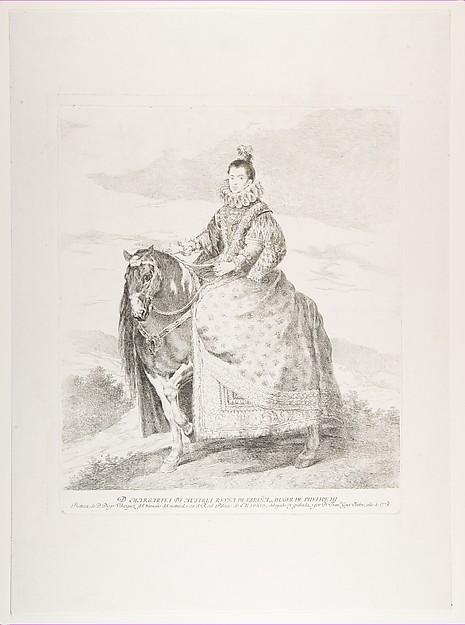
Margaret of Austria on horseback, after Velázquez
1778 · Etching and drypoint
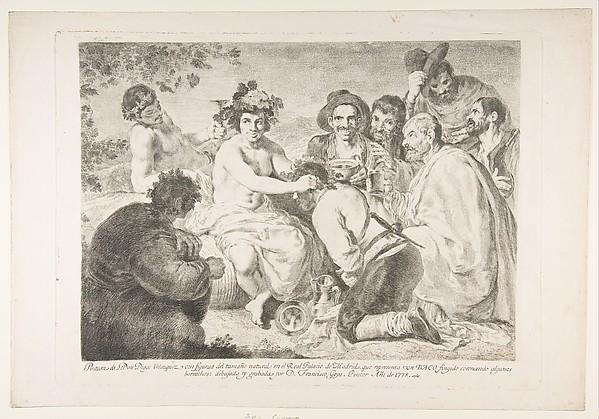
A False Bacchus Crowning Drunkards
1778 · Etching

Isabel de Bourbon on horseback, after Velázquez
1778 · Etching and drypoint

Philip IV on horseback, after Velázquez
1778 · Etching

Portrait of the court dwarf known as el Primo, after Velázquez
1778 · Etching
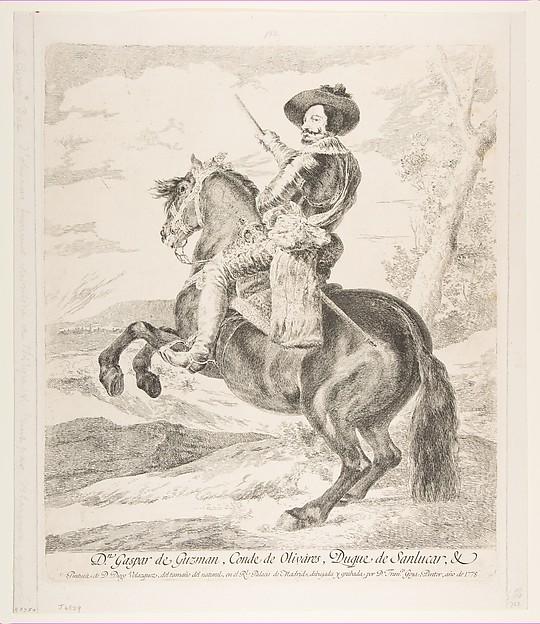
Gaspar de Guzmán, Count Duke of Olivares on horseback, after Velázquez
1778 · Etching
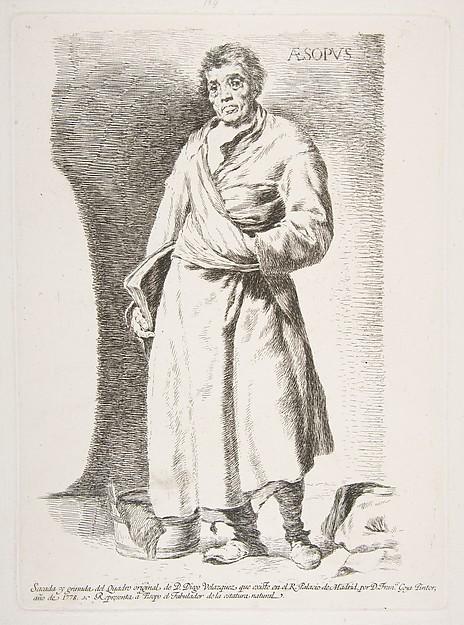
Aesop, after Velázquez
1778 · Etching
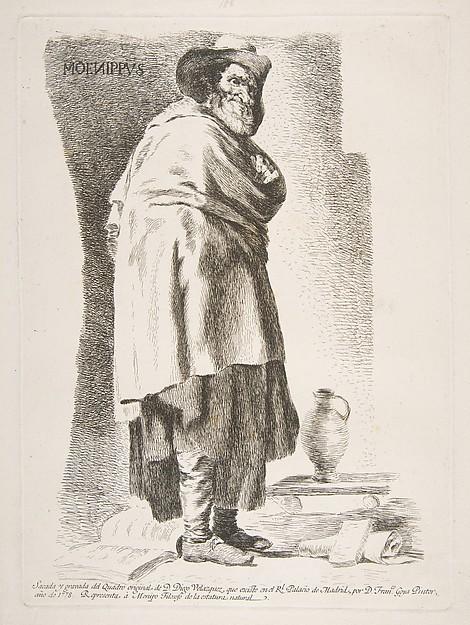
Menippus, after Velázquez
1778 · Etching
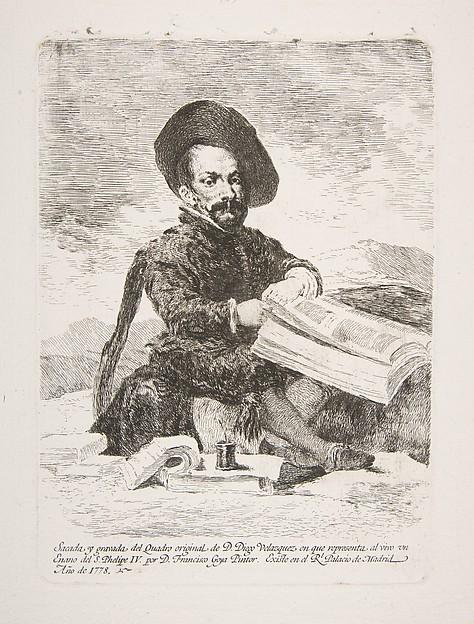
Portrait of the court dwarf El Primo, after Velázquez
1778 · Etching
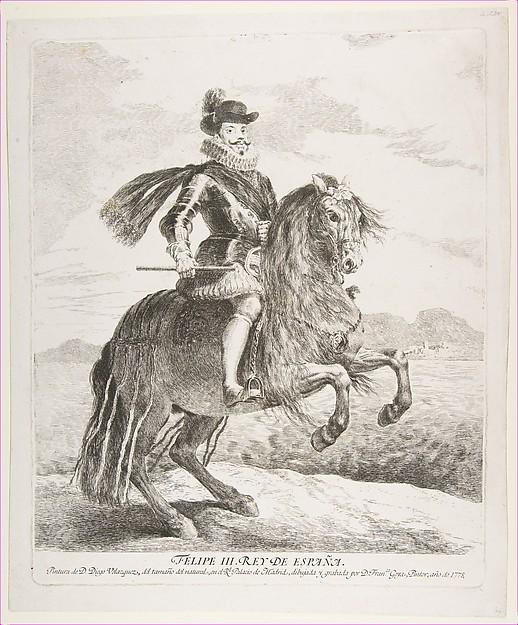
Philip III, King of Spain on horseback, after Velázquez
1778 · Etching and drypoint
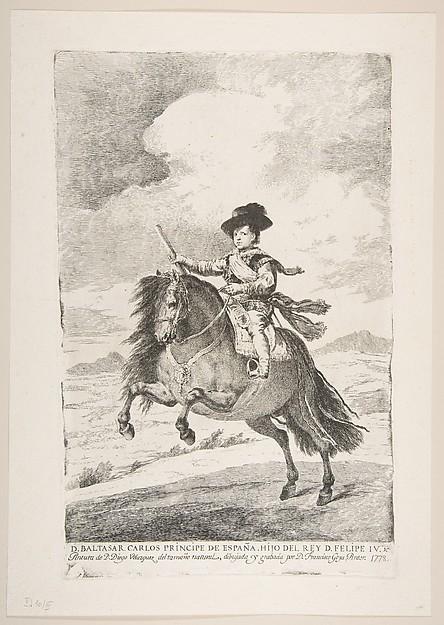
Baltasar Carlos on horseback
1778 · Etching and drypoint printed in black ink
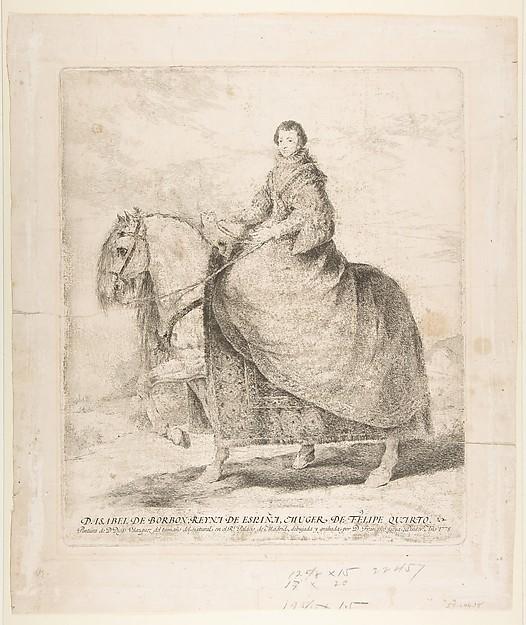
Isabel of Bourbon, Queen of Spain on horseback, after Veláquez
1778 · Etching

Don Baltasar Carlos on horseback, after Velázquez
1778 · Etching, drypoint
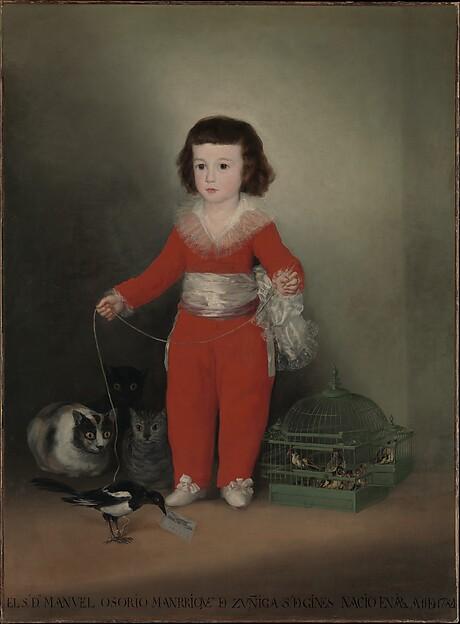
Manuel Osorio Manrique de Zuñiga
1787–88 · Oil on canvas

Condesa de Altamira and Her Daughter, María Agustina
1787–88 · Oil on canvas

Sebastián Martínez y Pérez
1792 · Oil on canvas

Girl on a swing, a man with his arms raised; folio 21 (recto) from the Madrid Album "B"
1795–97 · Brush and point of brush, carbon black washes
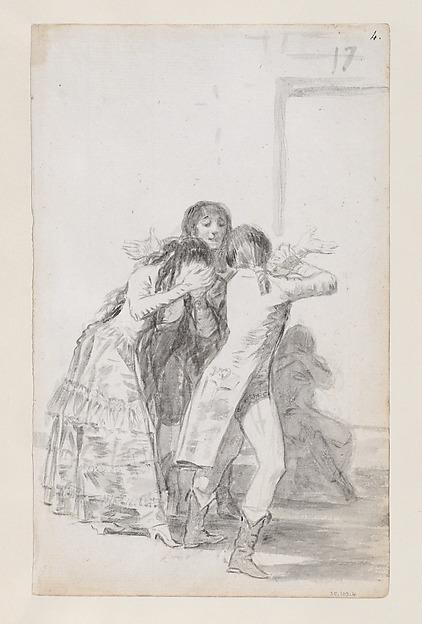
Young woman weeping and covering her face with her hands, accompanied by men; folio 17 (recto) from the Madrid Album "B"
1795–97 · Brush and point of brush, carbon black washes, black chalk
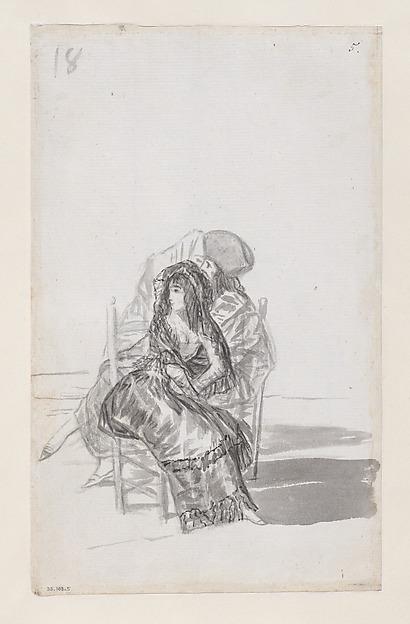
Maja seated on a chair and two companions behind; folio 18 (verso) from the Madrid Album "B"
1795–97 · Brush and point of brush, carbon black washes
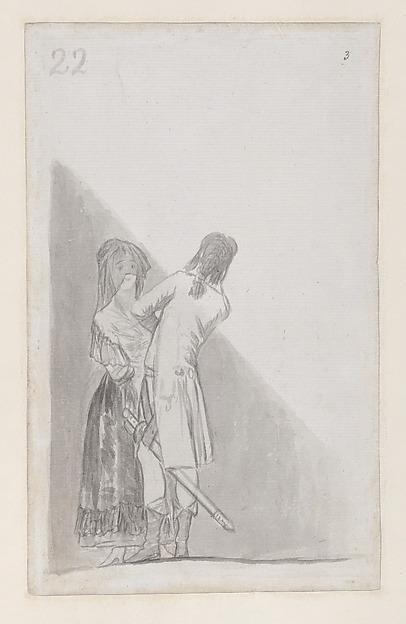
Maja and an officer; folio 22 (verso) from the Madrid Album "B"
1795–97 · Brush and point of brush, carbon black washes
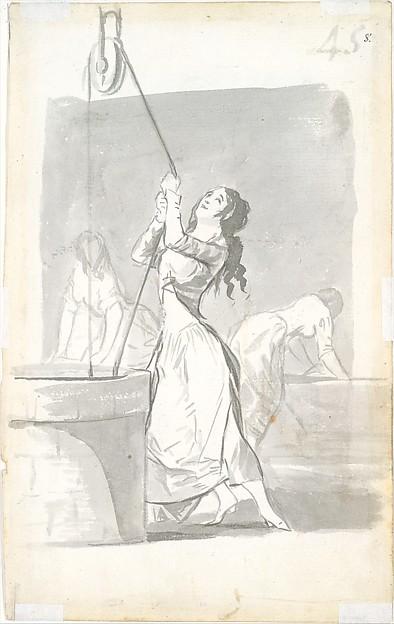
Three women, one in the foreground drawing water from a well, two in the background washing; folio 45 (recto) from the Madrid Album "B"
1795–97 · Brush and point of brush, carbon black washes
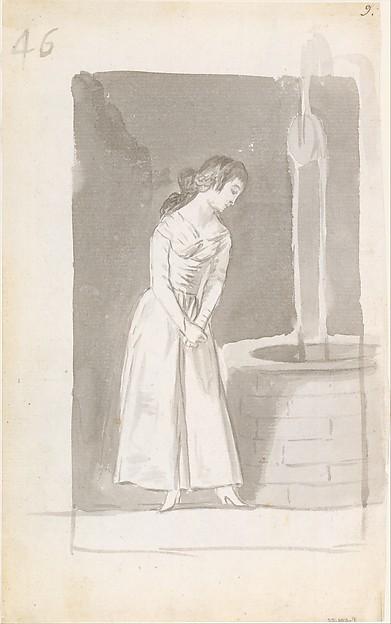
A young woman looking into a well; folio 46 (verso) from the Madrid Album "B"
1795–97 · Brush and point of brush, carbon black washes

Lovers Sitting on a Rock
1796–97 · Brush and point of brush, carbon black washes
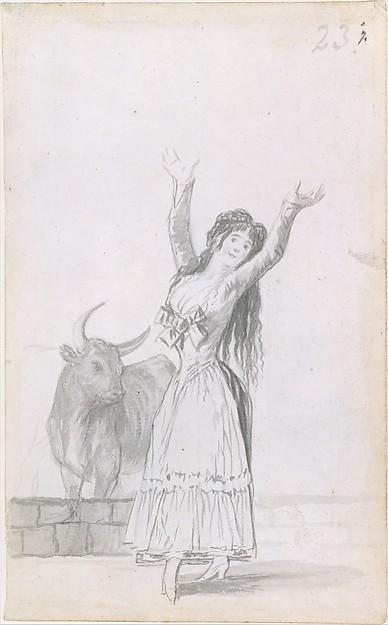
A Young Woman Dancing, Her Arms Raised, a Bull in the Background; folio 23 (recto) from the Madrid Album "B"
1796–97 · Brush and point of brush, carbon black washes

A charlatan extracting a tooth from a patient's mouth, figure in the foreground vomiting; folio 68 (verso) from the Madrid Album "B"
1796–98 · Brush and point of brush, scraper, carbon black washes
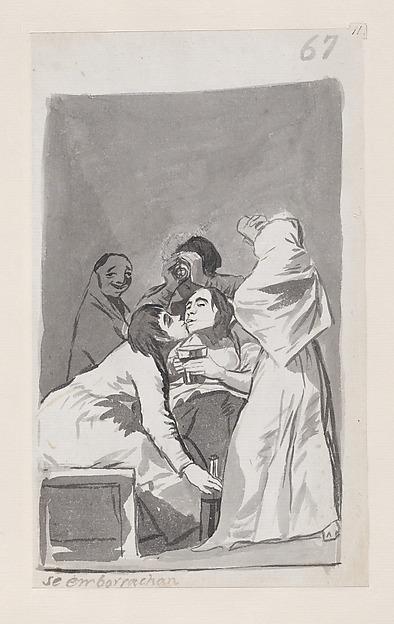
They are getting drunk; folio 67 (recto) from the Madrid Album "B"
1796–98 · Brush and point of brush, scraper, carbon black washes

Two brothers killing their sister's lover in her presence; folio 77 (recto) from the Madrid Album "B"
1796–98 · Brush and point of brush, carbon black washes

Two women helping a confessor to climb through a window; folio 78 (verso) from the Madrid Album "B"
1796–98 · Brush and point of brush, carbon black washes
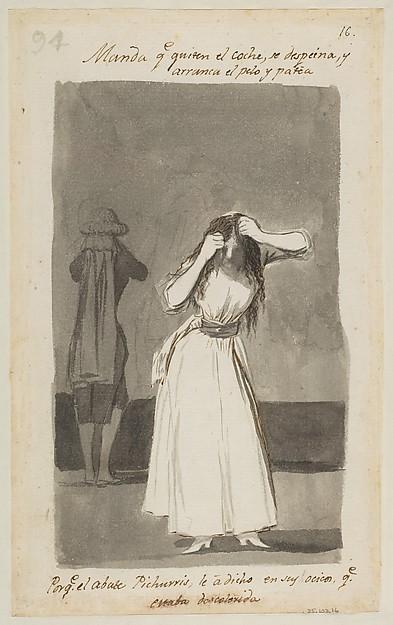
Woman throwing a tantrum and pulling her hair; folio 94 (verso) from the Madrid Album "B"
1796–98 · Brush and point of brush, carbon black washes, touches of pen and brown ink
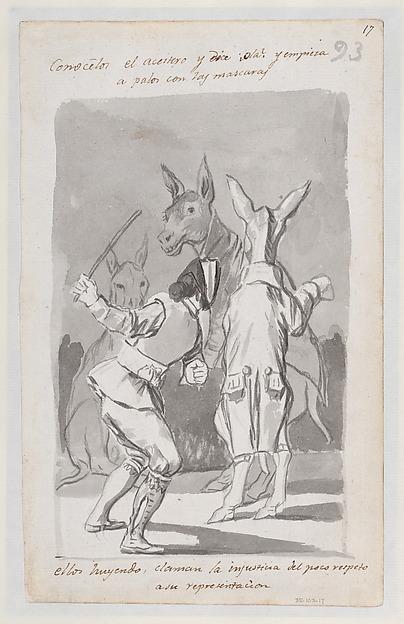
Masquerading asses being whipped; folio 93 (recto) from the Madrid Album "B"
1796–98 · Brush and point of brush, carbon black washes, touches of pen and brown ink

Generosity versus Greed; a woman and three men conducting a transaction inside a shop; folio 76 (recto) from the Madrid Album "B"
1796–98 (possibly later) · Brush and point of brush, carbon black washes
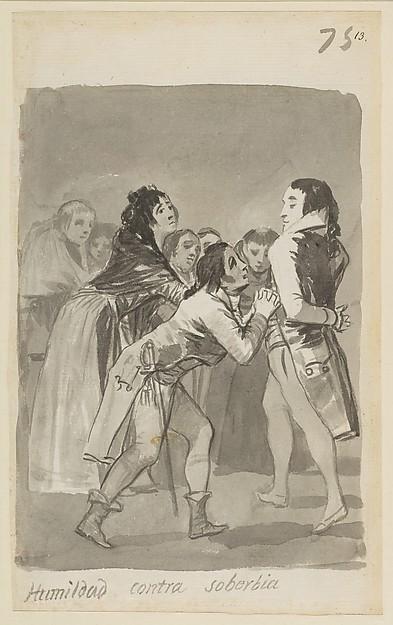
Humility versus Pride; a young man imploring an older man with other figures in front of them; folio 75 (recto) from the Madrid Album "B"
1796–98 (possibly later) · Brush and point of brush, carbon black washes
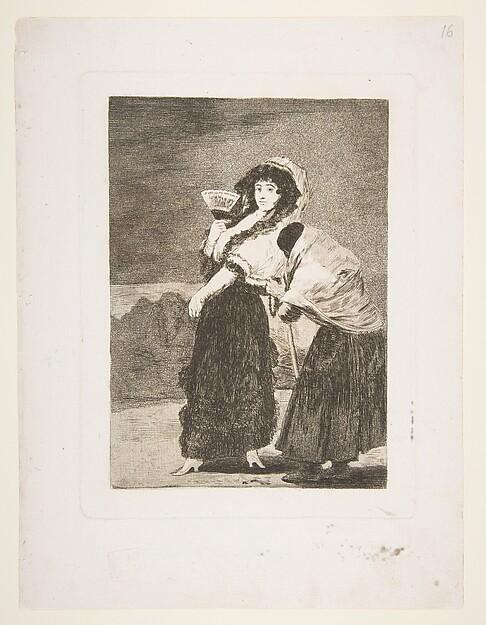
Plate 16 from 'Los Caprichos': For heaven's sake: and it was her mother (Dios la Perdone: Y era su madre)
1797–98 · Etching, aquatint, drypoint

A bad night (Mala noche), plate 36 from "Los Caprichos"
1799 · Etching, burnished aquatint

Out hunting for teeth (A caza des dientes), plate 12 from "Los Caprichos"
1799 · Etching, burnished aquatint, burin

Tantalus (Tantalo), plate 9 from "Los Caprichos"
1799 · Etching, burnished aquatint

It is nicely stretched (Bien tirada está), plate 17 from "Los Caprichos"
1799 · Etching, burnished aquatint, burin

A pretty piece of advice (Bellos consejos), plate 15 from "Los Caprichos"
1799 · Etching, burnished aquatint, burin
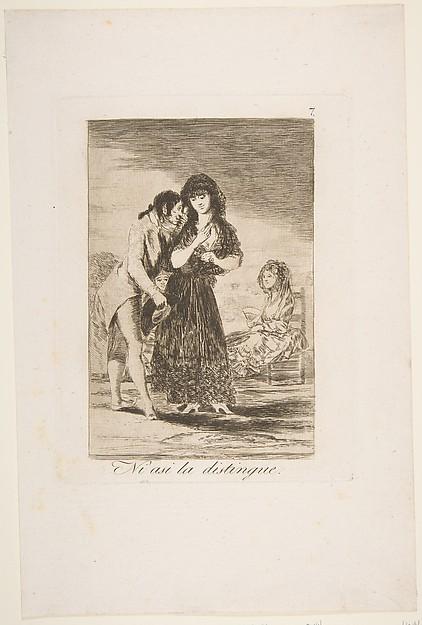
Even thus he cannot make her out (Ni asi la distingue), plate 7 from "Los Caprichos"
1799 · Etching, aquatint, drypoint
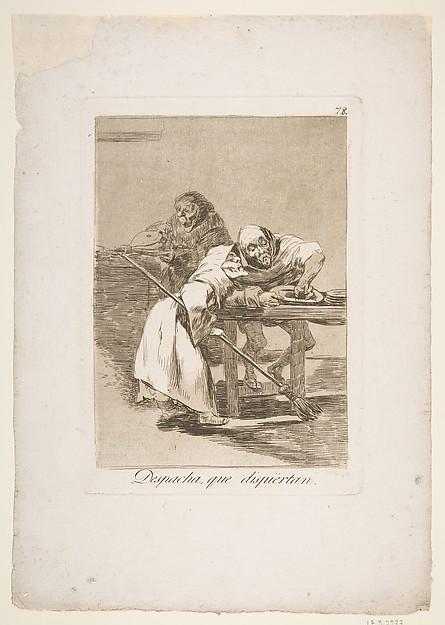
Be quick, they are waking up (Despacha, que dispiertan.)
1799 · Etching, burnished aquatint
The Caprices (Los Caprichos), plates 1-80
1799 · Etching, aquatint, drypoint, and burin
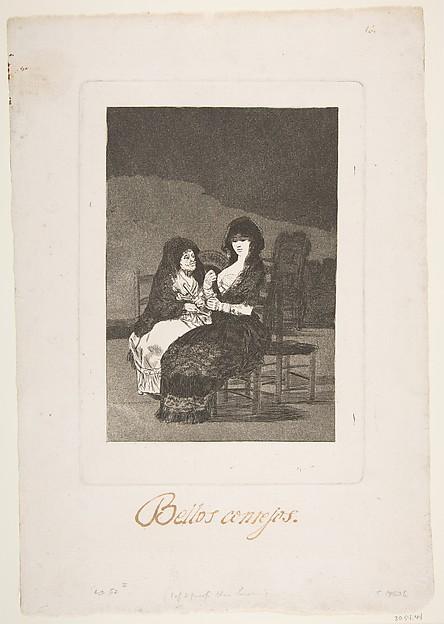
Plate 15: Pretty Advice (Bellos Consejos), from "Los Caprichos"
1799 · Etching, aquatint, burin, touches of pen and ink
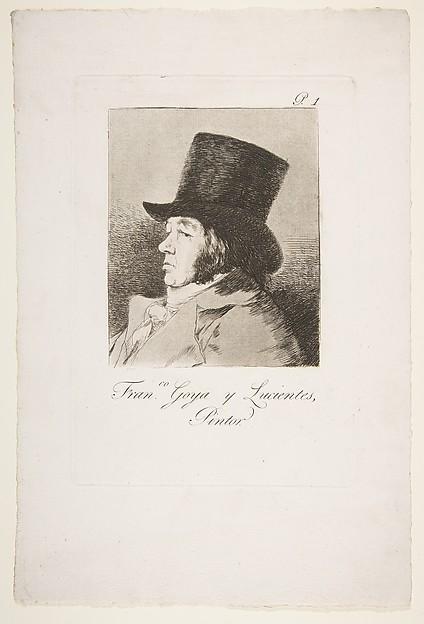
Self-Portrait; Plate 1 from "Los Caprichos"
1799 · Etching, aquatint, drypoint, burin
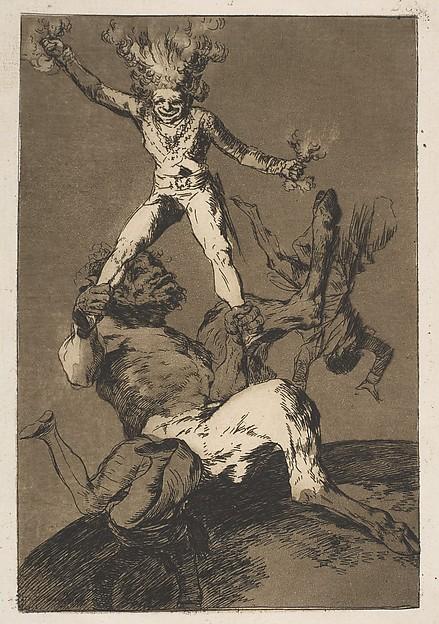
To rise and to fall (Subir y bajar) (1799, Met-Objekt 1461)
1799 · Etching, burnished aquatint
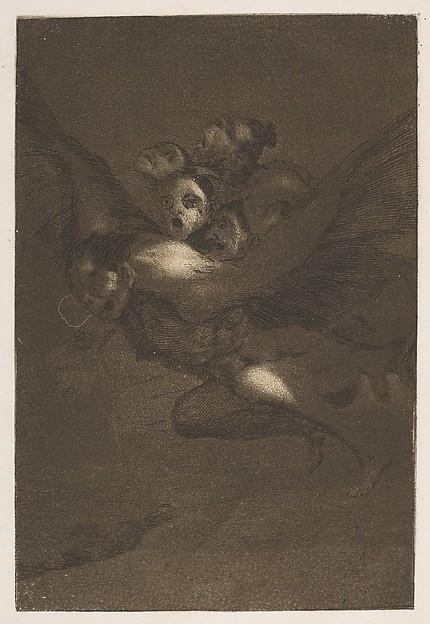
Bon Voyage (Buen Viage)
1799 · Etching, burnished aquatint, burin
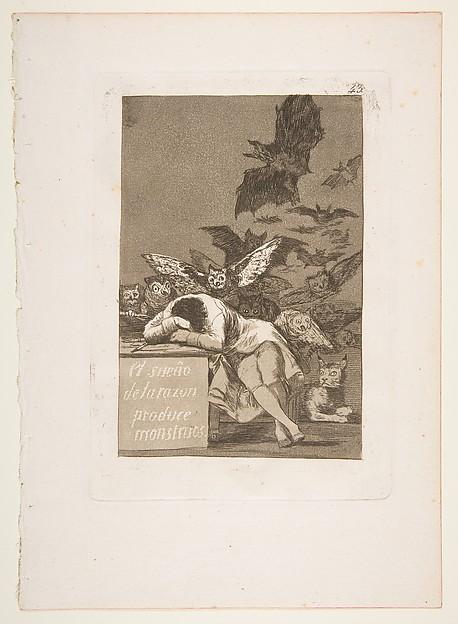
The sleep of reason produces monsters (El sueño de la razón produce monstruos)
1799 · Etching, aquatint
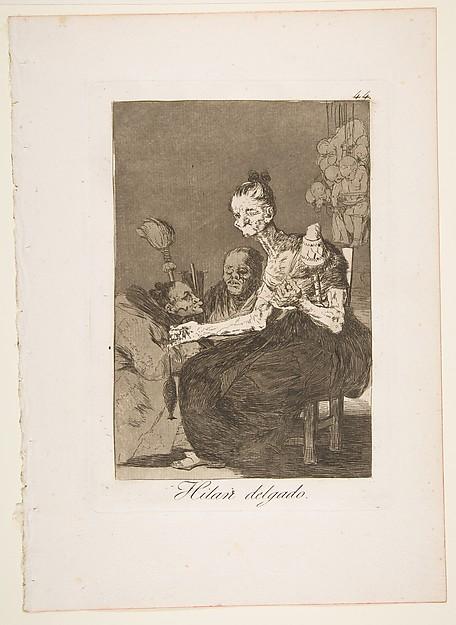
They spin finely (Hilan delgado)
1799 · Etching, aquatint, drypoint, burin

Plate 36 from "Los Caprichos": A bad night (Mala noche) (1799)
1799 · Etching, burnished aquatint
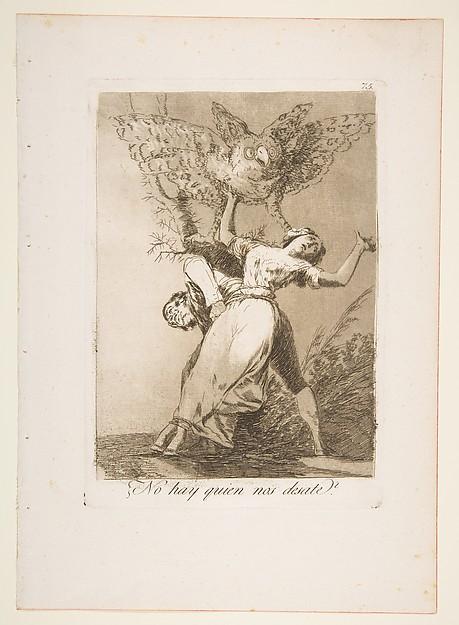
Is there no one to untie us? (¿No hay quien nos desate?)
1799 · Etching, burnished aquatint
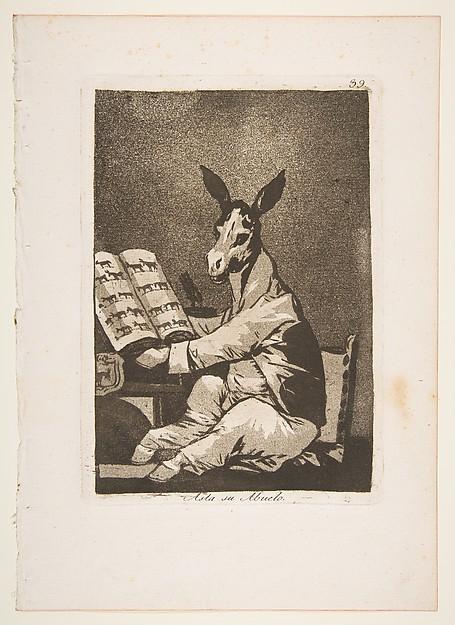
Plate 39 from "Los Caprichos": And so was his grandfather (Asta su Abuelo)
1799 · Aquatint

Plate 3 from "Los Caprichos": Here comes the bogey-man (Que viene el Coco)
1799 · Etching, burnished aquatint
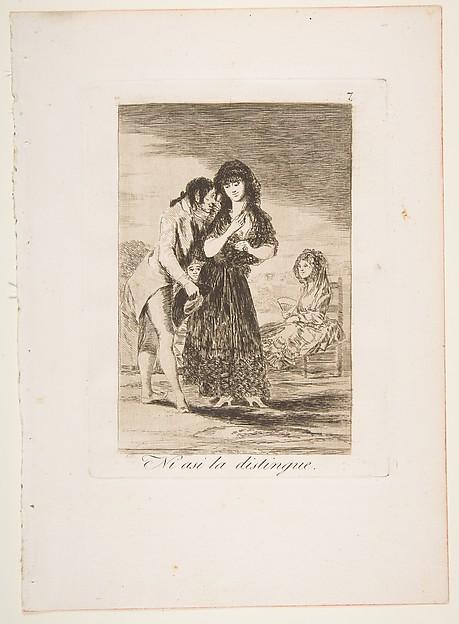
Even thus he cannot make her out (Ni asi la distingue)
1799 · Etching, aquatint, drypoint

A pretty piece of advice
1799 · Etching, burnished aquatint, burin
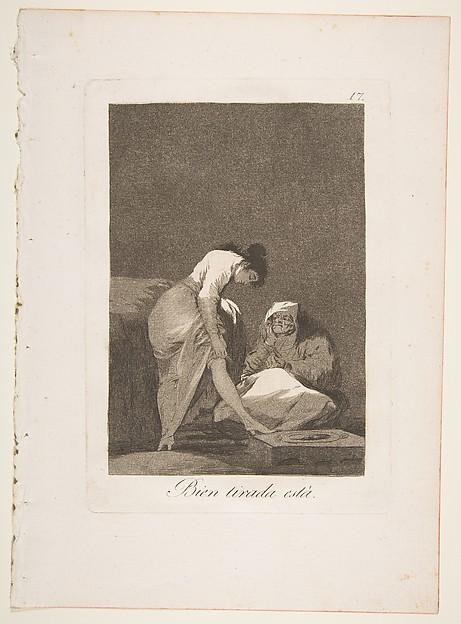
Plate 17 from "Los Caprichos": It is nicely stretched (Bien tirada está)
1799 · Etching, burnished aquatint, burin
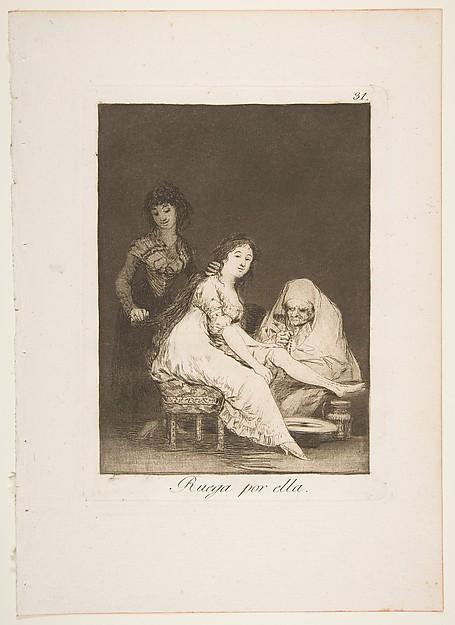
Plate 31 from "Los Caprichos": She prays for her (Ruega por ella)
1799 · Etching, burnished aquatint, drypoint, burin
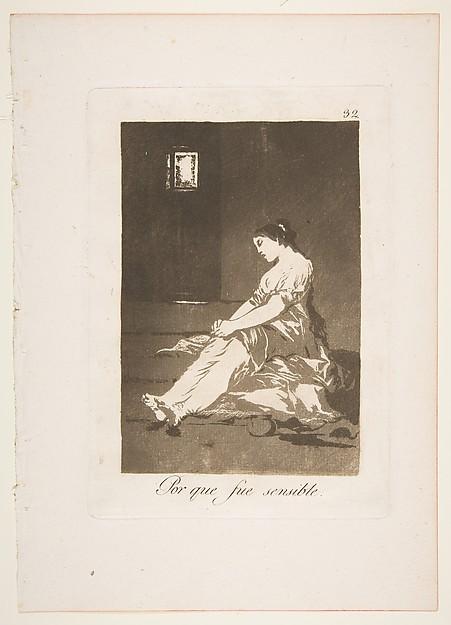
Plate 32 from "Los Caprichos": Because she was susceptible (Por que fue sensible)
1799 · Aquatint
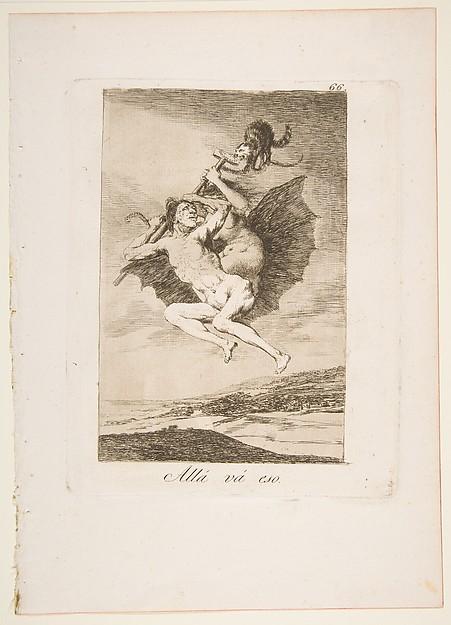
There it goes (Allá vá eso)
1799 · Etching, aquatint, drypoint
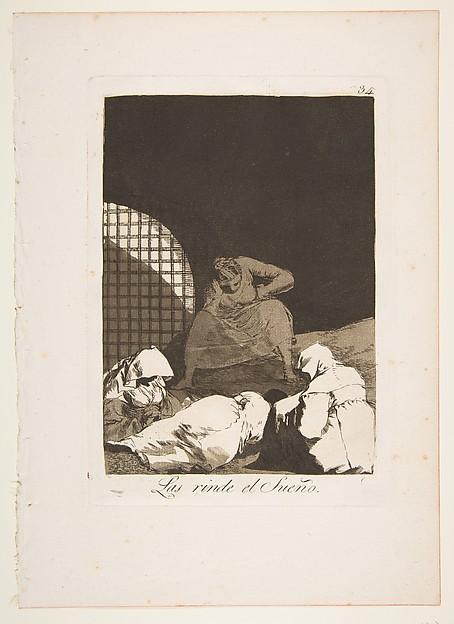
Plate 34 from "Los Caprichos": Sleep overcomes them (Las rinde el Sueño)
1799 · Etching, burnished aquatint

Love and death (El amor y la muerte)
1799 · Etching, burnished aquatint, burin
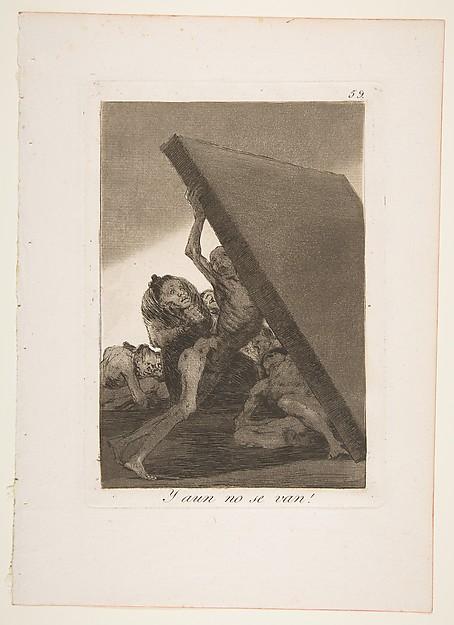
Plate 59 from "Los Caprichos": And still they don't go! (Y aun no se van!)
1799 · Etching, burnished aquatint, burin
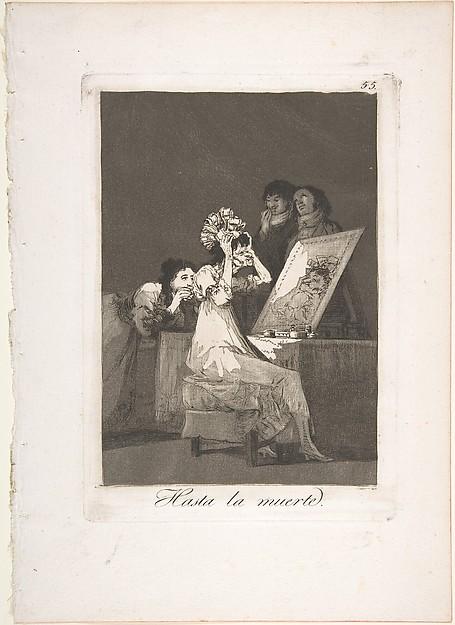
Plate 55 from "Los Caprichos": Until death (Hasta la muerte)
1799 · Etching, burnished aquatint, drypoint
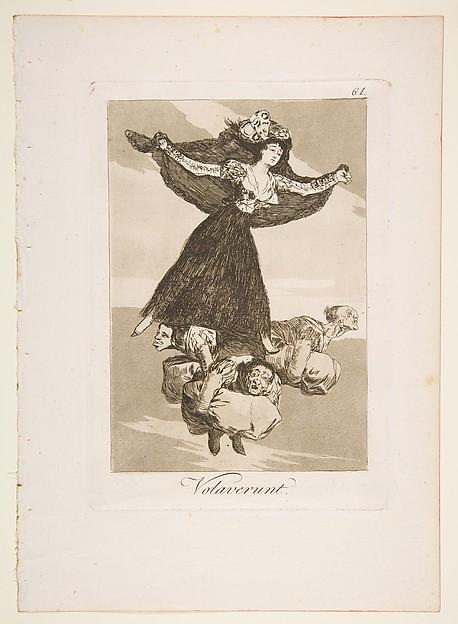
They have flown (Volaverunt)
1799 · Etching, aquatint, drypoint
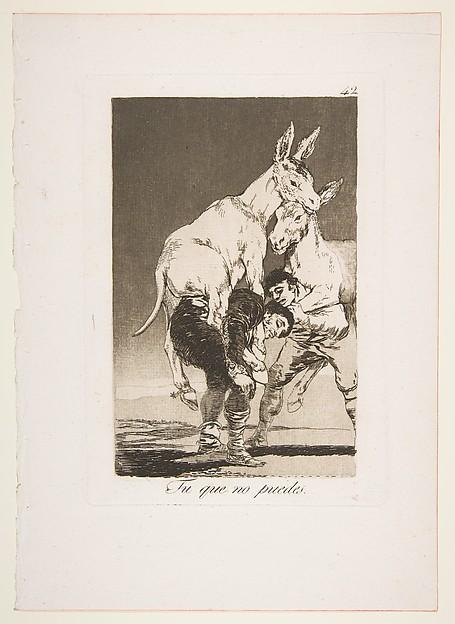
Thou who canst not (Tu que no puedes)
1799 · Etching, burnished aquatint
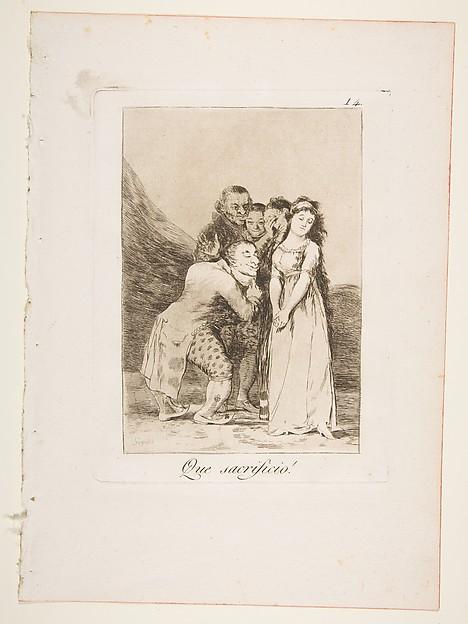
Plate 14 from "Los Caprichos": What a sacrifice! (Que sacrificio!)
1799 · Etching, burnished aquatint, drypoint
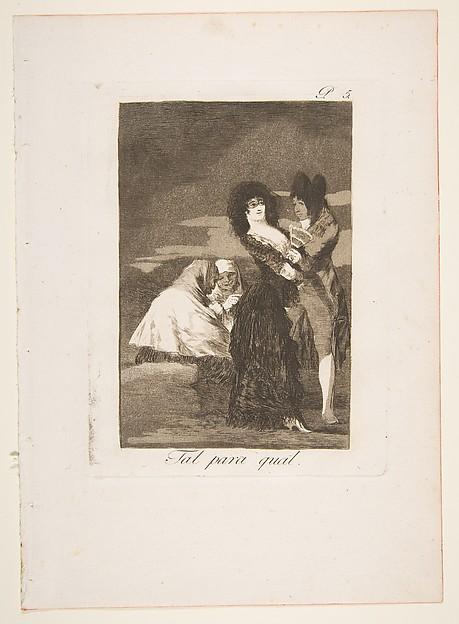
Two of a kind (Tal para qual)
1799 · Etching, aquatint, drypoint
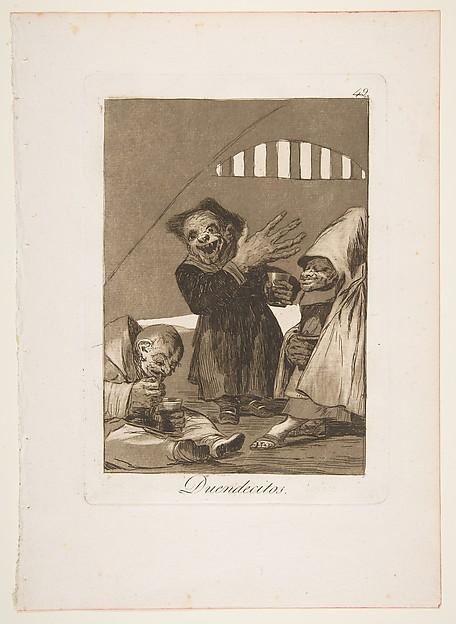
Plate 49 from "Los Caprichos": Hobgoblins (Duendecitos)
1799 · Etching, burnished aquatint

They say yes and give their hand to the first comer (El si pronuncian y la mano alargen al primero que llega)
1799 · Etching, burnished aquatint
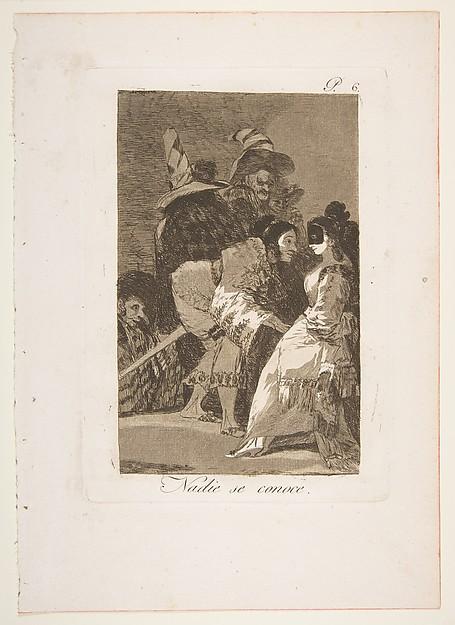
Plate 6 from "Los Caprichos": Nobody knows himself (Nadie se conoce)
1799 · Etching, burnished aquatint
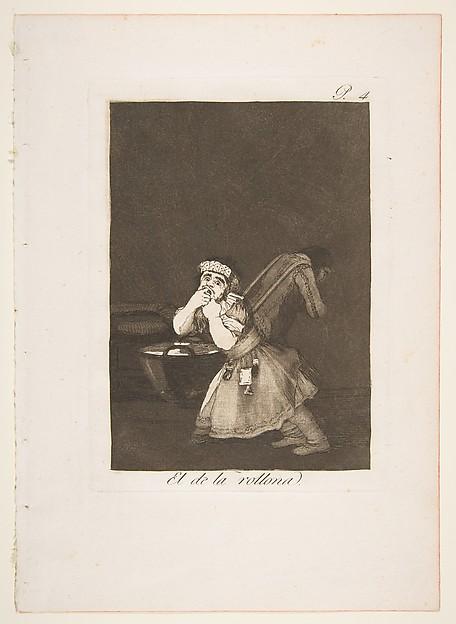
Plate 4 from "Los Caprichos": Nanny's boy (El de la rollona)
1799 · Etching, burnished aquatint
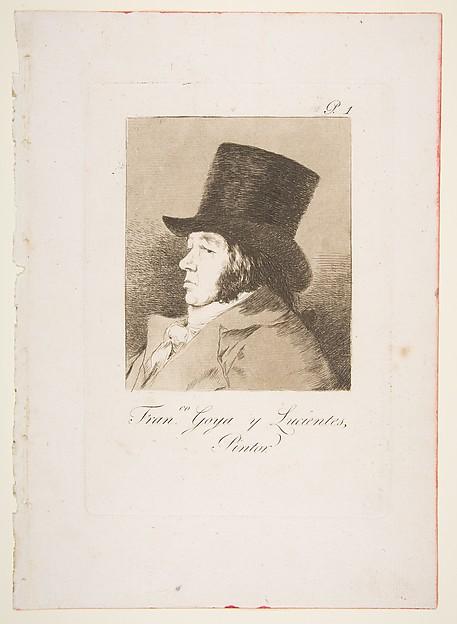
Plate 1 from "Los Caprichos": Self-portrait (1799)
1799 · Etching, aquatint, drypoint and burin
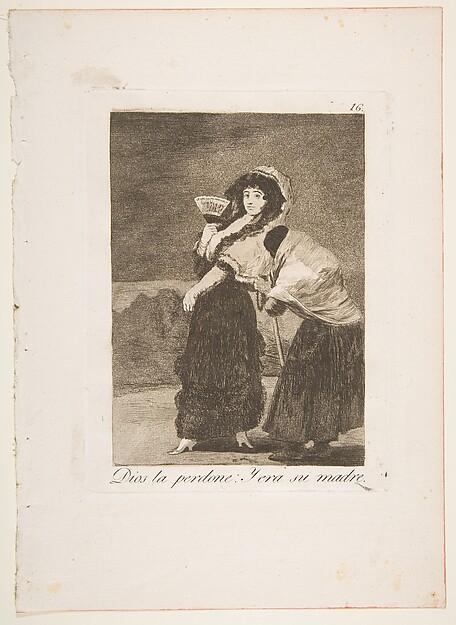
Los Caprichos, Plate 16: For heaven's sake: and it was her mother
1799 · Etching, burnished aquatint, drypoint
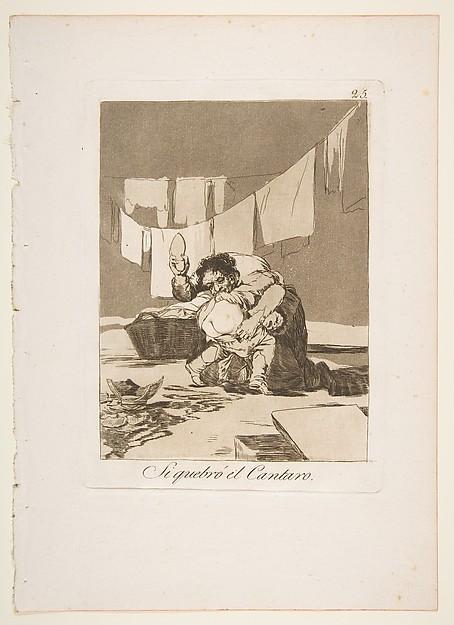
If he broke the pot (Si quebró el Cantaro)
1799 · Etching, aquatint, drypoint
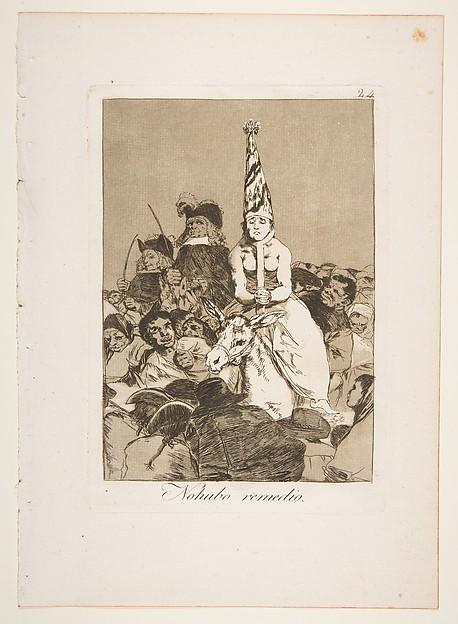
Plate 24 from "Los Caprichos": Nothing could be done about It (Nohubo remedio)
1799 · Etching, burnished aquatint
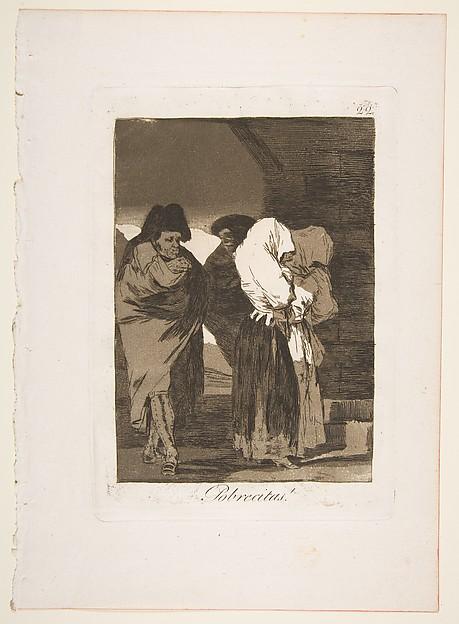
Plate 22 from "Los Caprichos": Poor little girls! (Pobrecitas!)
1799 · Etching, burnished aquatint
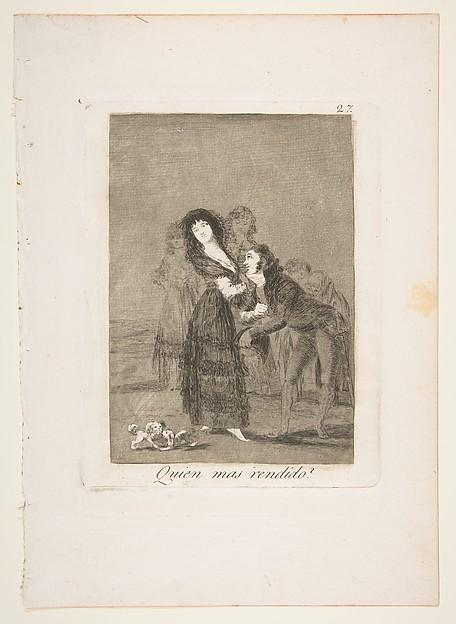
Plate 27 from "Los Caprichos": Which of them is the more overcome? (Quien mas rendido?)
1799 · Etching, aquatint, drypoint
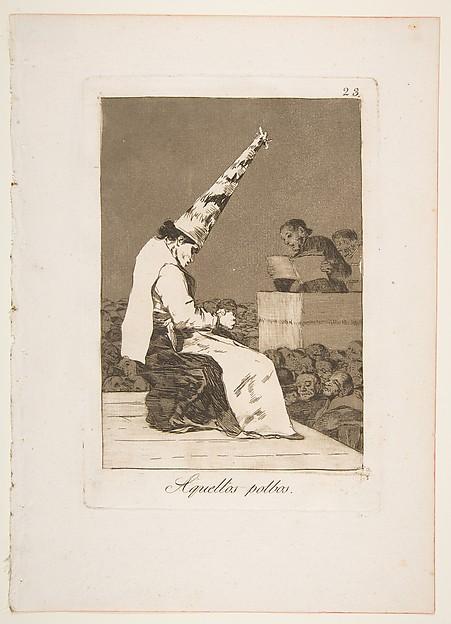
Plate 23 from "Los Caprichos": These specks of dust (Aquellos polbos)
1799 · Etching, burnished aquatint, drypoint, burin
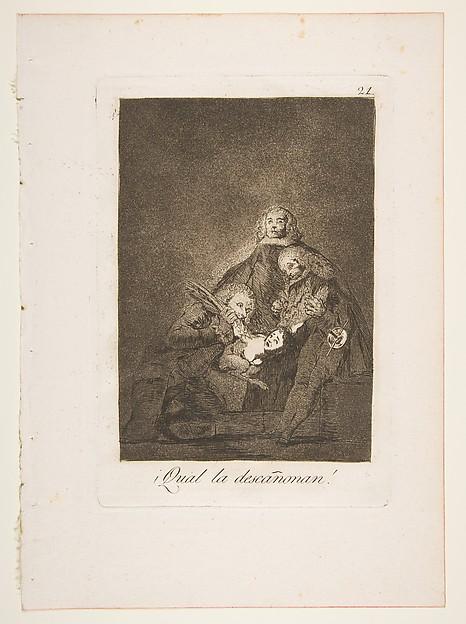
Plate 21 from "Los Caprichos": How they pluck her! (¡Qual la descañonan!)
1799 · Etching, burnished aquatint
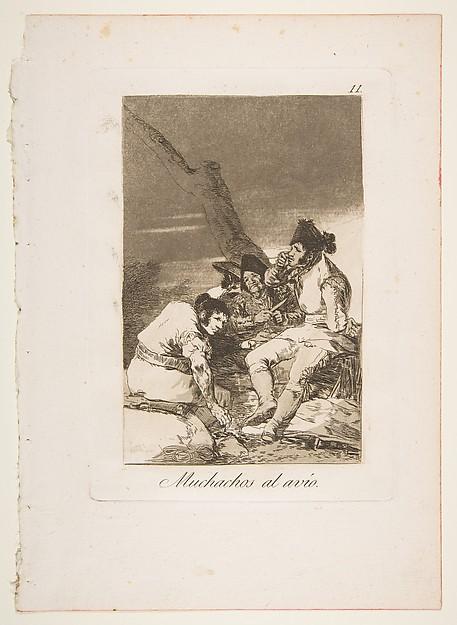
Plate 11 from "Los Caprichos": Lads Making Ready (Muchachos al Avío)
1799 · Etching, burnished aquatint, burin
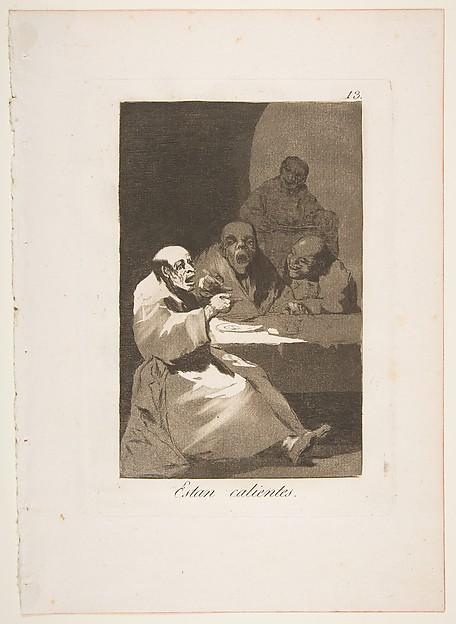
They are hot (Estan calientes)
1799 · Etching, burnished aquatint
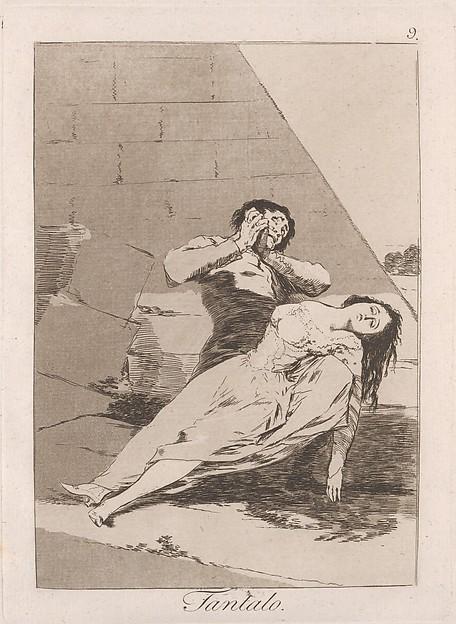
Tantalus (Tantalo)
1799 · Etching, burnished aquatint
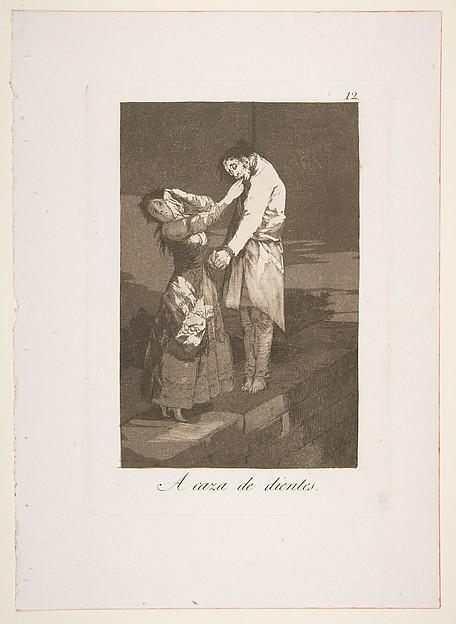
Plate 12 from "Los Caprichos": Out hunting for teeth (A caza de dientes)
1799 · Etching, burnished aquatint, burin
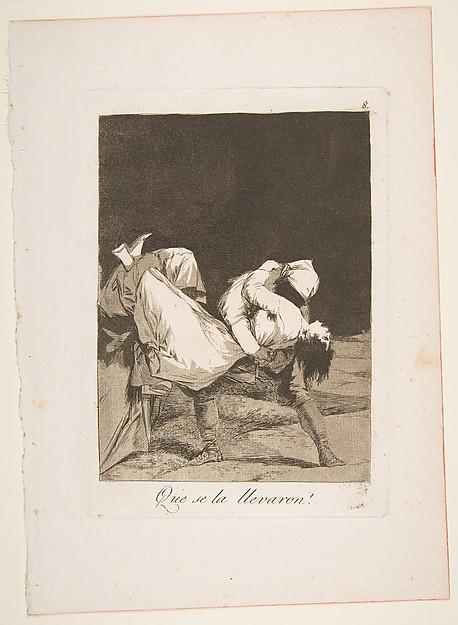
They carried her off! (Que se la llevaron!)
1799 · Etching, burnished aquatint
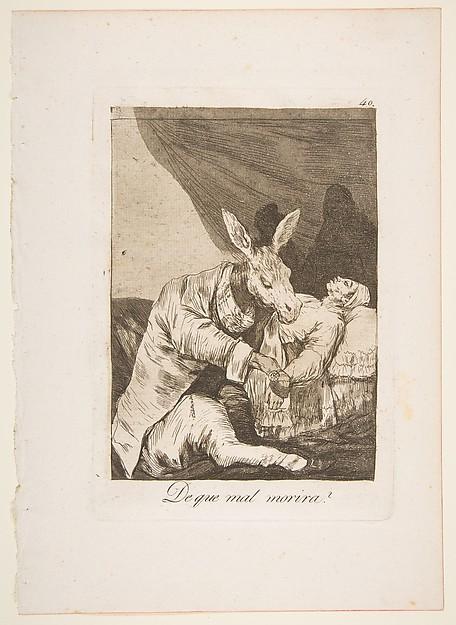
Of what ill will he die? (De que mal morira?)
1799 · Etching, burnished aquatint, drypoint, burin
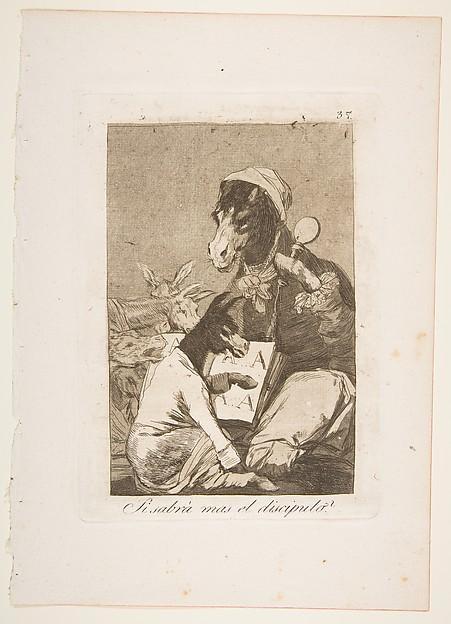
Plate 37 from "Los Caprichos": Might not the pupil know more? (Si Sabrá mas el discipulo?)
1799 · Etching, burnished aquatint, burin
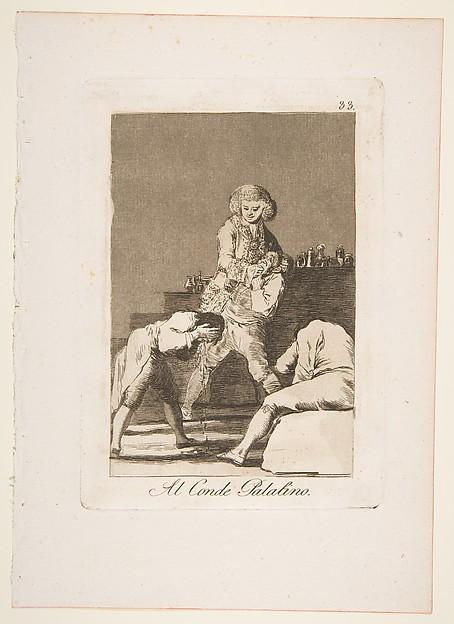
Plate 33 from "Los Caprichos": To the Count Palatine (Al Conde Palatino)
1799 · Etching, burnished aquatint, drypoint, burin
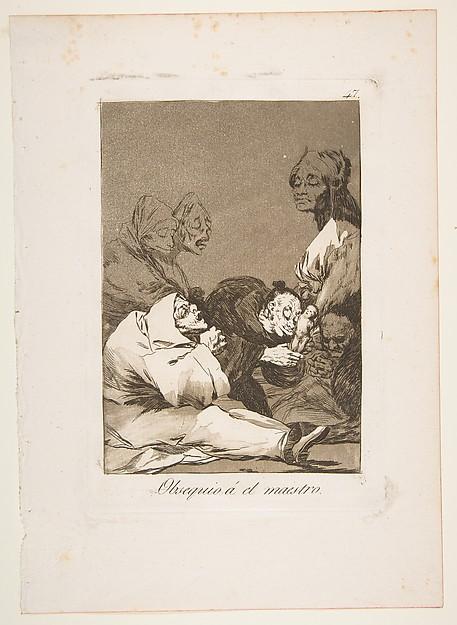
Plate 47 from "Los Caprichos": A gift for the master (Obsequio á el maestro)
1799 · Etching, burnished aquatint, burin
To rise and to fall (Subir y bajar) (1799, Met-Objekt 1550)
1799 · Etching, burnished aquatint
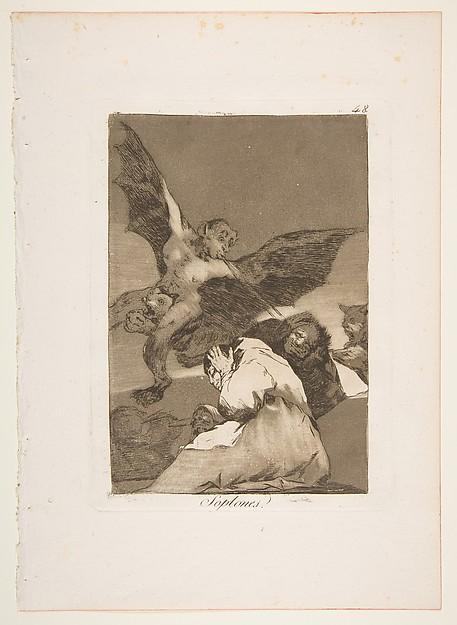
Plate 48 from 'Los Caprichos': Tale-Bearers--Blasts of Wind (Soplones)
1799 · Etching, burnished aquatint
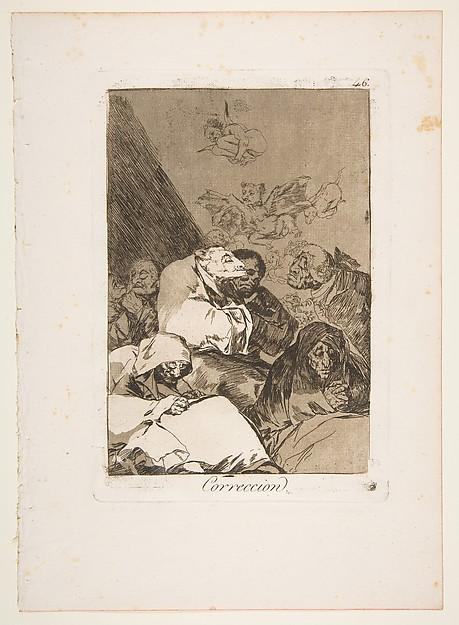
Plate 46 from "Los Caprichos": Correction (Correccion)
1799 · Etching, burnished aquatint
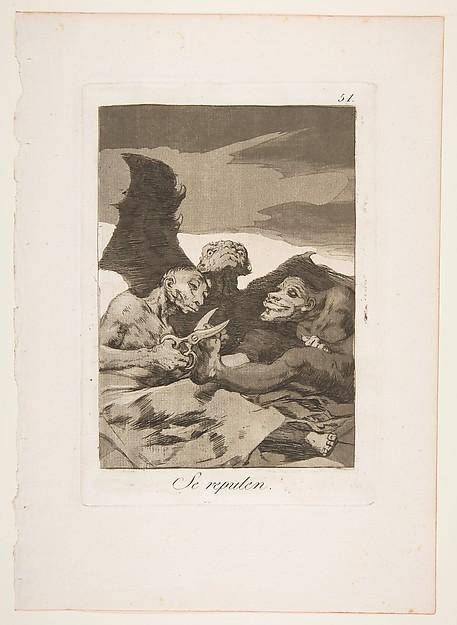
They spruce themselves up (Se repulen)
1799 · Etching, burnished aquatint, burin
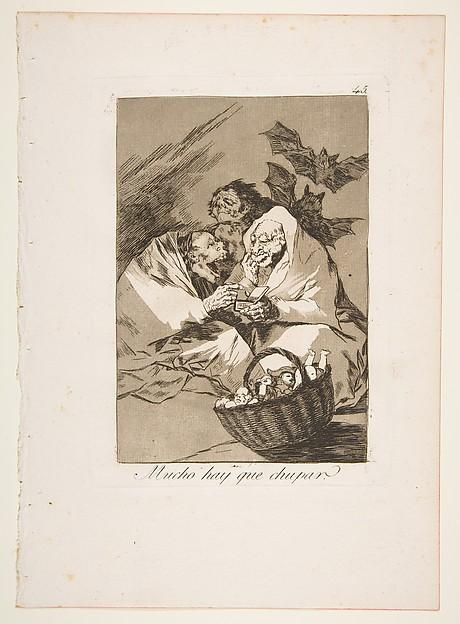
Plate 45 from "Los Caprichos": There is Plenty to Suck (Mucho hay que chupar)
1799 · Etching, burnished aquatint
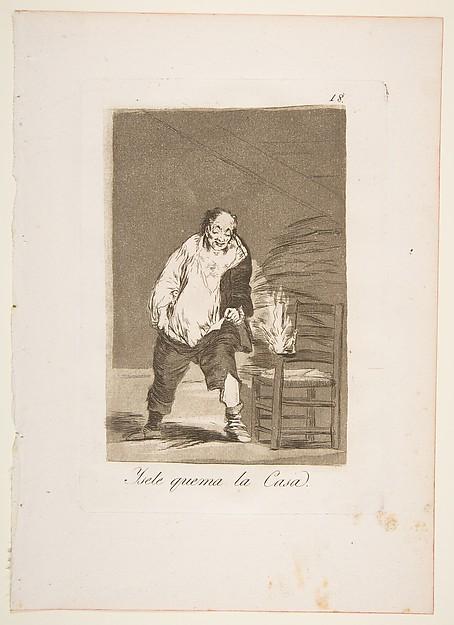
Plate 18 from "Los Caprichos": And his house is on fire (Ysele quema la Casa)
1799 · Etching and burnished aquatint
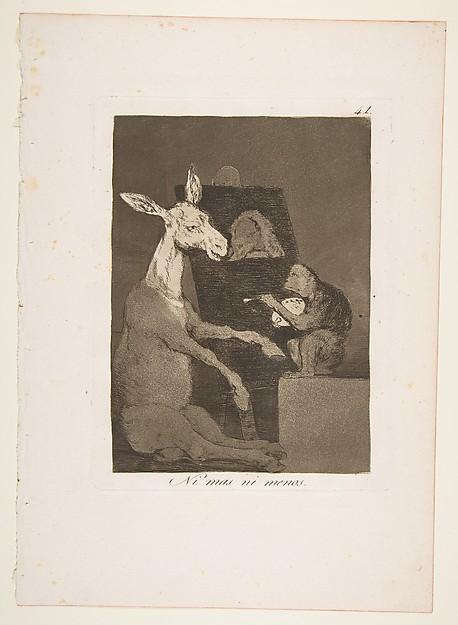
Neither more nor less (Ni mas ni menos)
1799 · Etching, burnished aquatint, drypoint, burin
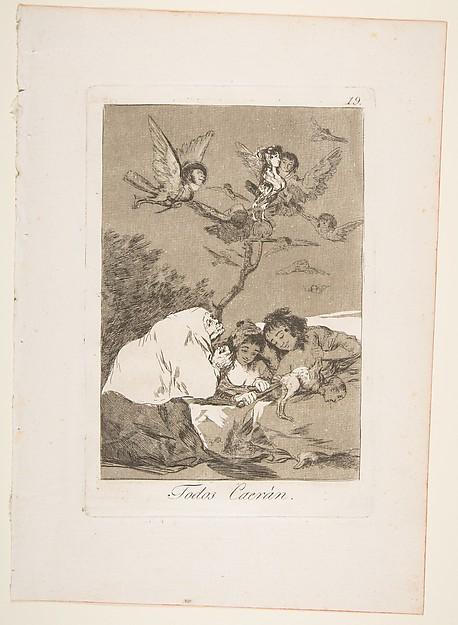
Plate 19 from "Los Caprichos": All will fall (Todos Caerán)
1799 · Etching, burnished aquatint
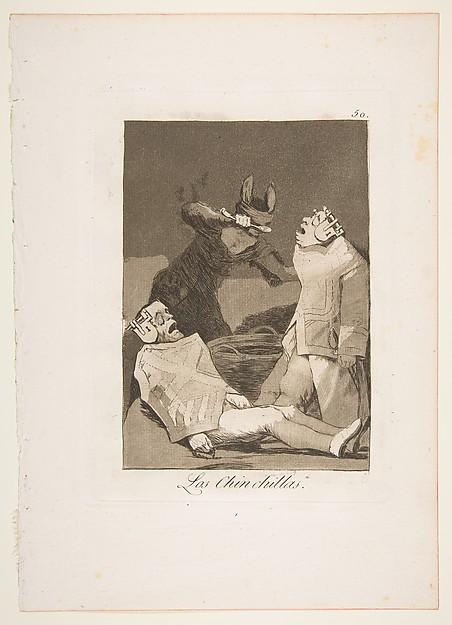
Plate 50 from "Los Caprichos": The Chinchillas (Los Chinchillas)
1799 · Etching, burnished aquatint, burin
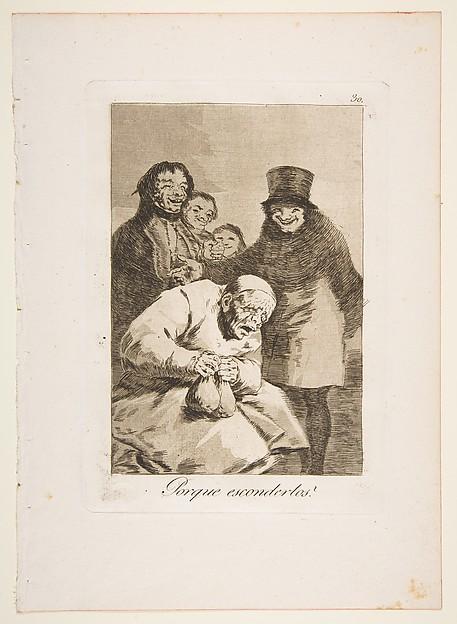
Plate 30 from "Los Caprichos": Why hide them? (Porque esconderlos?)
1799 · Etching, burnished aquatint, drypoint
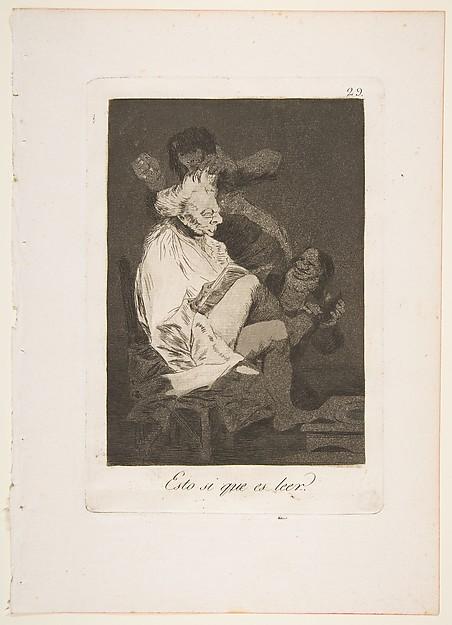
Plate 29 from "Los Caprichos": That certainly is being able to read (Esto si que es leer)
1799 · Etching, burnished aquatint, drypoint
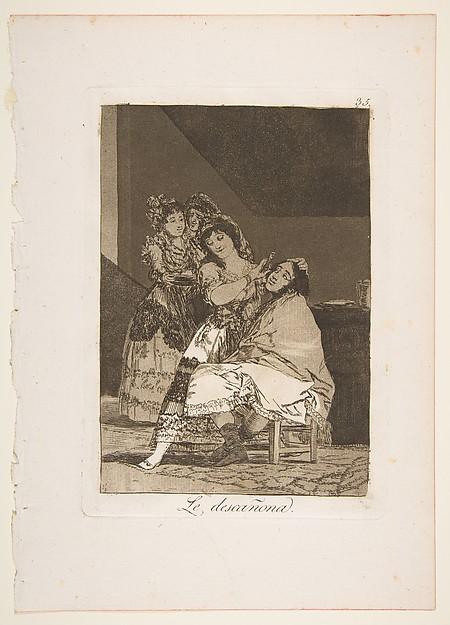
She fleeces him (Le descañona)
1799 · Etching, burnished aquatint
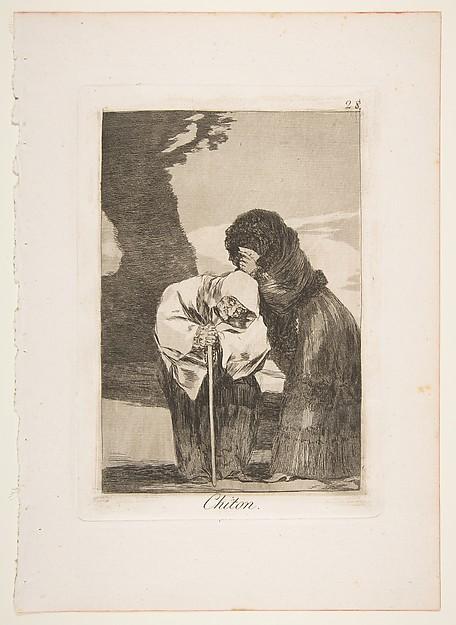
Hush (Chiton)
1799 · Etching, aquatint, burin
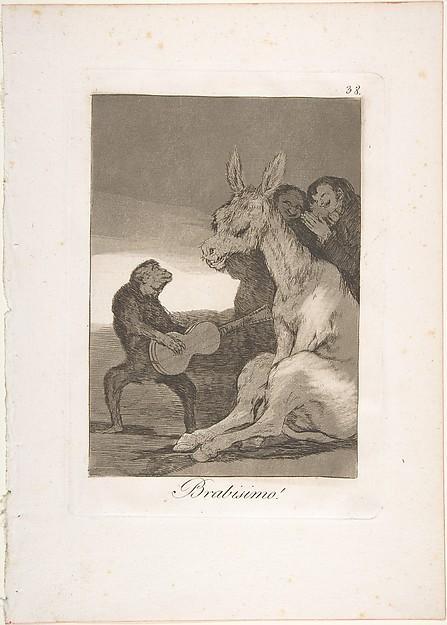
Bravo! (Brabisimo!)
1799 · Etching, burnished aquatint, drypoint
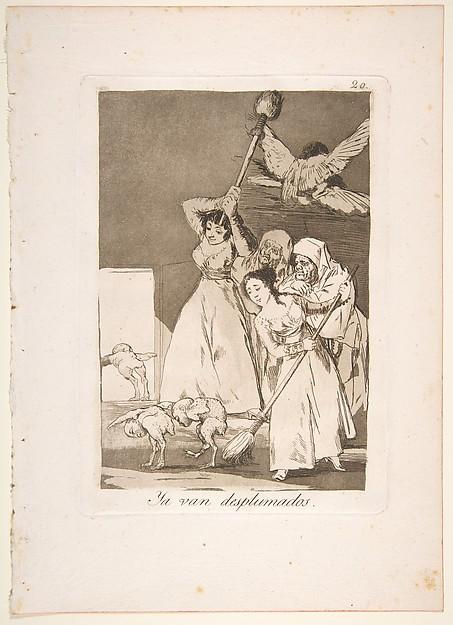
There they go plucked (Ya van desplumados)
1799 · Etching, burnished aquatint, drypoint
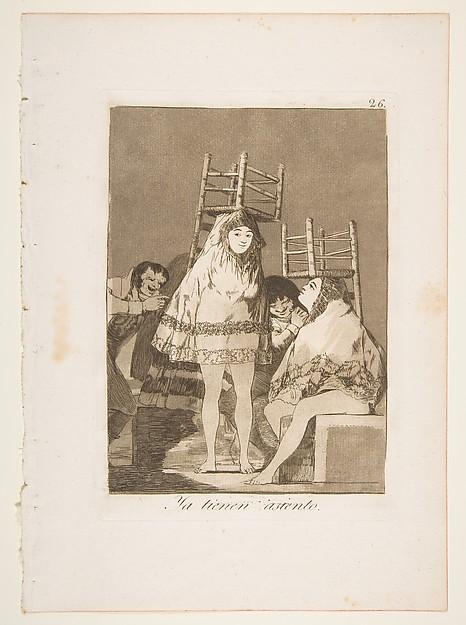
They've already got a seat (Ya tienen asiento)
1799 · Etching, burnished aquatint
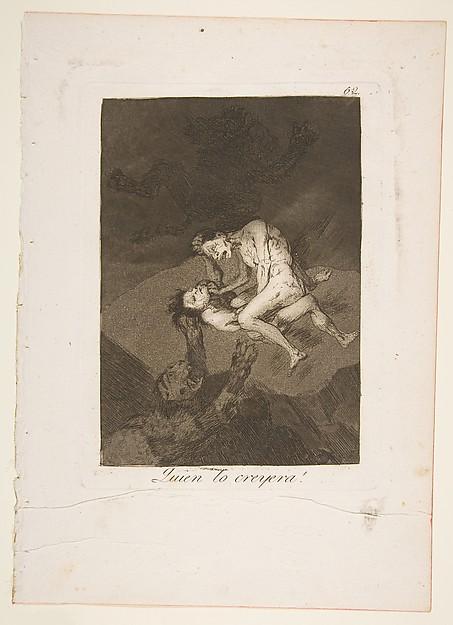
Plate 62 from "Los Caprichos": Who would have thought it? (Quien lo creyera!)
1799 · Etching, burnished aquatint, burin
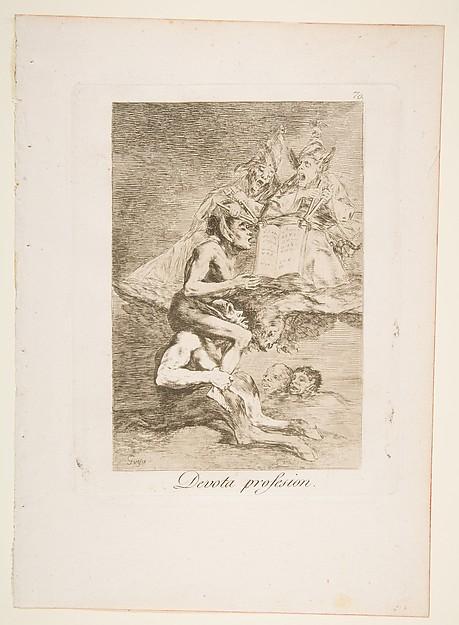
Devout Profession (Devota profesion), Plate 70 from "Los Caprichos"
1799 · Etching, aquatint, drypoint
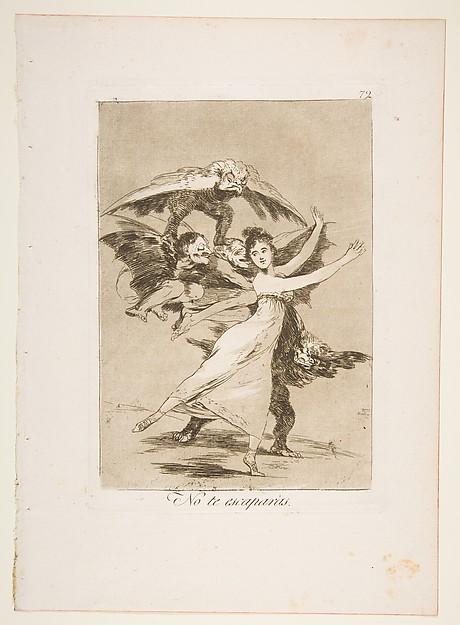
You will not escape (No te escaparàs)
1799 · Etching, burnished aquatint
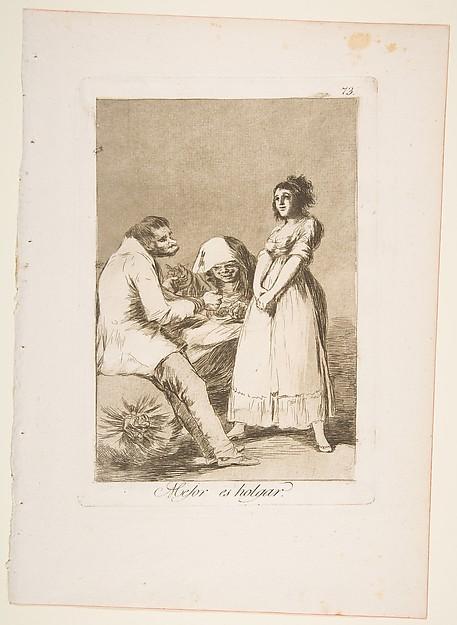
It is better to be lazy (Mejor es holgar)
1799 · Etching, burnished aquatint, burin
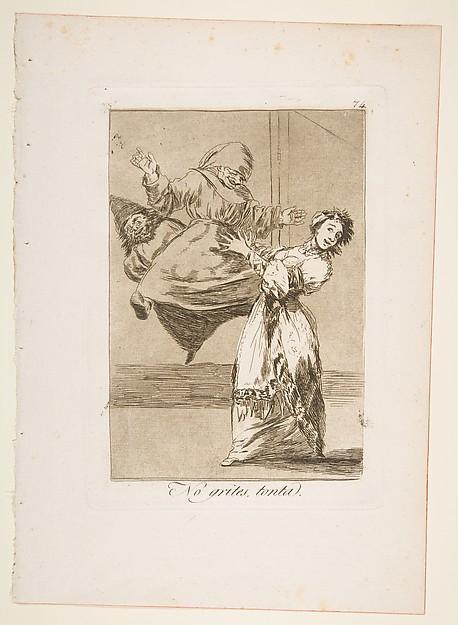
Don't scream, stupid (No grites, tonta)
1799 · Etching, burnished aquatint
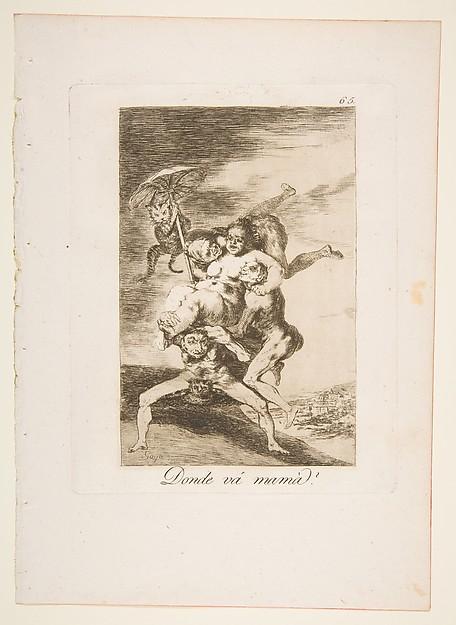
Where is mom going? (Donde vá mamá?)
1799 · Etching, aquatint, drypoint
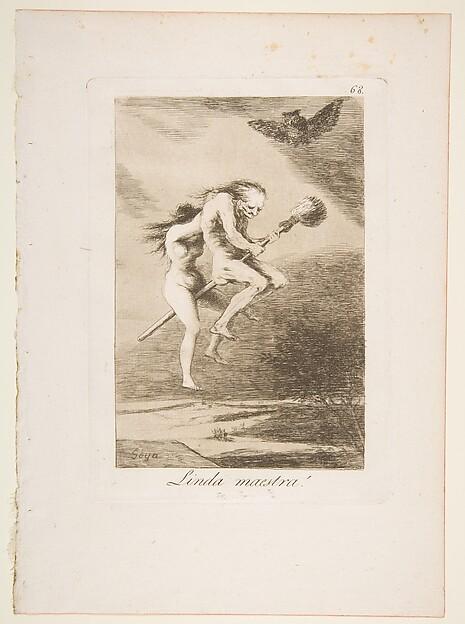
Plate 68 from "Los Caprichos": Pretty teacher! (Linda maestra!)
1799 · Etching, burnished aquatint, drypoint
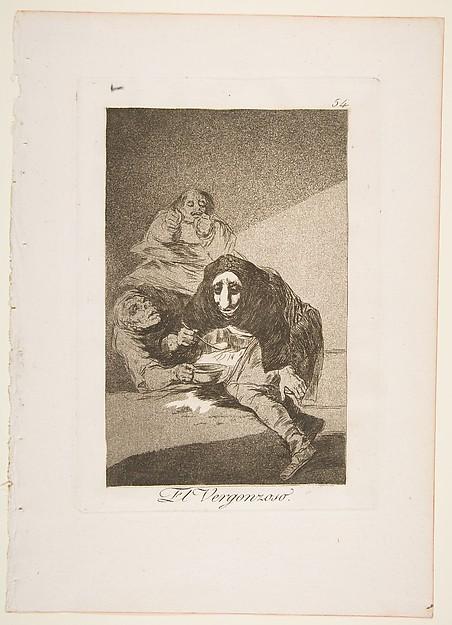
Plate 54 from "Los Caprichos": The shamefaced one (El Vergonzoso)
1799 · Etching, aquatint
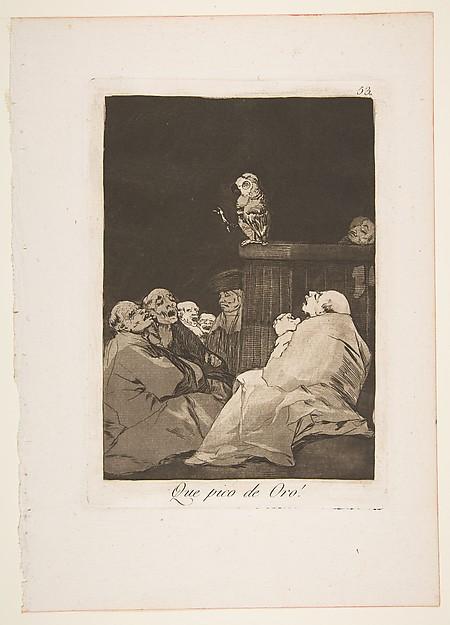
Plate 53 from "Los Caprichos": What a golden beak! (Que pico de Oro!)
1799 · Etching, burnished aquatint, burin
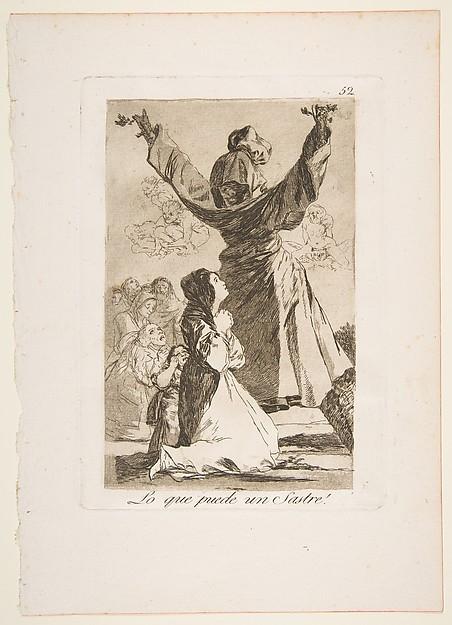
What a tailor can do! (Lo que puede un Sastre!)
1799 · Etching, burnished aquatint, drypoint, burin
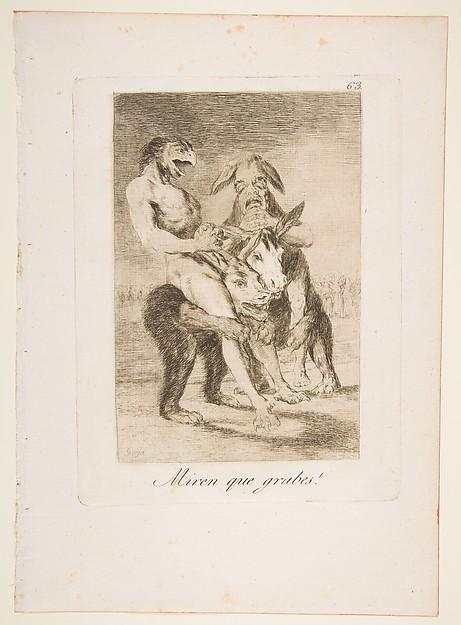
Look how solemn they are! (Miren que grabes!)
1799 · Etching, aquatint, drypoint

Plate 57 from "Los Caprichos": The filiation (La filiacion)
1799 · Etching, aquatint
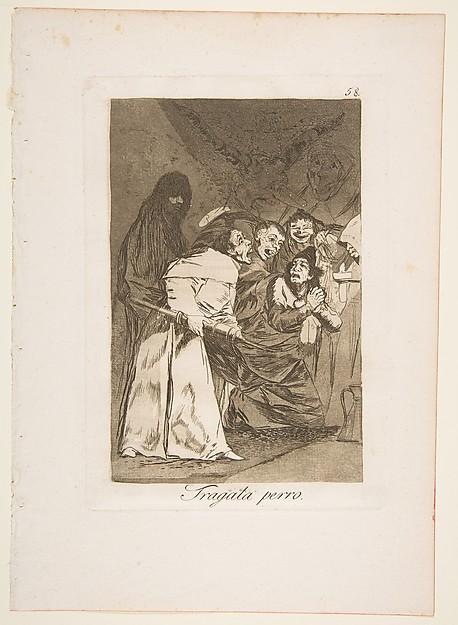
Plate 58 from "Los Caprichos": Swallow it, dog (Tragala perro)
1799 · Etching, burnished aquatint, drypoint
Plate 64 from "Los Caprichos": Bon voyage (Buen Viage)
1799 · Etching, burnished aquatint, burin
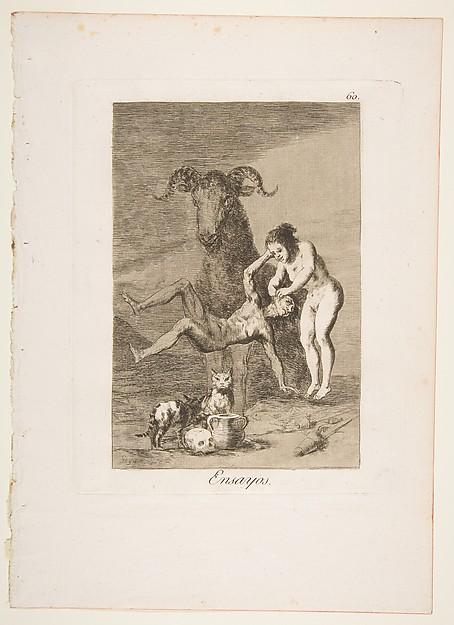
Plate 60 from "Los Caprichos": Trials (Ensayos)
1799 · Etching, aquatint, burin
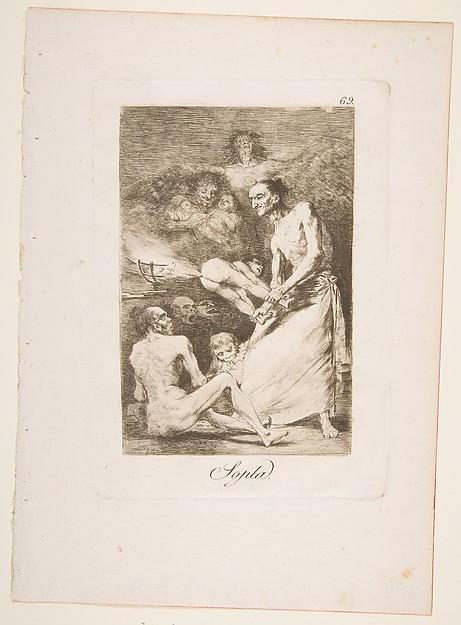
Blow (Sopla)
1799 · Etching, aquatint, drypoint, burin
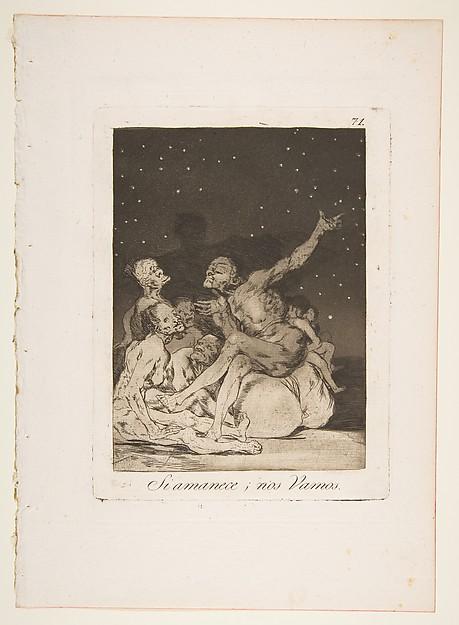
Plate 71 from "Los Caprichos": When day breaks we will be off (Si amanece; nos Vamos)
1799 · Etching, burnished aquatint, burin
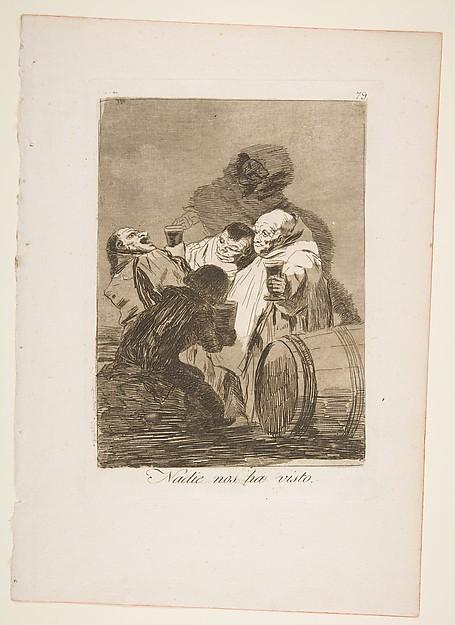
Plate 79 from "Los Caprichos": No one has seen us (Nadie nos ha visto)
1799 · Etching, burnished aquatint, burin
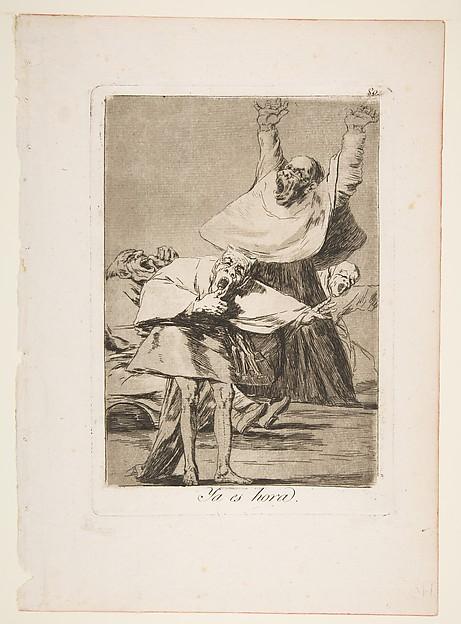
It is time (Ya es hora)
1799 · Etching, burnished aquatint, drypoint, burin
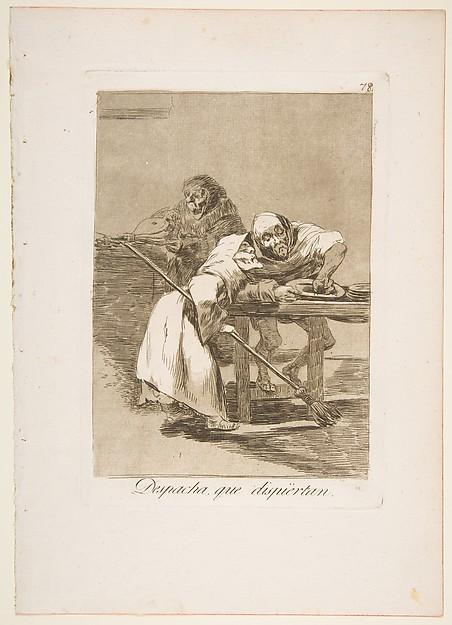
Plate 78 from "Los Caprichos": Be quick, they are waking up (Despacha, que dispiértan)
1799 · Etching, burnished aquatint
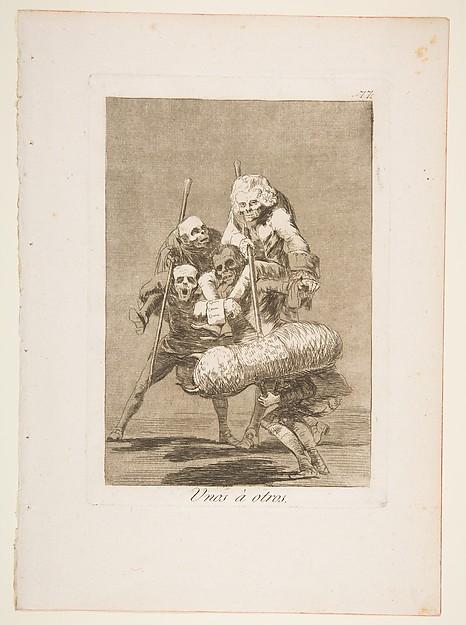
Plate 77 from "Los Caprichos": What one does to another (Unos á otros)
1799 · Etching, burnished aquatint, drypoint, burin
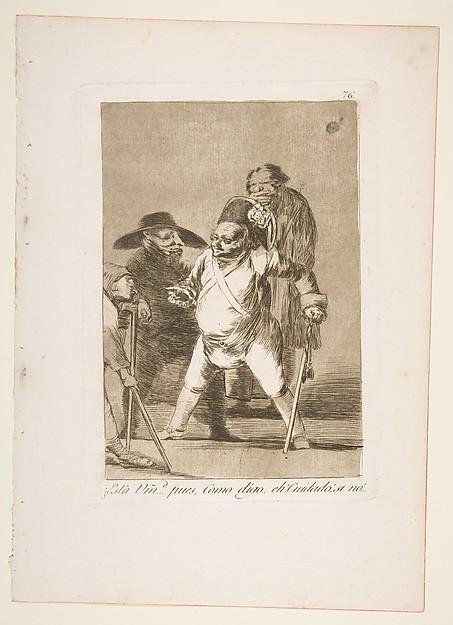
Plate 76 from "Los Caprichos": You understand?... well, as I say... eh! Look out! otherwise...
1799 · Etching, burnished aquatint
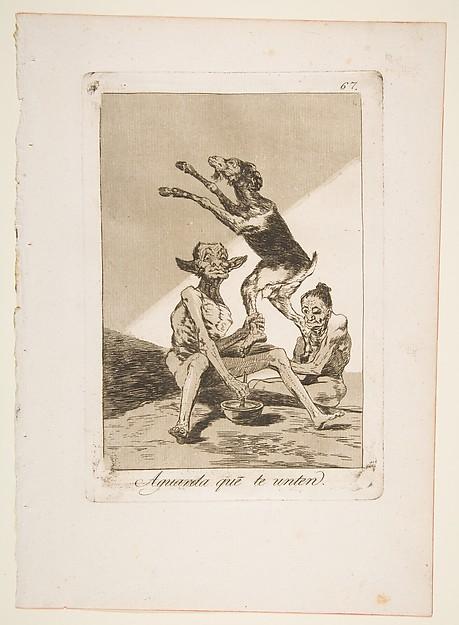
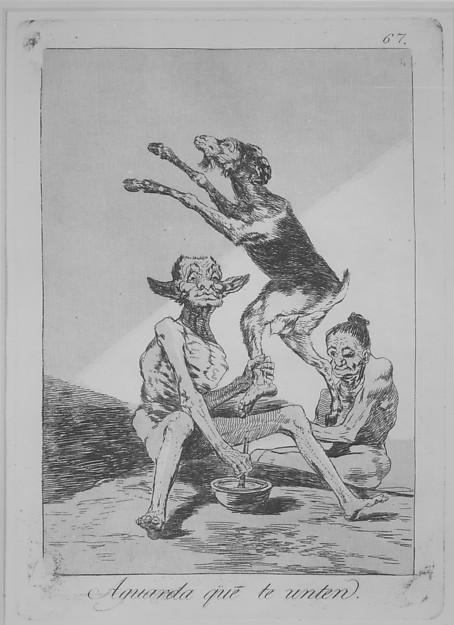
Wait till you've been anointed (Aguarda que te unten)
1799 · Etching, burnished aquatint, drypoint
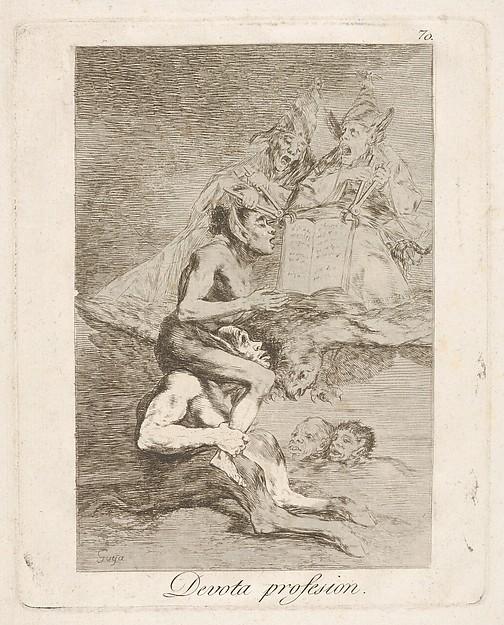
Plate 70: Devout Profession (Devota Profesion), from "Los Caprichos"
1799 · Etching, aquatint, drypoint
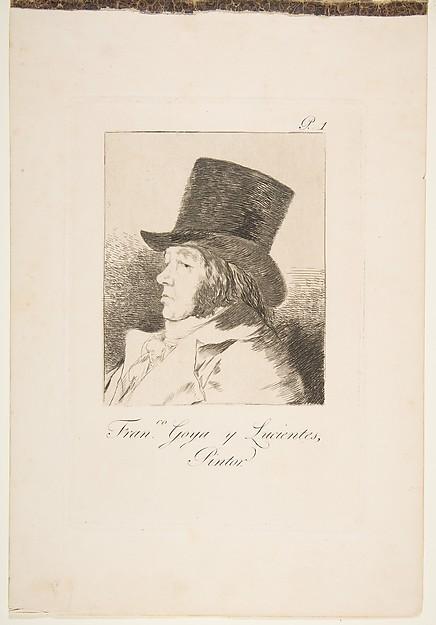
Plate 1 from "Los Caprichos": Self-portrait (1799 (published 1881–86))
1799 (published 1881–86) · Etching, aquatint, drypoint and burin
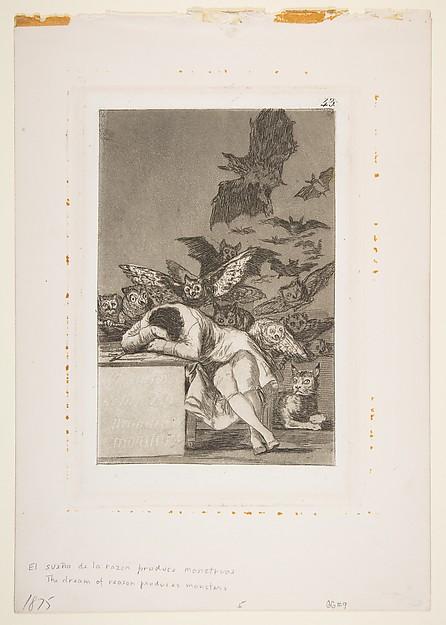
Plate 43 from "Los Caprichos": The sleep of reason produces monsters (El sueño de la razon produce monstruos)
1799 (published 1908–12) · Etching, aquatint on wove paper

Plate 22 from 'Los Caprichos': Poor little girls! (Probrecitas!)
1799, posthumous impression · Etching, burnished aquatint

Barbarous Entertainment
1800–1804 (published 1828–67) · Etching, aquatint, drypoint on laid paper

Ignacio Garcini y Queralt, Brigadier of Engineers
1804 · Oil on canvas

Josefa de Castilla Portugal y van Asbrock de Garcini
1804 · Oil on canvas
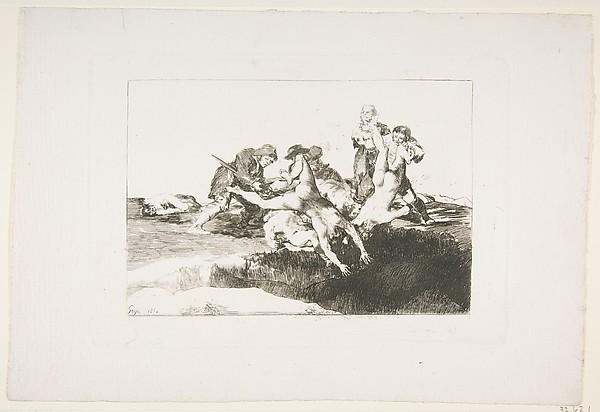
Plate 27 from "The Disasters of War" (Los Desastres de la Guerra): 'Charity' (Caridad)
1810 · Etching, drypoint, burin (proof impression)
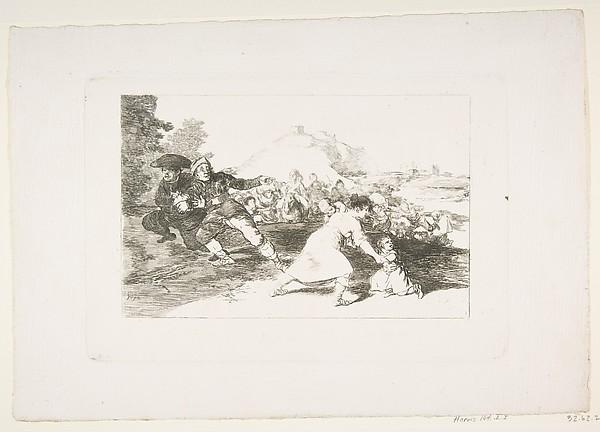
Plate 44 from 'The Disasters of War' (Los Desastres de la Guerra): 'I saw it' (Yo lo vi)
1810 · Etching, drypoint, burin
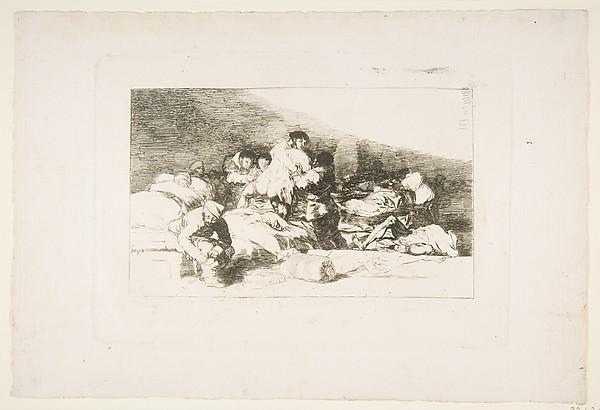
Plate 25 from "The Disasters of War" (Los Desastres de la Guerra): 'These too' (Tambien estos)
1810 · Etching, drypoint, and burin (proof impressions)
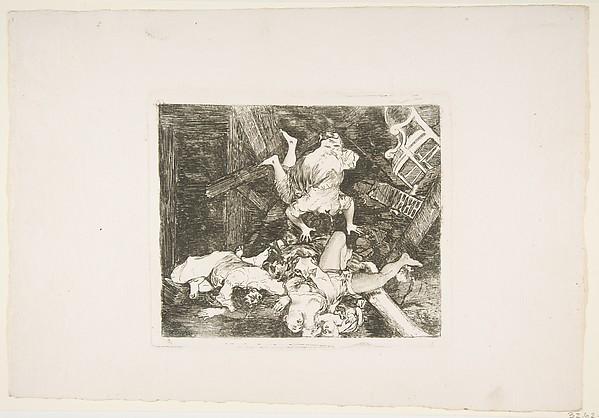
Plate 30 from 'The Disasters of War' (Los Desastres de la Guerra): 'Ravages of War' (Estragos de la guerra)
1810 · Etching, drypoint, burin, burnisher
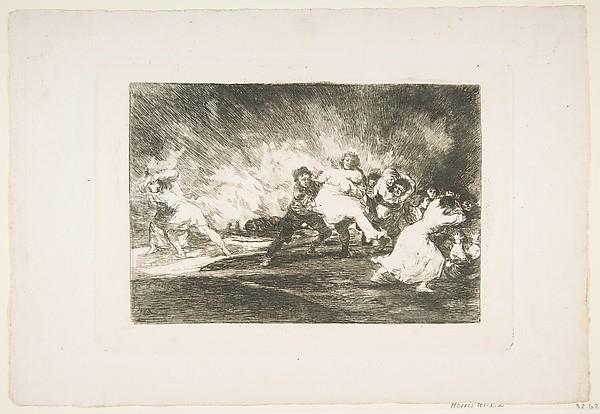
Plate 41 from 'The Disasters of War' (Los Desastres de La Guerra): 'They escape through the flames' (Escapan entre las llamas)
1810 · Etching, burin (proof impression)
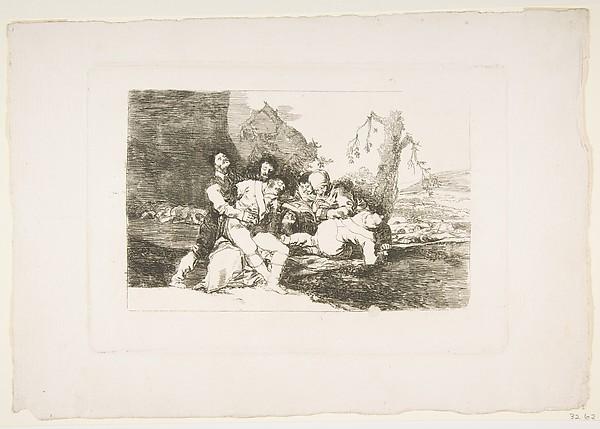
Plate 20 from "The Disasters of War" (Los Desastres de la Guerra): 'Get them well, and on to the next' (Curarlos y á otra) (1810)
1810 · Etching, lavis, burin, burnisher (proof impression)
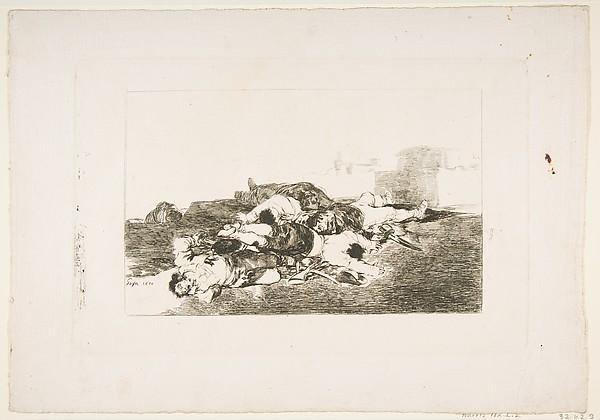
Plate 22 from "The Disasters of War" (Los Desastres de la Guerra): 'Even worse' (Tanto y mas) (1810)
1810 · Etching, burin (proof impression)
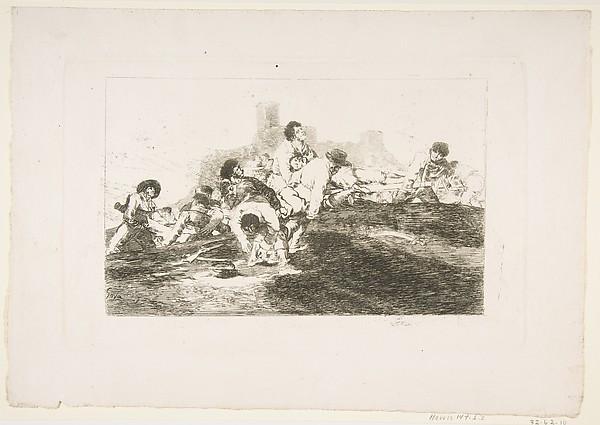
Plate 24 from "The Disasters of War" (Los Desastres de la Guerra): 'They can still be of use' (Aun podrán servir)
1810 · Etching (proof impression)
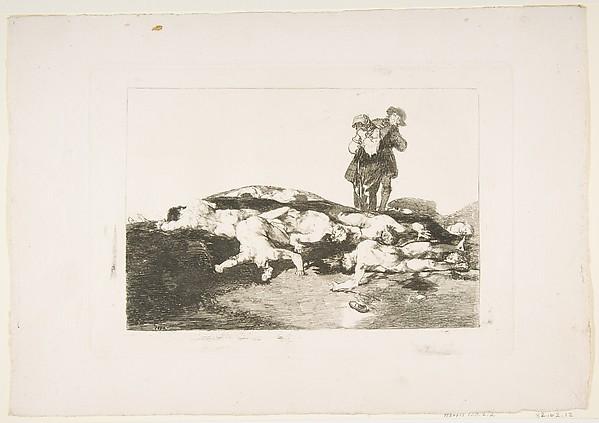
Plate 18 from 'The Disasters of War' (Los Desastres de la Guerra): 'Bury them and keep quiet' (Enterrar y callar)
1810 · Etching, drypoint, burin (working proof)
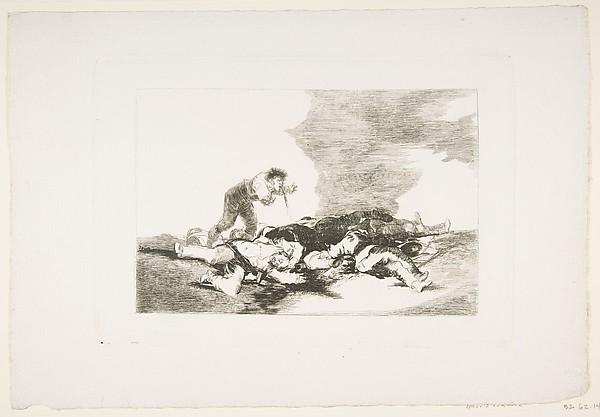
Plate 12 from 'The Disasters of War' (Los Desastres de la Guerra): 'This is what you were born for' (Para eso habeis nacido)
1810 · Etching, drypoint, burin (working proof)
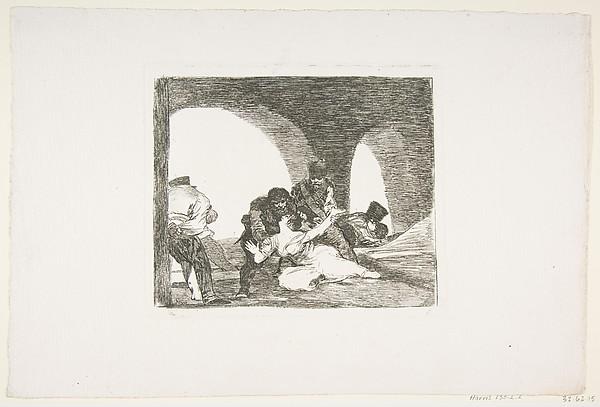
Bitter to be Present (Amarga presencia)
1810 · Etching, burin
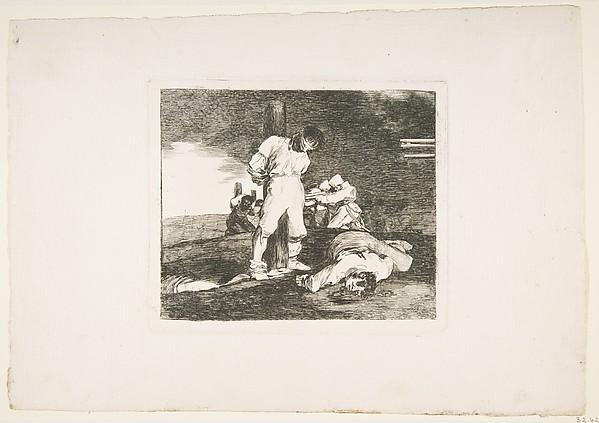
Plate 15 from "The Disasters of War" (Los Desastres de la Guerra): 'And there is no help' (Y no hai remedio)
1810 · Etching, drypoint, burin, burnisher
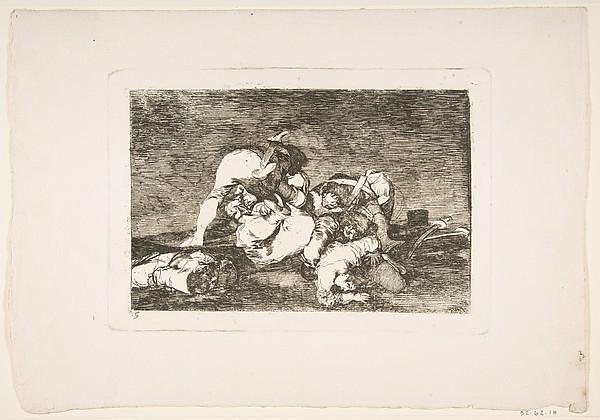
Plate 10 from 'The Disasters of War' (Los Desastres de la Guerra): 'Nor do these' (Tampoco)
1810 · Etching, burin (proof impression before addition of caption)
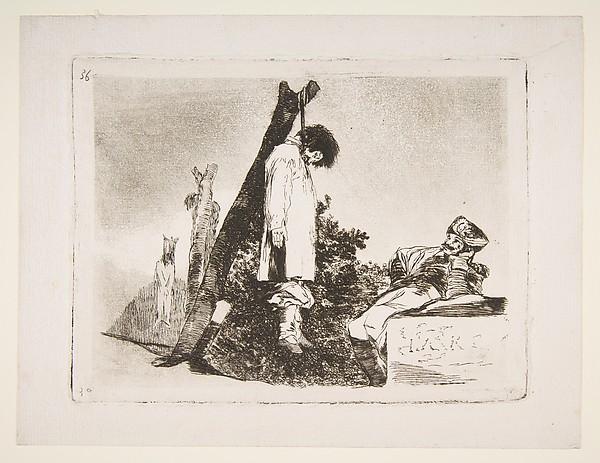
Neither [in this case] either (Tampoco), plate 36 from "The Disasters of War" (Los Desastres de La Guerra)
1810 · Etching, burnished aquatint, drypoint
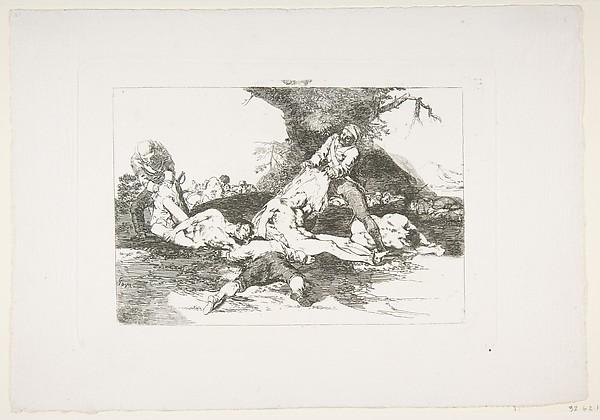
Plate 16 from 'The Disasters of War' (Los Desastres de la Guerra): 'They make use of them' (Se aprovechan)
1810 · Etching, drypoint (proof impression)
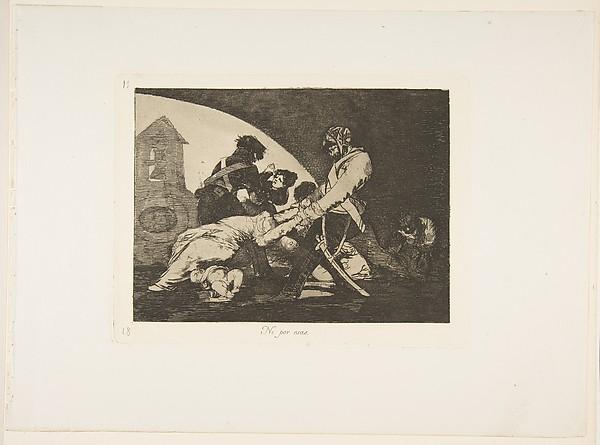
Plate 11 from "The Disasters of War" (Los Desastres de la Guerra): 'Neither do these' (Ni por esas)
1810 · Etching, lavis, drypoint, burin
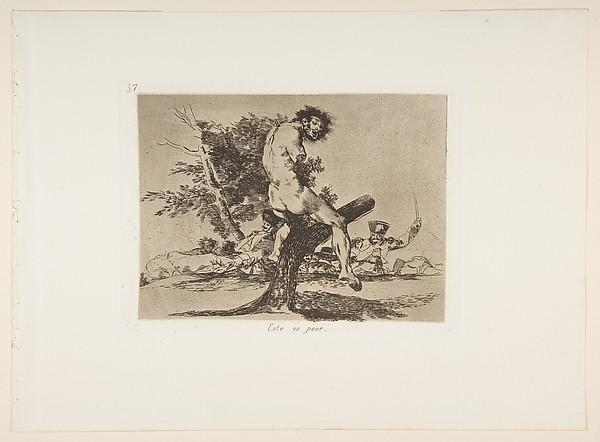
Plate 37 from "The Disasters of War" (Los Desastres de La Guerra): This is worse (Esto es peor)
1810 (first published 1863) · Etching, lavis, drypoint
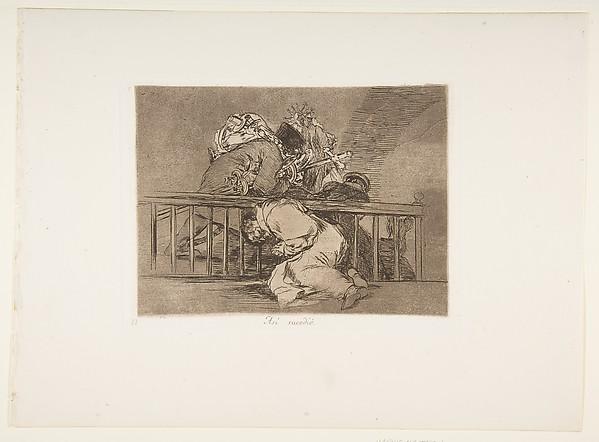
Plate 47 from "The Disasters of War" (Los Desastres de la Guerra): 'This is how it happened' (Así sucedió)
1810 (published 1863) · Etching,burnished lavis, drypoint, burin, burnisher
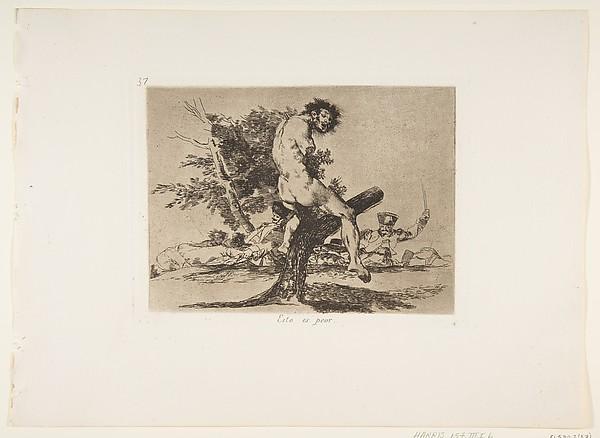
This is worse (Esto es peor), Plate 37 from 'The Disasters of War'
1810 (published 1863) · Etching, lavis, drypoint
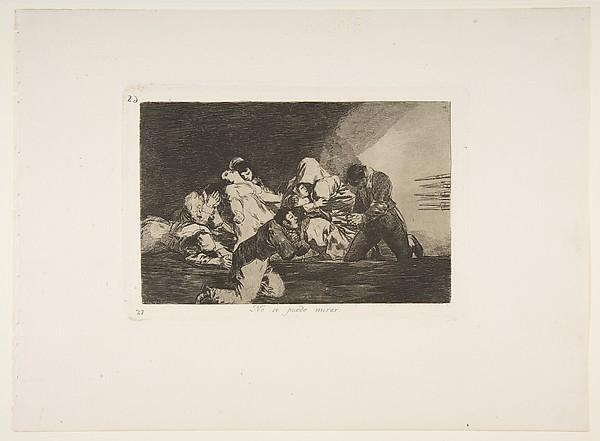
Plate 26 from "The Disasters of War" (Los Desastres de la Guerra): 'One can't look' (No se puede mirar)
1810 (published 1863) · Etching, burnished lavis, drypoint, burin
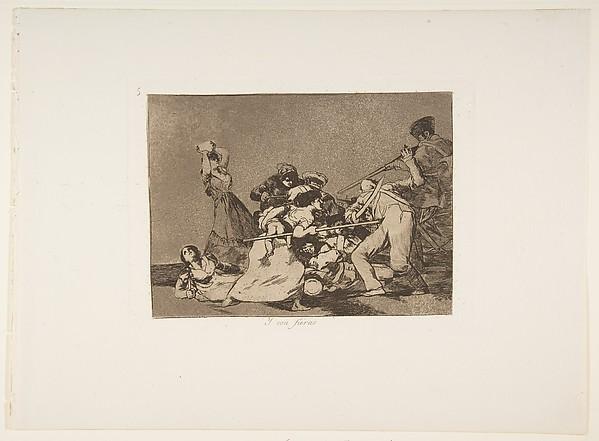
Plate 5 from "The Disasters of War" (Los Desastres de la Guerra): 'And they are like wild beasts' (Y son fieras)
1810 (published 1863) · Etching, burnished aquatint, drypoint
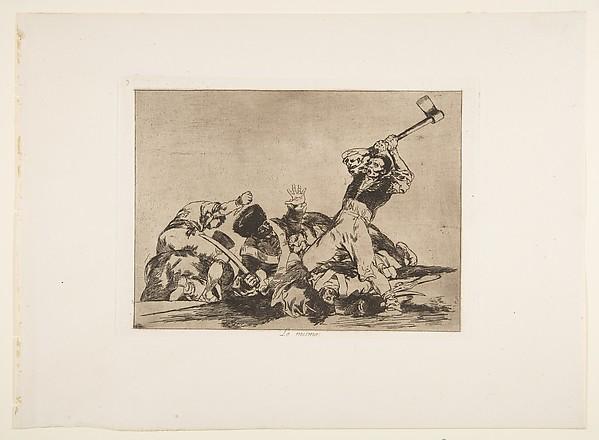
The Disasters of War, Plate 3: The same (Lo mismo)
1810 (published 1863) · Etching, lavis, drypoint, burin, burnisher

Plate 15 from "The Disasters of War" (Los Desastres de la Guerra): And there is nothing to be done (Y no hai remedio)
1810 (published 1863) · Etching, drypoint, burin, burnisher
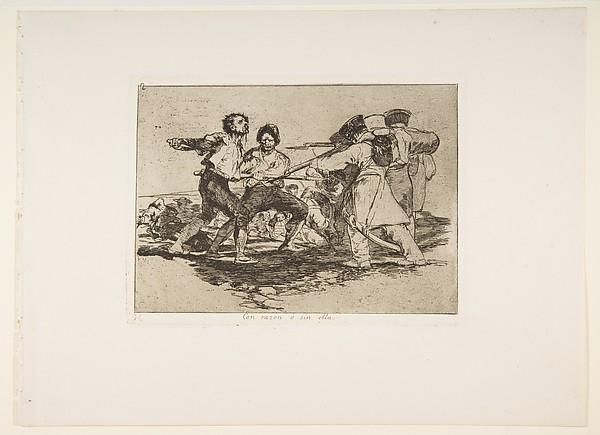
Plate 2 from "The Disasters of War" (Los Desastres de la Guerra): 'Rightly or wrongly' (Con razon ó sin ella)
1810 (published 1863) · Etching, lavis, drypoint, burin, burnisher
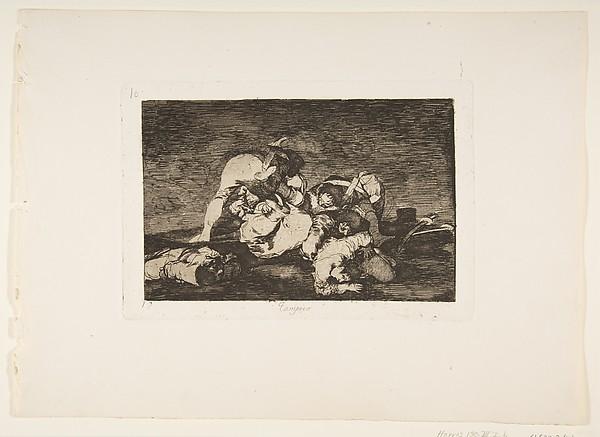
Plate 10 from 'The Disasters of War' (Los Desastres de la Guerra): Nor [do these] either (Tampoco)
1810 (published 1863) · Etching, burin
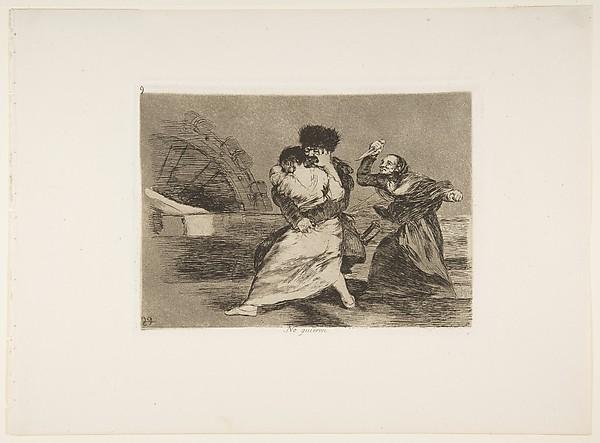
The Disasters of War (Los Desastres de la Guerra), Plate 9: 'They don't like to' (No quieren)
1810 (published 1863) · Etching, aquatint, drypoint, burin
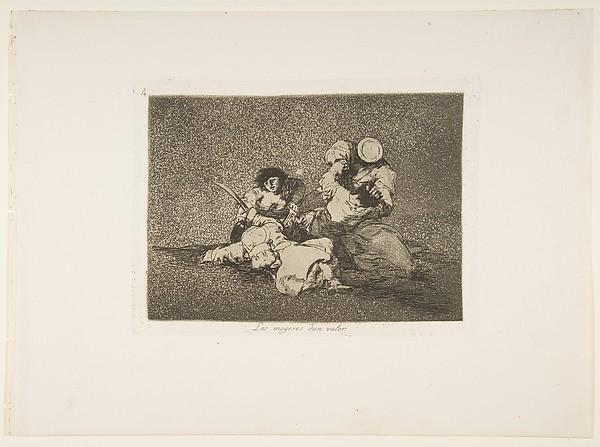
Plate 4 from "The Disasters of War" (Los Desastres de la Guerra): 'The women give courage' (Las mugeres dan valor)
1810 (published 1863) · Etching, aquatint, lavis, drypoint and burnisher
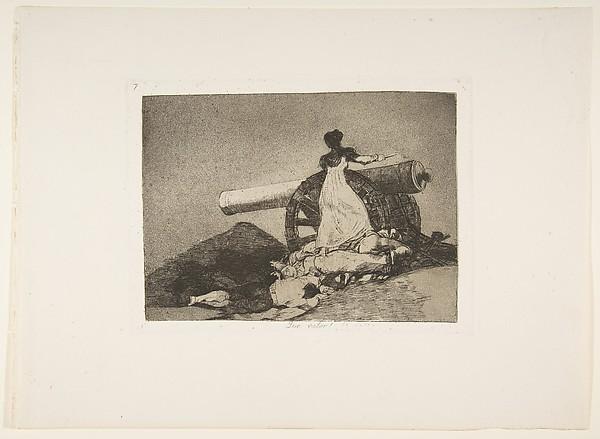
Plate 7 from "The Disasters of War" (Los Desastres de la Guerra): 'What courage!' (Que valor!)
1810 (published 1863) · Etching, aquatint, drypoint, burin
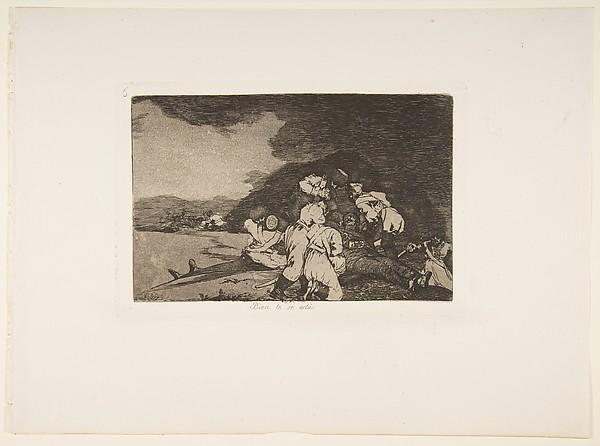
Plate 6 from 'The Disasters of War' (Los Desastres de la Guerra): 'It serves you right' (Bien te se está)
1810 (published 1863) · Etching, lavis, burin
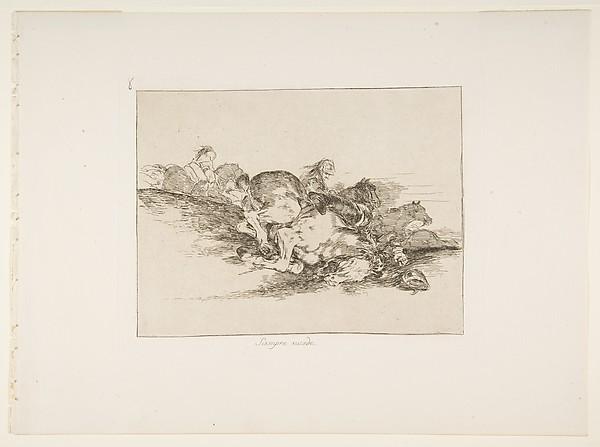
Plate 8 from "The Disasters of War" (Los Desastres de la Guerra): 'It always happens' (Siempre sucede)
1810 (published 1863) · Etching, drypoint

The Disasters of War: Plate 13: Bitter to be Present (Amarga presencia)
1810 (published 1863) · Etching, lavis, drypoint, burin and burnisher
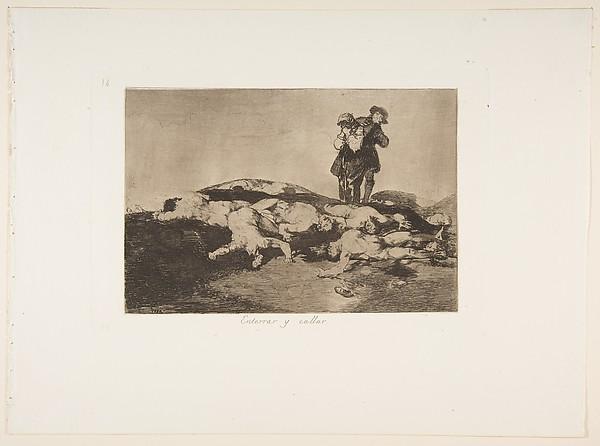
Plate 18 from "The Disasters of War" (Los Desastres de la Guerra): 'Bury them and keep quiet' (Enterrar y callar)
1810 (published 1863) · Etching, burnished lavis, drypoint, burin
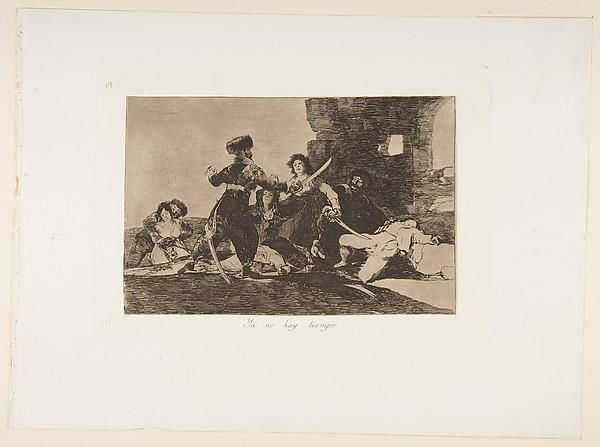
Plate 19 from 'The Disasters of War' (Los Desastres de la Guerra): 'There isn't time now' (Ya no hay tiempo)
1810 (published 1863) · Etching, lavis, drypoint, burin and burnisher
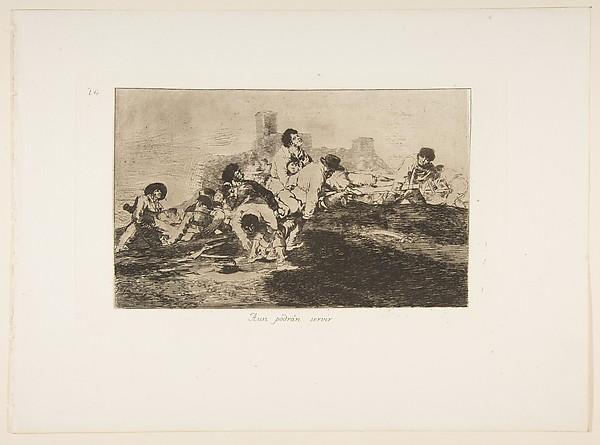
Plate 24 from 'The Disasters of War' (Los Desastres de la Guerra): 'They can still be of use' (Aun podrán servir)
1810 (published 1863) · Etching, burnisher
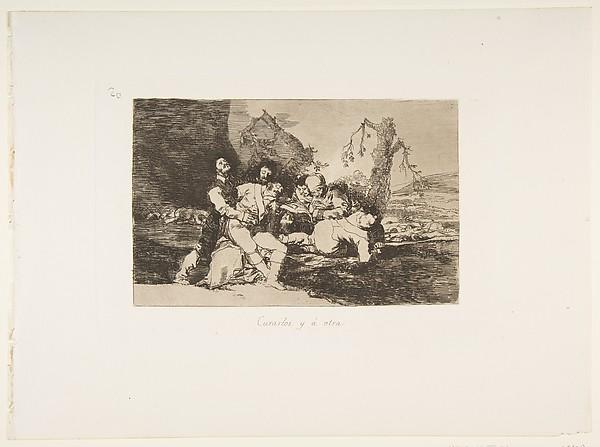
Plate 20 from "The Disasters of War" (Los Desastres de la Guerra): 'Get them well, and on to the next' (Curarlos y á otra) (1810 (published 1863))
1810 (published 1863) · Etching, lavis, burin, burnisher
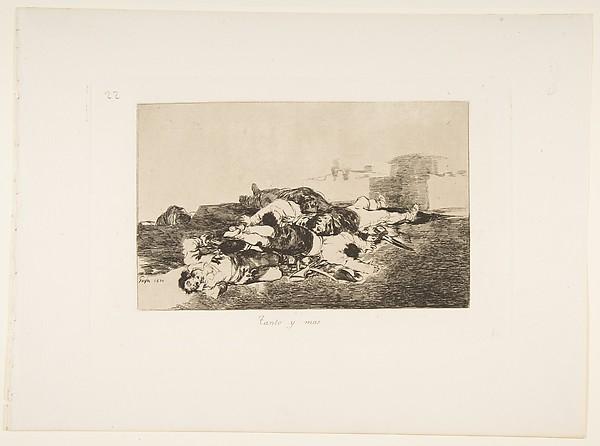
Plate 22 from "The Disasters of War" (Los Desastres de la Guerra): 'Even worse' (Tanto y mas) (1810 (published 1863))
1810 (published 1863) · Etching, lavis, burin
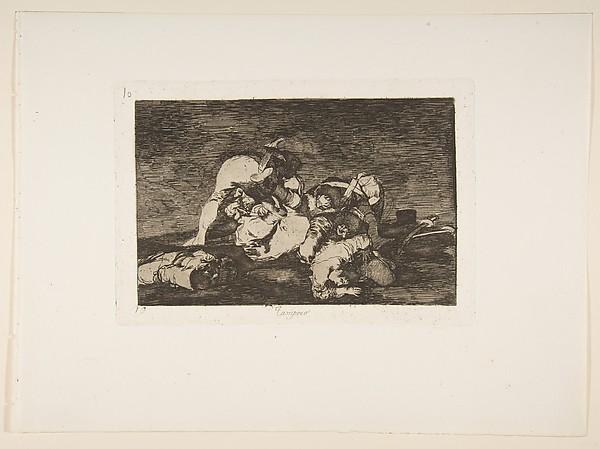
Plate 10 from "The Disasters of War" (Los Desastres de la Guerra): 'Nor [do these] either' (Tampoco)
1810 (published 1863) · Etching, burin
Plate 24 from "The Disasters of War" (Los Desastres de la Guerra): They can still be of use (Aun podrán servir)
1810 (published 1863) · Etching, burnisher
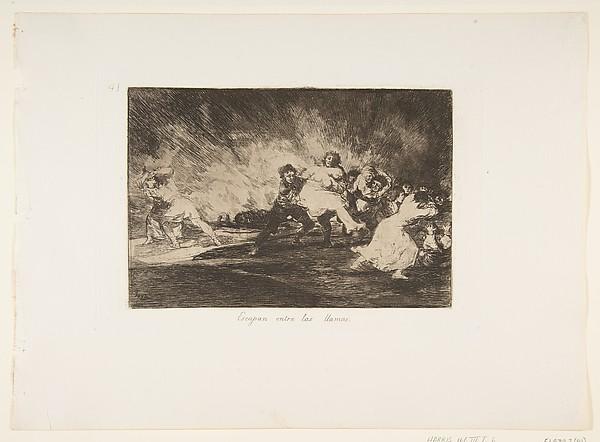
Plate 41 from "The Disasters of War" (Los Desastres de La Guerra): They escape through the flames (Escapan entre las llamas)
1810 (published 1863) · Etching, burin
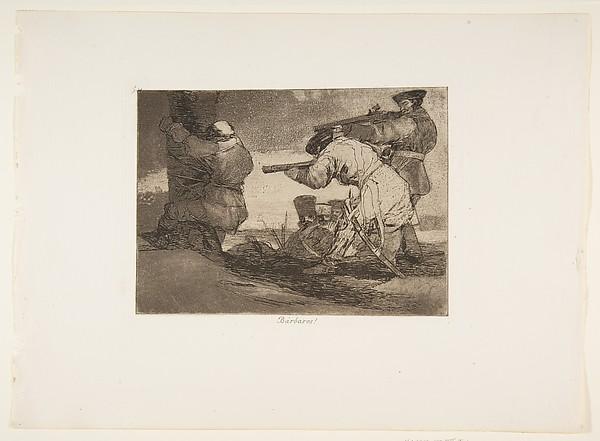
Plate 38 from "The Disasters of War" (Los Desastres de La Guerra): Barbarians! (Bárbaros!)
1810 (published 1863) · Etching, burnished aquatint, burin, burnisher
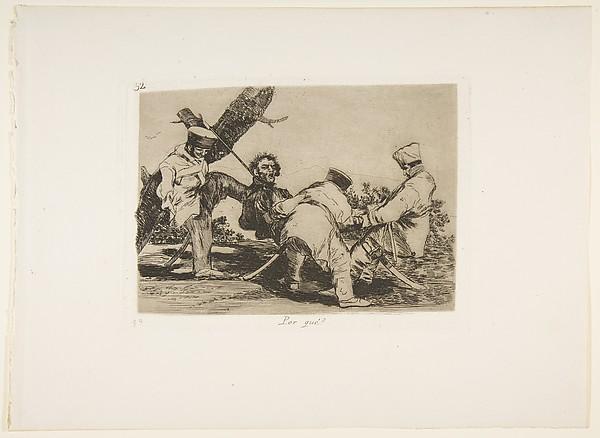
The Disasters of War (Los Desastres de la Guerra): Plate 32: 'Why?' (Por qué?)
1810 (published 1863) · Etching, lavis, drypoint, burin, burnisher
They escape through the flames (Escapan entre las llamas)
1810 (published 1863) · Etching, burin
Plate 38 from "The Disasters of War" (Los Desastres de La Guerra): 'Barbarians!' (Bárbaros!)
1810 (published 1863) · Etching, burnished aquatint, burin, burnisher
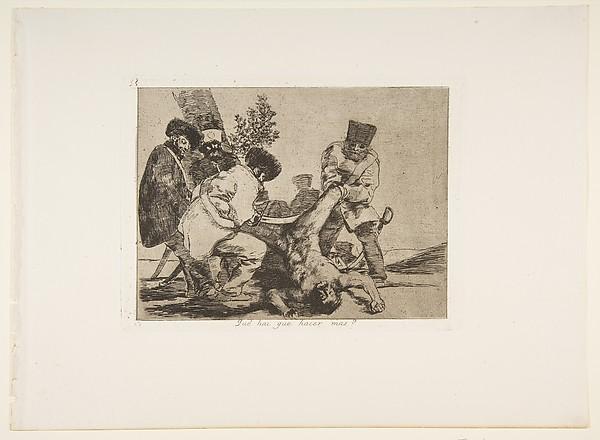
Plate 33 from "The Disasters of War" (Los Desastres de La Guerra): 'What more can be done?' (Qué hai que hacer mas?)
1810 (published 1863) · Etching, lavis, drypoint, burin, burnisher
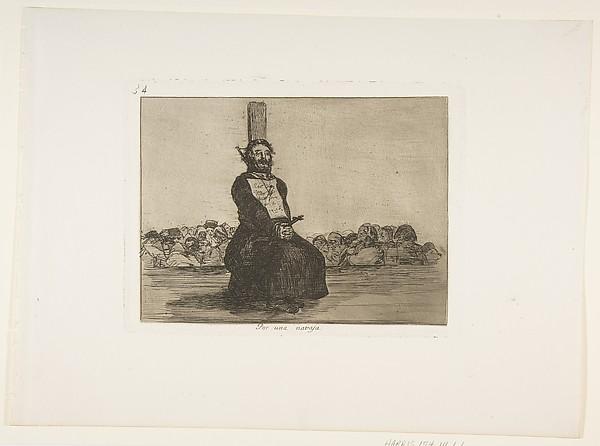
Plate 34 from "The Disasters of War" (Los Desastres de La Guerra): 'On account of a knife' (Por una navaja)
1810 (published 1863) · Etching, drypoint, burin, burnisher
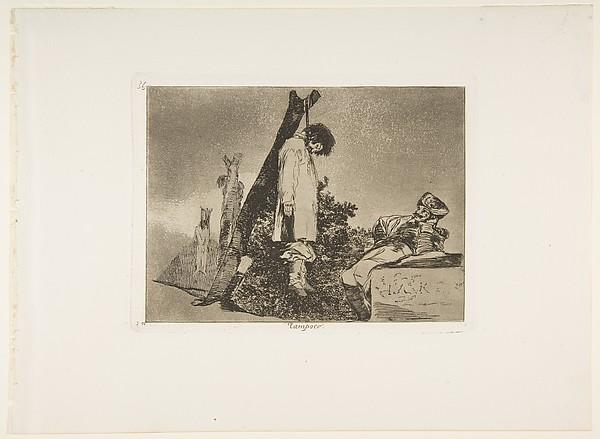
Plate 36 from 'The Disasters of War' (Los Desastres de La Guerra): 'Not [in this case] either' (Tampoco)
1810 (published 1863) · Etching, burnished aquatint, drypoint, burin, burnisher
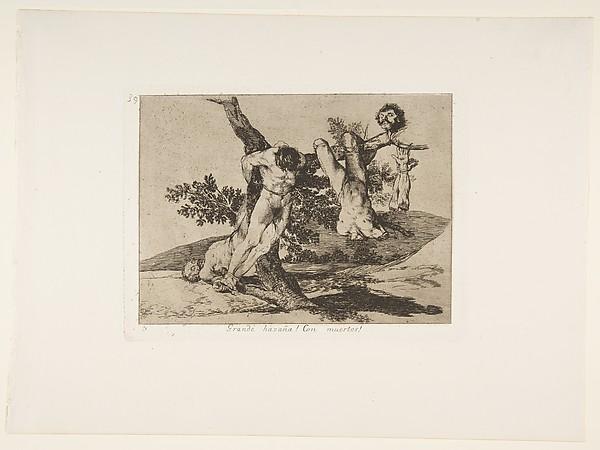
Plate 39 from "The Disasters of War" (Los Desastres de La Guerra): 'An heroic feat! With dead men!' (Grande hazaña! Con muertos!)
1810 (published 1863) · Etching, lavis, drypoint
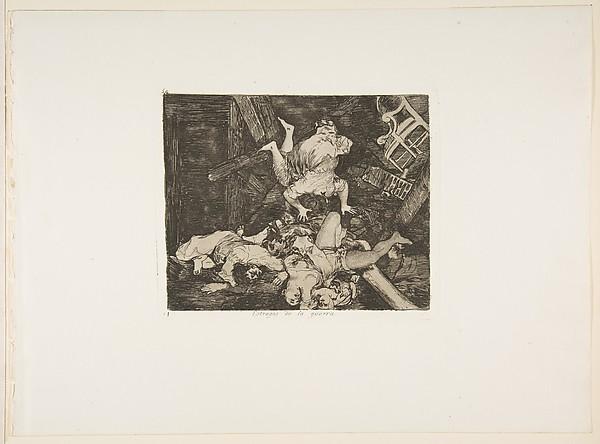
Plate 30 from 'The Disasters of War' (Los Desastres de la Guerra): 'Ravages of war' (Estragos de la guerra)
1810 (published 1863) · Etching, drypoint, burin, burnisher
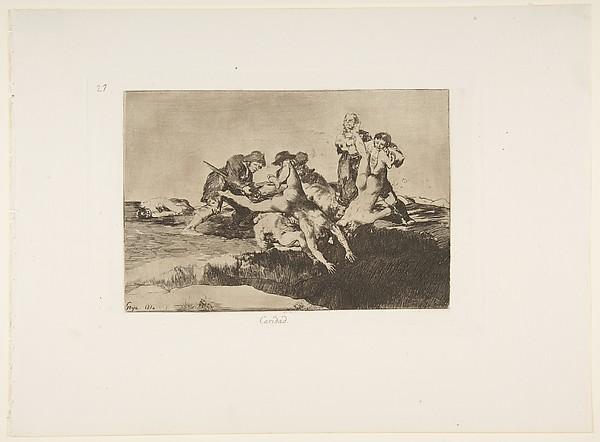
Plate 27 from 'The Disasters of War' (Los Desastres de la Guerra): 'Charity' (Caridad)
1810 (published 1863) · Etching, lavis, drypoint, burin, burnisher
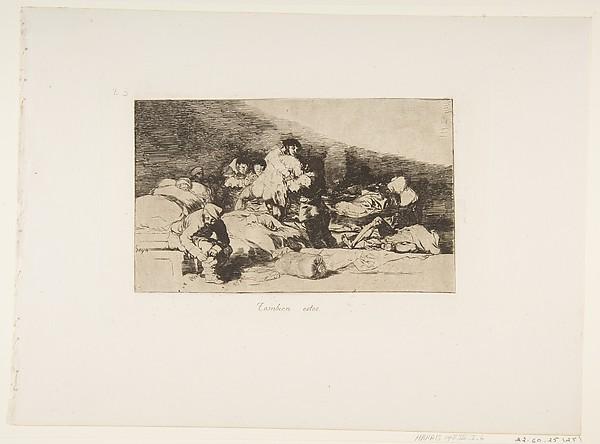
Plate 25 from 'The Disasters of War' (Los Desastres de la Guerra): 'These too' (Tambien estos)
1810 (published 1863) · Etching, drypoint, burin
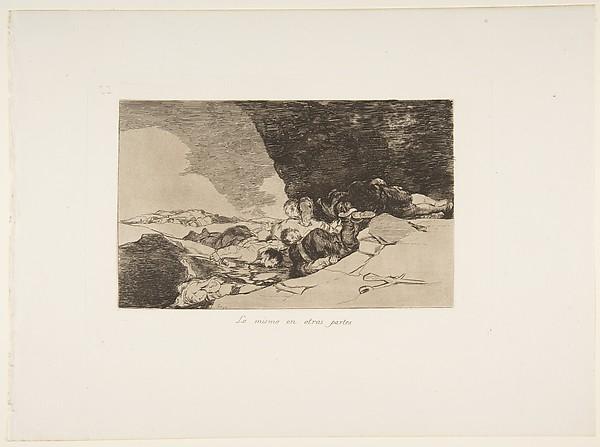
The Same Elsewhere (Lo mismo en otras partes)
1810 (published 1863) · Etching, drypoint, lavis, burin
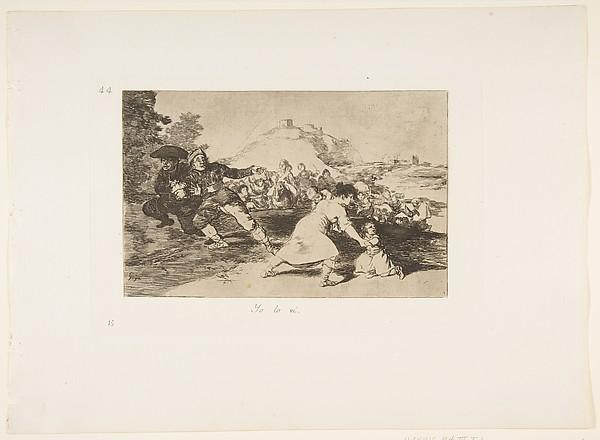
Plate 44 from "The Disasters of War" (Los Desastres de la Guerra): I saw it (Yo lo vi)
1810 (published 1863) · Etching, drypoint, burin
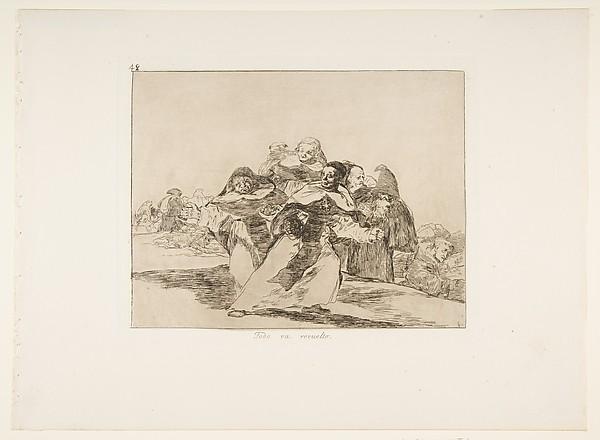
Plate 42 from "The Disasters of War" (Los Desastres de la Guerra): 'Everything is topsy-turvey' (Todo va revuelto)
1810 (published 1863) · Etching, burin
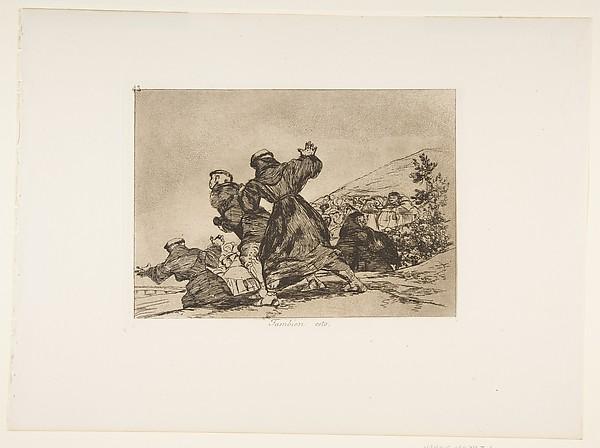
Plate 43 from "The Disasters of War" (Los Desastres de la Guerra): 'This too' (Tambien esto)
1810 (published 1863) · Etching, burnished aquatint, burnisher
Plate 44 from "The Disasters of War" (Los Desastres de la Guerra): 'I saw it' (Yo lo vi)
1810 (published 1863) · Etching, drypoint, burin
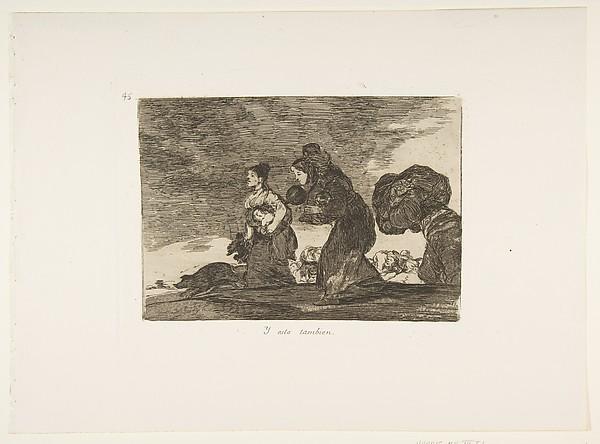
And this too
1810 (published 1863) · Etching, aquatint, drypoint, burin
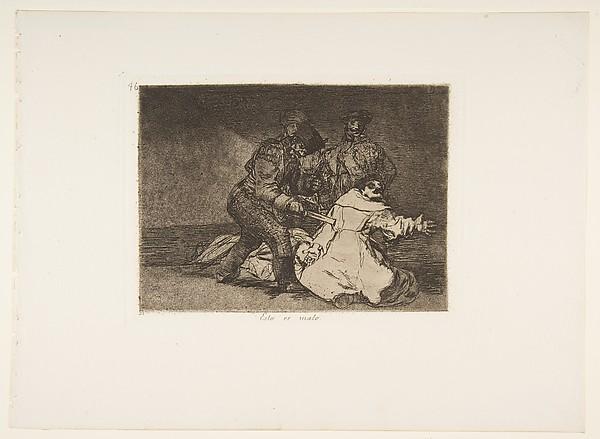
Plate 46 from "The Disasters of War" (Los Desastres de la Guerra): 'This is bad' (Esto es malo)
1810 (published 1863) · Etching, burnished aquatint, lavis, drypoint, burin, burnisher

Plate 56, To the cemetery (Al cementerio), from "The Disasters of War" (Los Desastres de la Guerra)
1810–11 · Etching, lavis, drypoint

Plate 18 from "The Disasters of War" (Los Desastres de la Guerra): Bury them and keep quiet (Enterrar y callar)
1810–20, published 1863 · Etching, burnished lavis, drypoint, burin
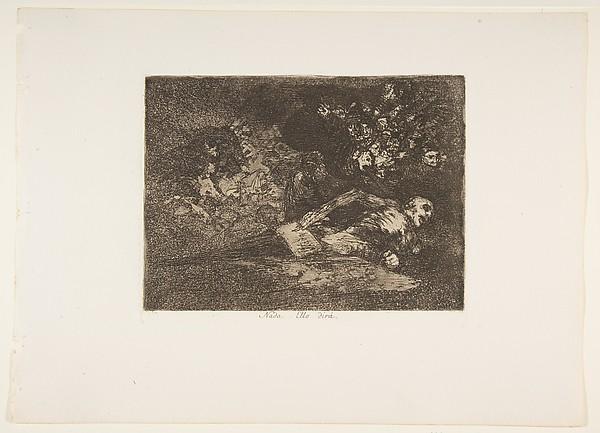
Nothing. The event will tell (Nada. Ello dirá)
1810–20, published 1863 · Etching, burnished aquatint, lavis, drypoint and burin

Plate 58 from 'The Disasters of War' (Los Desastres de la Guerra): 'It's no use crying out.' (No hay que dar voces.)
1811–12 · Etching, burnished aquatint, burin, burnisher (proof impression)

There Is No One to Help Them (No hay quien los socorra)
1811–12 (published 1863) · Etching, burnished aquatint, burin, burnisher

The Disasters of War (Los Desastres de la Guerra): Plate 58: 'It's no use crying out' (No hay que dar voces)
1811–12 (published 1863) · Etching, burnished aquatint, burin, burnisher

The Disasters of War: Appeals are in vain (Clamores en vano)
1811–12 (published 1863) · Etching, lavis, burin, burnisher

Plate 48 from "The Disasters of War" (Los Desastres de la Guerra): Cruel tale of woe! (Cruel Lástima!)
1811–12 (published 1863) · Etching, burnished lavis, burin, burnisher
Plate 54 from 'The Disasters of War' (Los Desastres de la Guerra): 'Appeals are in vain' (Clamores en vano)
1811–12 (published 1863) · Etching, lavis, burin, burnisher

Plate 61 from "The Disasters of War" (Los Desastres de la Guerra): 'Perhaps they are of another breed' (Si son de otro linage)
1811–12 (published 1863) · Etching, lavis, drypoint, burin, burnisher
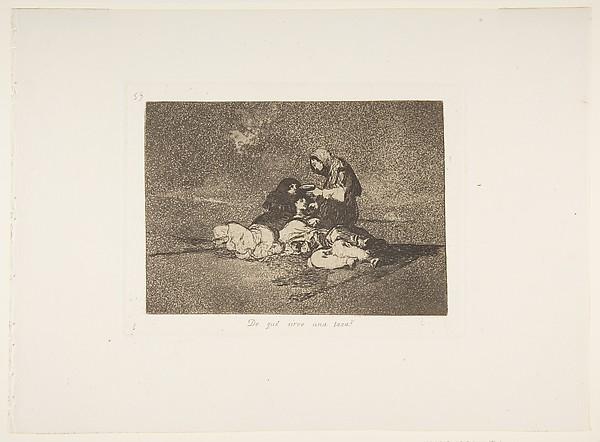
Plate 59 from "The Disasters of War" (Los Desastres de la Guerra): 'What is the use of a cup?' (De qué sirve una taza?)
1811–12 (published 1863) · Etching, burnished aquatint, lavis

Plate 63 from "The Disasters of War" (Los Desastres de la Guerra): 'Harvest of the dead' (Muertos recogidos)
1811–12 (published 1863) · Etching, burnished aquatint
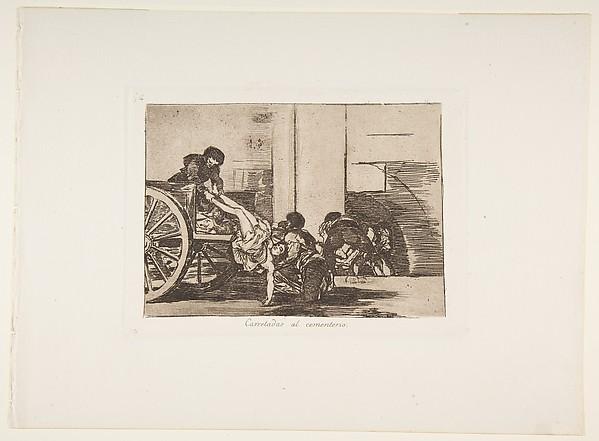
Plate 64 from 'The Disasters of War' (Los Desastres de la Guerra): 'Cartloads to the cemetery' (Carretadas al cementerio)
1811–12 (published 1863) · Etching, drypoint, burnished aquatint
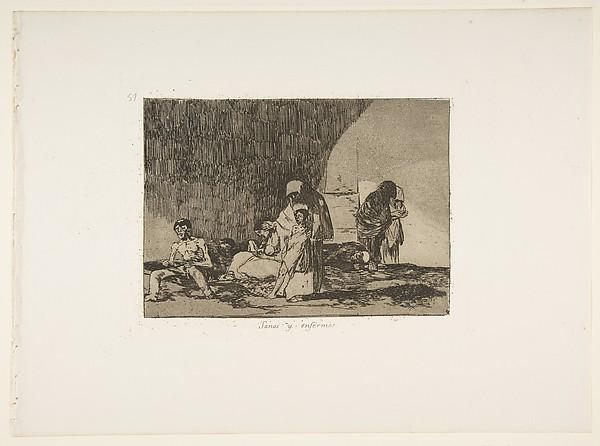
Plate 57 from "The Disasters of War" (Los Desastres de la Guerra): 'The healthy and the sick' (Sanos y enfermos)
1811–12 (published 1863) · Etching, burnished aquatint, burin, burnisher

Plate 56 from "The Disasters of War" (Los Desastres de la Guerra): 'To the cemetery' (Al cementerio)
1811–12 (published 1863) · Etching, lavis, drypoint
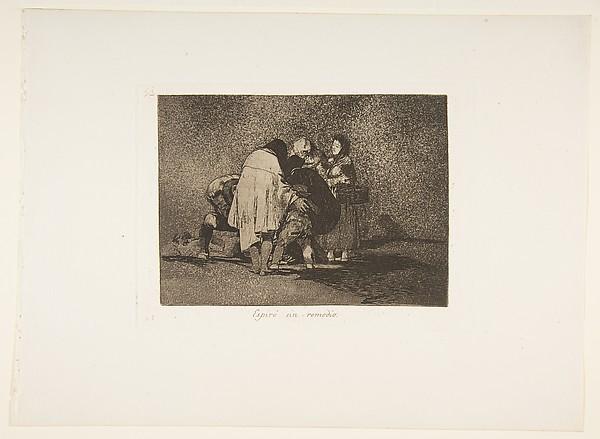
Plate 53 from "The Disasters of War" (Los Desastres de la Guerra): 'There was nothing to be done and he died' (Espiró sin remedio)
1811–12 (published 1863) · Etching, burnished aquatint, lavis, burin, burnisher
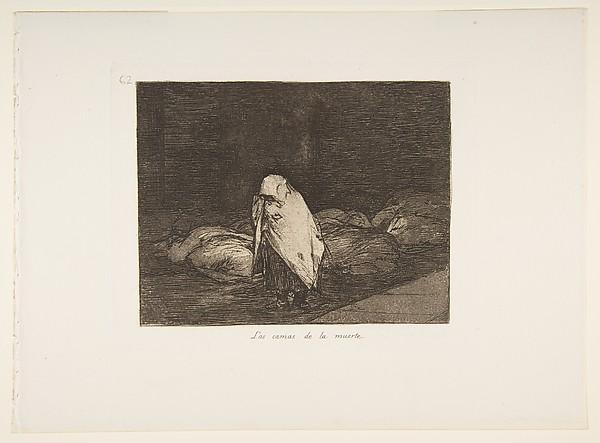
The Beds of Death
1811–12 (published 1863) · Etching, lavis, drypoint, burin, burnisher

Plate 55 from "The Disasters of War" (Los Desastres de la Guerra): 'The worst is to beg' (Lo peor es pedir)
1811–12 (published 1863) · Etching, lavis, burnisher
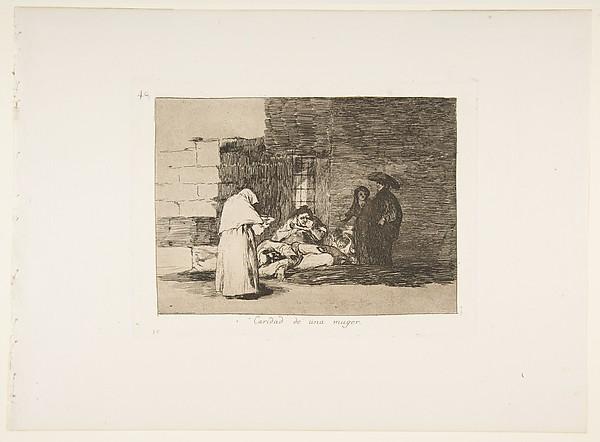
Plate 49 from "The Disasters of War" (Los Desastres de la Guerra): 'A woman's charity' (Caridad de una muger)
1811–12 (published 1863) · Etching, lavis, burin, burnisher

They do not arrive in time (No llegan á tiempo)
1811–12 (published 1863) · Etching, lavis, drypoint, burin
Plate 48 from 'The Disasters of War' (Los Desastres de la Guerra): 'Cruel tale of woe!' (Cruel Lástima!)
1811–12 (published 1863) · Etching, burnished lavis, burin, burnisher

Plate 50 from 'The Disasters of War' (Los Desastres de la Guerra): 'Unhappy mother!' (Madre Infeliz!)
1811–12 (published 1863) · Etching, burnished aquatint, drypoint

Thanks to the millet (Gracias á la almorta)
1811–12 (published 1863) · Etching, burnished aquatint
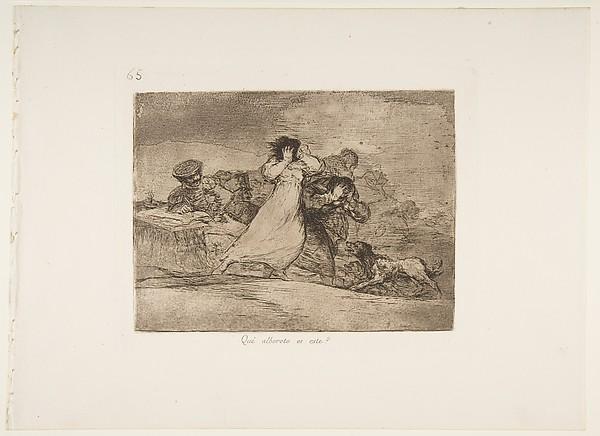
Plate 65 from 'The Disasters of War' (Los Desastres de la Guerra): 'What is this hubbub?' (Qué alboroto es este?)
1814–15 (published 1863) · Etching, burnished aquatint and/or lavis, burin, burnisher

Plate 72 from "The Disasters of War" (Los Desastres de la Guerra): 'The Consequences' (Las resultas)
1814–15 (published 1863) · Etching

Plate 69 from "The Disasters of War" (Los Desastres de la Guerra): 'Nothing. The event will tell' (Nada. Ello dirá)
1814–15 (published 1863) · Etching, burnished aquatint, lavis, drypoint, burin

The Disasters of War (Los Desastres de la Guerra), Plate 75: Charlatan's Show (Farándula de charlatanes)
1814–15 (published 1863) · Etching, aquatint or lavis, drypoint and burin

That is the worst of it! (Esto es lo peor!)
1814–15 (published 1863) · Etching, burnisher

Plate 71 from 'The Disasters of War' (Los Desastres de la Guerra): 'Against the common good' (Contra el bien general)
1814–15 (published 1863) · Etching, burnisher
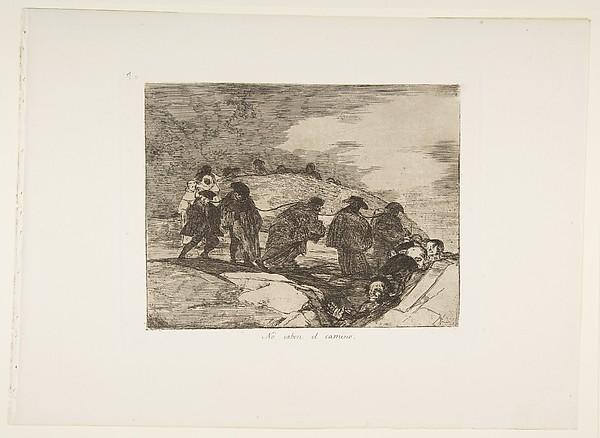
They do not know the way (No saben el camino), plate 70 from 'The Disasters of War' (Los Desastres de la Guerra)
1814–15 (published 1863) · Etching, drypoint, burin, burnisher

Plate 68 from "The Disasters of War" (Los Desastres de la Guerra): 'What madness!' (Que locura!)
1814–15 (published 1863) · Etching, lavis, burin

Plate 67 from "The Disasters of War" (Los Desastres de la Guerra): 'This is not less so' (Esta no lo es menos)
1814–15 (published 1863) · Etching, burnished aquatint, drypoint, burin and burnisher

Plate 66 from "The Disasters of War" (Los Desastres de la Guerra): 'Strange devotion!' (Extraña devocion!)
1814–15 (published 1863) · Etching, burnished aquatint and/or lavis, burin, burnisher

Plate 73 from 'The Disasters of War' (Los Desastres de la Guerra): 'Feline pantomime' (Gatesca pantomima)
1814–15 (published 1863) · Etching, burin, burnisher

Will she rise again? (Si resucitará?)
1814–15 (published 1863) · Etching, burnisher

The Carnivorous Vulture
1814–15 (published 1863) · Etching, drypoint(?), burin, burnisher

Plate 77 from 'The Disasters of War' (Los Desastres de la Guerra): 'May the cord break' (Que se rompe la cuerda)
1814–15 (published 1863) · Etching, burnished aquatint, drypoint

He defends himself well (Se defiende bien)
1814–15 (published 1863) · Etching, drypoint, burin, burnisher

Plate 79 from "The Disasters of War" (Los Desastres de la Guerra): 'Truth has died' (Murió la verdad)
1814–15 (published 1863) · Etching and burnisher
Plate 80 from "The Disasters of War" (Los Desastres de la Guerra): Will she rise again? (Si resucitará?)
1814–15 (published 1863) · Etching, burnisher
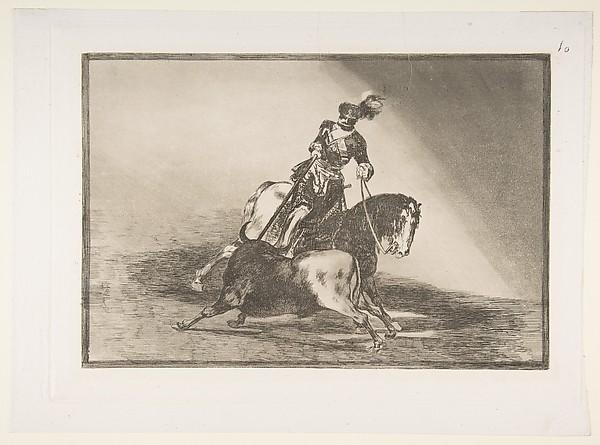
Charles V spearing a bull in the ring at Valladolid, plate 10 from "La Tauromaquia"
1816 · Etching, burnished aquatint, drypoint, burin
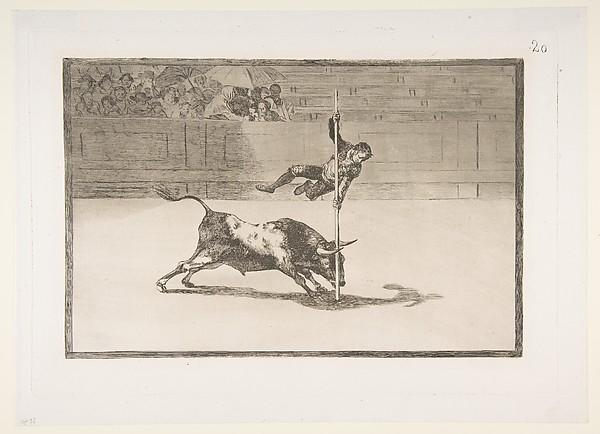
The agility and audacity of Juanito Apiñani in [the ring] at Madrid, plate 20 from "La Tauromaquia"
1816 · Etching, aquatint
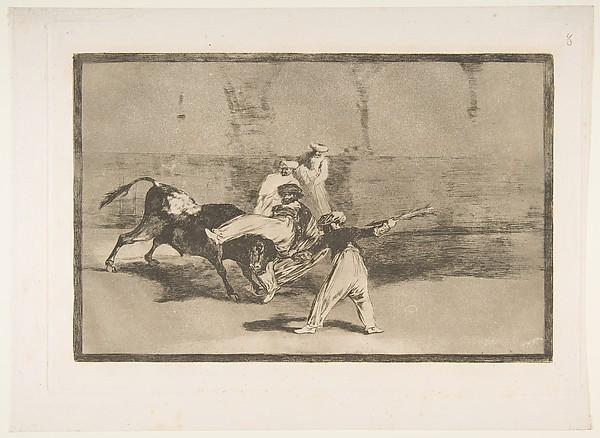
A Moor Caught by the Bull in the Ring, plate 8 from 'La Tauromaquia'
1816 · Etching, burnished aquatint, drypoint
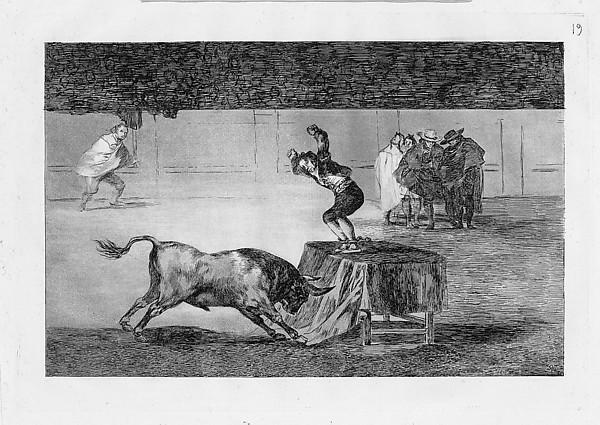
The Bullfight, plates 1-33 (La Tauromaquia)
1816 · Etching, aquatint, drypoint, burin, and burnishing
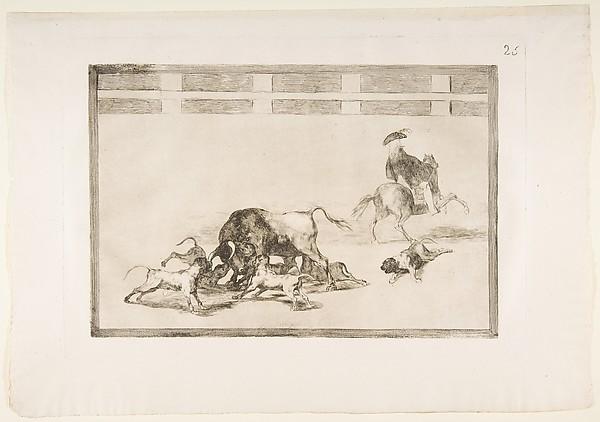
They loose dogs on the bull
1816 · Etching, burnished aquatint, drypoint

Plate 21 from "La Tauromaquia": Dreadful events in the front rows of the ring at Madrid and death of the mayor of Torrejon
1816 · Etching, burnished aquatint, lavis, drypoint, burin
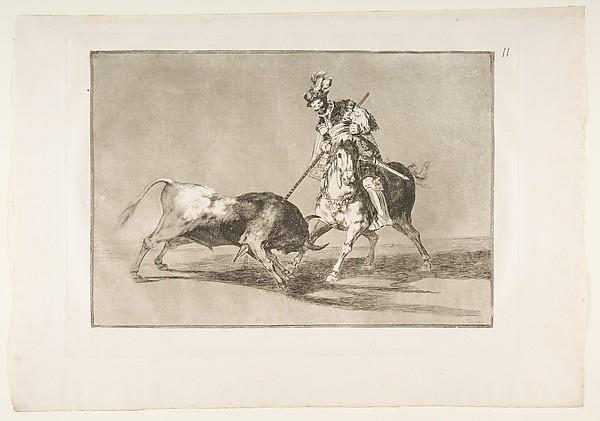
The Cid Campeador Spearing Another Bull
1816 · Etching, burnished aquatint, burin
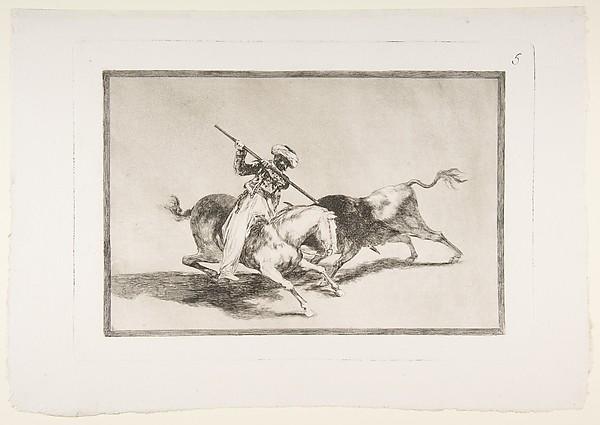
The spirited Moor Gazul is the first to spear bulls according to the rules
1816 · Etching, burnished aquatint, drypoint

The unlucky death of Pepe Illo in the ring at Madrid
1816 · Etching, burnished aquatint, drypoint, burin
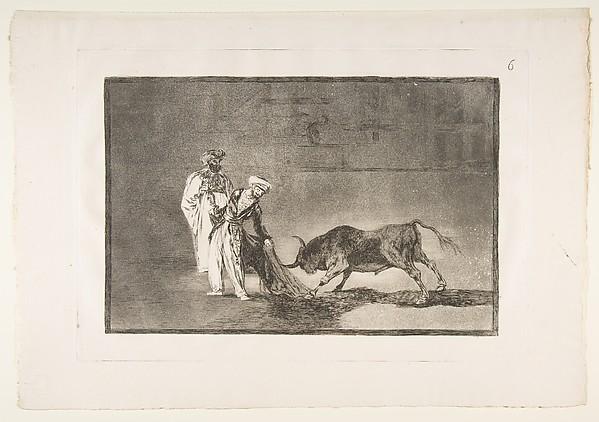
Plate 6 from 'La Tauromaquia': The Moors make a different play in the ring calling the bull with their burnous
1816 · Etching, burnished aquatint, drypoint
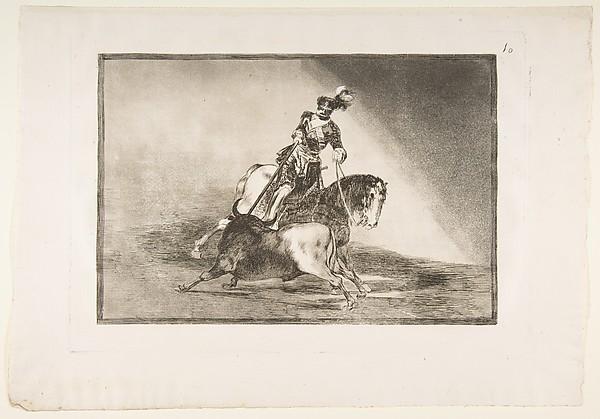
Plate 10 from 'La Tauromaquia': Charles V spearing a bull in the ring at Valladolid
1816 · Etching, burnished aquatint, drypoint, burin
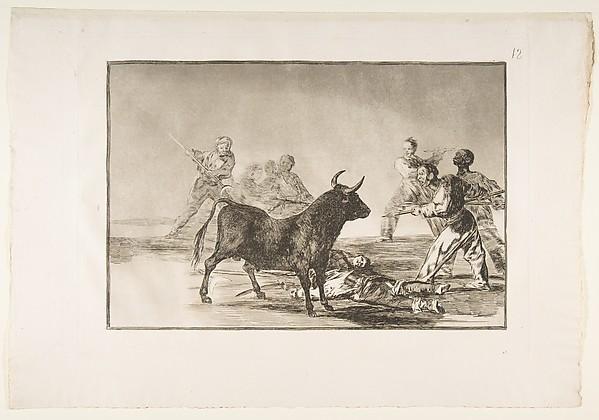
Plate 12 from 'La Tauromaquia': The crowd hamstrings the bull with lances, sickles, banderillas and other arms
1816 · Etching, aquatint, drypoint

Plate 15 from "La Tauromaquia": The famous Martincho places the banderillas playing the bull with the movement of his body
1816 · Etching, burnished aquatint, drypoint, burin

Plate 20 from "La Tauromaquia": The agility and audacity of Juanito Apiñani in [the ring] at Madrid
1816 · Etching, aquatint

Plate 23 from "La Tauromaquia": Mariano Ceballos, alias the Indian, kills the bull from his horse
1816 · Etching, burnished aquatint

Plate 27 from "La Tauromaquia": The celebrated picador, Fernando del Toro, draws the fierce beast on with his pike
1816 · Etching, aquatint, drypoint
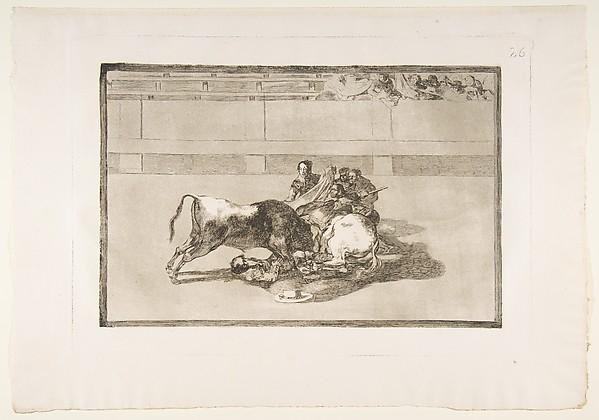
Plate 26 from 'La Tauromaquia': A picador is unhorsed and falls under the bull
1816 · Etching, burnished aquatint, drypoint

Plate 3 from 'La Tauromaquia': The Moors settled in Spain, giving up the superstitions of the Koran, adopted this art of hunting, and spear a bull in the open
1816 · Etching, burnished aquatint, drypoint, burin

Plate 1 from "La Tauromaquia": The way in which the ancient Spaniards hunted bulls on horseback in the open country
1816 · Etching, aquatint, drypoint

Plate 2 from "La Tauromaquia": Another way of hunting on foot
1816 · Etching, burnished aquatint, drypoint, burin
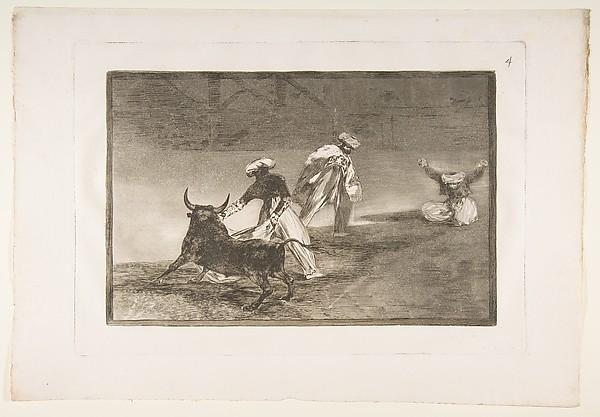
Plate 4 from 'La Tauromaquia': They play another with the cape in an enclosure
1816 · Etching, burnished aquatint, drypoint, burin
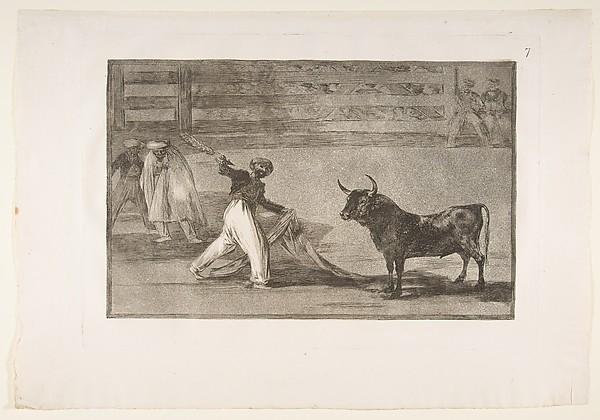
Plate 7 from 'La Tauromaquia': Origin of the harpoon or banderillas
1816 · Etching, burnished aquatint, burin
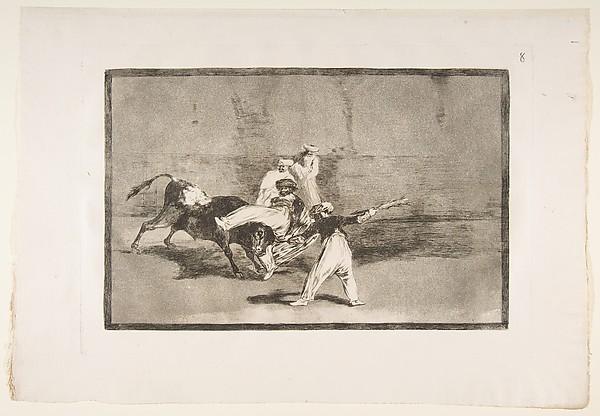
A Moor caught by the bull in the ring
1816 · Etching, burnished aquatint, drypoint

Plate 9 from "La Tauromaquia": A Spanish knight kills the bull after having lost his horse
1816 · Etching, burnished aquatint, burin
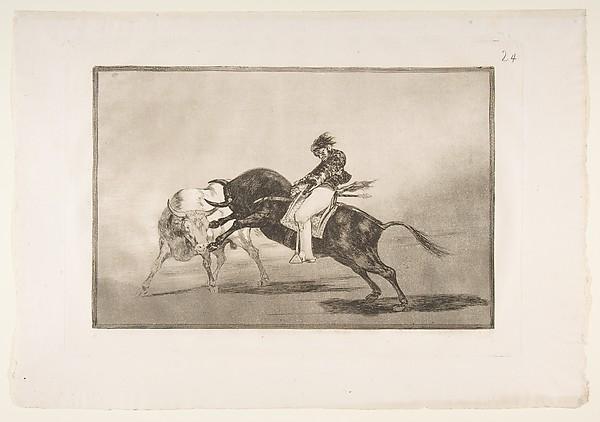
Plate 24 of "La Tauromaquia": The same Ceballos mounted on another bull breaks short spears in the ring at Madrid
1816 · Etching, burnished aquatint, drypoint, burin

Plate 22 from "La Tauromaquia": Manly courage of the celebrated Pajuelera in [the ring] at Zaragoza
1816 · Etching, burnished aquatint, drypoint, burin

Plate 19 of "La Tauromaquia": Another madness of his in the same ring
1816 · Etching, burnished aquatint, drypoint and burin

The daring of Martincho in the ring at Zaragoza
1816 · Etching, burnished aquatint, drypoint

The Moors use donkeys as a barrier to defend themselves against the bull whose horns have been tipped with balls
1816 · Etching, burnished aquatint, drypoint, burin
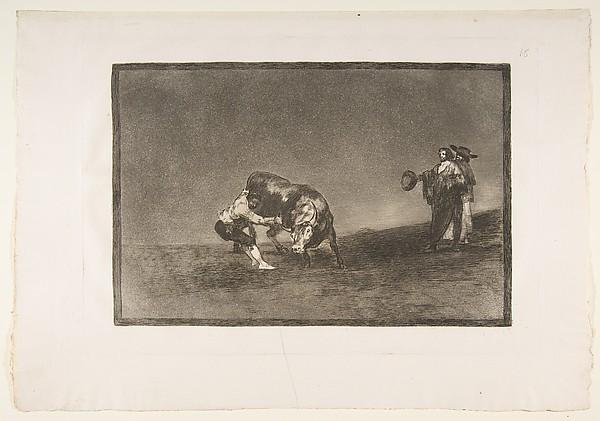
Plate 16 of "La Tauromaquia": The same man throws a bull in the ring at Madrid
1816 · Etching, burnished aquatint, drypoint, burin

Plate 14 from "La Tauromaquia": The very skillful student of Falces, wrapped in his cape, tricks the bull with the play of his body
1816 · Etching, aquatint, drypoint

Plate 13 of "La Tauromaquia": A Spanish mounted knight in the ring breaking short spears without the help of assistants
1816 · Etching, burnished aquatint, drypoint, burin

Plate 32 from "La Tauromaquia": Two teams of picadors thrown one after the other by a single bull
1816 · Etching, burnished aquatint, drypoint, burin
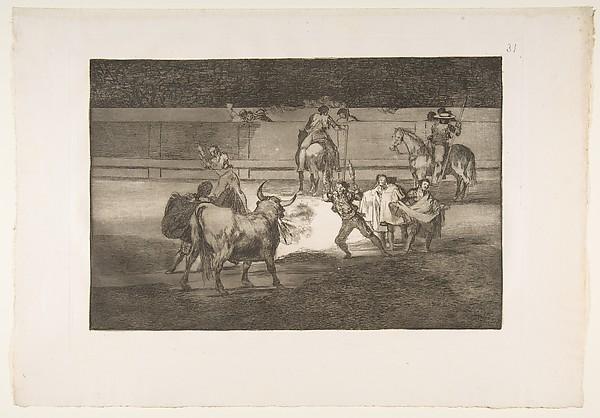
Plate 31 of "La Tauromaquia": Banderillas with firecrackers
1816 · Etching, burnished aquatint, drypoint, burin

Plate 30 from 'La Tauromaquia': Pedro Romero killing the halted bull
1816 · Etching, burnished aquatint, burin

Plate 29 of "La Tauromaquia": Pepe Illo making the pass of the 'recorte'
1816 · Etching, burnished aquatint, drypoint, burin

Plate 28 of "La Tauromaquia": The forceful Rendon stabs a bull with the pique, from which pass he died in the ring at Madrid
1816 · Etching, burnished aquatint, burin

An old woman spinning, spindle in her right hand, distaff in her left
1819 · Pen lithograph
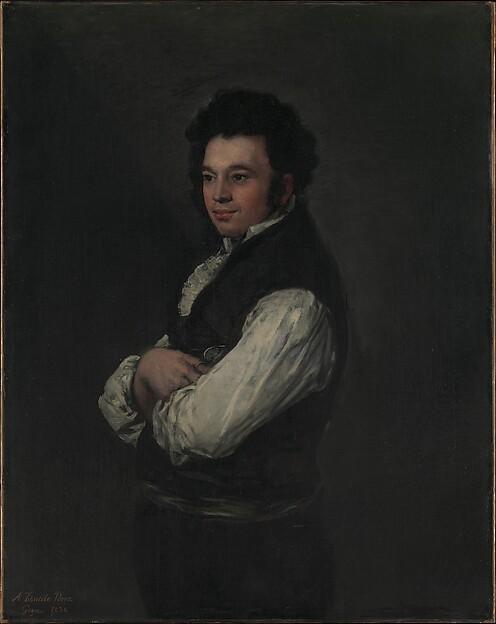
Tiburcio Pérez y Cuervo, the Architect
1820 · Oil on canvas
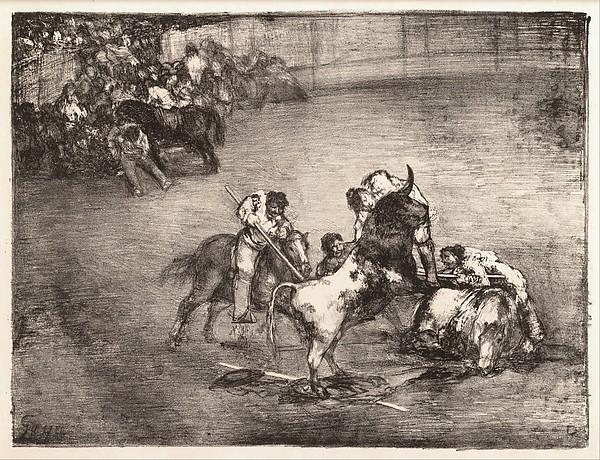
A picador caught by a bull, from the "Bulls of Bordeaux"
1825 · Crayon lithograph and scraper
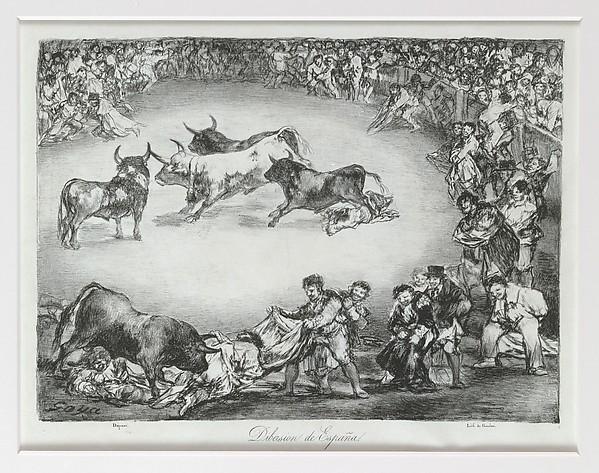
Spanish Entertainment from the 'Bulls of Bordeaux'
1825 · Lithograph

Bullfight in a divided ring
1825 · Lithograph
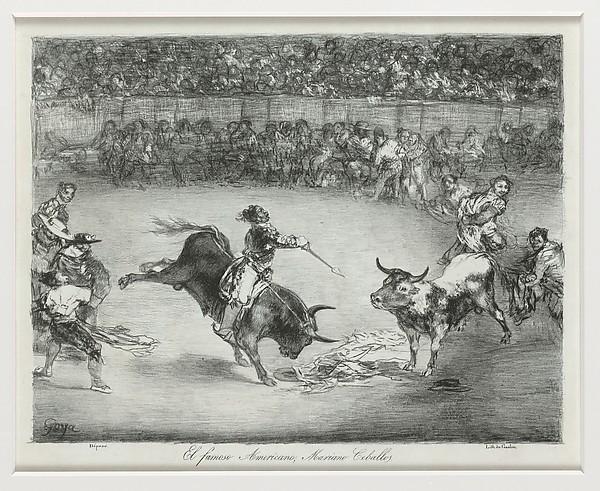
Mariano Ceballos riding a bull from the 'Bulls of Bordeaux'
1825 · Crayon lithograph and scraper
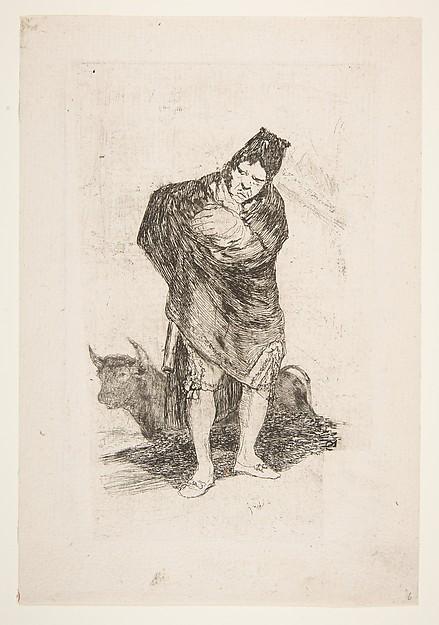
The cloaked man
1859 · Etching, drypoint

A Maja standing against a dark background with figures
1859 · Etching, aquatint

Title page to "The Disasters of War" (Los Desastres de la Guerra) and two pages of letterpress description of the series
1863 · Offset lithograph, letterpress
Title page for "Los Proverbios" (Disparates)
1864 · Lithographic offset

Plate 36 from "Los Caprichos": A bad night (Mala noche) (1881–86)
1881–86 · Etching, burnished aquatint
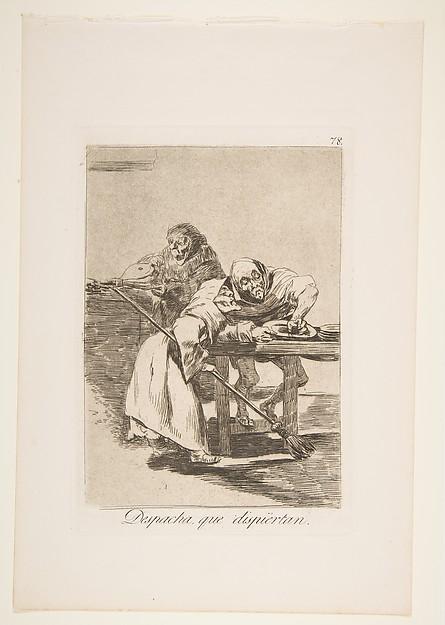
Plate 78 from "Los Caprichos": Be quick, they are waking up (Despacha, que dispiertan)
1881–86 · Etching, burnished aquatint

A Maja standing with hands on her hips
19th century ? · Etching, drypoint
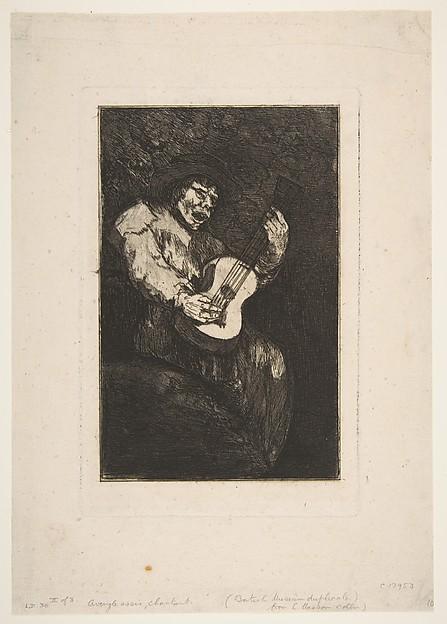
Blind Singer
Ca. 1824–28 (published second half of the 19th century) · Etching, aquatint, drypoint, burin on laid paper
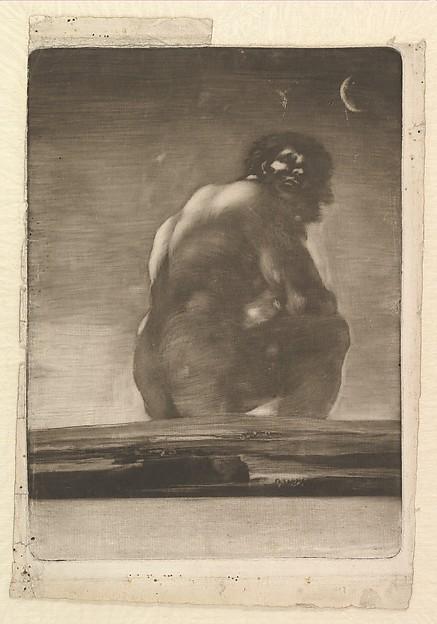
Seated Giant
by 1818 (possibly 1814–18) · Burnished aquatint, scaper, roulette, lavis (along the top of the landscape and within the landscape)
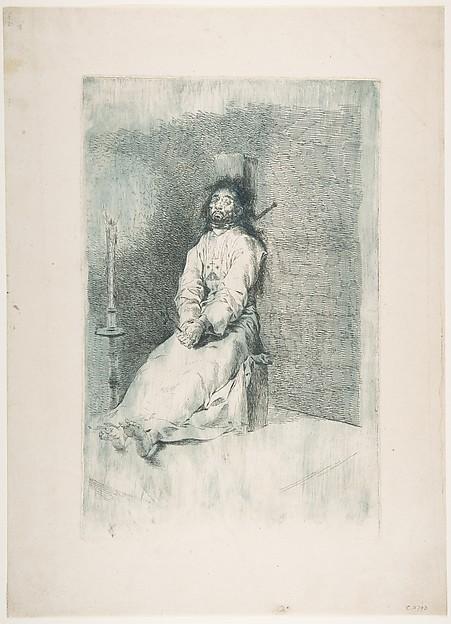
Garroted Man
ca. 1775–78 · Etching, printed in blue (working proof)
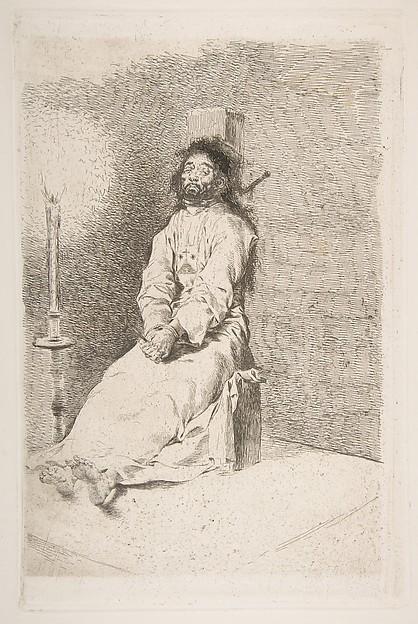
The garroted man (El agarrotado)
ca. 1775–78 (published 1868) · Etching, burin
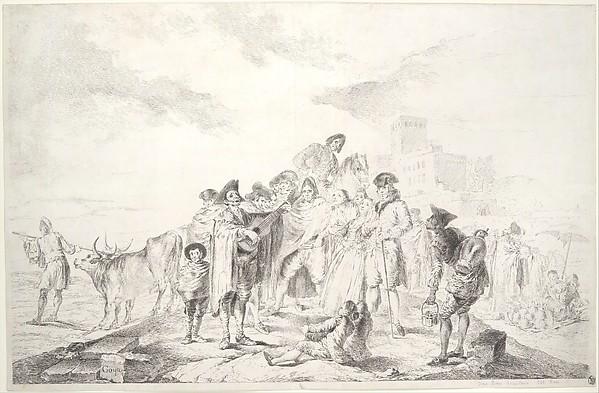
Blind Guitarist
ca. 1778 · Etching
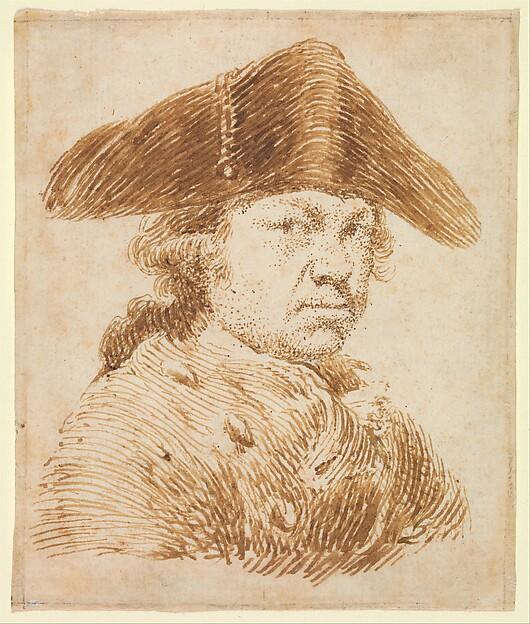
Self-Portrait in a Cocked Hat
ca. 1790 · Pen and brown (iron gall?) ink on paper
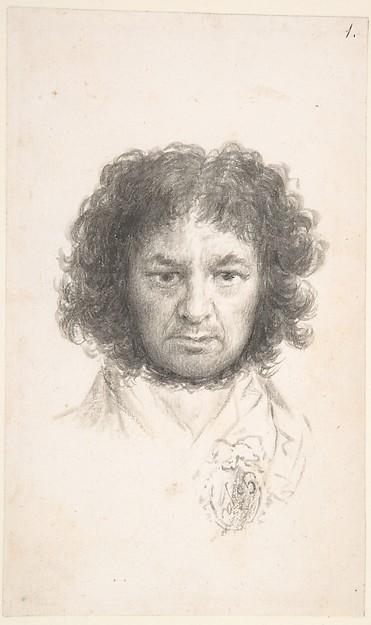
Self-Portrait (ca. 1796)
ca. 1796 · Brush and point of brush, carbon black ink
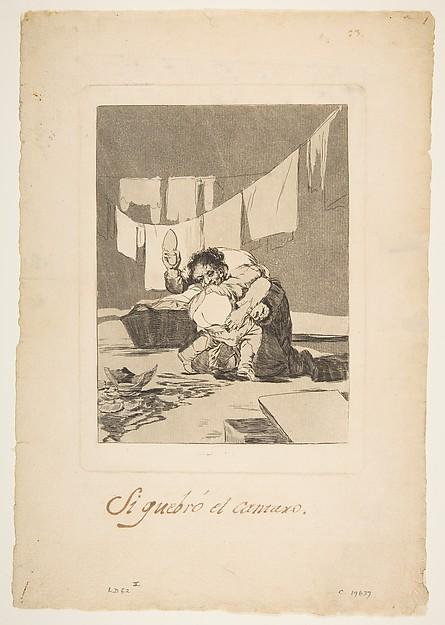
Plate 25: If he broke the pot (Si quebró el cantaro), from "Los Caprichos"
ca. 1797–98 · Etching, aquatint, before drypoint
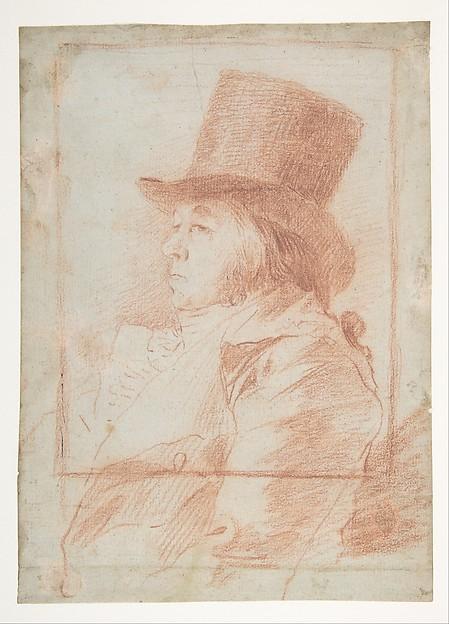
Self-Portrait; wearing a top hat facing left within a drawn frame (recto); two studies of his face (verso)
ca. 1797–98 · Red chalk (recto), pen and ink and red chalk (verso) on laid paper
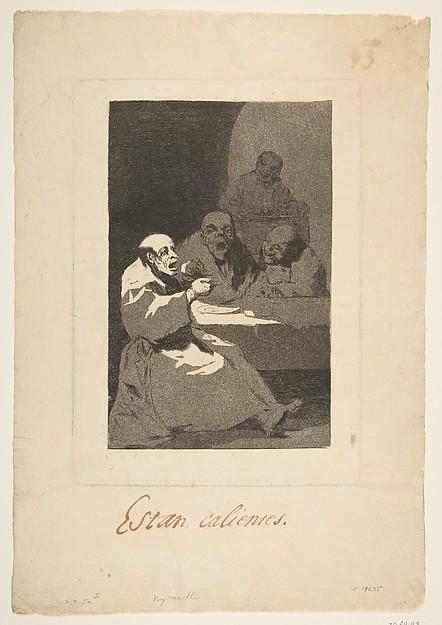
They are Hot (Estan Calientes), from "Los Caprichos"
ca. 1798 · Etching, aquatint, before burnishing of the aquatint
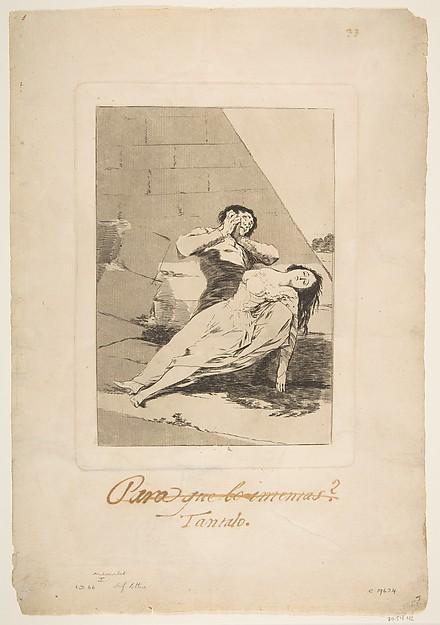
Plate 9: Tantalus (Tantalo), from "Los Caprichos"
ca. 1798–99 · Etching, burnished aquatint
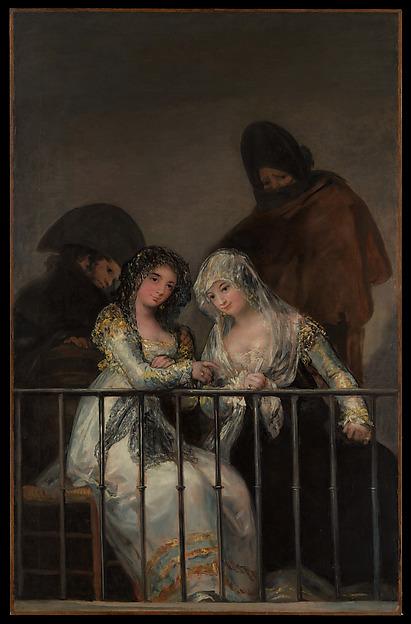
Majas on a Balcony
ca. 1800–1810 · Oil on canvas
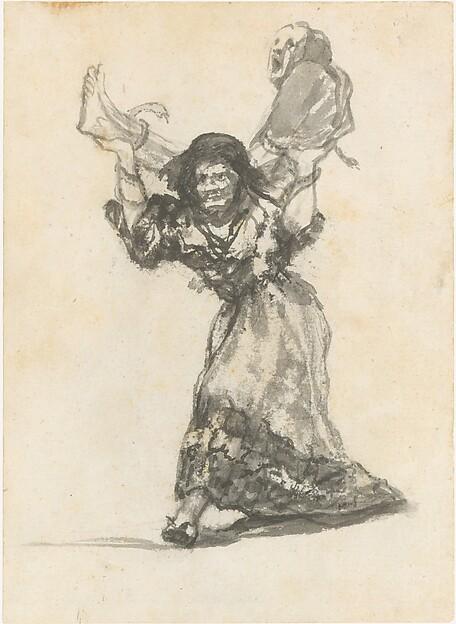
Unholy Union
ca. 1801–3 or ca. 1813–19 · Brush with Indian ink and wash and traces of pen and ink on laid paper

Narcisa Barañano Gayoso de Goicoechea
ca. 1805 · Oil on canvas
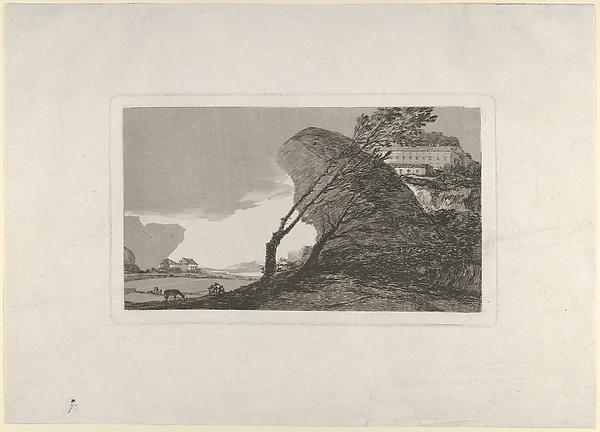
Landscape (ca. 1807–10)
ca. 1807–10 · Etching, aquatint

Plate 17: They do not agree (No se convienen), from "The Disasters of War" (Los Desastres de la Guerra)
ca. 1810 · Etching, drypoint, burin, burnisher (proof impression)
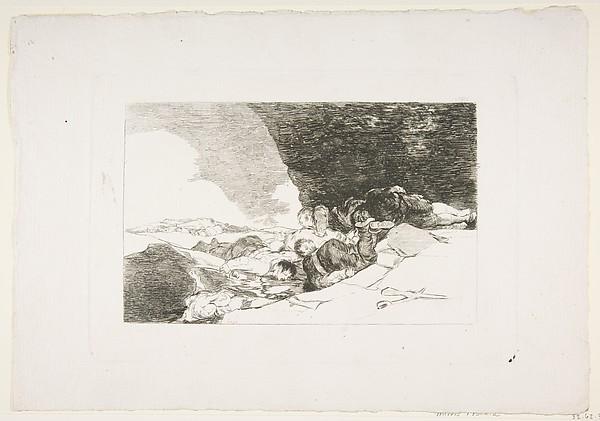
Plate 23 from "The Disasters of War" (Los Desastres de la Guerra): 'The Same Elsewhere' (Lo mismo en otras partes)
ca. 1810 · Etching, drypoint, burin (proof impression)
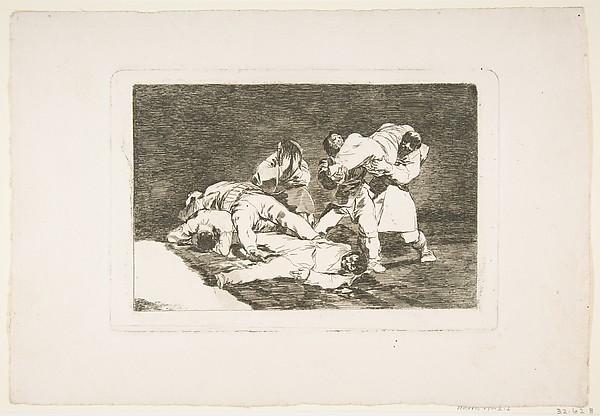
Plate 21 from "The Disasters of War" (Los Desastres de la Guerra): 'It will be the same' (Será lo mismo) (ca. 1810)
ca. 1810 · Etching (before lavis is added)
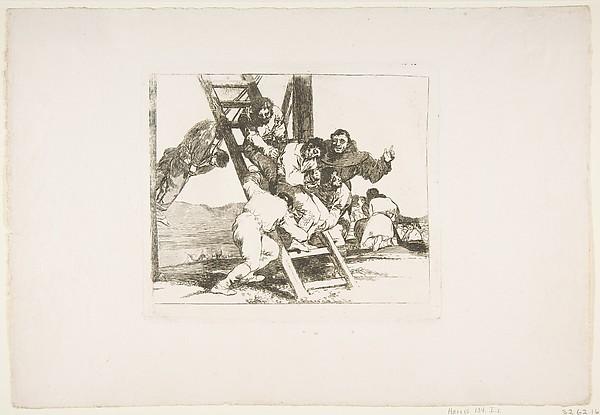
Plate 14 from "The Disasters of War" (Los Desastres de la Guerra): 'It's a Hard Step!' (Duro es el paso!)
ca. 1810 · Etching, drypoint, burin (working proof)
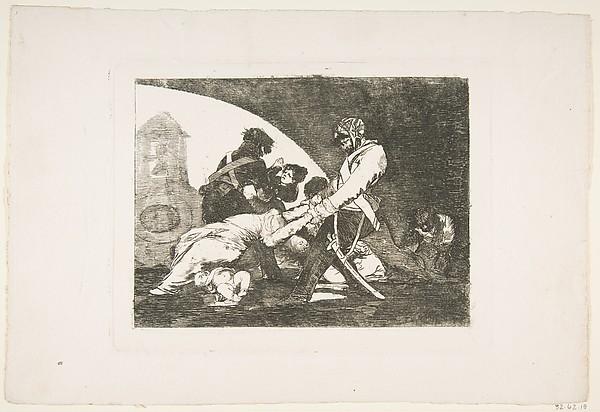
Neither do these
ca. 1810 · Etching, drypoint, burin (working proof)
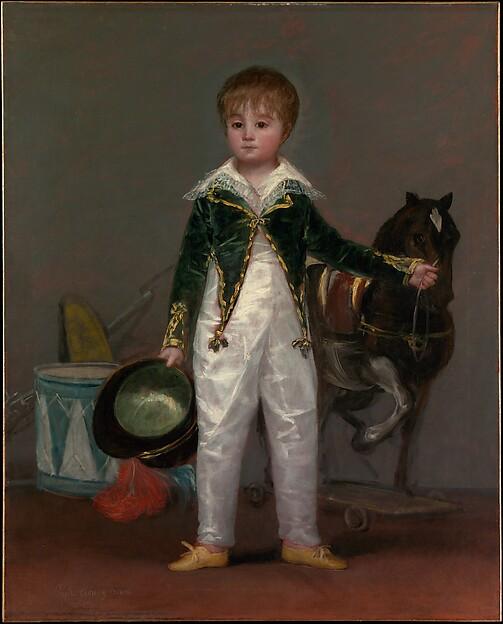
José Costa y Bonells (died 1870), Called Pepito
ca. 1810 · Oil on canvas
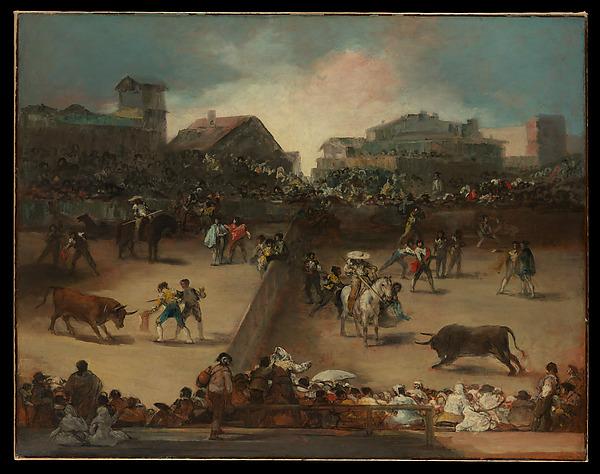
Bullfight in a Divided Ring
ca. 1810 · Oil on canvas
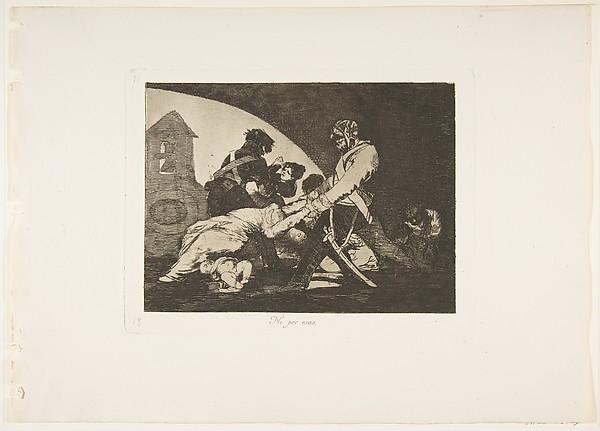
Plate 11 from "The Disasters of War" (Los Desastres de la Guerra): Not even in that way (Ni por esas)
ca. 1810 (published 1863) · Etching, lavis, drypoint, burin
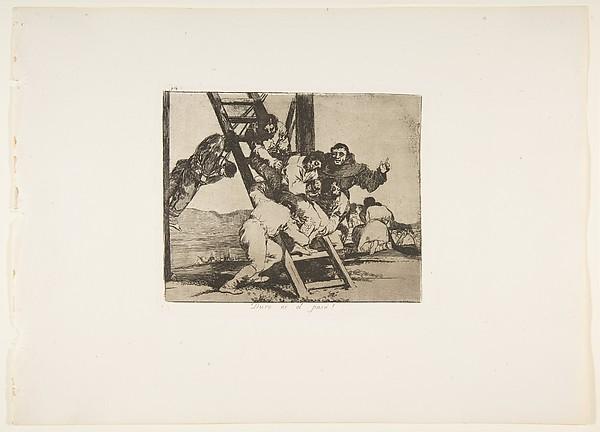
Plate 14 from "The Disasters of War" (Los Desastres de la Guerra): It's a hard step! (Duro es el paso!)
ca. 1810 (published 1863) · Etching, burnished lavis, drypoint, burin
Plate 14 from 'The Disasters of War' (Los Desastres de la Guerra): 'It's a hard step!' (Duro es el paso!)
ca. 1810 (published 1863) · Etching, burnished lavis, drypoint, burin
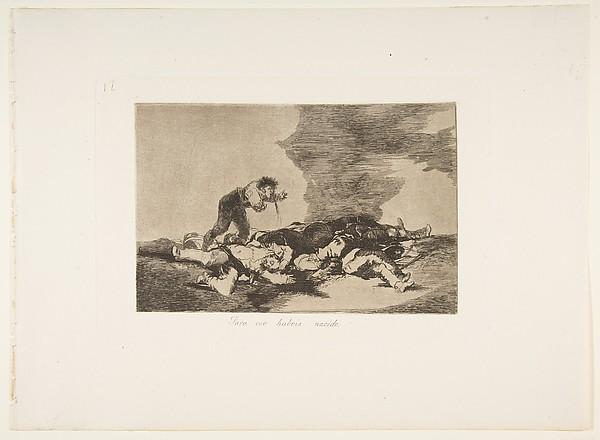
Plate 12 from "The Disasters of War" (Los Desastres de la Guerra): 'This is what you were born for' (Para eso habeis nacido)
ca. 1810 (published 1863) · Etching, lavis, drypoint, burin
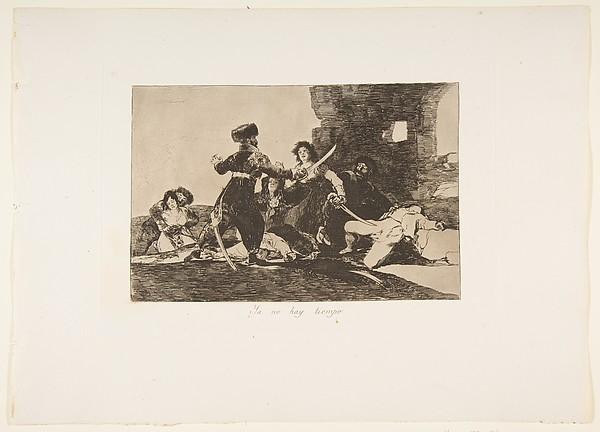
There isn't time now (Ya no hay tiempo)
ca. 1810 (published 1863) · Etching, lavis, drypoint, burin, burnisher
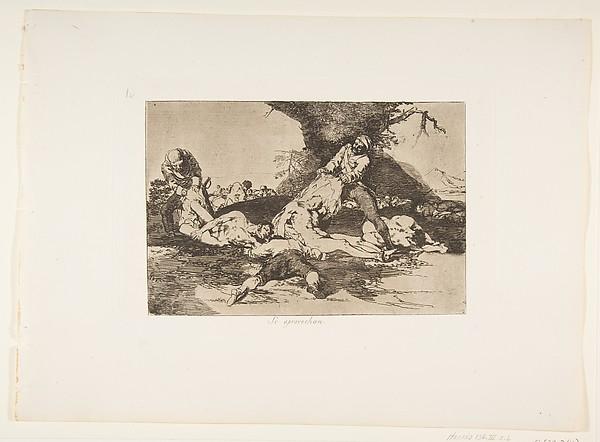
They make use of them (Se aprovechan)
ca. 1810 (published 1863) · Etching, lavis, drypoint, burin, burnisher
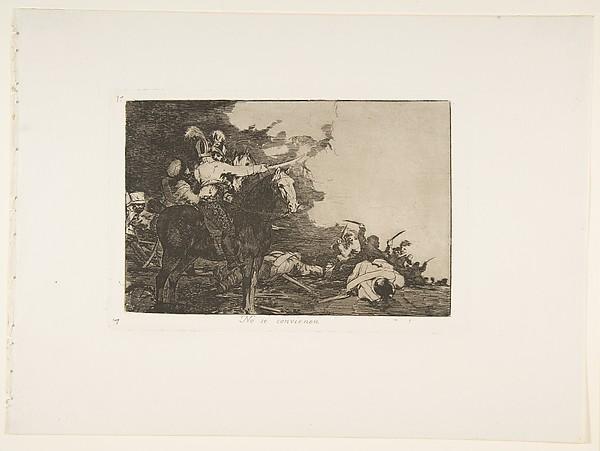
They do not agree (No se convienen)
ca. 1810 (published 1863) · Etching, drypoint, burin, burnisher
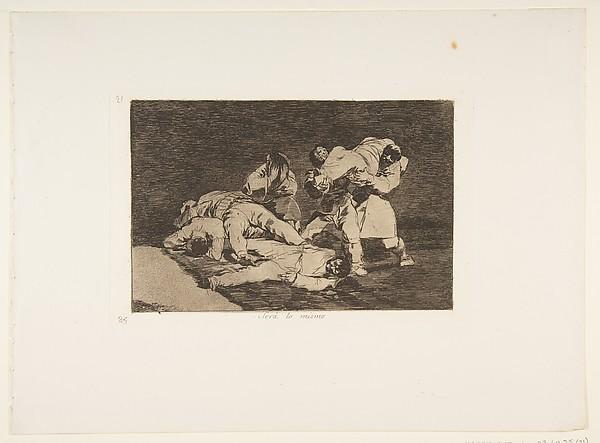
Plate 21 from "The Disasters of War" (Los Desastres de la Guerra): 'It will be the same' (Será lo mismo) (ca. 1810 (published 1863))
ca. 1810 (published 1863) · Etching, burnished lavis
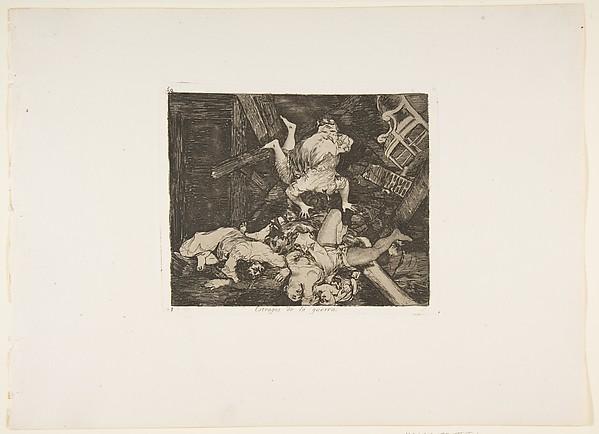
Plate 30 from "The Disasters of War" (Los Desastres de la Guerra): Ravages of war (Estragos de la guerra)
ca. 1810 (published 1863) · Etching, drypoint, burin, burnisher
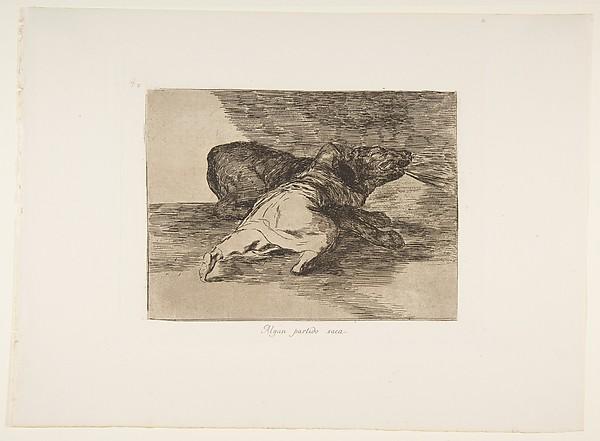
Plate 40 from 'The Disasters of War' (Los Desastres de La Guerra): 'He gets something out of it' (Algun partido saca)
ca. 1810 (published 1863) · Etching, drypoint, burin
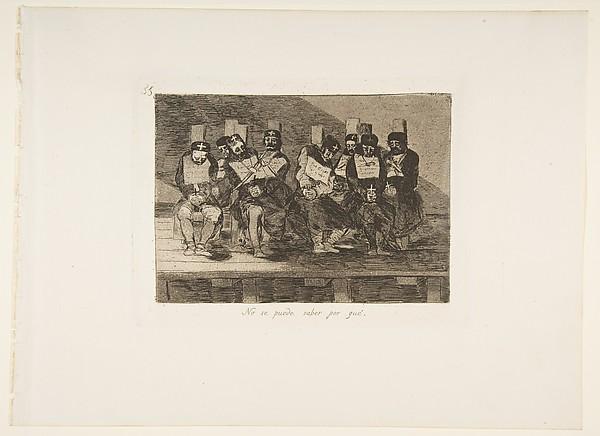
Plate 35 from "The Disasters of War" (Los Desastres de La Guerra): 'One Can't Tell Why' (No se puede saber por qué)
ca. 1810 (published 1863) · Etching, burnished lavis, drypoint, burin
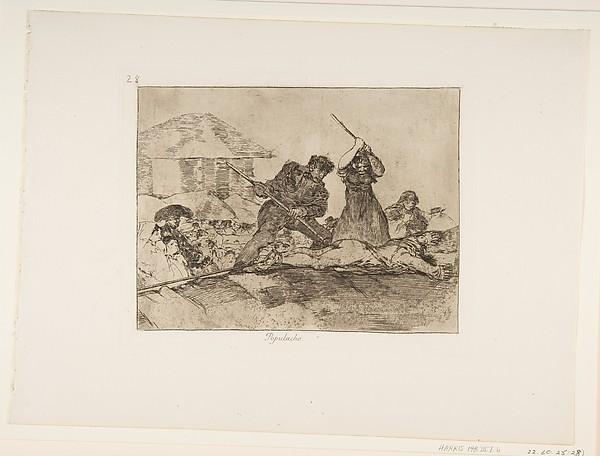
Plate 28 from "The Disasters of War" (Los Desastres de la Guerra): 'Rabble' (Populacho)
ca. 1810 (published 1863) · Etching, lavis, drypoint, burin, burnisher
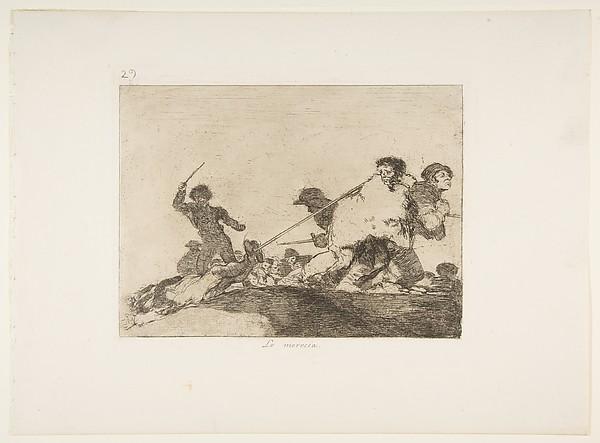
Plate 29 from "The Disasters of War" (Los Desastres de la Guerra): 'He deserved it' (Lo merecia)
ca. 1810 (published 1863) · Etching, drypoint, burin, burnisher
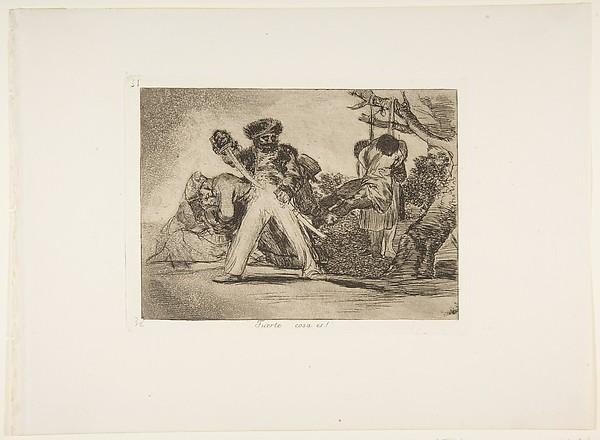
That's tough! (Fuerte cosa es!)
ca. 1810 (published 1863) · Etching, burnished aquatint, drypoint

They make use of them (Se aprovechan), Plate 16 from 'The Disasters of War'
ca. 1810 (published in 1863) · Etching, lavis, drypoint, burin, burnisher

Crowd in a Park; page 31 from the "Images of Spain" album (F)
ca. 1812–20 · Brush, bistre and brown ink wash, traces of black chalk
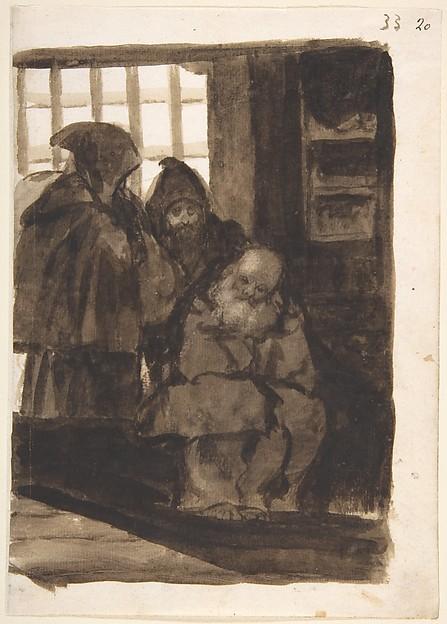
Monks in an interior (a cell?); page 33 from the "Images of Spain" Album (F)
ca. 1812–20 · Brush and brown wash
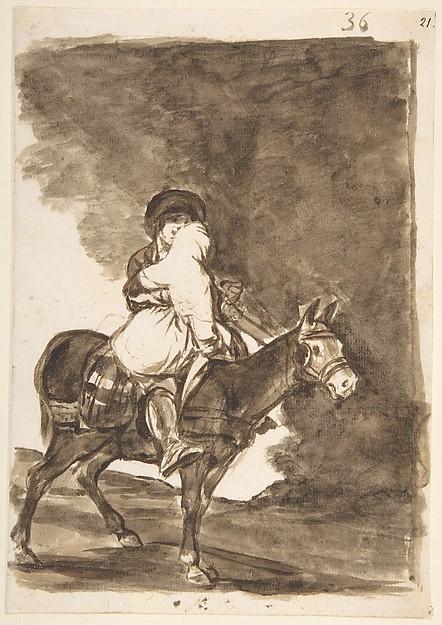
A man and a woman riding a mule; page 36 from the "Images of Spain" Album (F)
ca. 1812–20 · Brush and point of brush, gray washes, over touches or red chalk
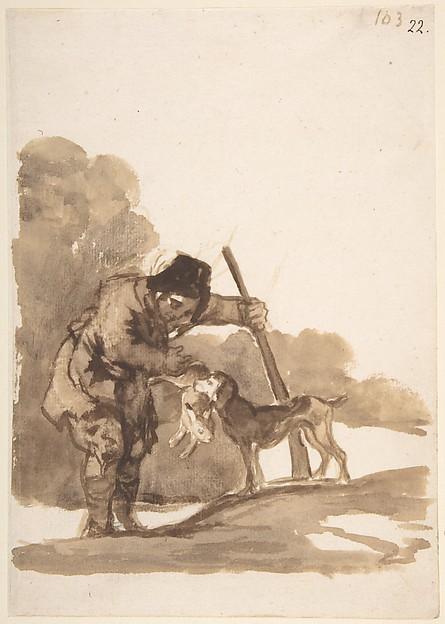
Rabbit hunter with a Retriever; folio 103 from the "Images of Spain" Album (F)
ca. 1812–20 · Brush and brown wash
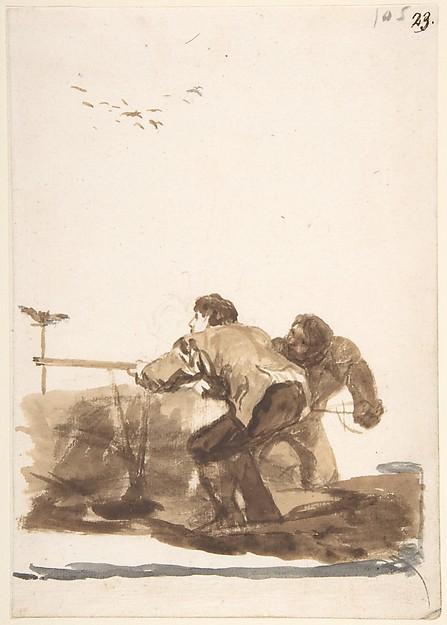
Men Hunting; page 105 from the "Images of Spain" Album (F)
ca. 1812–20 · Brush, brown and gray washes, traces of black chalk
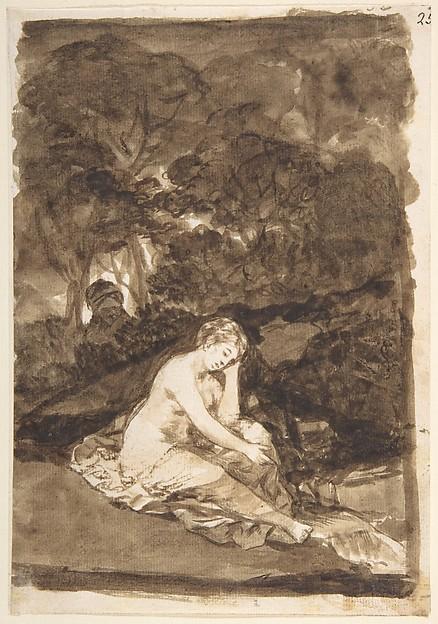
A partly naked woman seated by a stream; page 32 from the "Images of Spain" Album (F)
ca. 1812–20 · Brush, bistre and wash, traces of red chalk
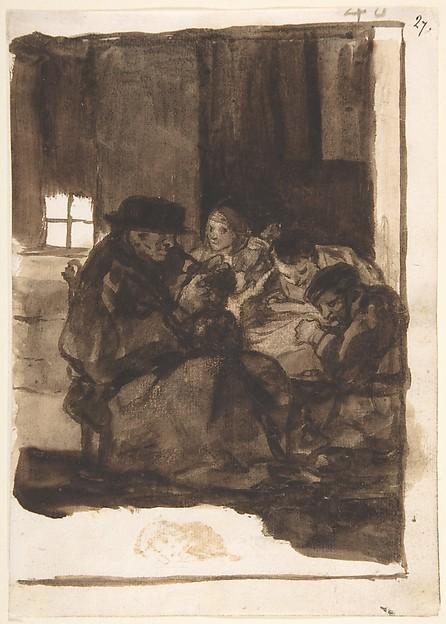
An Old Man Delousing a Boy Accompanied by Three Figures, a Cat in the Foreground; page 40 from the 'Images of Spain' Album (F)
ca. 1812–20 · Brush, brown wash

Figures inside a church; page 41 from the "Images of Spain" Album (F)
ca. 1812–20 · Brush and gray and brown wash, with scraping

A Crowd Forming a Circle; page 42 from the "Images of Spain" album (F)
ca. 1812–20 · Brush, brown ink washes, traces of black chalk
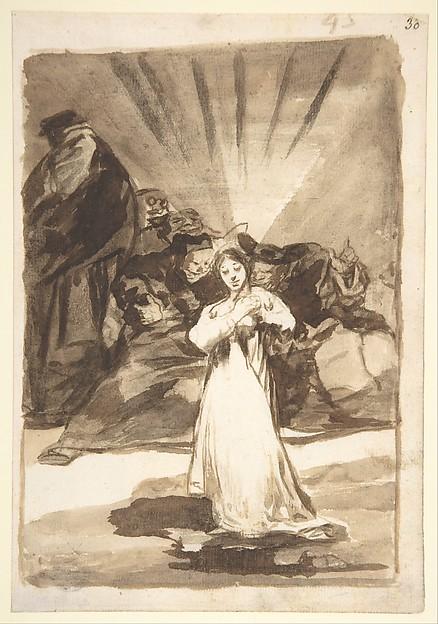
A radiant female figure beset by dark spirits; page 45 from the "Images of Spain" Album (F)
ca. 1812–20 · Brush and point of brush, brown and gray washes, over touches or chalk
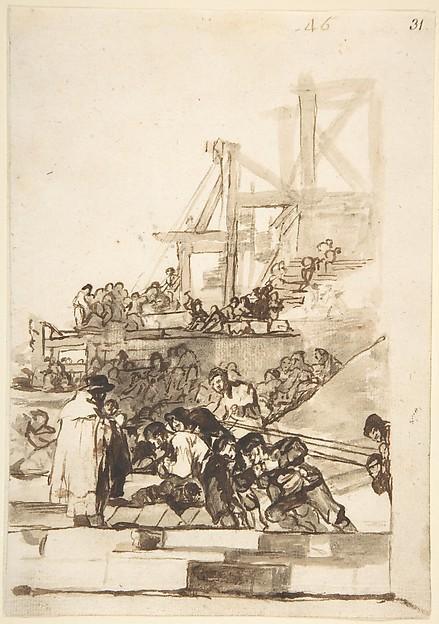
Construction; page 46, from "Images of Spain" Album (F)
ca. 1812–20 · Brush and gray-brown and irongall wash, with scraping
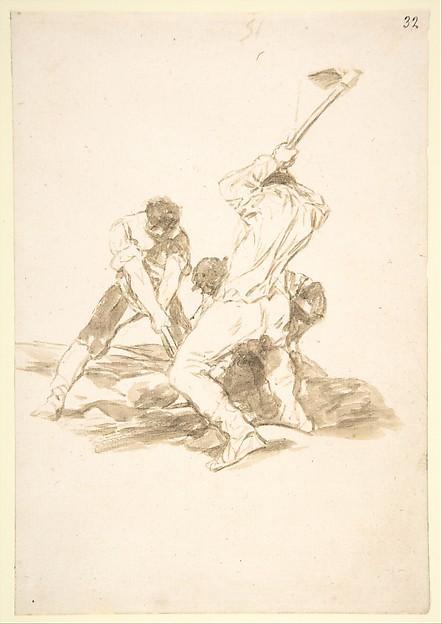
Three men digging; folio 51 from the "Images of Spain" Album (F)
ca. 1812–20 · Brush with brown and gray-brown wash
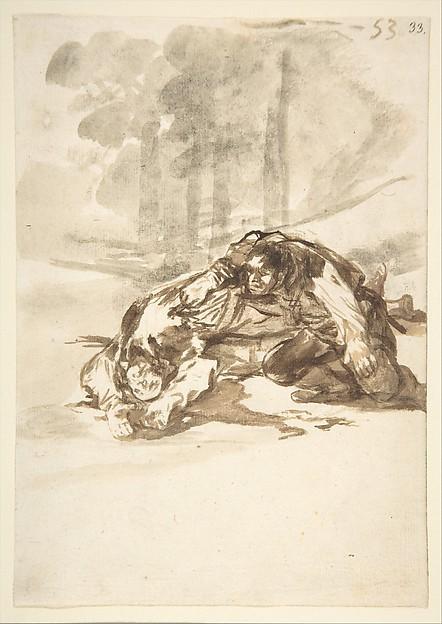
A man stabbing another; folio 53 from the "Images of Spain" Album (F)
ca. 1812–20 · Brush and gray and brown washes

A woman kneeling before an old man; page 55 from the "Images of Spain" Album (F)
ca. 1812–20 · Brush and point of brush, brown ink and gray chalk-and-ink washes
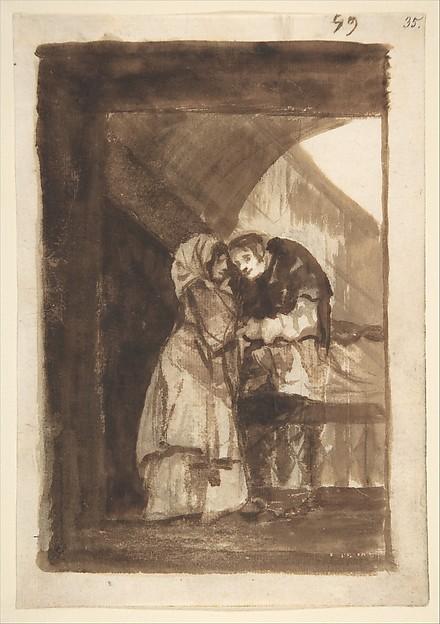
A woman talking to a priest in a covered archway; folio 59 from the "Images of Spain" Album (F)
ca. 1812–20 · Brush and brown wash
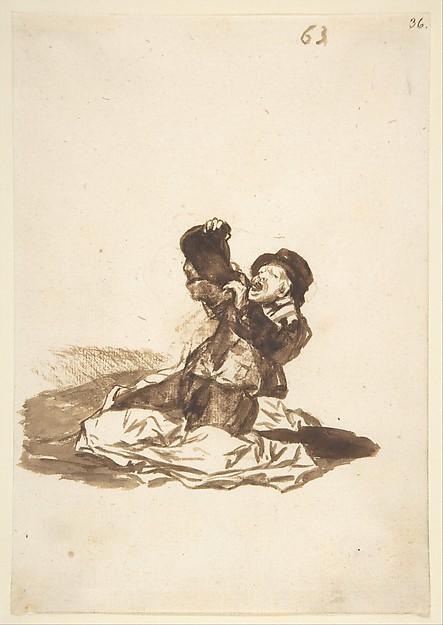
A man on the ground drinking from a wine skin; folio 63 from the 'Images of Spain' Album (F)
ca. 1812–20 · Brush and brown wash over traces of black chalk
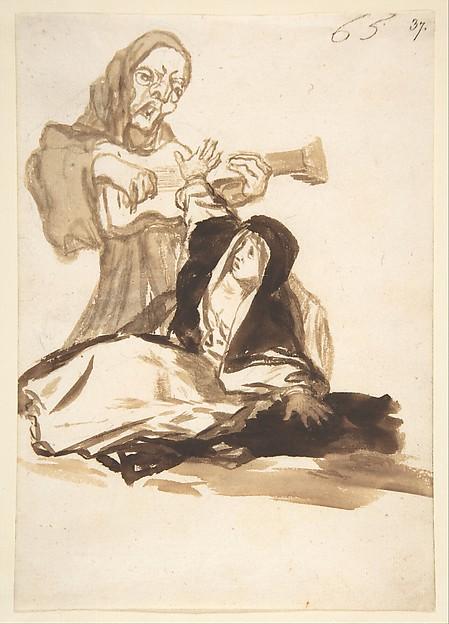
A Nun Frightened by a Ghost Playing a Guitar; page 65 from the "Images of Spain" Album (F)
ca. 1812–20 · Brush and point of brush, brown ink washes, black chalk
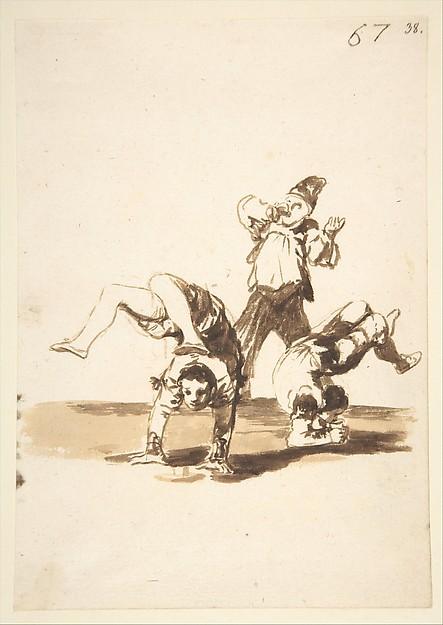
Three acrobats; page 67 from the "Images of Spain" Album (F)
ca. 1812–20 · Brush and point of brush, brown ink washes, traces of red and black chalk

Beggar with a staff in his right hand; folio 69 from the "Images of Spain" Album (F)
ca. 1812–20 · Brush and brown wash

Beggar with a staff in his left hand; folio 70 from the "Images of Spain" Album (F)
ca. 1812–20 · Brush and brown wash
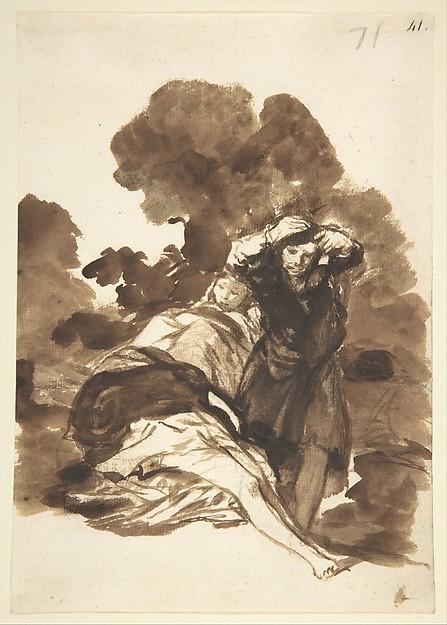
Figures waking from sleep (?); page 71 from the "Images of Spain" Album (F)
ca. 1812–20 · Brush, brown wash, touches of black chalk

A woman pulling at her hair accompanied by a group of figures; page 76 from the "Images of Spain" Album (F)
ca. 1812–20 · Brush, brown ink washes, traces of black chalk
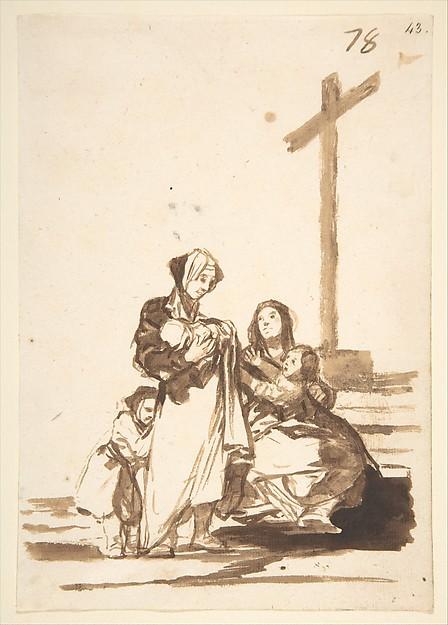
Women and Children near a Cross; folio 78 from the 'Images of Spain' Album (F)
ca. 1812–20 · Brush and brown wash

Prisoners in irons; page 80 from the "Images of Spain" Album (F)
ca. 1812–20 · Brush, brown ink washes, over touche of black chalk

A man breaking up a fight; page 82 from the "Images of Spain" Album (F)
ca. 1812–20 · Brush, brown ink washes, touches of black chalk

A woman attacking a sleeping man; page 87 from the "Images of Spain" Album (F)
ca. 1812–20 · Brush, brown ink washes, traces of black chalk
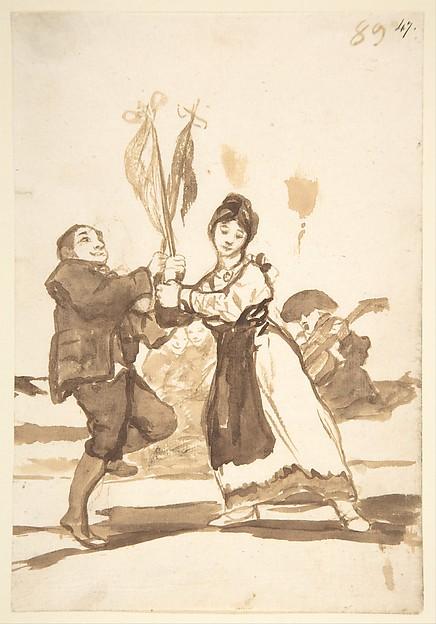
A country dance; page 89 from the "Images of Spain" Album (F)
ca. 1812–20 · Brush, brown ink washes, traces of black chalk
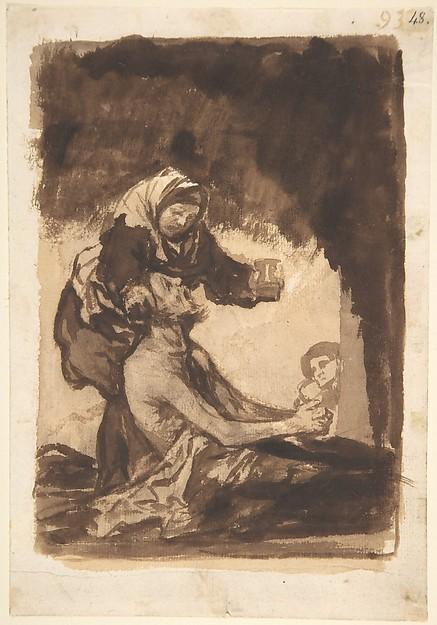
A woman giving a mug to an old man; folio 93 from the 'Images of Spain' Album (F)
ca. 1812–20 · Brush, brown ink washes and scraping, touches of black chalk

Revenge on Constable Lampiños; page 86 from the "Images of Spain" Album (F)
ca. 1812–20 · Brush, brown ink washes, touches of gray ink
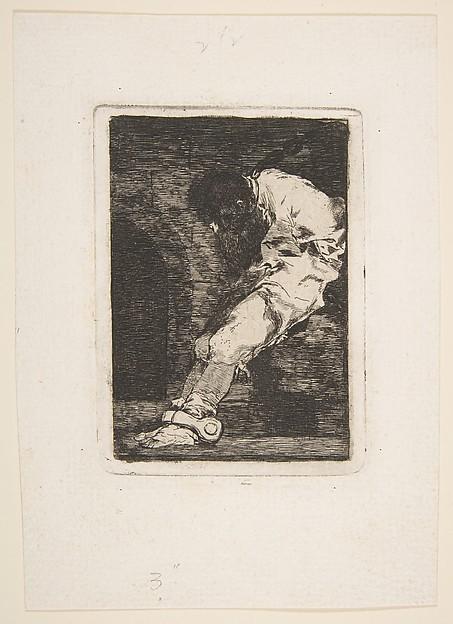
If he is guilty, let him die quickly (Si es deliquente qe, muera presto)
ca. 1815 (printed around 1859) · Etching
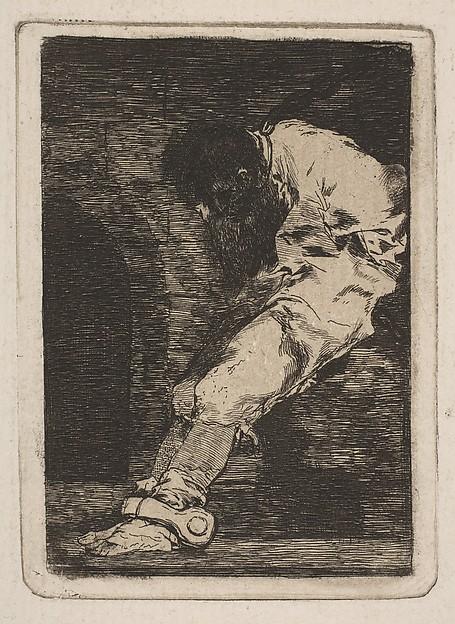
If he is guilty, let him die quickly (Si es delinquente qe. muera presto)
ca. 1815 (published 1859) · Etching
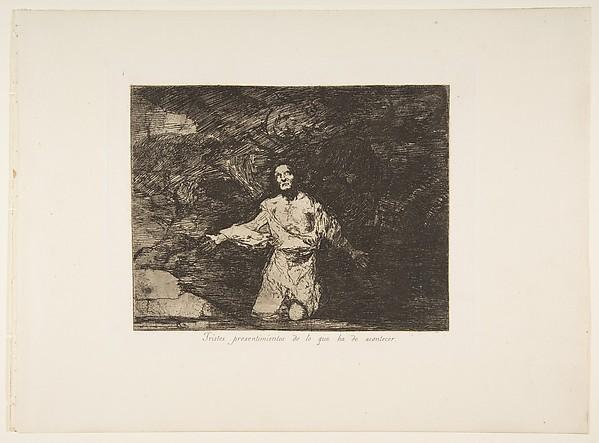
Sad forebodings of what is going to happen (Tristes presentimientos de lo que ha de acontecer)
ca. 1815 (published 1863) · Etching, burin, drypoint, burnisher
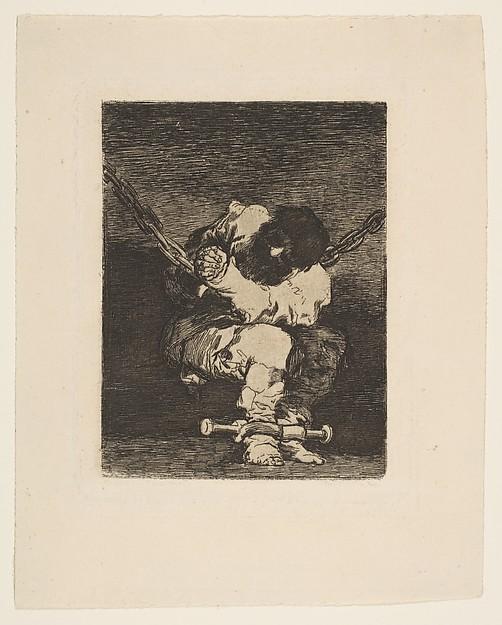
The custody is as barbarous as the crime (Tan bárbara la seguridad como el delito)
ca. 1815 (published after 1867) · Etching, burin
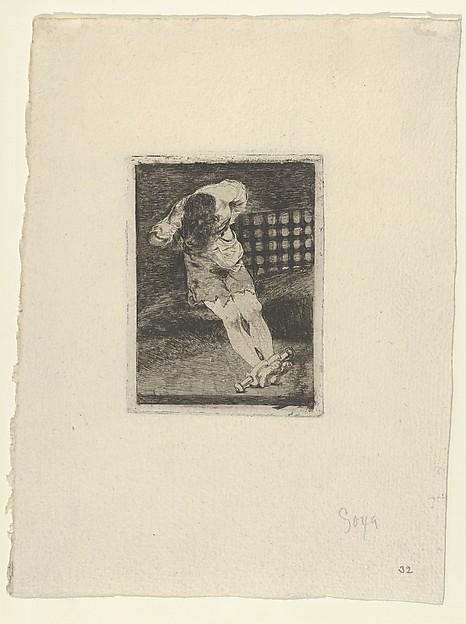
The Custody of a Prisoner Does Not Call for Torture (La seguridad de un reo no exige tormento)
ca. 1815; published ca. 1859 · Etching, burin ('Goya' inscribed in pencil lower right, not in the artist's hand)
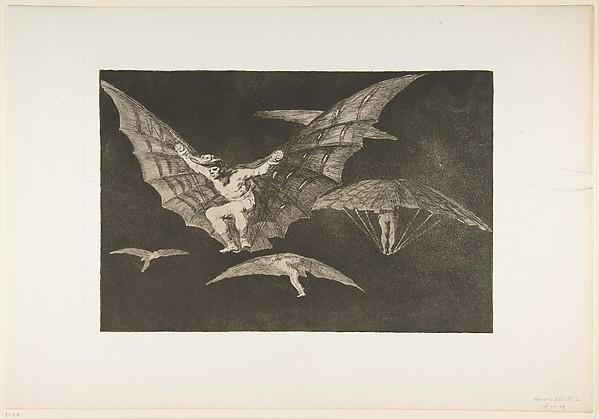
A Way of Flying, from "The Disparates" (Follies / Irrationalities)
ca. 1815–16 (published 1864) · Etching, aquatint, drypoint
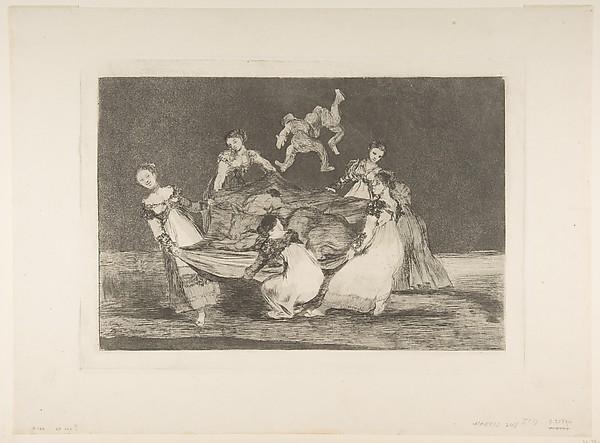
Feminine Folly
ca. 1815–19 (printed ca.1848–54) · Etching, aquatint, drypoint

Loyalty (ca. 1815–19 (private printing ca.1854))
ca. 1815–19 (private printing ca.1854) · Etching, burnished aquatint

Funereal Folly from the Disparates (Follies / Irrationalities)
ca. 1815–19 (private printing ca.1854) · Etching, burnished aquatint
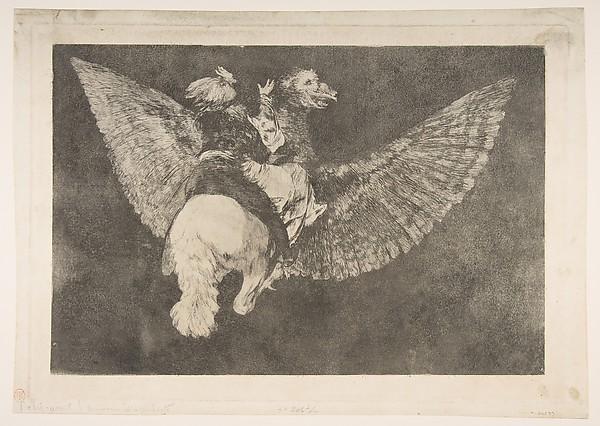
Flying Folly (ca. 1815–19 (private printing ca.1854))
ca. 1815–19 (private printing ca.1854) · Etching, aquatint

Dancing Giant (ca. 1815–19 (private printing ca.1854))
ca. 1815–19 (private printing ca.1854) · Etching, burnished aquatint, drypoint
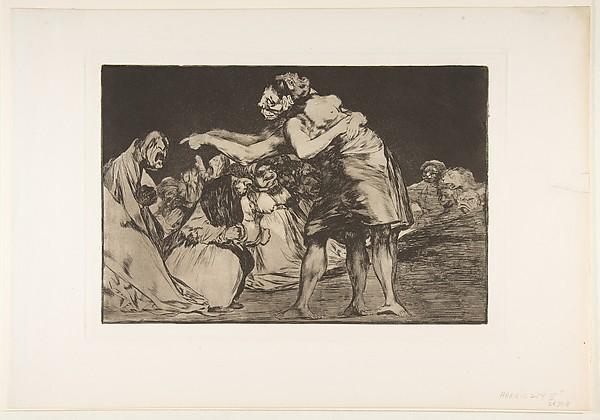
Disorderly Folly
ca. 1815–19 (published 1864) · Etching, aquatint, drypoint

Feminine Folly, from "The Disparates" (Follies / Irrationalities)
ca. 1815–19 (published 1864) · Etching, aquatint, drypoint
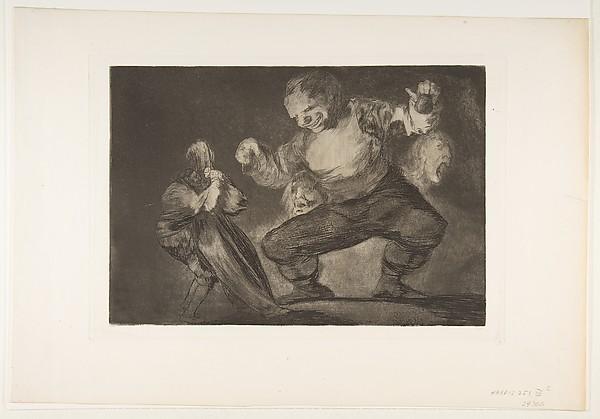
Dancing Giant, from "The Disparates" (Follies / Irrationalities)
ca. 1815–19 (published 1864) · Etching, burnished aquatint, drypoint
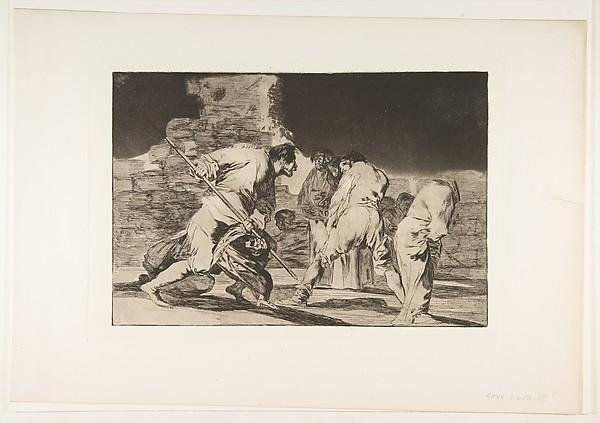
Cruel Folly, from 'The Disparates' (Follies / Irrationalities)
ca. 1815–19 (published 1864) · Etching, burnished aquatint
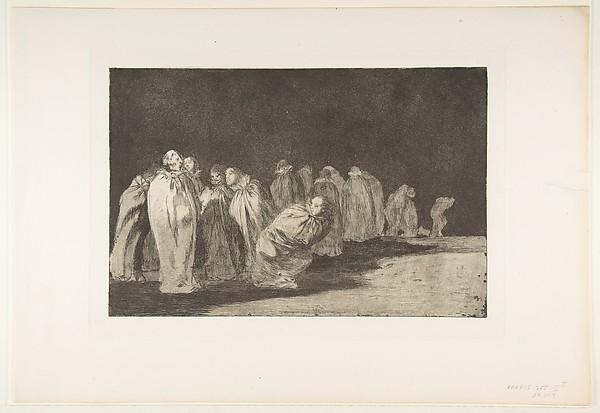
Men in Sacks, from "The Disparates" (Follies / Irrationalities)
ca. 1815–19 (published 1864) · Etching, burnished aquatint

The horse abductor, from "The Disparates" (Follies / Irrationalities)
ca. 1815–19 (published 1864) · Etching, burnished aquatint, drypoint
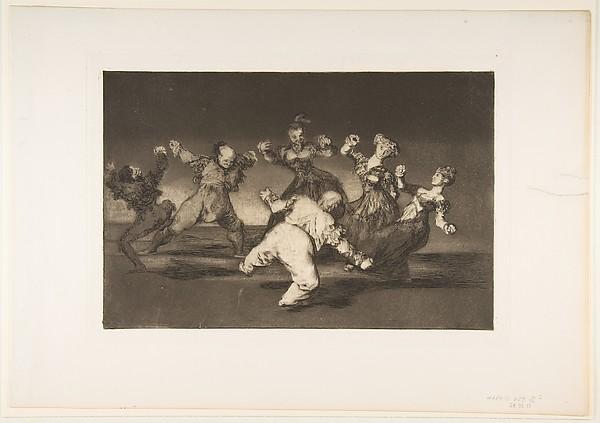
Merry Folly, from 'The Disparates' (Follies / Irrationalities)
ca. 1815–19 (published 1864) · Etching,burnished aquatint, drypoint

Carnival Folly, from "The Disparates" (Follies / Irrationalities)
ca. 1815–19 (published 1864) · Etching, aquatint
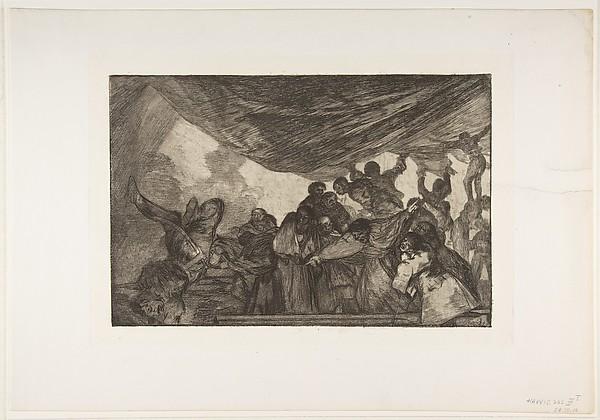
Clear Folly, from "The Disparates" (Follies / Irrationalities)
ca. 1815–19 (published 1864) · Etching, burnished aquatint
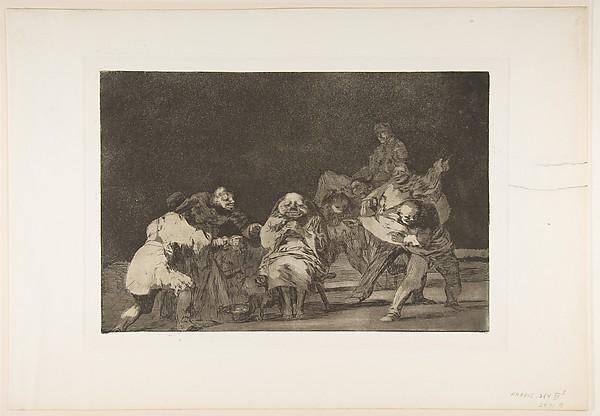
Loyalty, from "The Disparates" (Follies / Irrationalities)
ca. 1815–19 (published 1864) · Etching, burnished aquatint

Ridiculous Folly, from the 'Disparates' (Follies / Irrationalities)
ca. 1815–19 (published 1864) · Etching, aquatint, drypoint
Dancing Giant (ca. 1815–19 (published 1864))
ca. 1815–19 (published 1864) · Etching, burnished aquatint, drypoint
Cruel Folly
ca. 1815–19 (published 1864) · Etching, burnished aquatint
The horse abductor
ca. 1815–19 (published 1864) · Etching, burnished aquatint, drypoint
Merry Folly
ca. 1815–19 (published 1864) · Etching, burnished aquatint, drypoint
Loyalty (ca. 1815–19 (published 1864))
ca. 1815–19 (published 1864) · Etching, burnished aquatint
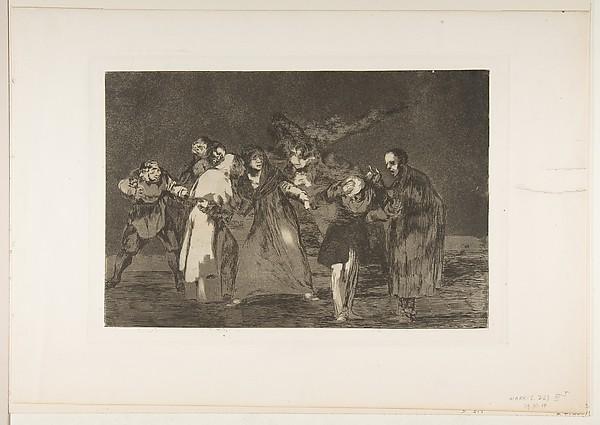
The Exhortations, from "The Disparates" (Follies / Irrationalities)
ca. 1815–19 (published 1864) · Etching, burnished aquatint

Folly of Fear (ca. 1815–19 (published 1864))
ca. 1815–19 (published 1864) · Etching, burnished aquatint, drypoint
Carnival Folly
ca. 1815–19 (published 1864) · Etching, aquatint
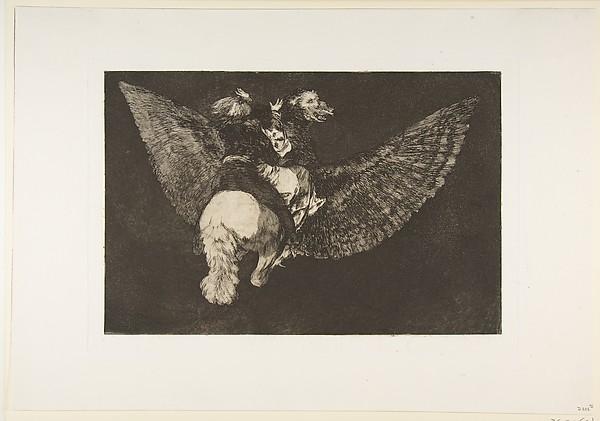
Flying Folly (ca. 1815–19 (published 1864))
ca. 1815–19 (published 1864) · Etching, aquatint
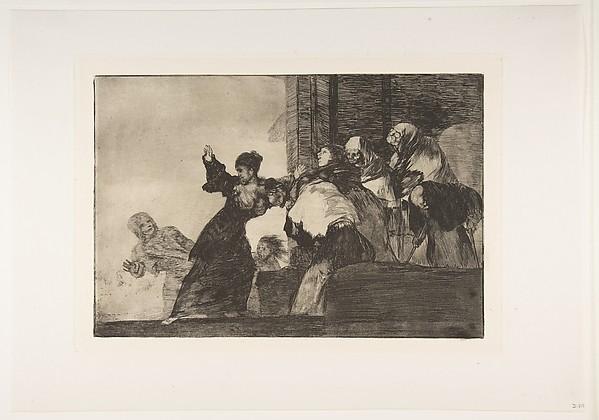
Poor Folly
ca. 1815–19 (published 1864) · Etching, burnished aquatint, drypoint
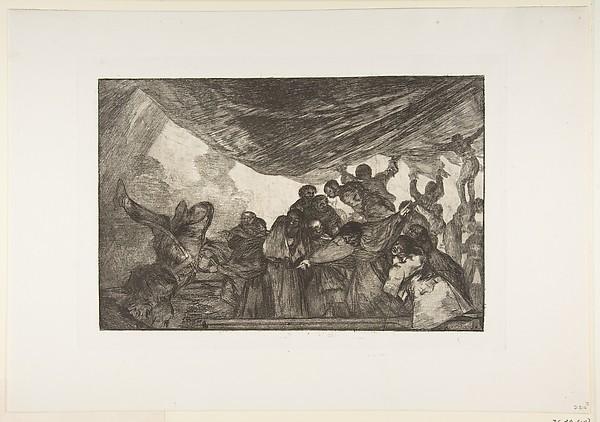
Clear Folly
ca. 1815–19 (published 1864) · Etching, burnished aquatint
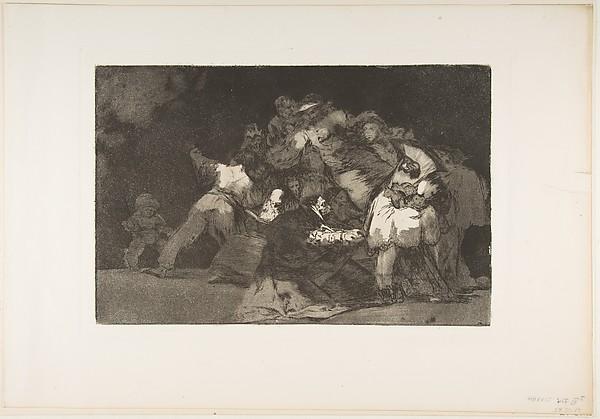
General Folly, from "The Disparates" (Follies / Irrationalities)
ca. 1815–19 (published 1864) · Etching, burnished aquatint
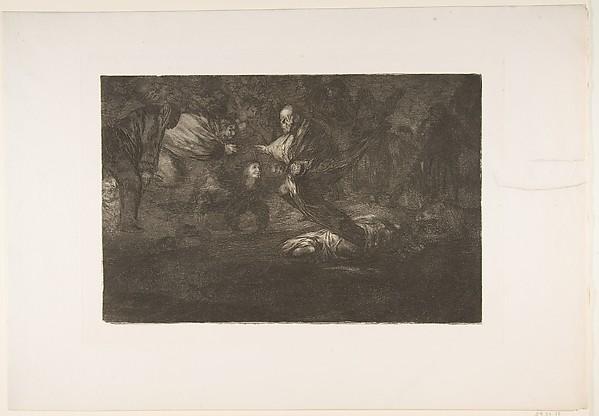
Funereal Folly, from "The Disparates" (Follies / Irrationalities)
ca. 1815–19 (published 1864) · Etching, burnished aquatint
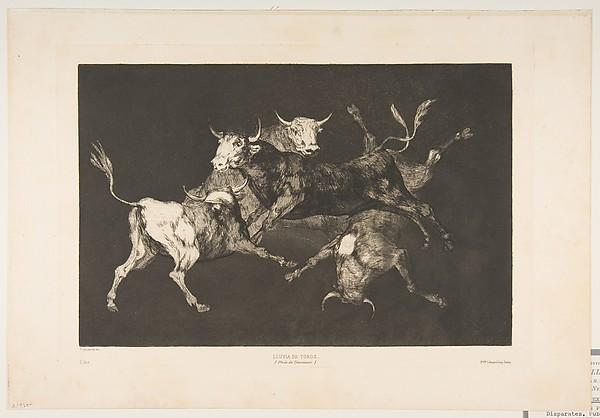
Little Bulls' Folly, from "The Disparates" (Disparates, Plate D)
ca. 1815–19 (published 1877) · Etching, aquatint, drypoint
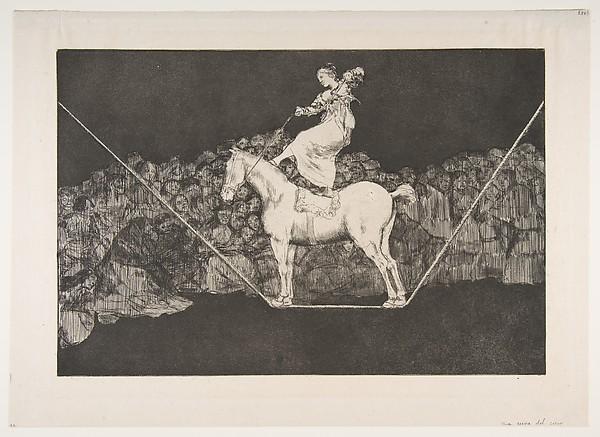
Punctual Folly
ca. 1815–19 (published before 1877) · Etching, aquatint, drypoint on Japan paper
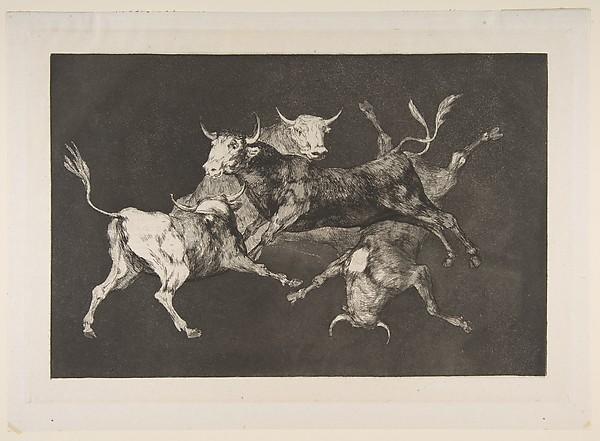
Little Bulls' Folly
ca. 1815–19 (published before 1877) · Etching, aquatint, drypoint on Japan paper
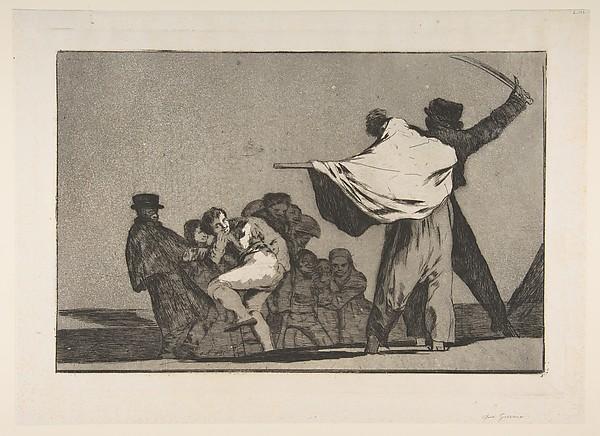
Well-Known Folly (ca. 1815–19 (published before 1877), Met-Objekt 1368)
ca. 1815–19 (published before 1877) · Etching and burnished aquatint
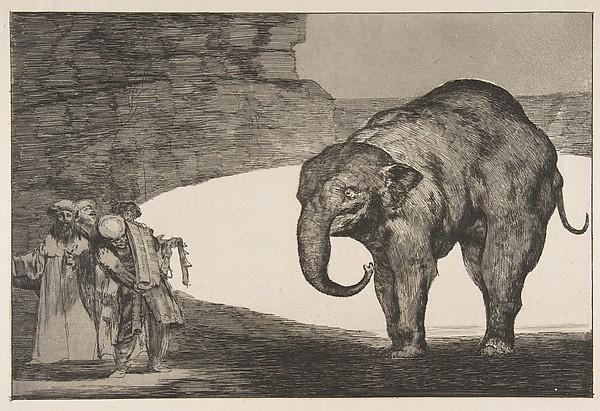
Animal Folly
ca. 1815–19 (published before 1877) · Etching, aquatint, drypoint on Japan paper
Well-Known Folly (ca. 1815–19 (published before 1877), Met-Objekt 1465)
ca. 1815–19 (published before 1877) · Etching, burnished aquatint on Japan paper
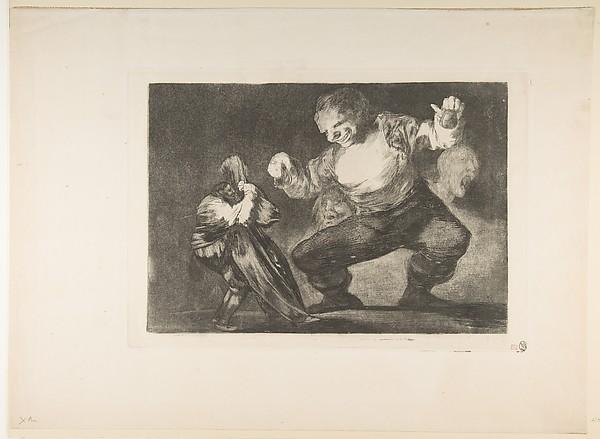
Dancing Giant (ca. 1815–19 (published between 1854–63))
ca. 1815–19 (published between 1854–63) · Etching, burnished aquatint, drypoint

Folly of Fear (ca. 1815–19 (published ca. 1848))
ca. 1815–19 (published ca. 1848) · Etching, burnished aquatint, drypoint
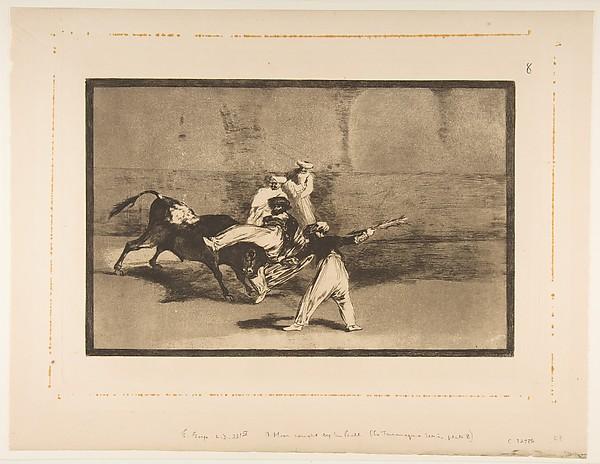
Plate 8 from 'Tauromaquia': A moor caught by the bull in the ring
ca. 1816 · Etching, burnished aquatint, drypoint
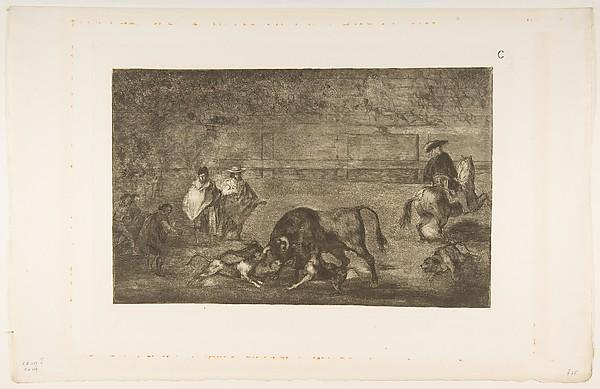
Plate C: The dogs let loose on the bull, from "Tauromaquia"
ca. 1816 · Etching, burnished aquatint, drypoint, burin

You'll See Later; a man drinking, a woman trying to stop him; page 24 from the "Black Border Album" (E)
ca. 1816–20 · Brush, carbon black and gray ink and wash, scraper
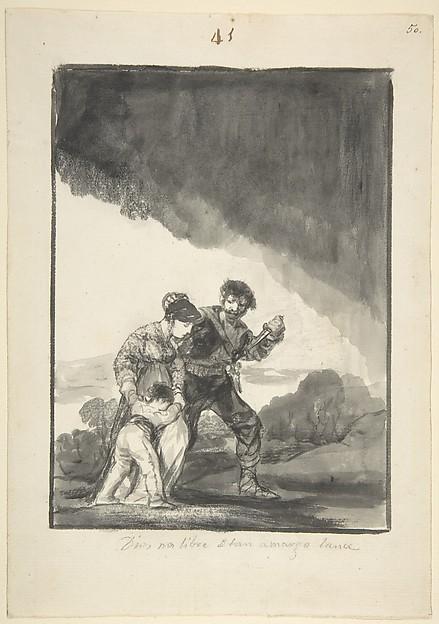
God save us from such a bitter fate; a bandit threatening a woman and a child with a knife, page 41 from the "Black Border Album" (E)
ca. 1816–20 · Brush, carbon black gray ink and was, scraper
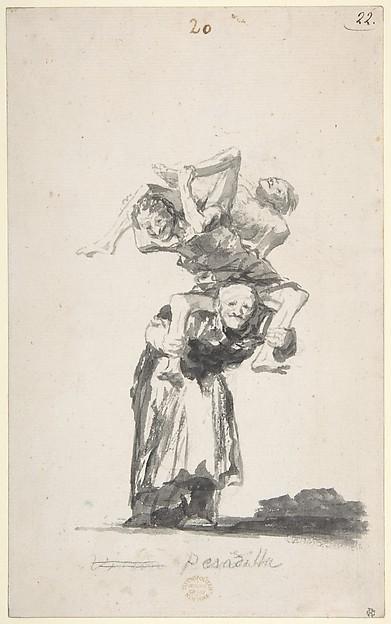
Nightmare
ca. 1819–23 · Brush, carbon black and gray ink and wash, touches of black chalk, on laid paper
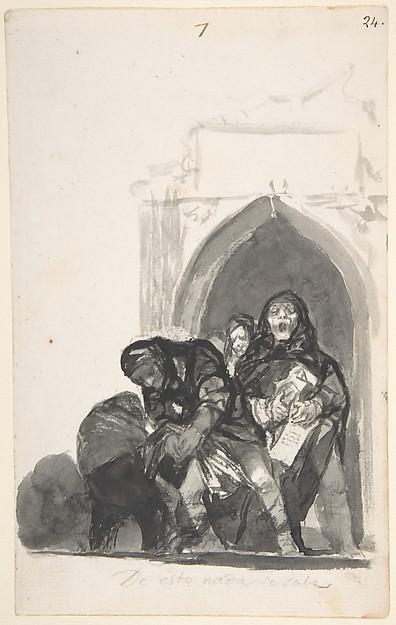
Nothing is Known of This
ca. 1819–23 · Brush, carbon black and gray ink and wash, scraper
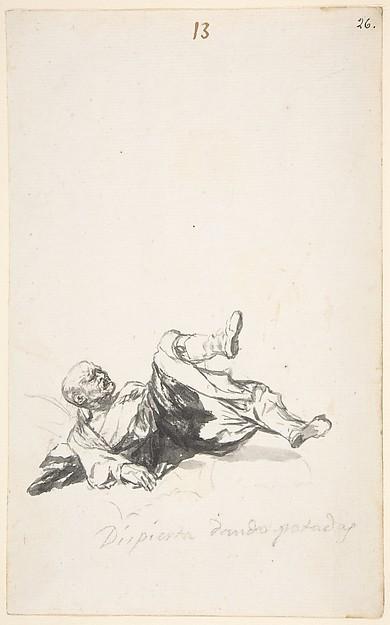
He Wakes Up Kicking
ca. 1819–23 · Brush, carbon black and gray ink and wash, touches of black chalk, scraper
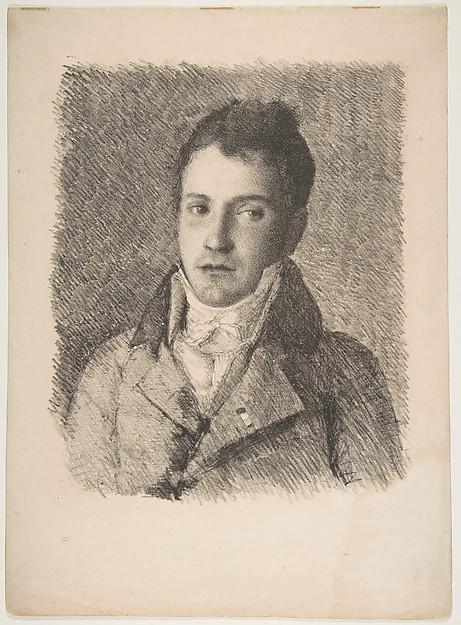
Portrait of a Young Man
ca. 1820 · Lithograph
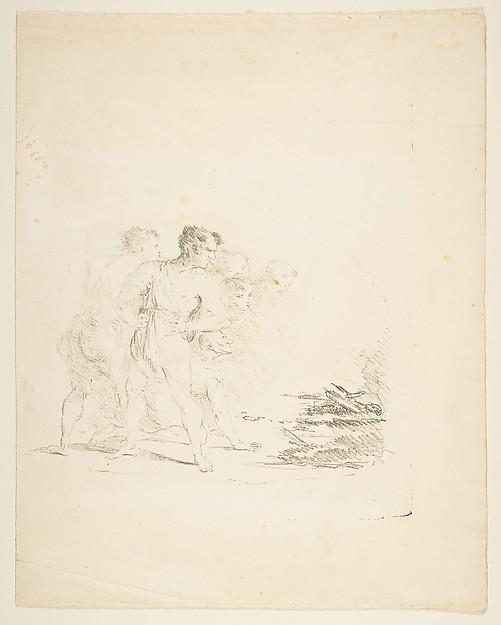
Men Spitting at a Fire
ca. 1820–50 · Lithograph
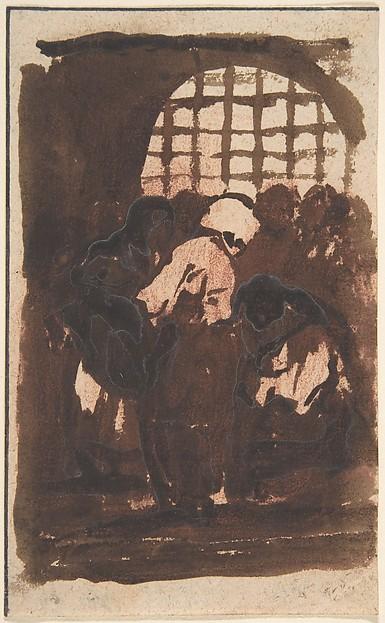
Figures inside a prison (recto), a monstrous animal (verso)
ca. 1820–50 (or later) · Brush with brown, black wash over red chalk on wove paper
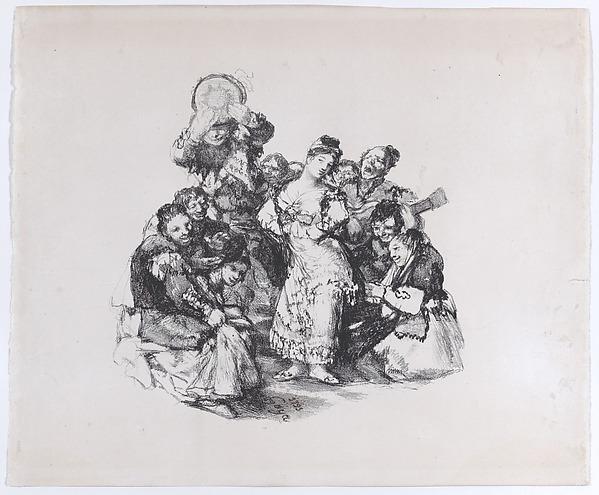
The Andalusian Dance (El Vito)
ca. 1824–1825 · Lithograph
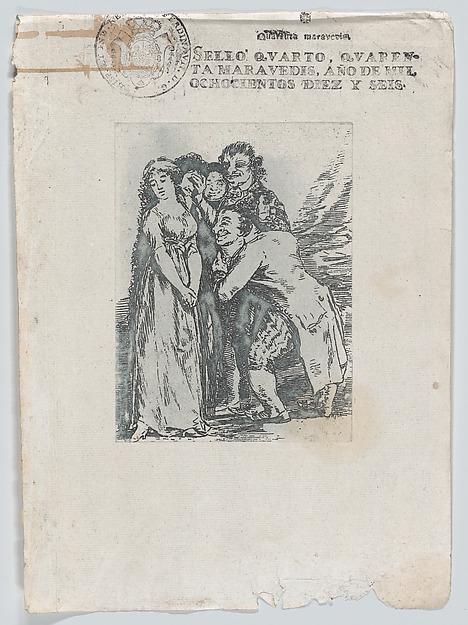
Reproduction in reverse of Goya's Sueño drawing that was preparatory for Plate 14 from Los Caprichos, 'What a sacrifice'
ca. 1830–50 (?) · Heliogravure with traces of green watercolor

Hanged Man
ca. 1840–1900 · Pen and brown ink, brush and brown wash
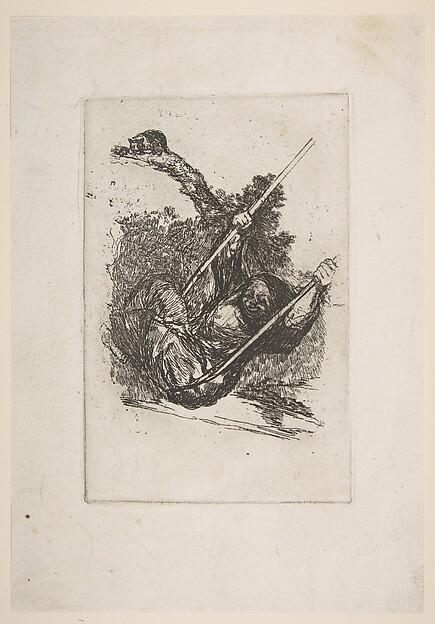
Old woman on a swing
n.d. · Facsimile