Giovanni Battista Piranesi
Giovanni Battista Piranesi stands among the defining etchers of the eighteenth century, celebrated for visionary views of Roman architecture and for the imaginary prisons of his Carceri d'invenzione. His plates combine archaeological observation with dramatic, almost theatrical perspective, and the collection here is dominated by etching across its many states. Some two hundred sheets represent his work, with impressions dated from 1720 up to 1778, including later printings that extend beyond the artist's lifetime.
200 works in the collection · All public domain (CC0)
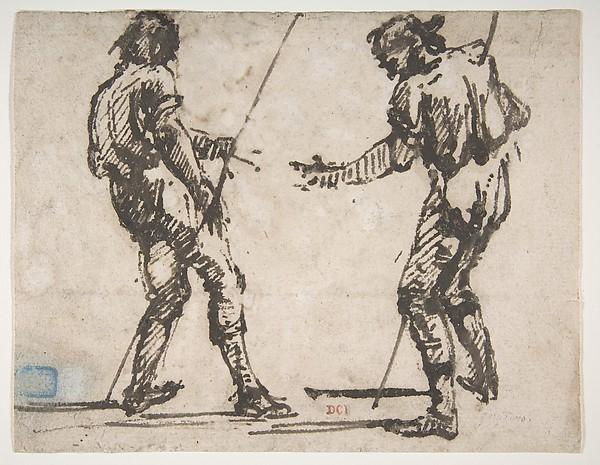
Two Men Holding Long Staffs (recto); Proof impression of part of an etching, and scribbles in the artist's hand (verso)
1720–78 · Pen and brown ink
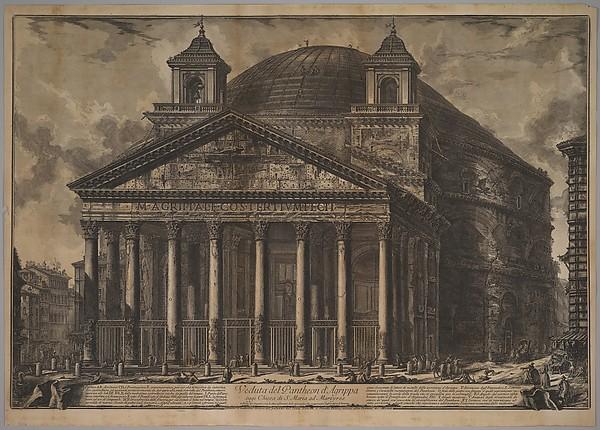
The Pantheon exterior (Veduta del Pantheon d'Agrippa oggi Chiesa di S. Maria ad Martyres)
1720–78 · etching
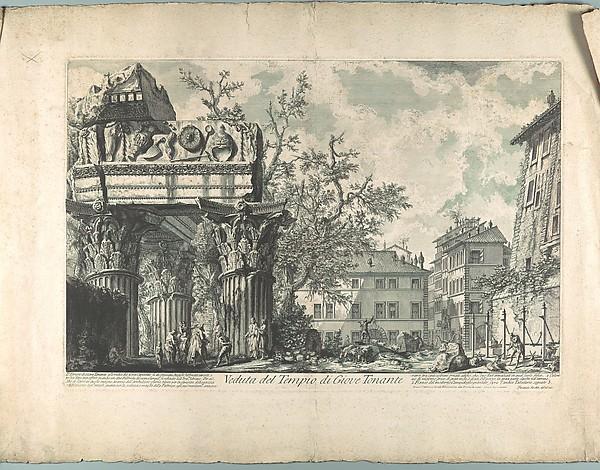
Veduta del Tempio di Giove Tonante
1740s–60s · Engraving
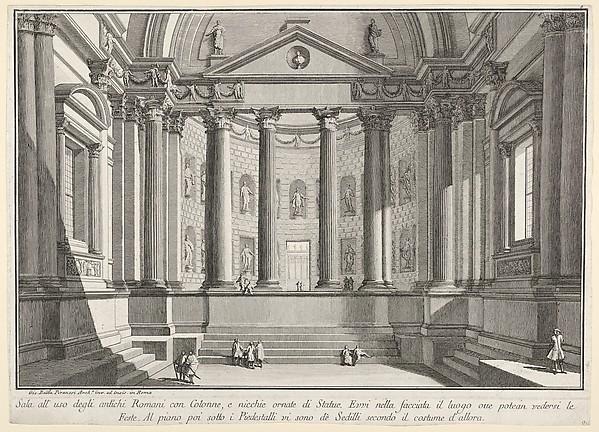
Plate 9: Colonnaded hall according to the custom of the ancient Romans (...), from "Part one of architecture and perspectives: drawn and etched by Gio. Batt'a Piranesi, Venetian Architect: dedicated to Nicola Giobbe"
1743 · Etching
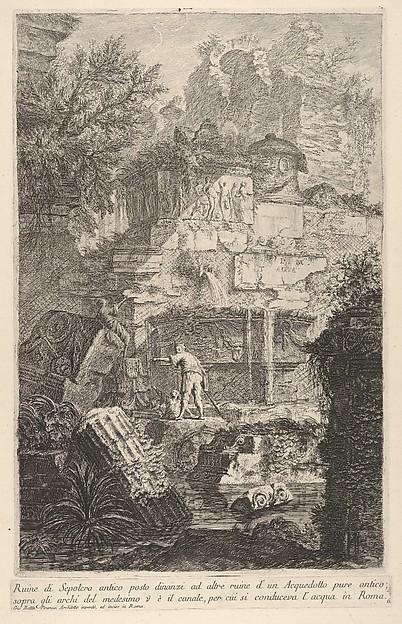
Plate 6: Ruins of an ancient tomb in front of ruins of an ancient aqueduct (...), from "Part one of architecture and perspectives: drawn and etched by Gio. Batt'a Piranesi, Venetian Architect: dedicated to Nicola Giobbe"
1743 · Etching
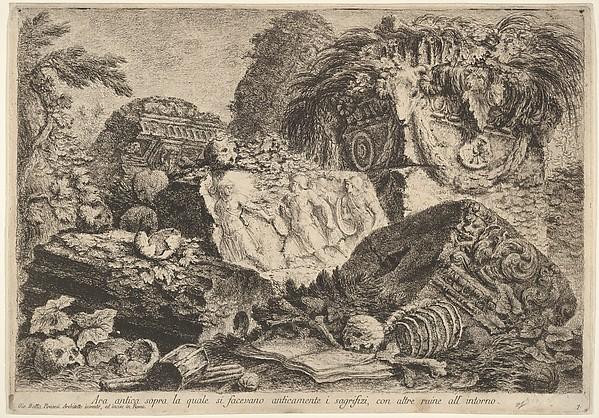
Plate 7: Ancient altar on which sacrifices were performed in antiquity, surrounded by other ruins (Ara antica sopra la quale si facevano anticamente i sagrifizi, con altre ruine all' intorno)
1743 · Etching
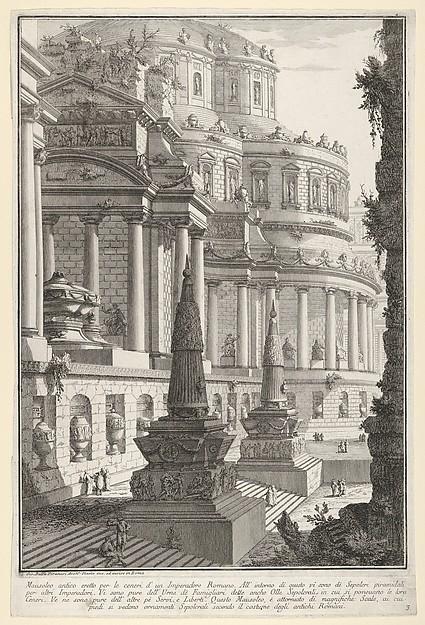
Plate 3: Ancient mausoleum erected for the ashes of a Roman emperor (Mausoleo antico eretto per le ceneri d'un imperadore romano), from "Part one of architecture and perspectives: drawn and etched by Gio. Batt'a Piranesi, Venetian Architect: dedicated to Nicola Giobbe"
1743 · Etching
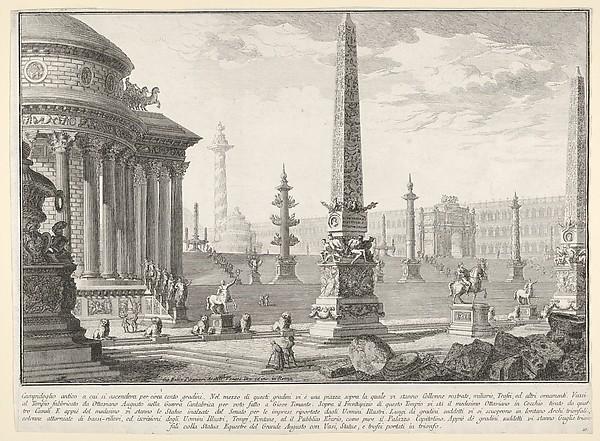
Plate 10: The ancient Capitol ascended by approximately one hundred steps [...] (Campidoglio antico a cui si ascendeva per circa cento gradini [...])
1743 · Etching
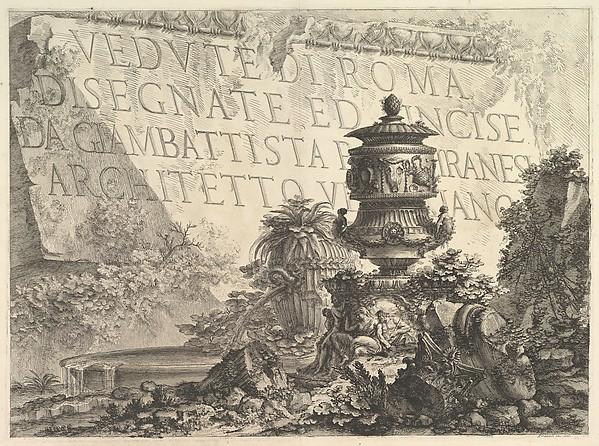
Frontispiece from "Vedute di Roma"
1748 · Etching
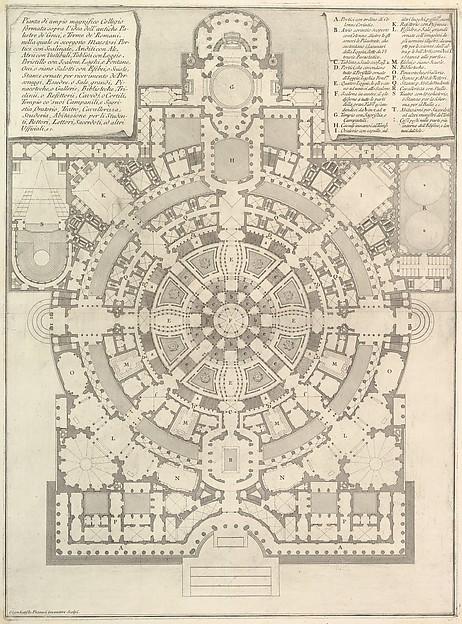
Plan of a spacious and magnificent College designed after the ancient gymnasia of the Greeks and the baths of the Romans...
1750 · Etching, engraving, drypoint; second state of seven (Robison)
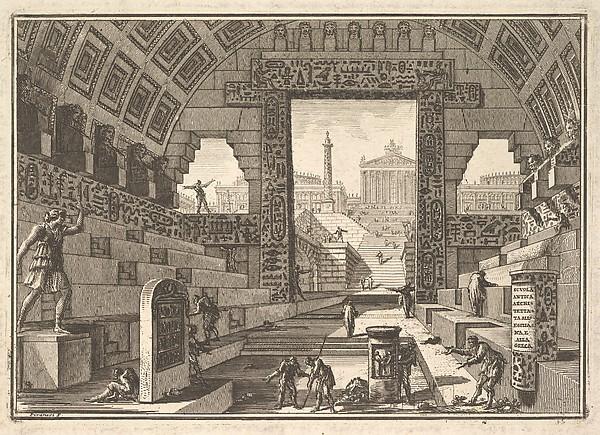
Ancient school built according to the Egyptian and Greek manners (Scuola antica architettata all'Egiziana e alla Greca)
1750 · Etching
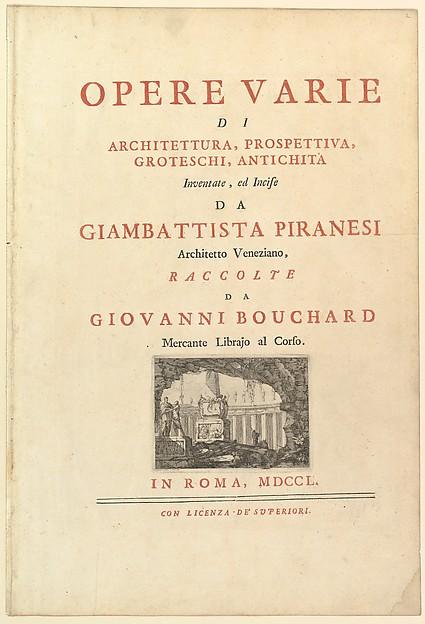
Frontispiece to 'Opere varie di architettura, prospettive grotesshi antichità'
1750 · Etching
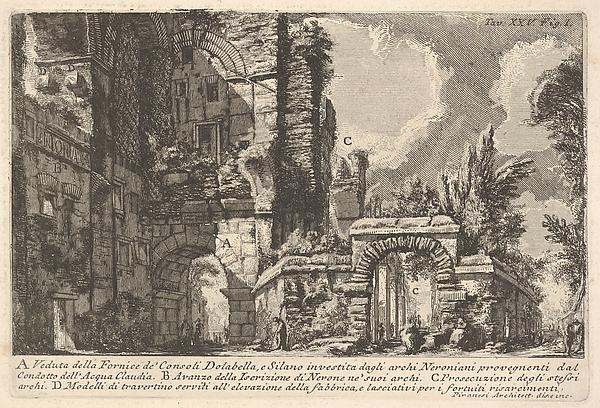
View of the arches of the consuls Dolabella and Silanus enclosed within the Neronian arches of the Acqua Claudia, from "Roman Antiquities" (Le Antichità Romane)
1756 · Etching
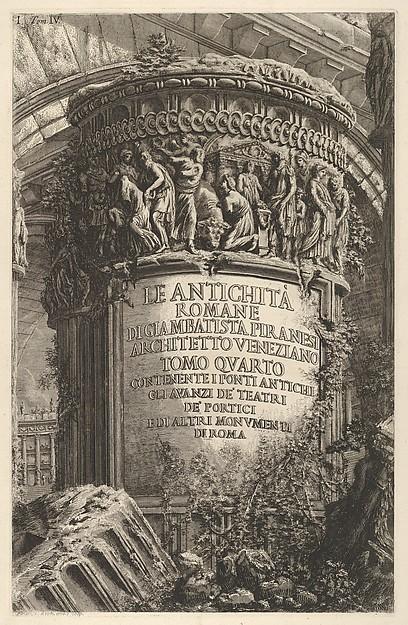
Title page: Volume IV, 'The Antiquities of Rome by Giambatista Piranesi, Venetian Architect (...), from 'Roman Antiquities' (Le Antichità Romane)
1756 · Etching
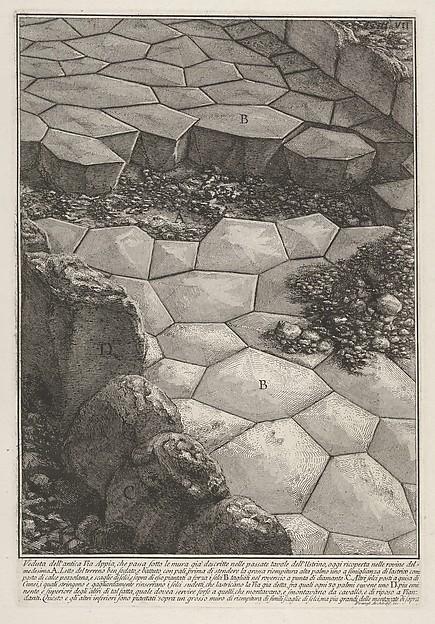
View of the stone pavement of the Appian Way (Veduta dell'antica Via Appia), from "Le Antichità Romane"
1756 · Etching
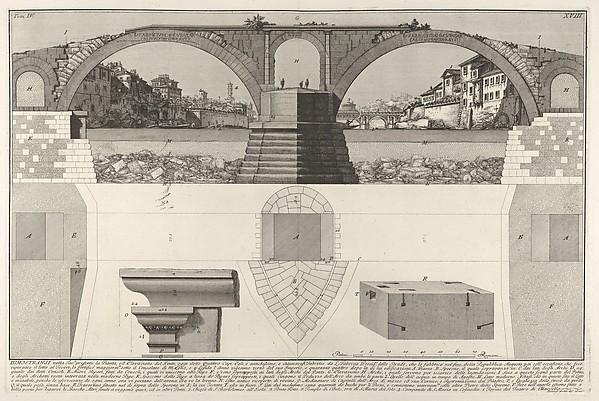
Plan and elevation of the Pons Fabricius (also known as the Quattro Capi Bridge), Rome, from "Le Antichità Romane"
1756 · Etching
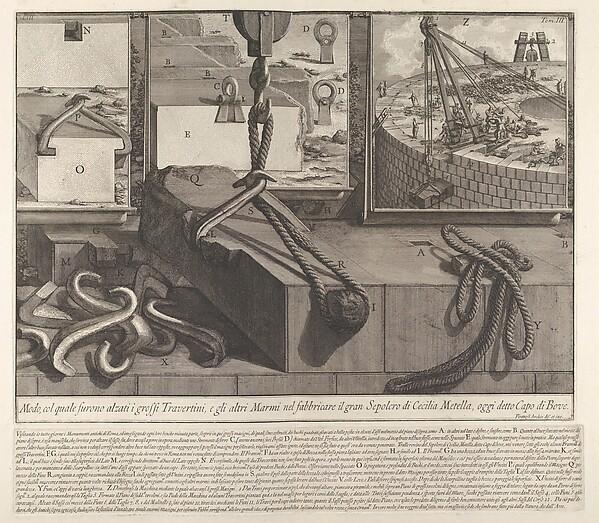
Demonstration panel showing technique for raising travertine and marble blocks for the construction of the tomb of Cecilia Metella, Rome, from "Le Antichità Romane"
1756 · Etching
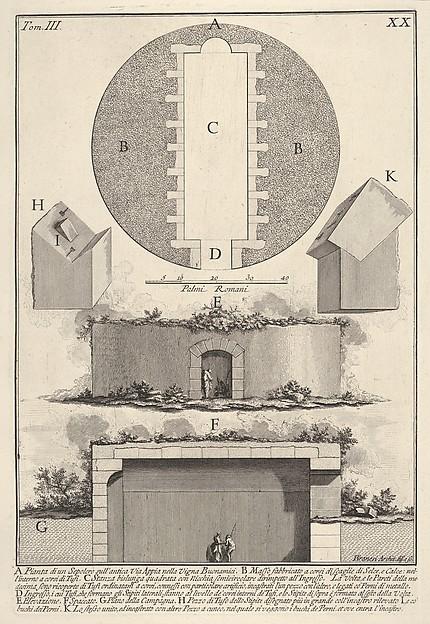
Plan of a tomb on the Appian Way in Vigna Buonamici (Pianta di un sepolcro sull'antica Via Appia nella Vigna Buonamici), from "Le Antichità Romane"
1756 · Etching
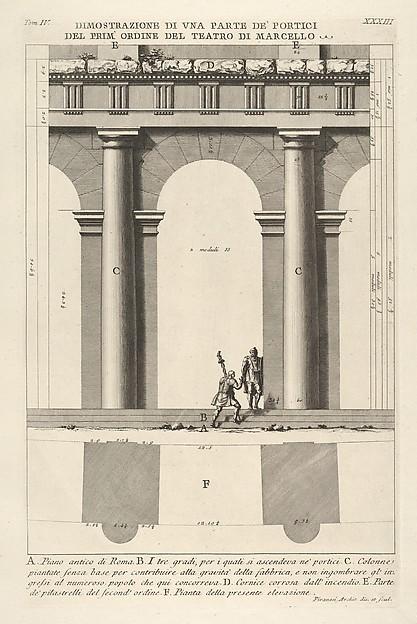
Partial elevation and plan of the first-order portico at the Theater of Marcellus
1756 · Etching
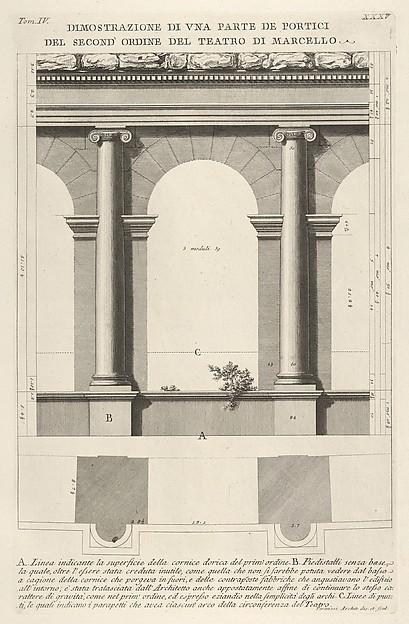
Elevation and plan of the second-order portico at the Theater of Marcellus (Teatro di Marcello), Rome, from "Le Antichità Romane"
1756 · Etching
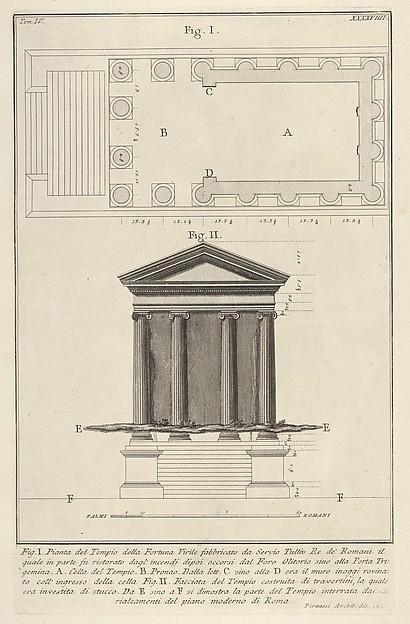
Plan and facade of the Temple of Fortuna Virilis (Tempio della Fortuna Virile), from "Le Antichità Romane"
1756 · Etching
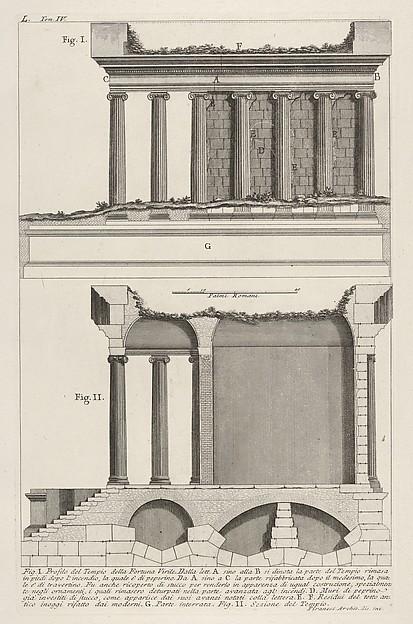
Profile of the Temple of Fortuna Virilis (Profilo del Tempio della Fortuna Virile), and section of the temple, from "Le Antichità Romane"
1756 · Etching
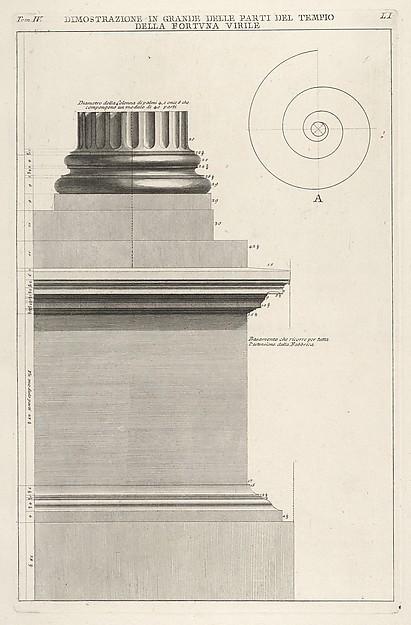
Section of column base from the Temple of Fortuna Virilis (Tempio della Fortuna Virile), from "Le Antichità Romane"
1756 · Etching
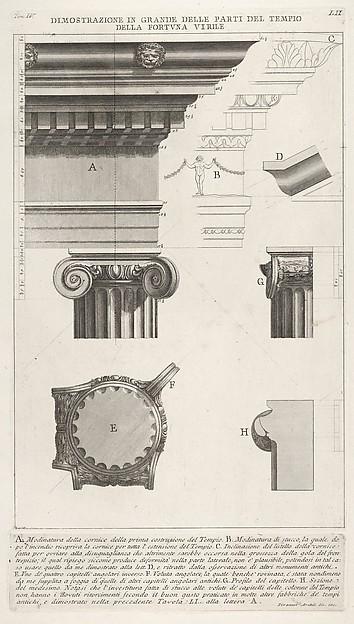
Cornice and column from the Temple of Fortuna Virilis (Tempio della Fortuna Virile), from "Le Antichità Romane"
1756 · Etching
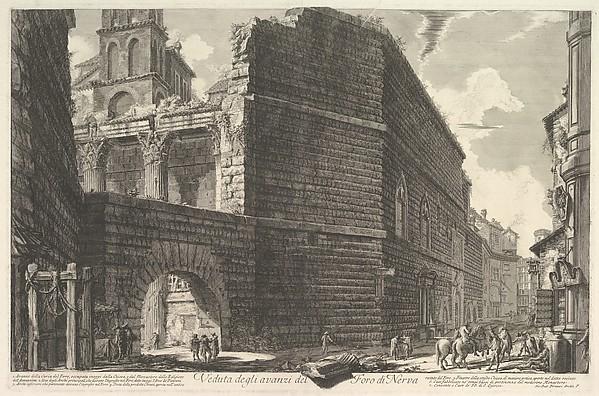
Veduta degli avanzi del Foro di Nerva, l'arcade et la muraille (The Forum of Augustus [erroneously called the Forum of Nerva])
1757 · etching
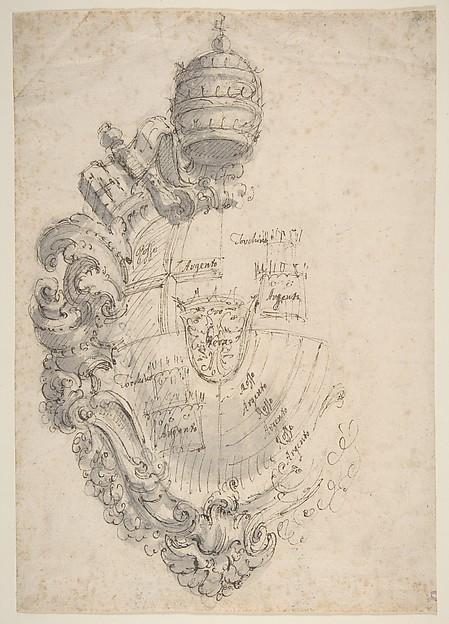
Coat of Arms of Clement XIII (Rezzonico)
1758–69 · Pen and ink and gray wash
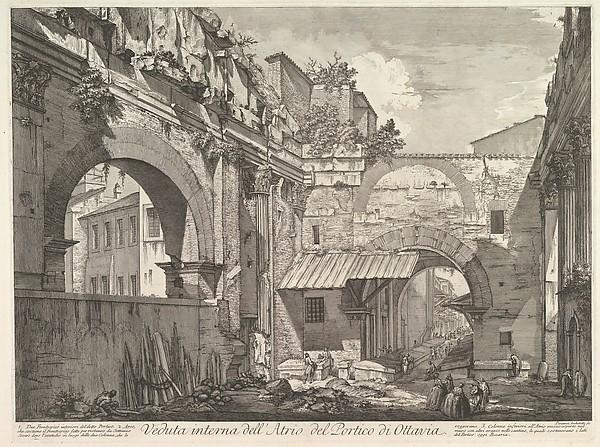
Veduta interna dell'Atrio del Portico di Ottavia (Internal View of the Atrium of the Portico of Octavia), in: 'Vedute di Roma' (Views of Rome)
1760 · Etching
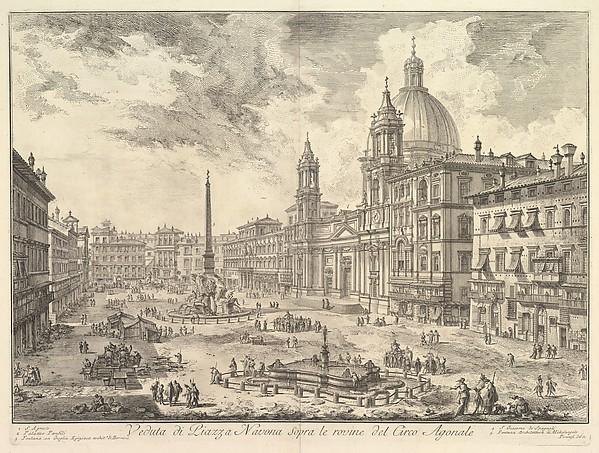
The Piazza Navona, Rome, above the ruins of the Circus of Domitian, the Church of Sant Agnese to the right, Bernini's fountain in the center, from 'Vedute di Roma'
1760–78 · Etching
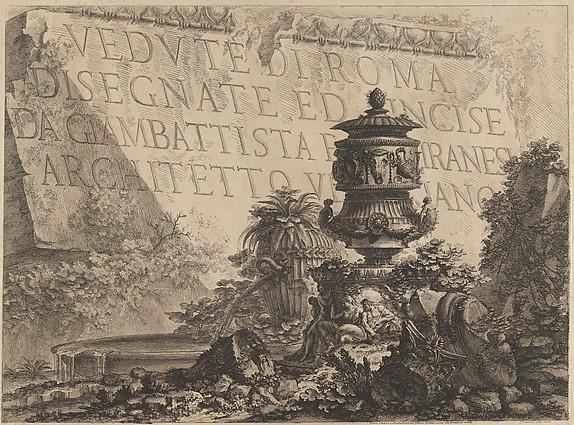
Vedute di Roma
1760–78 · Etching; fourth state of five
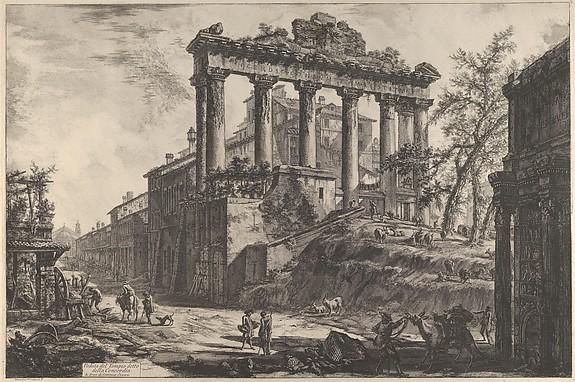
View of the so-called Temple of Concord with the Temple of Saturn, on the right the Arch of Septimius Severus
1760–78 · Etching
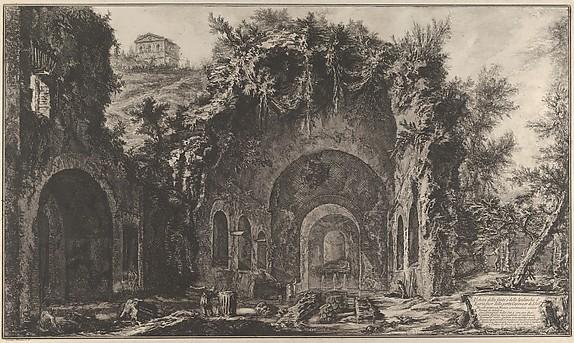
View of the fountainhead and the Grotto of Egiria outside the Porta Capena, from "Vedute di Roma"
1760–78 · Etching; second state of five
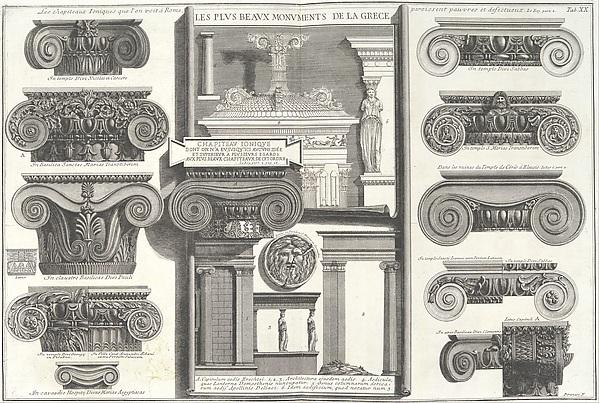
Della Magnificenza e d'Architettura de' Romani (On the Grandeur and the Architecture of the Romans)
1761, 1765 · Etchings and engravings
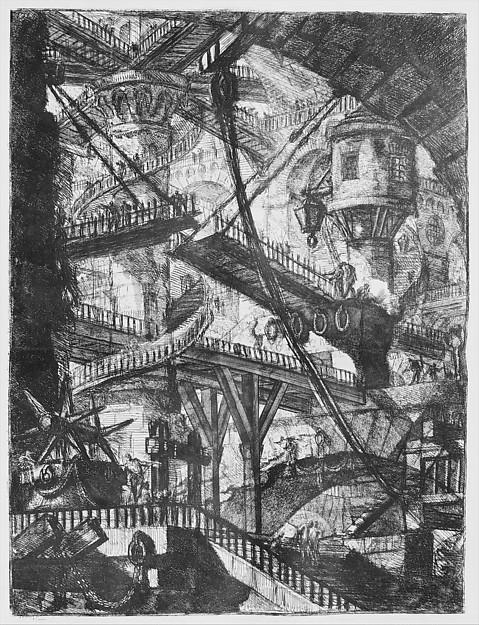
Prima Parte di Architettura, e Prospettive inventate, ed incise da Giambatista Piranesi Architetto Veneziano fra gli Arcadi Salcindio Tiseio; Lettere di Giustificazione a Milord Charlemont plates, which were adapted to appear in the Opere Varie; Opere Varie; Grotteschi; Carceri; Archi Trionfali, and Trofei di Ottaviano Augusto
1761–1809 · Etching
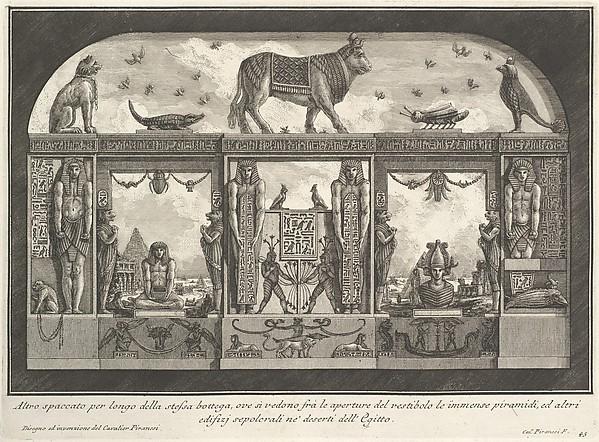
Egyptian decoration of the Caffè degli Inglesi: Animals on the cornice, including a bull at the center, from "Diverse Maniere d'adornare i cammini..."
1769 · Etching
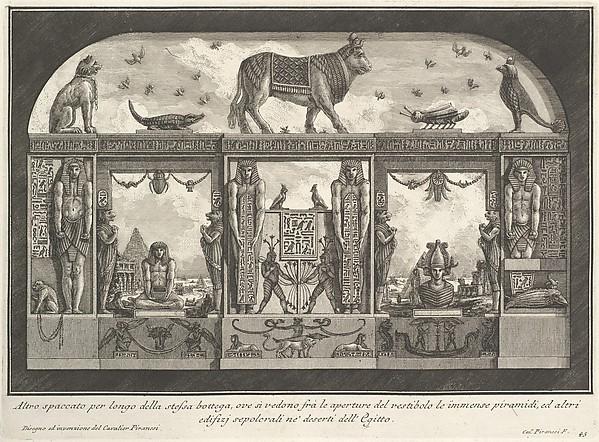
Diverse Maniere d'adornare i cammini ed ogni altra parte degli edifizi desunte dall'architettura Egizia, Etrusca, e Greca con un Ragionamento Apologetico in defesa dell'Architettura Egizia, e Toscana, opera del Cavaliere Giambattista Piranesi Architetto
1769 · Etching
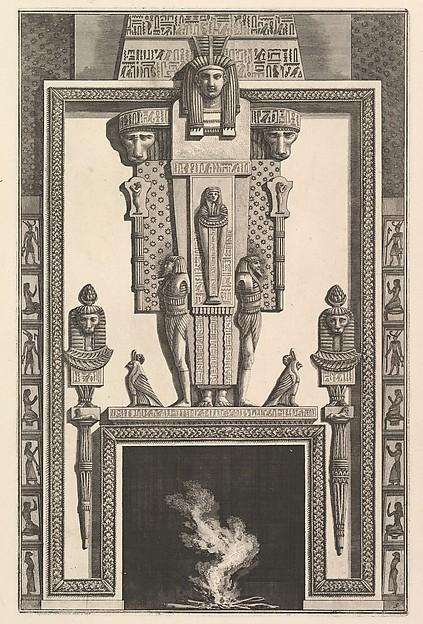
Chimneypiece in the Egyptian style: Mummy superimposed on a large caryatid above the lintel (Ch. à l'égyptiennne surmontée d'une grande cariatide contre laquelle s'applique une momie), from Diverse Maniere d'adornare i cammini ed ogni altra parte degli edifizi...(Different Ways of ornamenting chimneypieces and all other parts of houses)
1769 · Etching
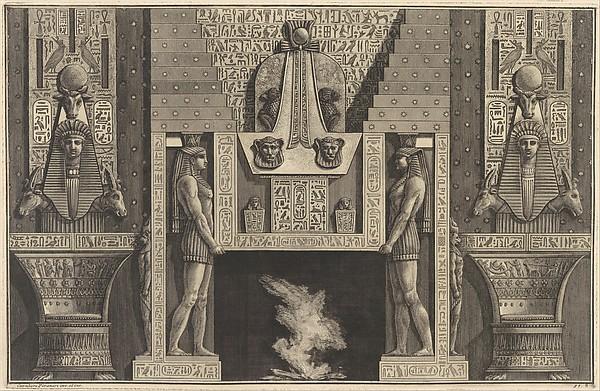
Chimneypiece in the Egyptian style: Giant figures supporting the lintel, flanked by chairs, from "Diverse Maniere d'adornare i cammini..."
1769 · Etching
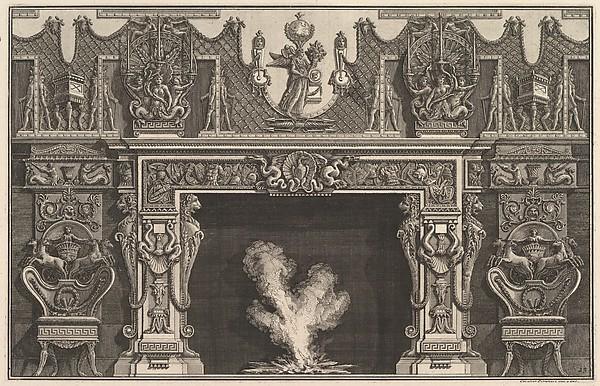
Bird in shell at the center of the lintel, with a frieze of trophies, surmounted by an overmantel with candelabra and flanked by chairs
1769 (?) · Etching
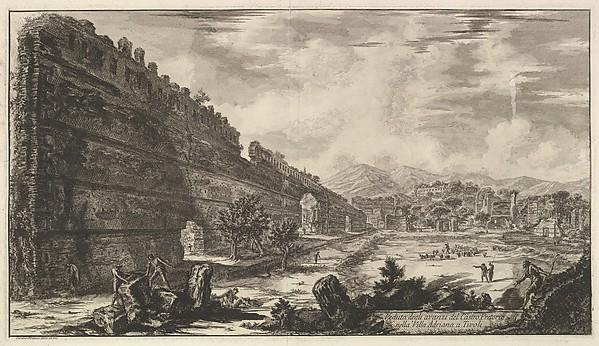
Veduta degli avanzi del Castro Pretorio nella Villa Adriana a Tivoli (View of the Remains of the Praetorian Fort [the Poecile], Hadrian's Villa, Tivoli)
1770 · Etching
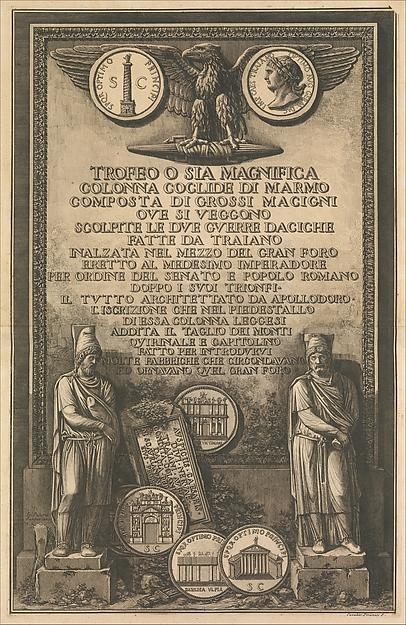
Title page, from "Trofeo o sia Magnifica Colonna Coclide..." (The Trophy or Magnificent Spiral Column)
1774–79 · Etching
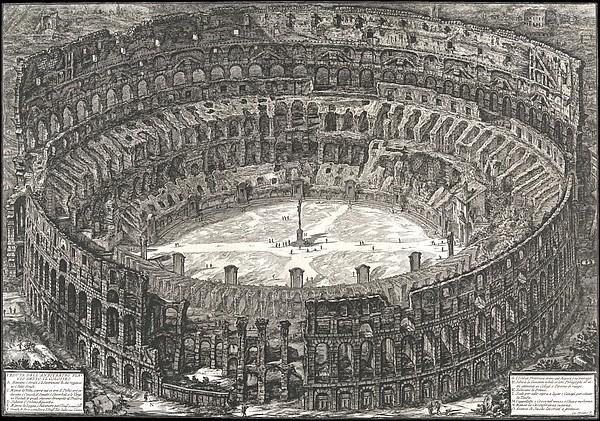
Veduta dell'Anfiteatro Flavio detto il Colosseo
1776 · Etching
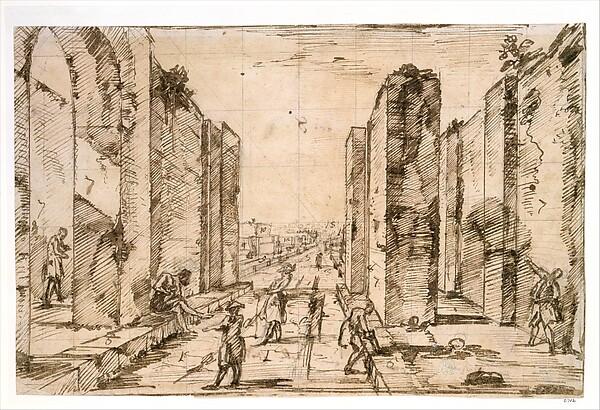
View through the Herculaneum Gate, Pompeii
1778 · Pen and brown ink over black chalk
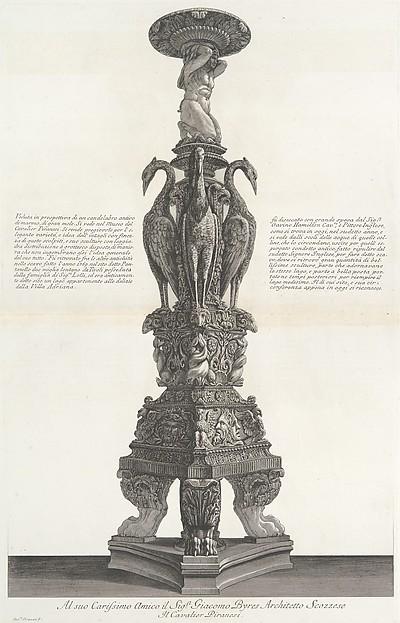
Perspective view of the same candelabrum, from "Vasi, candelabri, cippi, sarcofagi, tripodi, lucerne, ed ornamenti antichi disegnati ed incisi dal Cav. Gio. Batt. Piranesi, Vol. II"
1778–80 · Etching
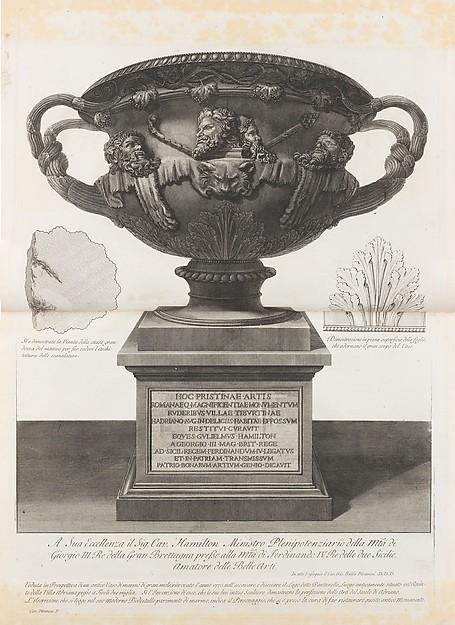
Large vase found at the Pantanello, Hadrian's Villa, Tivoli, in 1770 (The 'Warwick Vase')
1778–80 · Etching
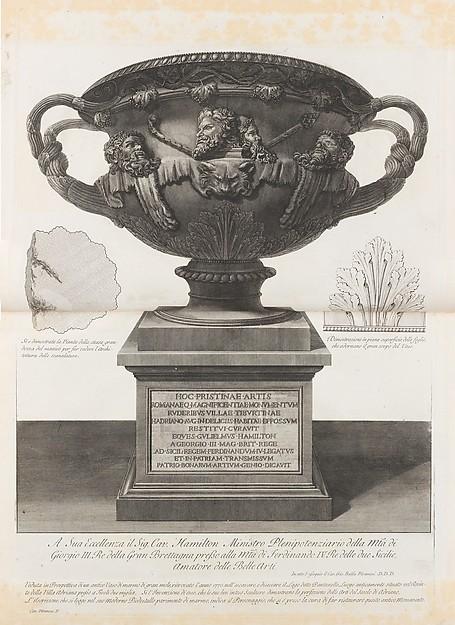
Vasi, candelabri, cippi, sarcofagi, tripodi, lucerne, ed ornamenti antichi disegnati ed incisi dal Cav. Gio. Batt. Piranesi, Vol. I
1778–80 · Etching
Vasi, candelabri, cippi, sarcofagi, tripodi, lucerne, ed ornamenti antichi disegnati ed incisi dal Cav. Gio. Batt. Piranesi, Vol. II
1778–80 · Etching
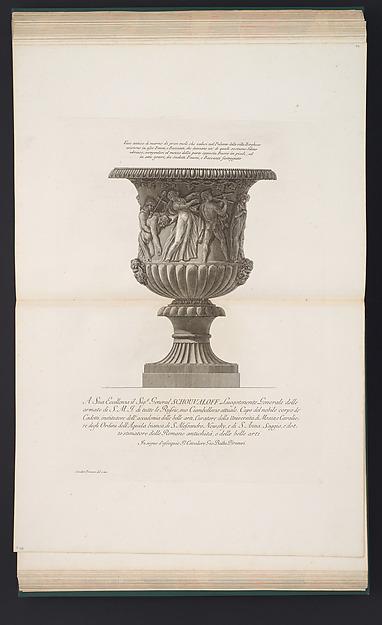
Vase decorated with a Bacchanalian frieze
1778–80 · Etching
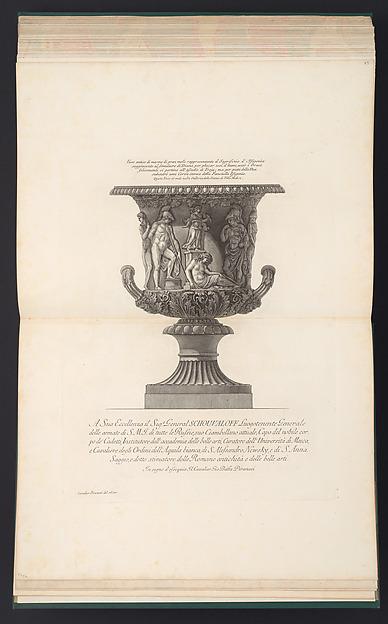
Large marble vase decorated with a relief of the sacrifice of Iphigenia
1778–80 · Etching
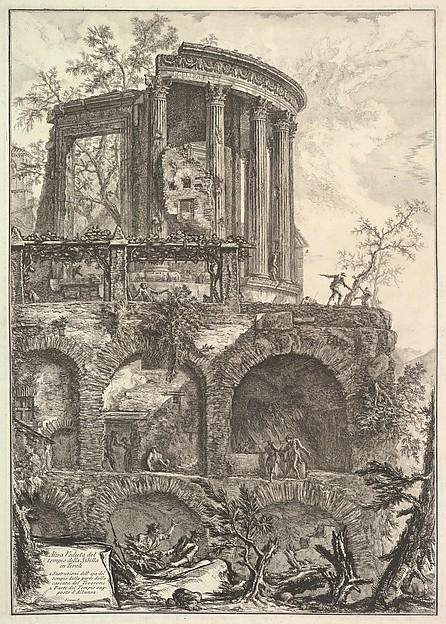
Altra V. del Tempio della Sibilla in Tivoli (Another view of the Temple of the Sibyl in Tivoli)
18th century · Etching
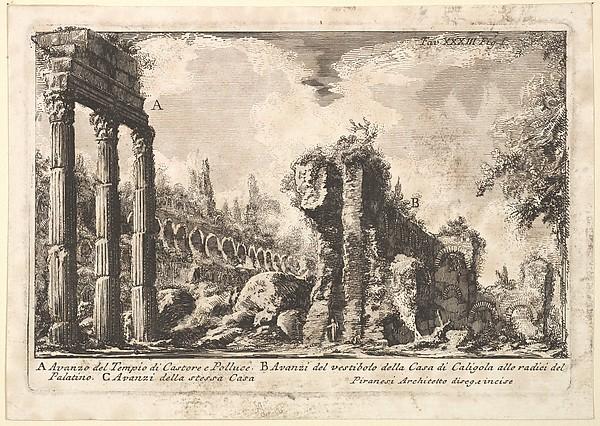
Remains of the Temple of Castor and Pollux . . . (Avanzo del Tempio di Castore e Polluce . . .)
18th century · Etching
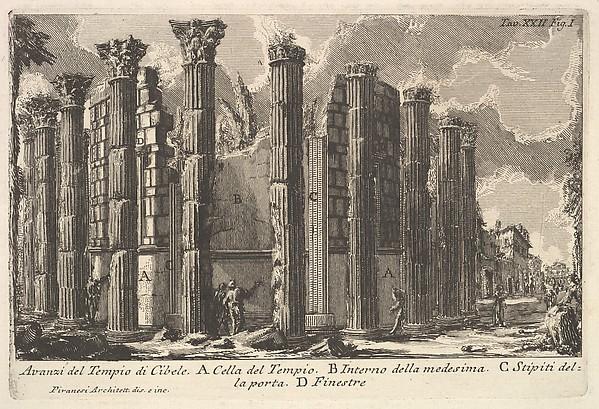
Remains of the Temple of Cybele (Avanzi del Tempio di Cibele)
18th century · Etching
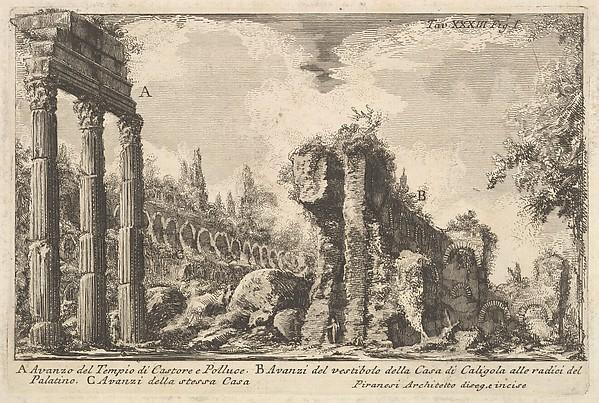
Remains of the Temple of Castor and Pollux . . . ( Avanzo del Tempio di Castore e Polluce . . .)
18th century · Etching
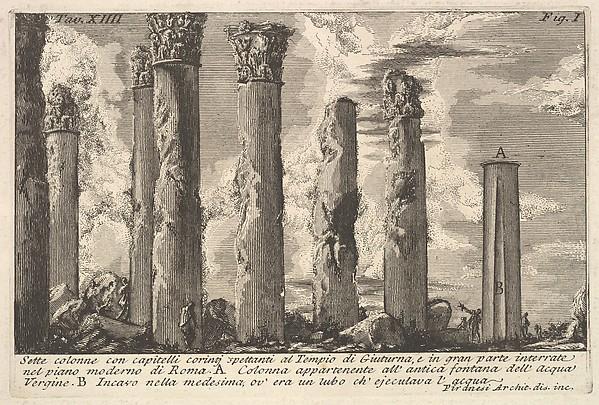
Seven columns of the Temple of Juturna with Corinthian capitals . . . (Sette colonne con capitelli corinti spettanti al Tempio di Giuturna . . .)
18th century · Etching
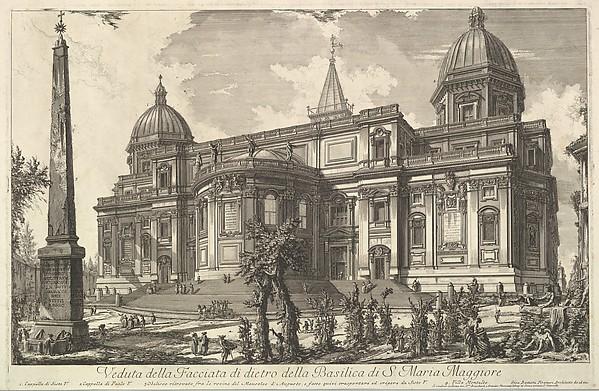
View of the rear entrance of the Basilica of S. Maria Maggiore, from Veduta di Roma (Roman Views)
ca. 1742 · Etching; first state of five (Hind)
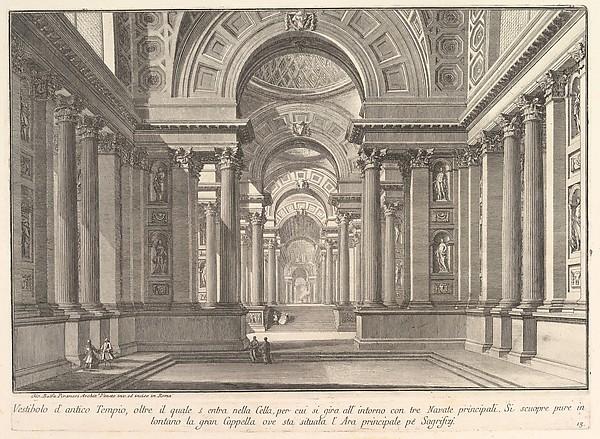
Vestibule of an ancient temple... (Vestibolo d'antico Tempio...), from "Prima Parte di Architettura, e Prospettive"
ca. 1743–50 · Etching
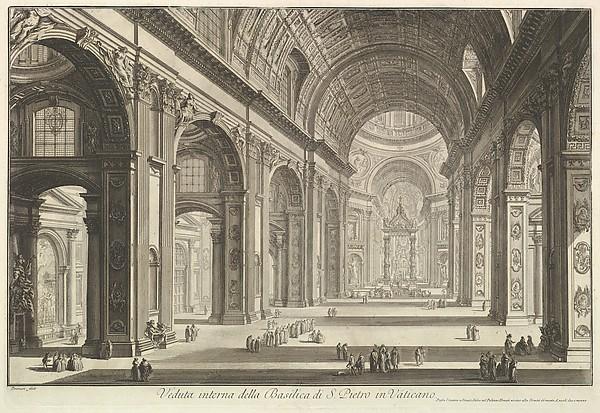
Interior view of St. Peter's Basilica in the Vatican, from "Vedute di Roma" (Roman Views) (ca. 1748, Met-Objekt 3927)
ca. 1748 · Etching; third state of six (Hind)

The Triumphal Arch, from "Grotteschi" (Grotesques)
ca. 1748 · Etching, engraving, drypoint, burnishing; first state of five (Robison)
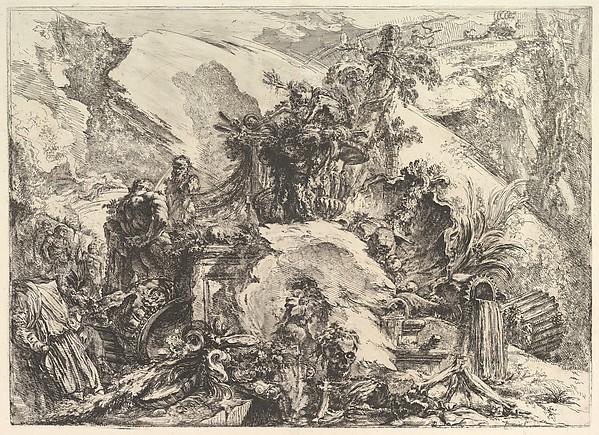
The Skeletons, from "Grotteschi" (Grotesques)
ca. 1748 · Etching with engraving, drypoint, and burnishing; second state of five (Robison)
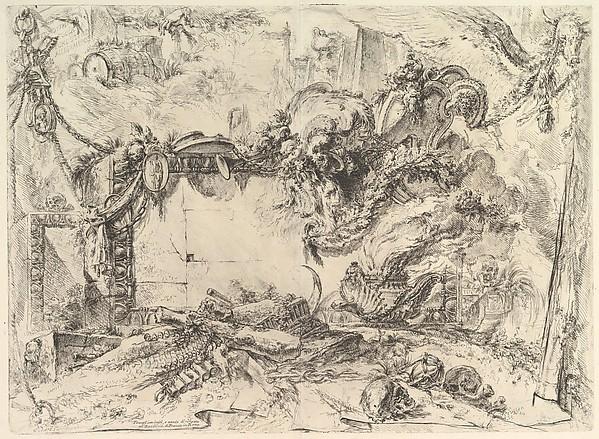
The Monumental Tablet, from "Grotteschi" (Grotesques)
ca. 1748 · Etching, engraving, drypoint, scratching; second state of four (Robison)
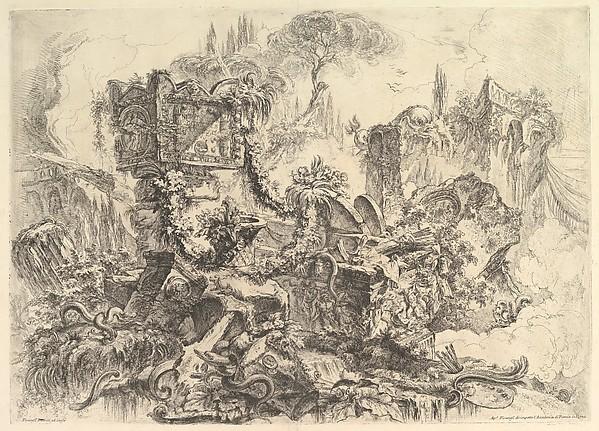
The Tomb of Nero, from "Grotteschi" (Grotesques)
ca. 1748 · Etching, engraving, drypoint, scratching; second state of six (Robison)
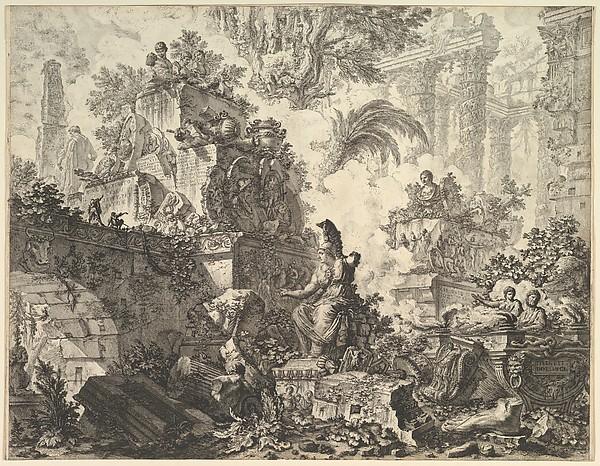
Frontispiece, with Statue of Minerva, from "Vedute di Roma" (ca. 1748, Met-Objekt 3965)
ca. 1748 · Etching
Frontispiece, with Statue of Minerva, from 'Vedute di Roma'
ca. 1748 · Etching
Frontispiece, with Statue of Minerva, from "Vedute di Roma" (ca. 1748, Met-Objekt 3967)
ca. 1748 · Etching
Interior view of St. Peter's Basilica in the Vatican, from "Vedute di Roma" (Roman Views) (ca. 1748, Met-Objekt 3971)
ca. 1748 · Etching; first state of four (Hind)
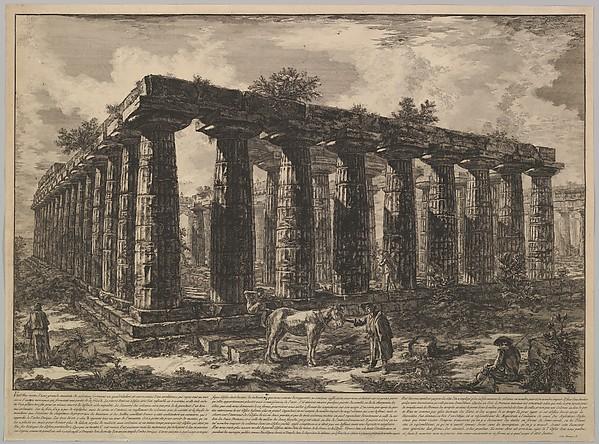
View showing the remains of a large enclosure of columns...
ca. 1748 · Etching
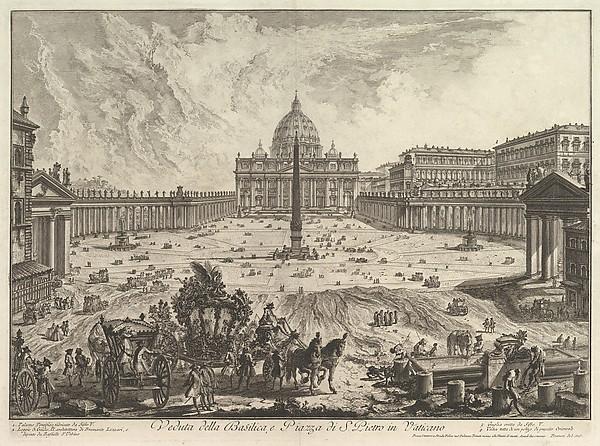
View of St. Peter's Basilica and Piazza in the Vatican, from Vedute di Roma (Roman Views)
ca. 1748 · Etching; fourth state of seven (Hind)
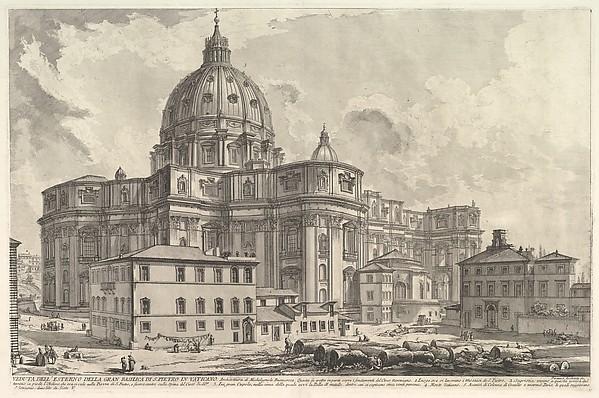
View of the exterior of St. Peter's Basilica in the Vatican, from Vedute di Roma (Roman Views)
ca. 1748 · Etching; first state of seven (Hind)
View of St. Peter's Basilica and Piazza in the Vatican, from "Vedute di Roma" (Roman Views)
ca. 1748 · Etching; first state of seven (Hind)
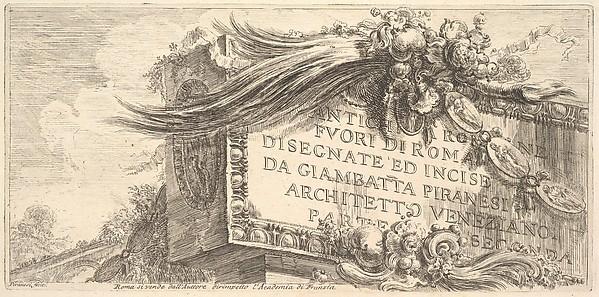
Frontispiece to "Roman Antiquities outside Rome drawn and etched by Giambat'ta Piranesi, Venetian Architect Part Two" (ANTICHITÀ ROMANE FUORI DI ROMA DISEGNATE ED INCISE DA GIAMBAT'TA PIRANESI, ARCHITETTO VENEZIANO, PARTE SECONDA)
ca. 1748 · Etching
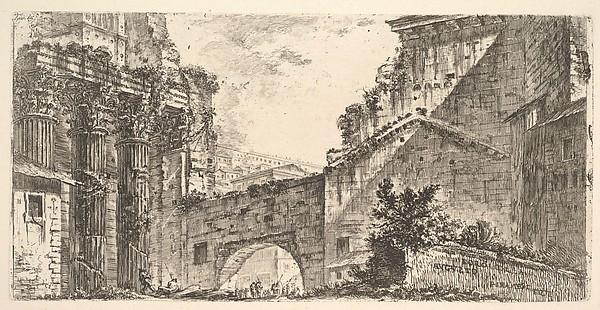
Plate 15: Forum of Augustus (Foro di Augusto), from "Antichità Romane de' Tempi della Repubblica, e de' primi Imperatori"
ca. 1748 · Etching
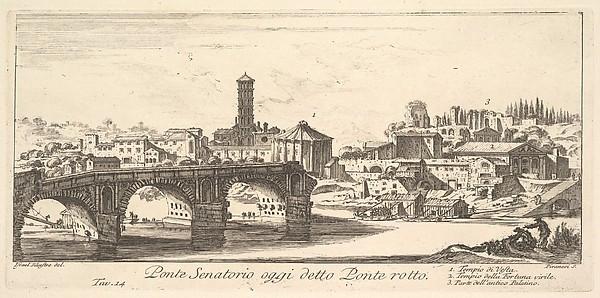
Plate 14: Senatorial Bridge, today called the Ponte Rotto (Broken Bridge). 1. Temple of Vesta. 2. Temple of Fortuna Virilis. 3. Part of the ancient Palatine.
ca. 1748 · Etching
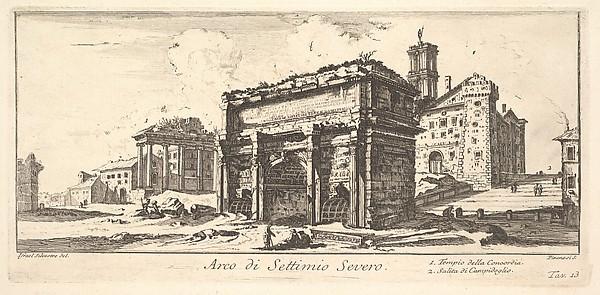
Plate 13: Arch of Settimius Severus 1. Temple of Concord. 2. Ascent to the Capitoline Hill (Arco di Settimio Severo. 1. Tempio della Concordia. 2. Salita di Campidoglio.), from "Antichità Romane de' Tempi della Repubblica, e de' primi Imperatori"
ca. 1748 · Etching
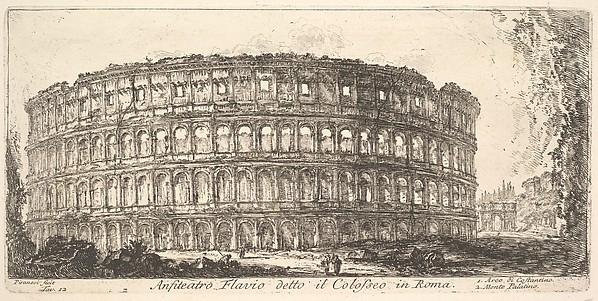
Plate 12: Flavian Amphitheater, called the Colosseum. 1. Arch of Constantine. 2. Palatine Hill. (Anfiteatro Flavio detto il Colosseo in Roma. 1. Arco di Costantino. 2. Monte Palatino.), from "Antichità Romane de' Tempi della Repubblica, e de' primi Imperatori"
ca. 1748 · Etching
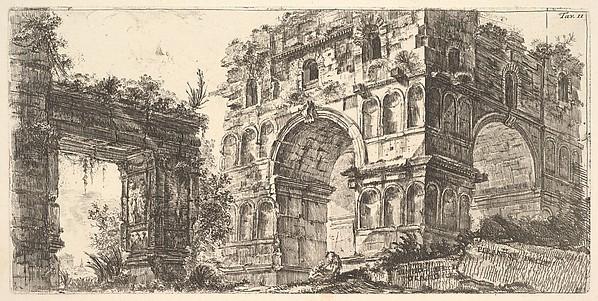
Plate 11: Temple of Janus (Tempio di Giano), from "Antichità Romane de' Tempi della Repubblica, e de' primi Imperatori"
ca. 1748 · Etching
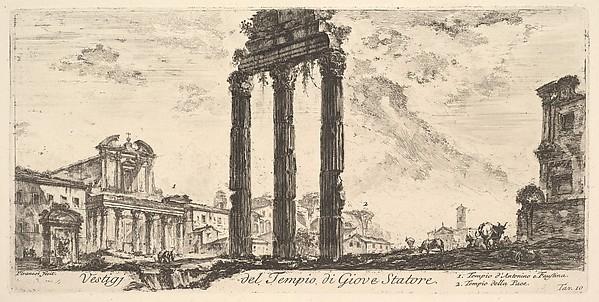
Plate 10: Ruins of the Temple of Jupiter Stator (Jupiter the Supporter). 1. Temple of Antoninus and Faustina. 2. Temple of Peace.
ca. 1748 · Etching
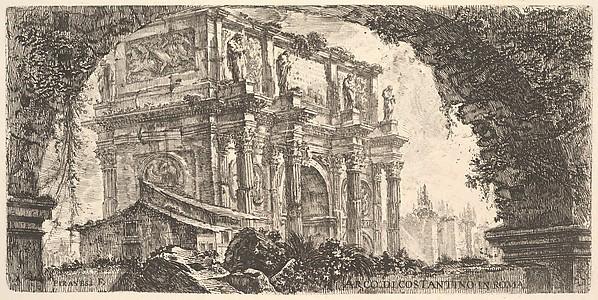
Plate 9: Arch of Constantine in Rome (Arco di Costantino in Roma), from "Antichità Romane de' Tempi della Repubblica, e de' primi Imperatori"
ca. 1748 · Etching
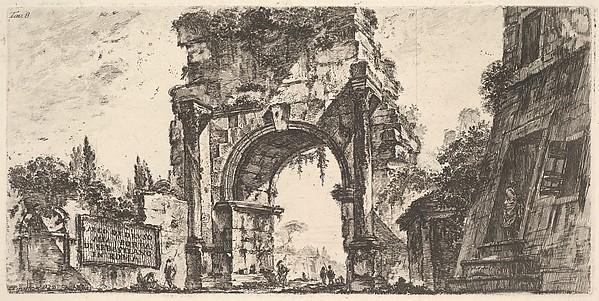
Plate 8: Arch of Drusus at the Porta S. Sebastiano in Rome (Arco di Druso alla Porta di Sebastiano in Roma), from "Antichità Romane de' Tempi della Repubblica, e de' primi Imperatori"
ca. 1748 · Etching
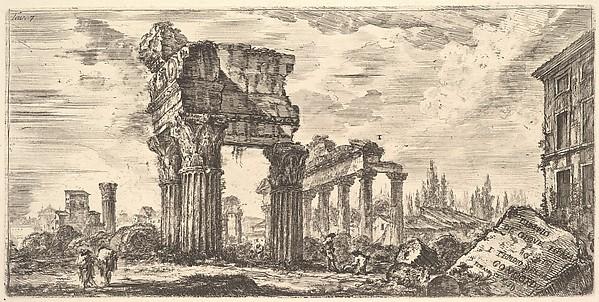
Plate 7: Temple of Jupiter Tonans (Jupiter the Thunderer). 1. Temple of Concord. (Tempio di Giove Tonans. 1. Tempio della Concordia.), from "Antichità Romane de' Tempi della Repubblica, e de' primi Imperatori"
ca. 1748 · Etching
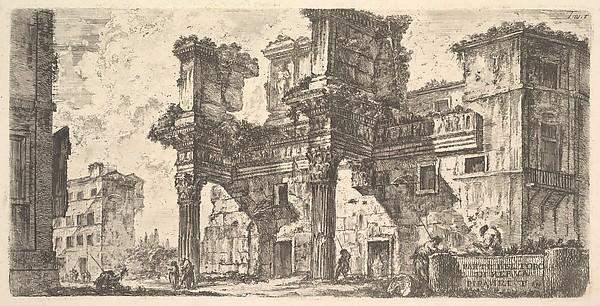
Plate 1: Part of the Forum of Nerva (Parte del Foro di Nerva), from "Antichità Romane de' Tempi della Repubblica, e de' primi Imperatori"
ca. 1748 · Etching
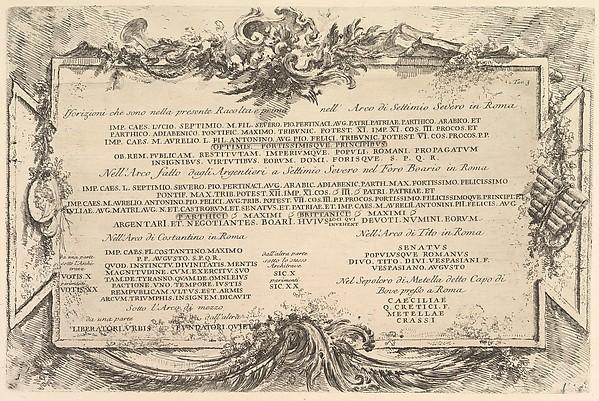
Plate 3: Inscriptions on Antiquities outside Rome with Index of Plates, from "Antichità Romane de' Tempi della Repubblica, e de' primi Imperatori"
ca. 1748 · Etching
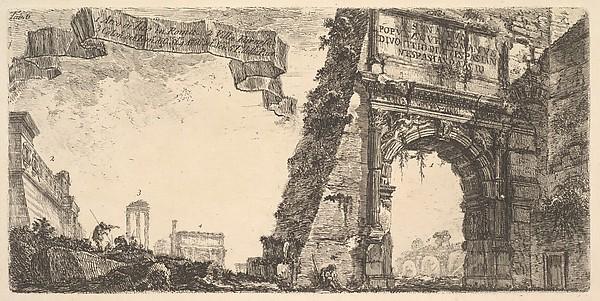
Plate 6: 1. Arch of Titus. 2. Villa Farnese. 3. Columns of the Temple of Jupiter Stator (the Supporter). 4. Arch of Septimus Severus. 5. Temple of Peace.
ca. 1748 · Etching
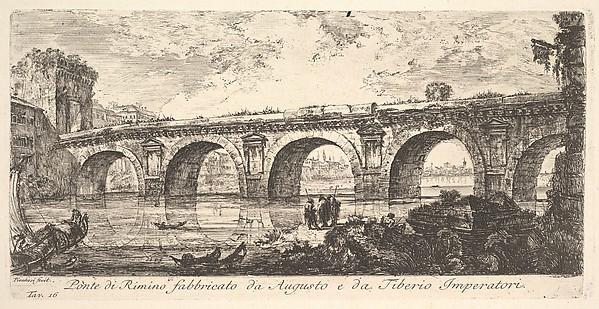
Plate 16: The Bridge at Rimini built by the Emperors Augustus and Tiberius (Ponte di Rimino fabbricato da Augusto e da Tiberio Imperatori), from "Antichità Romane fuori di Roma"
ca. 1748 · Etching
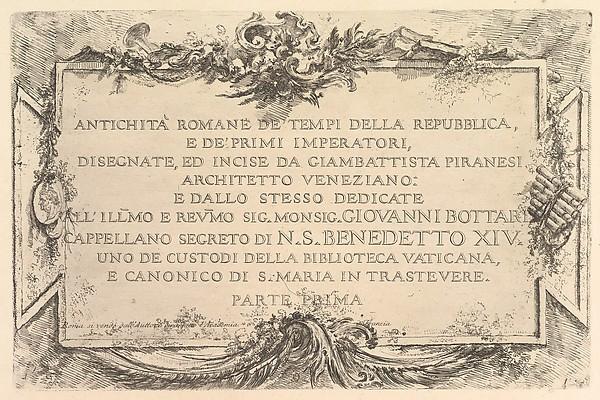
Title page from 'Roman Antiquity of the Time of the Republic and the First Emperors' (Antichità Romane de' Tempi della Repubblica, e de' primi Imperatori)
ca. 1748 · Etching
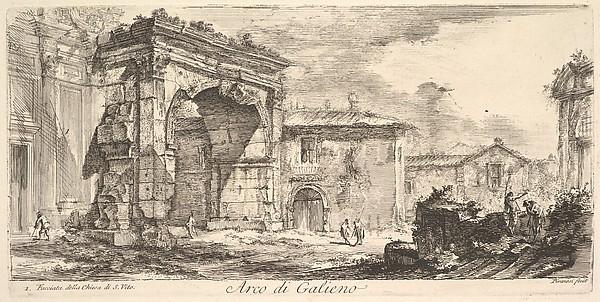
Arch of Galienus. 1. Façade of the Church of S. Vito (Arco di Galieno. 1. Facciata della Chiesa di S. Vito), from "Alcune Vedute di Archi Trionfali ed altri monumenti inalzati da Romani parte di quali se veggono in Roma e parte per l'Italia"
ca. 1748 · Etching

Plate 28: Arch of Trajan in Ancona (Arco di Trajano in Ancona), from "Alcune Vedute di Archi Trionfali ed altri monumenti inalzati da Romani parte di quali se veggono in Roma e parte per l'Italia"
ca. 1748 · Etching
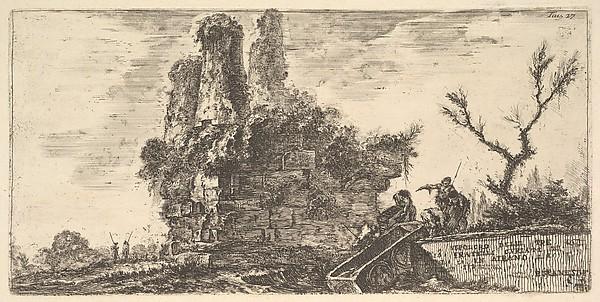
Plate 27: Tomb of the three Curiatii brothers in Albano (Sepolcro delle tre fratelli Curiati in Albano), from "Alcune Vedute di Archi Trionfali ed altri monumenti inalzati da Romani parte di quali se veggono in Roma e parte per l'Italia"
ca. 1748 · Etching
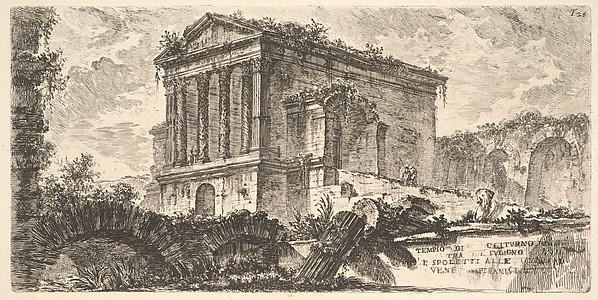
Plate 26: Temple of Clitumnus between Foligno and Spoleto... (Tempio di Clitumno tra Fuligno e Spoletti...), from "Alcune Vedute di Archi Trionfali ed altri monumenti inalzati da Romani parte di quali se veggono in Roma e parte per l'Italia"
ca. 1748 · Etching
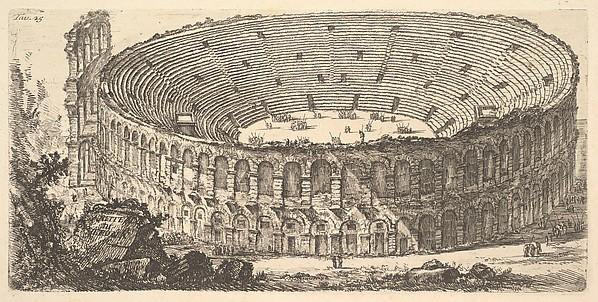
Plate 25: Amphitheater of Verona (Anfiteatro di Verona), from "Alcune Vedute di Archi Trionfali ed altri monumenti inalzati da Romani parte di quali se veggono in Roma e parte per l'Italia"
ca. 1748 · Etching
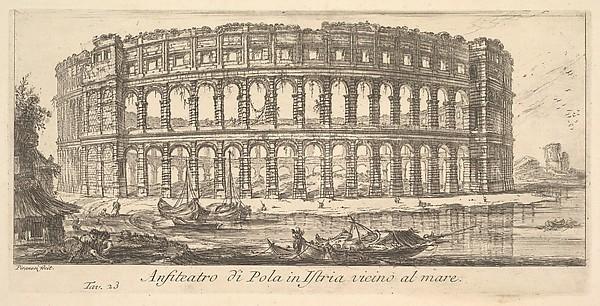
Plate 23: Amphitheater of Pola in Istria near the sea (Anfiteatro di Pola in Istria vicino al mare), from "Alcune Vedute di Archi Trionfali ed altri monumenti inalzati da Romani parte di quali se veggono in Roma e parte per l'Italia"
ca. 1748 · Etching
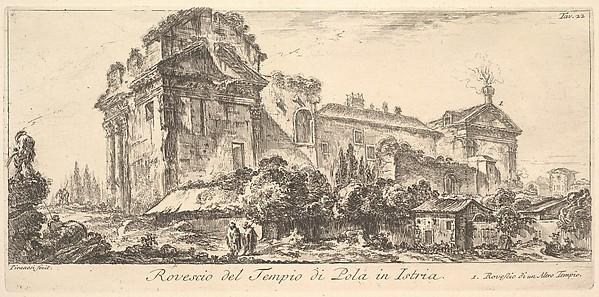
Plate 22: Rear View of the Temple of Pola in Istria. 1. Rear View of another temple. (Rovescio del Tempio di Pola di Istria. 1. Rovescio di un Altro Tempio.), from "Alcune Vedute di Archi Trionfali ed altri monumenti inalzati da Romani parte di quali se veggono in Roma e parte per l'Italia"
ca. 1748 · Etching
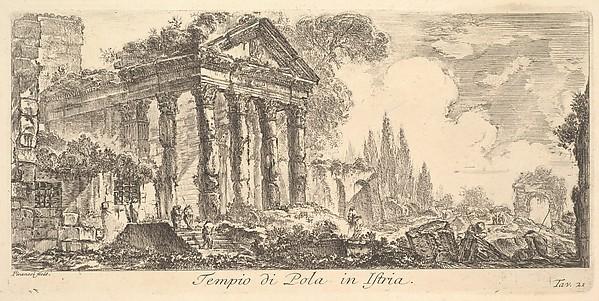
Plate 21: Temple of Pola in Istria (Tempio di Pola in Istria), from "Alcune Vedute di Archi Trionfali ed altri monumenti inalzati da Romani parte di quali se veggono in Roma e parte per l'Italia"
ca. 1748 · Etching
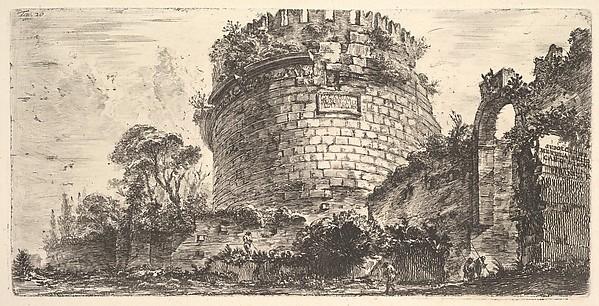
Plate 20: Tomb of Caecilia Metella called the Capo di Bove (Ox Head) (Sepolcro di Metela detto Capo di Bove), from "Alcune Vedute di Archi Trionfali ed altri monumenti inalzati da Romani parte di quali se veggono in Roma e parte per l'Italia"
ca. 1748 · Etching
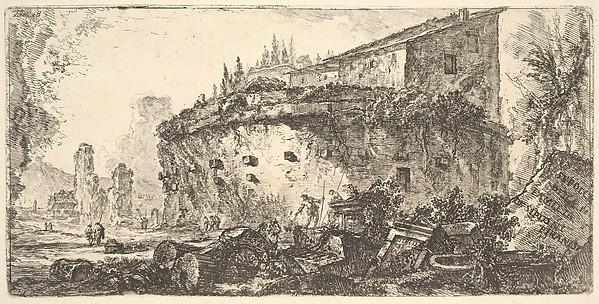
Plate 18: The Tomb of the Scipios (Sepolcro della famiglia de' Scipioni), from "Alcune Vedute di Archi Trionfali ed altri monumenti inalzati da Romani parte di quali se veggono in Roma e parte per l'Italia"
ca. 1748 · Etching

Plate 17: The Arch of Rimini built by Augustus (Arco di Rimino fabbricato da Augusto), from "Alcune Vedute di Archi Trionfali ed altri monumenti inalzati da Romani parte di quali se veggono in Roma e parte per l'Italia"
ca. 1748 · Etching
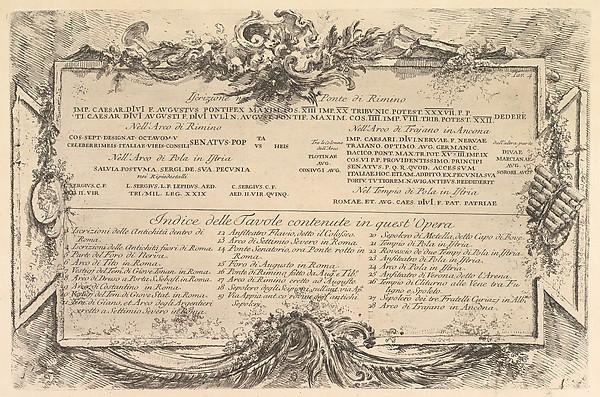
Iscrizione nei lati del Ponte di Rimino (Inscription on the side of the Rimini Bridge) followed by an index of plates in the volume, from "Antichità Romane de' Tempi della Repubblica, e de' primi Imperatori"
ca. 1748 · Etching
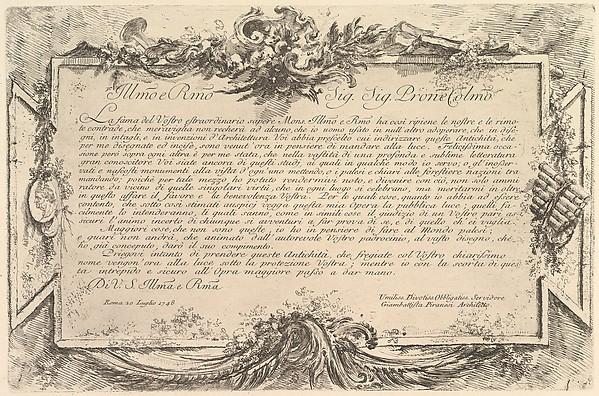
Dedication to Giovanni Bottari (Dédicace à Bottari), from "Antichità Romane de' Tempi della Repubblica, e de' primi Imperatori"
ca. 1748 · Etching
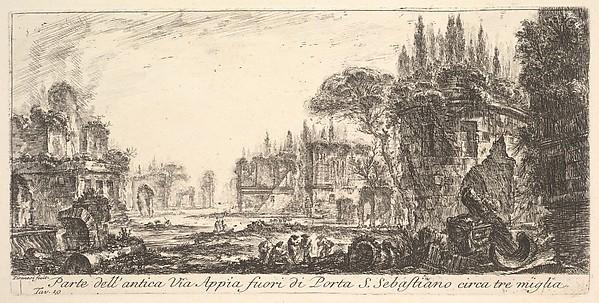
Plate 19: Part of the ancient Appian Way about three miles outside Porta S. Sebastiano, from "Alcune Vedute di Archi Trionfali ed altri monumenti inalzati da Romani parte de quali se veggono in Roma e parte per l'Italia"
ca. 1748 · Etching
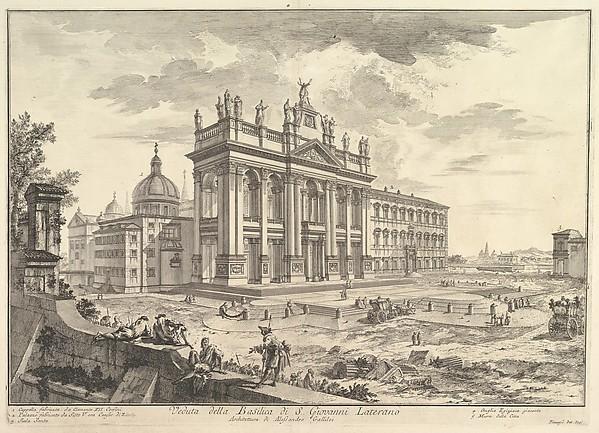
S. Giovanni in Laterano, main façade, with Palace and Scala Santa on the right (Veduta della Basilica di S. Giovanni Laterano), from "Vedute di Roma"
ca. 1749 · Etching
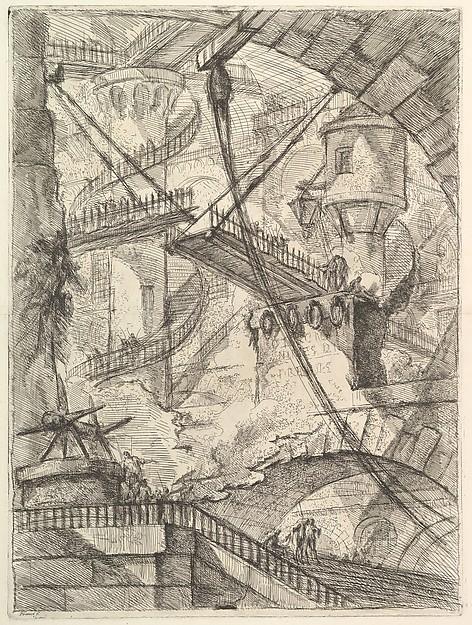
The Drawbridge, from "Carceri d'invenzione" (Imaginary Prisons)
ca. 1749–50 · Etching, engraving, scratching; first state of six (Robison)
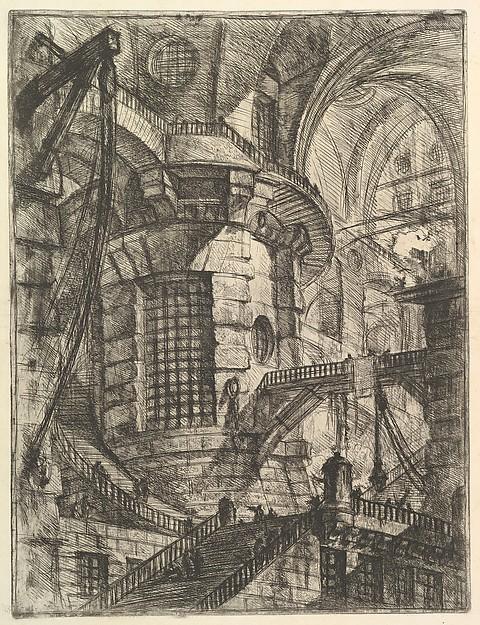
The Round Tower, from "Carceri d'invenzione" (Imaginary Prisons)
ca. 1749–50 · Etching, engraving, sulphur tint or open bite, burnishing; first state of four (Robison)
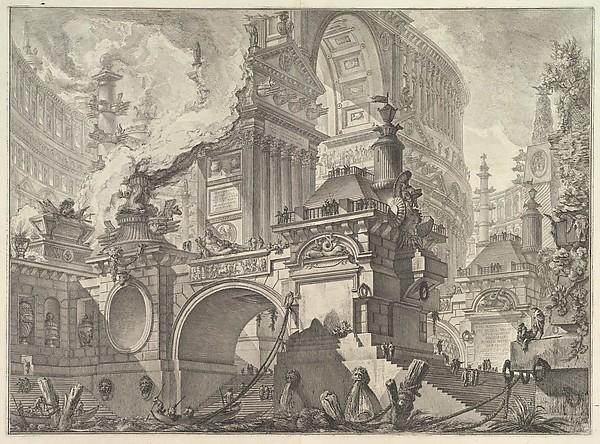
Parte di ampio magnifico Porto all'uso degli antichi Romani, ove si scuopre l'interno della gran Piazza pel Comercio... (Part of a spacious and magnificent Harbor for the use of the ancient Romans opening onto a large market square...), from "Opere Varie di Archiettura, prospettive, grotteschi, antichità; inventate, ed incise da Giambattista Piranesi Architetto Veneziano"
ca. 1749–50 · Etching, engraving, drypoint; second state of seven (Robison)
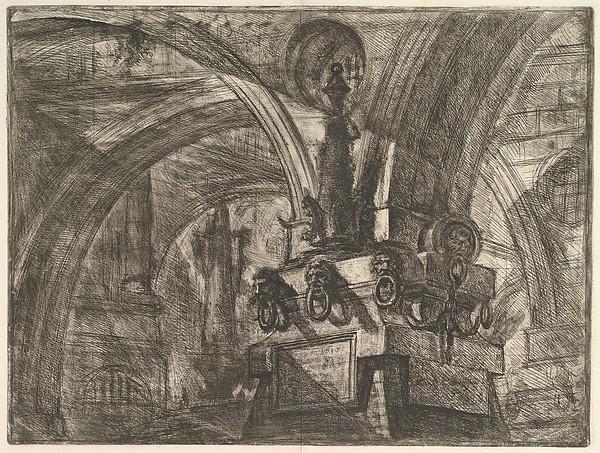
The Pier with a Lamp, from "Carceri d'invenzione" (Imaginary Prisons)
ca. 1749–50 · Etching, engraving, sulphur tint or open bite, burnishing; first state of seven (Robison)

The Arch with a Shell Ornament, from "Carceri d'invenzione" (Imaginary Prisons)
ca. 1749–50 · Etching, engraving, scratching, sulphur tint or open bite, drypoint; first state of seven (Robison)
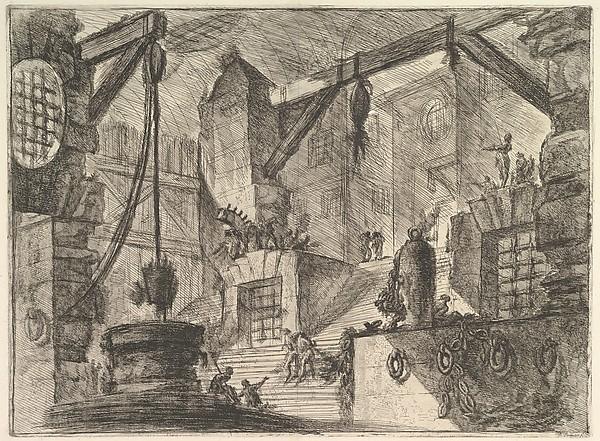
The Well, from "Carceri d'invenzione" (Imaginary Prisons)
ca. 1749–50 · Etching, engraving, scratching, burnishing, lavis; first state of six (Robison)
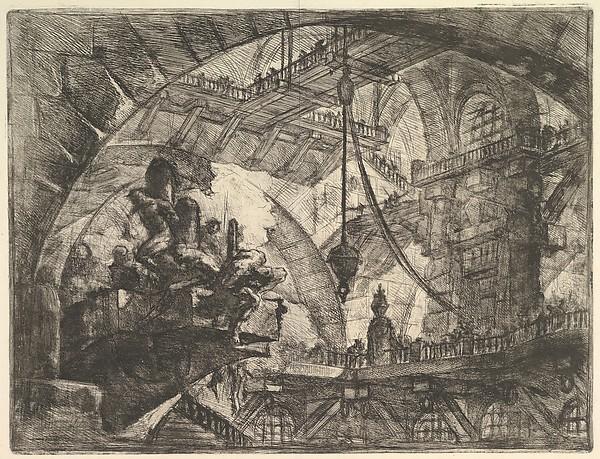
Prisoners on a Projecting Platform, from "Carceri d'invenzione" (Imaginary Prisons)
ca. 1749–50 · Etching, engraving, sulphur tint or open bite, burnishing; first state of four (Robison)
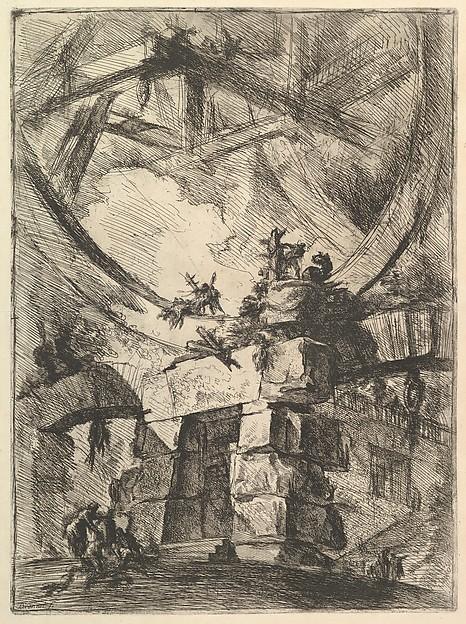
The Giant Wheel, from "Carceri d'invenzione" (Imaginary Prisons)
ca. 1749–50 · Etching, engraving; second state of eight (Robison)
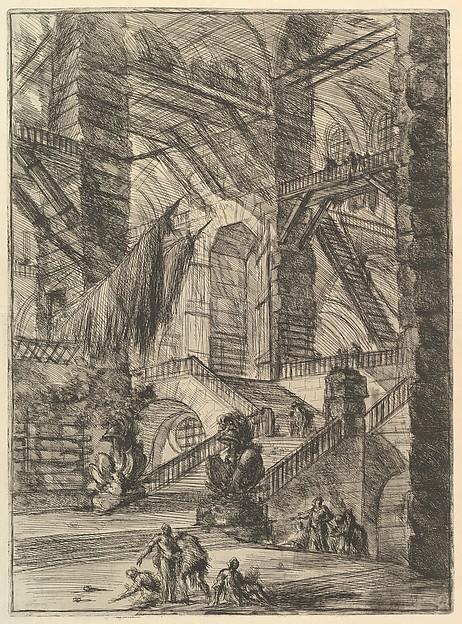
The Staircase with Trophies, from "Carceri d'invenzione" (Imaginary Prisons)
ca. 1749–50 · Etching, engraving; first state of six (Robison)
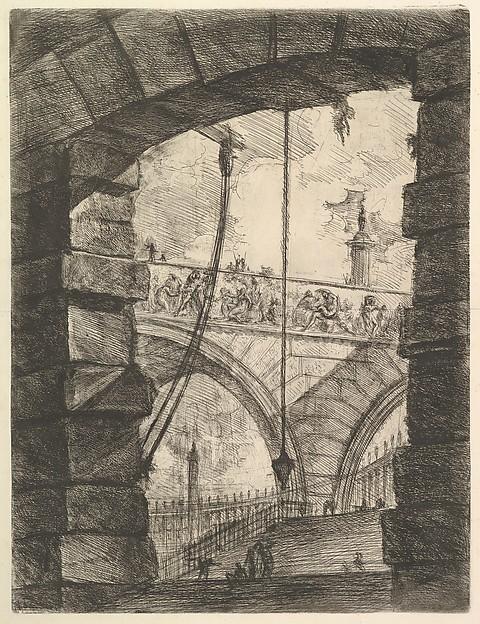
The Grand Piazza, from "Carceri d'invenzione" (Imaginary Prisons)
ca. 1749–50 · Etching, engraving, sulphur tint or open bite, burnishing; first state of six (Robison)
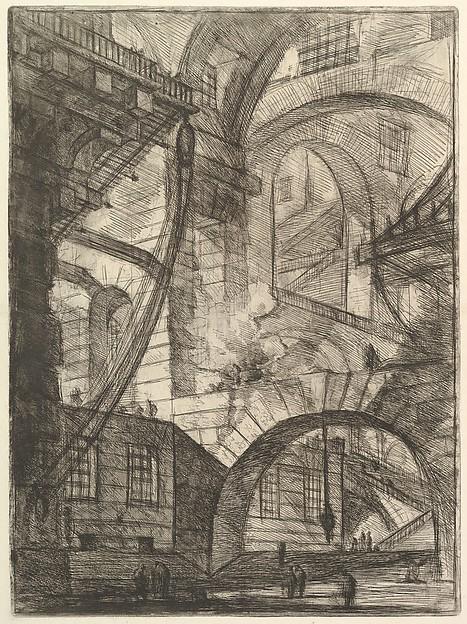
The Smoking Fire, from "Carceri d'invenzione" (Imaginary Prisons)
ca. 1749–50 · Etching, engraving, sulphur tint or open bite, burnishing; first state of seven (Robison)
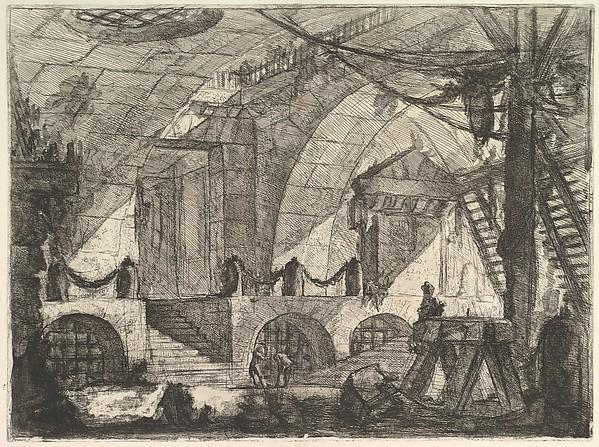
The Sawhorse, from "Carceri d'invenzione" (Imaginary Prisons)
ca. 1749–50 · Etching, engraving, sulphur tint or open bite, scratching
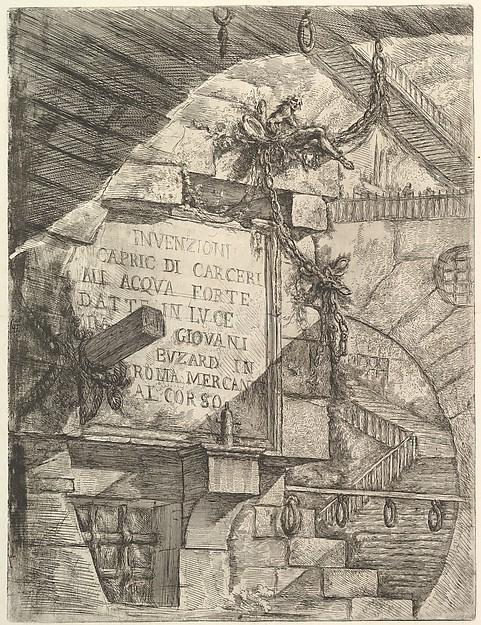
Title Page, from "Carceri d'invenzione" (Imaginary Prisons)
ca. 1749–50 · Etching, engraving, sulphur tint or open bite; first state of nine (Robison)
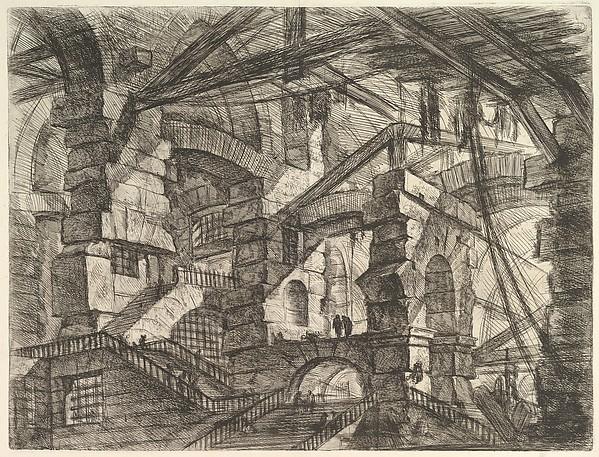
The Gothic Arch, from "Carceri d'invenzione" (Imaginary Prisons)
ca. 1749–50 · Etching, engraving, sulphur tint or open bite, burnishing; first state of six Robison)
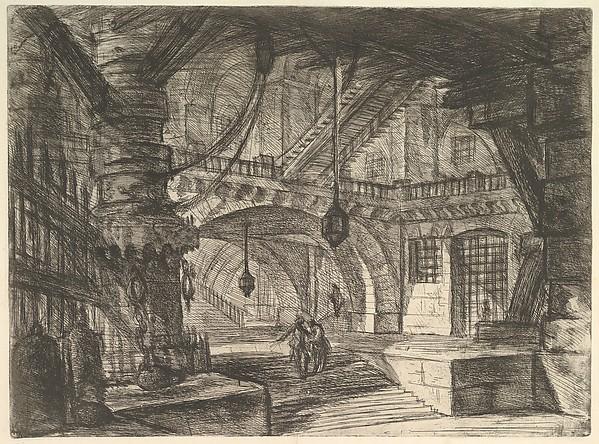
The Pier with Chains, from "Carceri d'invenzione" (Imaginary Prisons)
ca. 1749–50 · Etching, engraving, sulphur tint or open bite, burnishing; first state of six (Robison)
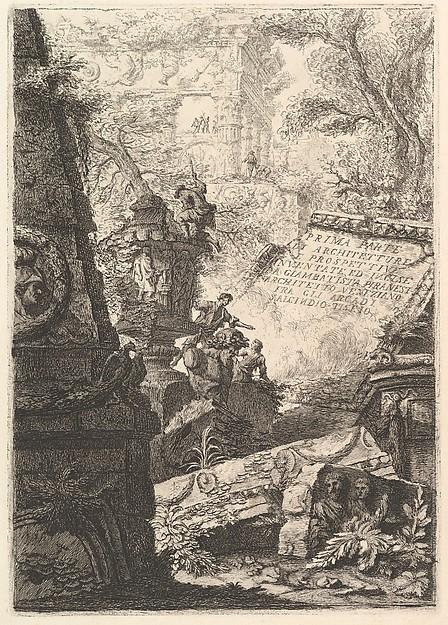
Frontispiece from "Prima Parte di Architetture, e Prospettive"
ca. 1750 · Etching
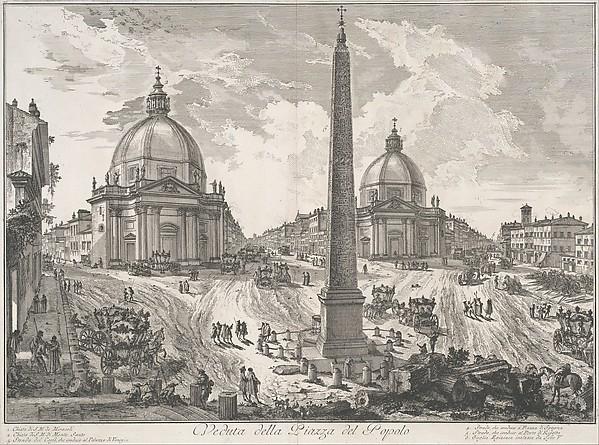
The Piazza del Popolo (Veduta della Piazza del Popolo), from "Vedute di Roma"
ca. 1750 · Etching
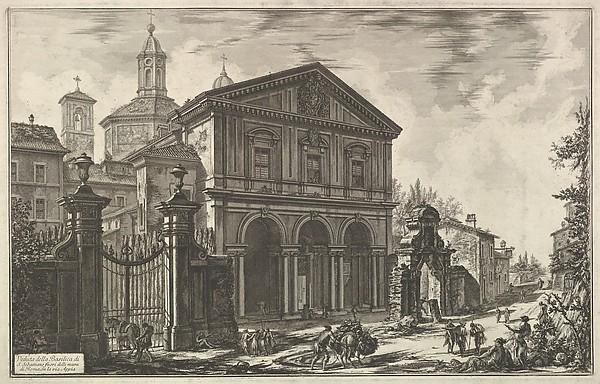
View of the Basilica of San Sebastiano fuori delle mura [St. Sebastian outside the Walls] on the Appian Way, from Vedute di Roma (Roman Views) (ca. 1750, Met-Objekt 3972)
ca. 1750 · Etching; first state of four (Hind)
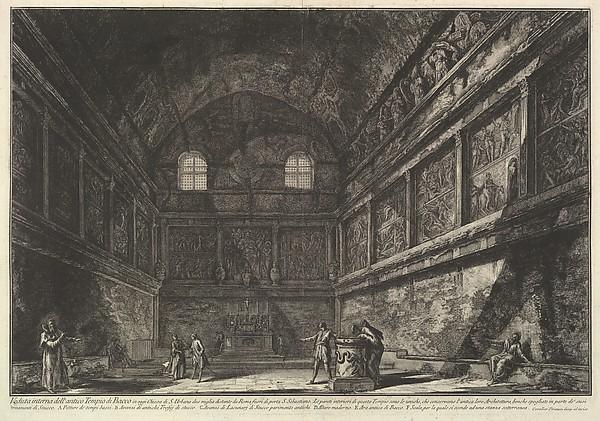
Interior view of the ancient Temple of Bacchus, now the church of S. Urbano, two miles from Rome..., from Vedute di Roma (Roman Views)
ca. 1750 · Etching; second state of four (Hind)
View of the Basilica of San Sebastiano fuori delle mura [St. Sebastian outside the Walls] on the Appian Way, from Vedute di Roma (Roman Views) (ca. 1750, Met-Objekt 3976)
ca. 1750 · Etching; first state of four (Hind)
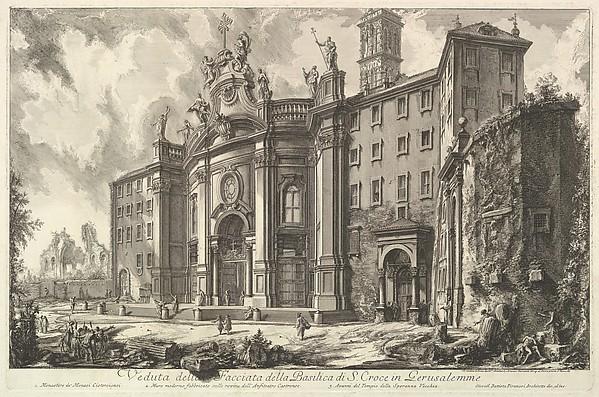
View of the Façade of the Basilica of S. Croce in Gerusalemme, from Vedute di Roma
ca. 1750 · Etching; first state of six (Hind)
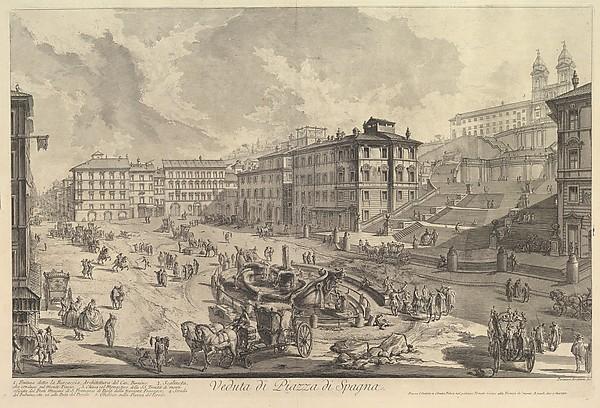
The Piazza di Spagna (Veduta di Piazza di Spagna)
ca. 1750 · Etching
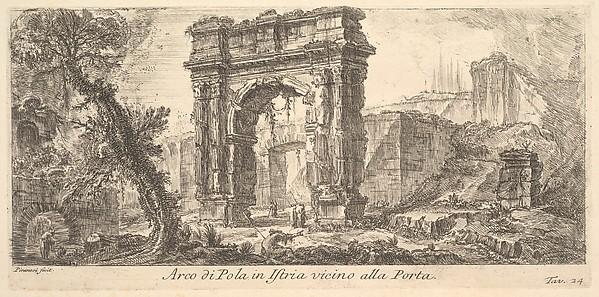
Plate 24: Arch of Pola in Istria near the Gate (Arco di Pola in Istria vicino alla Porta), from "Alcune Vedute di Archi Trionfali ed altri monumenti inalzati da Romani parte di quali se veggono in Roma e parte per l'Italia"
ca. 1750 · Etching
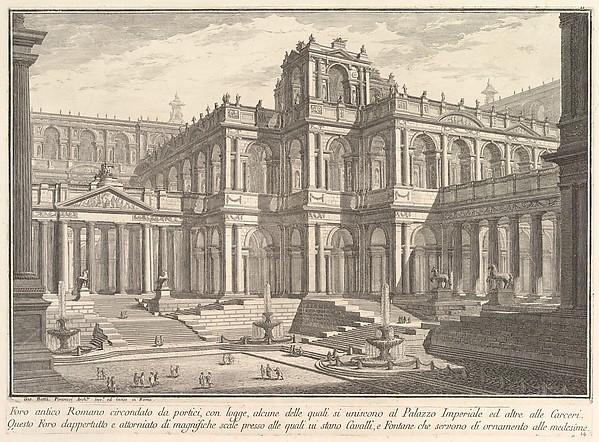
Ancient Roman forum surrounded by porticoes, with loggias, some of which communicate with the Imperial Palace and others with the prisons...
ca. 1750 · Etching
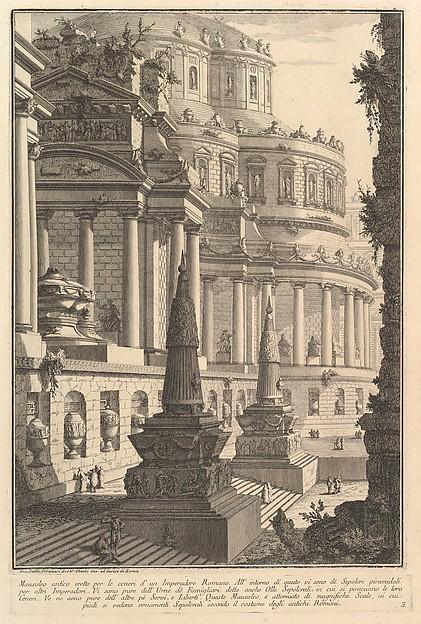
Ancient mausoleum erected for the ashes of a Roman Emperor (Mausoleo antico eretto per le ceneri d'un Imperadore Romano), from "Prima Parte di Architettura, e Prospettive"
ca. 1750 · Etching
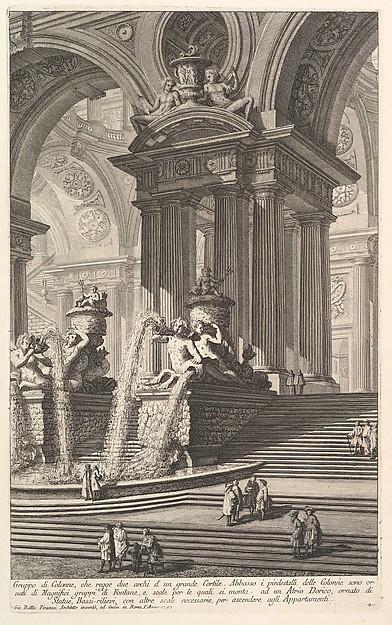
Group of columns which support two arches of a great courtyard... (Gruppo di Colonne, che regge due archi d'un grande Cortile...), from "Prima Parte di Architettura, e Prospettive"
ca. 1750 · Etching
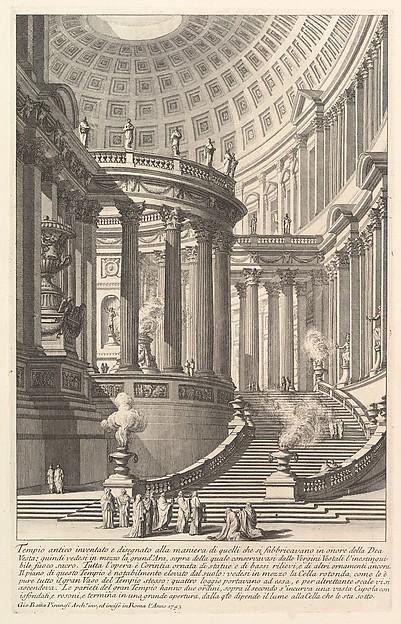
Imaginary Ancient Temple Designed in the Style of Those Built in Honor of the Goddess Vesta
ca. 1750 · Etching
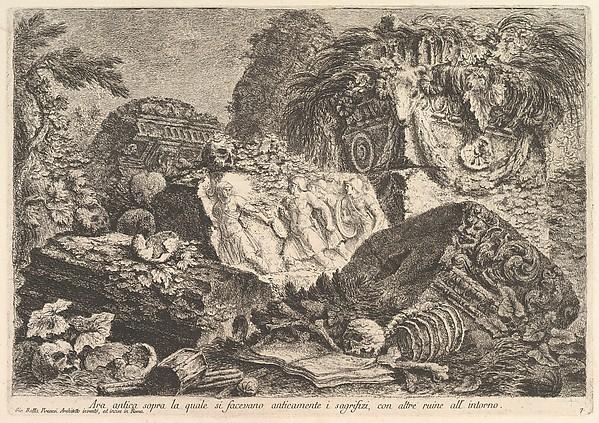
Ancient Altar on which sacrifices were performed in antiquity, surrounded by other ruins (Ara antica sopra la quale si facevano anticamente i sagrifizi, con altre ruine all'intorno), from "Prima Parte di Architettura, e Prospettive"
ca. 1750 · Etching
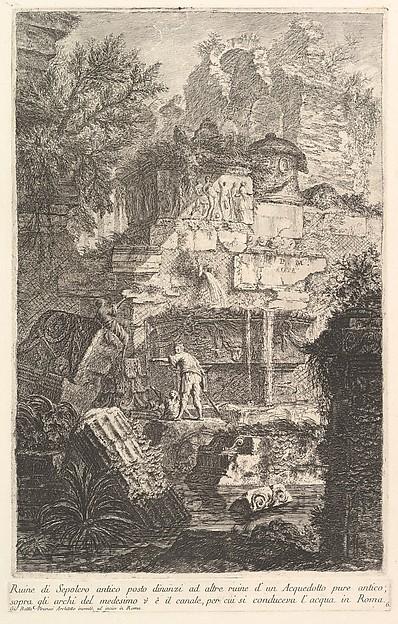
Ruins of an ancient tomb in front of ruins of an ancient aqueduct (Ruine di Sepolcro antico posto dinanzi ad altre ruine d'un Aquedotto), from "Prima Parte di Architettura, e Prospettive"
ca. 1750 · Etching
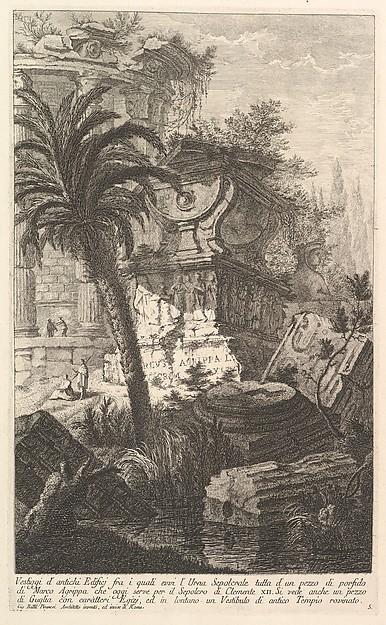
Remains of ancient buldings among which stands the sepulchral urn of Marcus Agrippa made entirely of porphyry, which serves today as the Tomb of Clement XII...
ca. 1750 · Etching
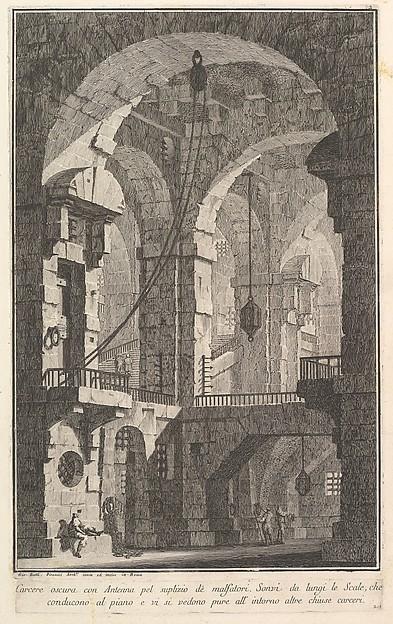
Dark prison with a courtyard for the punishment of criminals... (Carcere oscura con Antenna pel suplizio dè malfatori...)
ca. 1750 · Etching
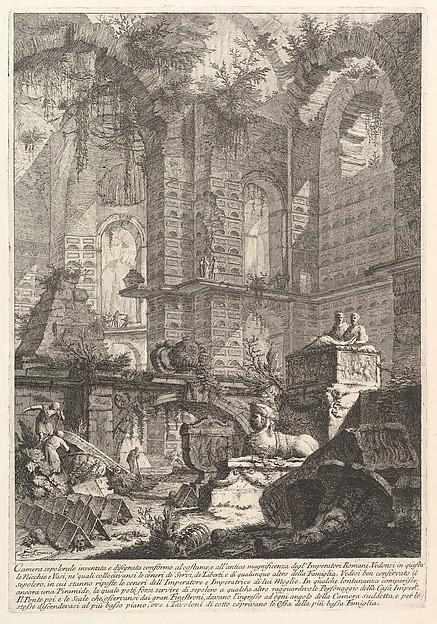
Camera sepolcrale inventata e disegnata conforme al costume, e all'antica magnificenza degl'Imperatori Romani... (Imaginary sepulcral chamber designed according to the fashion and ancient magnificence of the Roman Emperors...), from "Prima Parte di Architettura, e Prospettive"
ca. 1750 · Etching
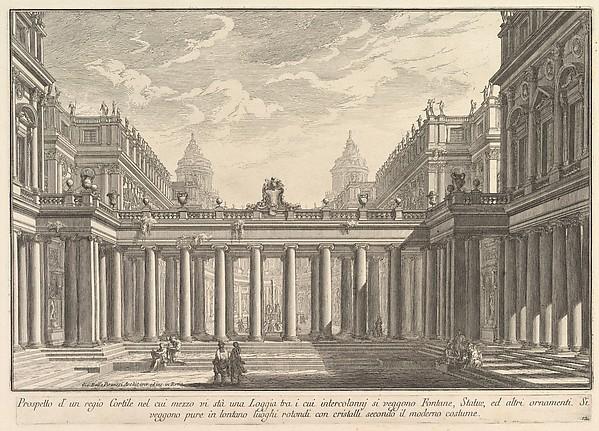
View of a courtyard with a loggia, fountains, statues, and other ornaments (Prospetto d'un regio Cortile nel cui mezzo vi stà una Loggia...), from "Prima Parte di Architettura, e Prospettive"
ca. 1750 · Etching
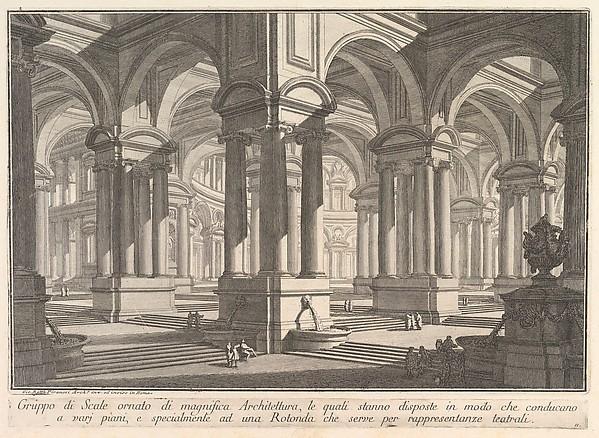
Stairways adorned by magnificent architecture... (Gruppo di Scale ornato di magnifica Architettura...), from "Prima Parte di Architettura, e Prospettive"
ca. 1750 · Etching
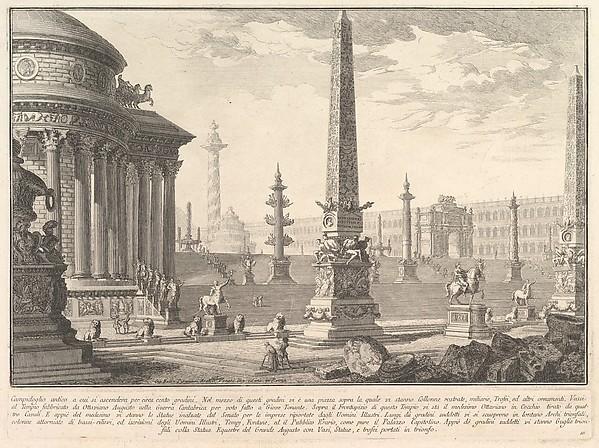
The ancient Capitol ascended by approximately one hundred steps... (Campidoglio antico a cui si ascendeva per circa cento gradini...), from "Prima Parte di Architettura, e Prospettive"
ca. 1750 · Etching
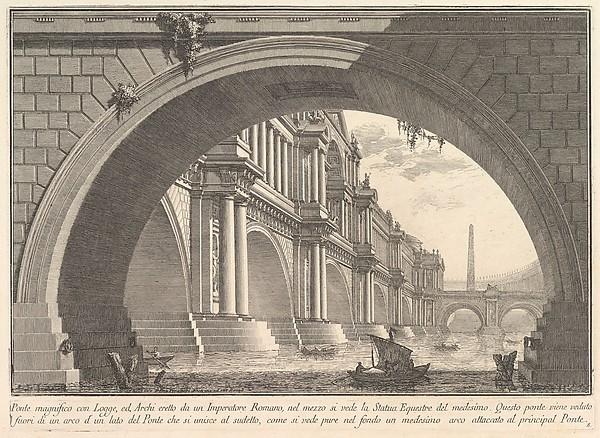
Magnificent bridge with loggias, and arches erected by a Roman Emperor... (Ponte magnfiico con Logge, ed Archi erretto da un Imperatore Romane...)
ca. 1750 · Etching
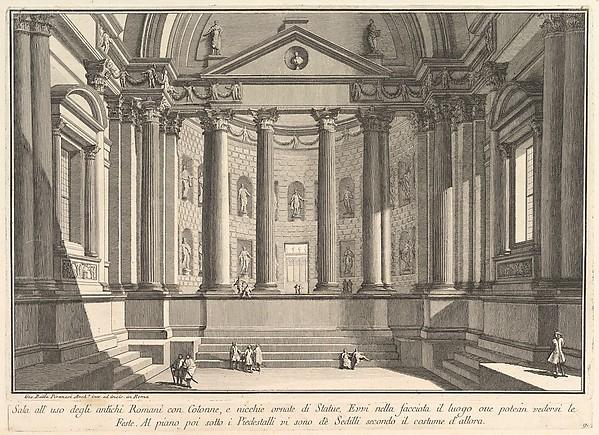
Colonnaded hall according to the custom of the ancient Romans, and niches adorned with statues (Sala all'uso degli antichi Romani con Colonne, e nicchie ornate di Statue), from "Prima Parte di Architettura, e Prospettive"
ca. 1750 · Etching
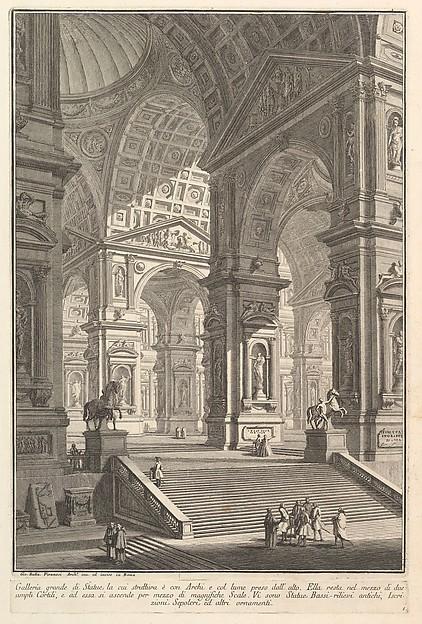
Large sculpture gallery built on arches and lit from above... (Galleria grande di Statue, la cui struttura è con Archi e col lume preso dall'alto...), from "Prima Parte di Architettura, e Prospettive"
ca. 1750 · Etching
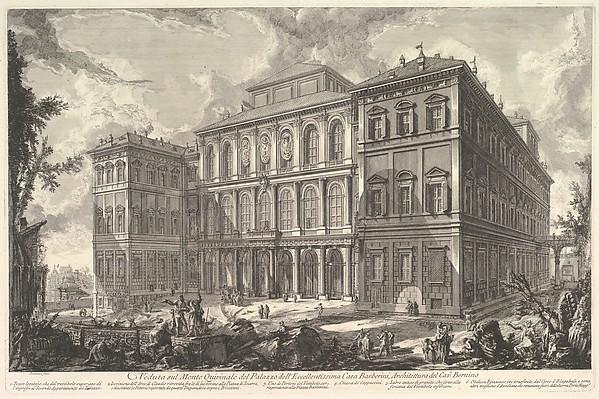
View of the palace of the illustrious Barberini family on the Quirinal Hill, designed by Cavaliere Bernini, from Vedute di Roma (Roman Views)
ca. 1750–1759 · Etching; first state of five (Hind)
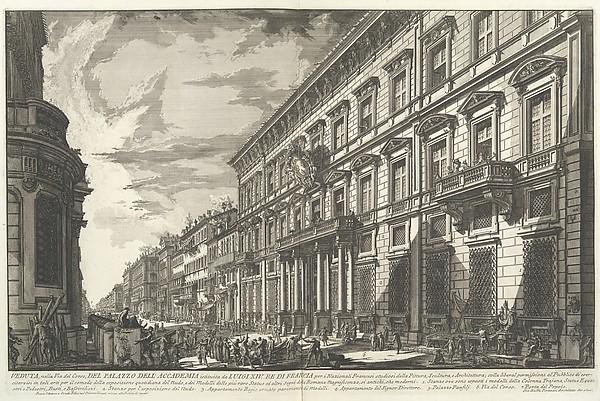
View along the Via del Corso of the Palazzo dell'Accademia, established by Louis XIV, King of France for French students of Painting, Sculpture and Architecture..., from "Vedute di Roma" (Views of Rome), part I
ca. 1750–78 · Etching; third state of five (Hind)
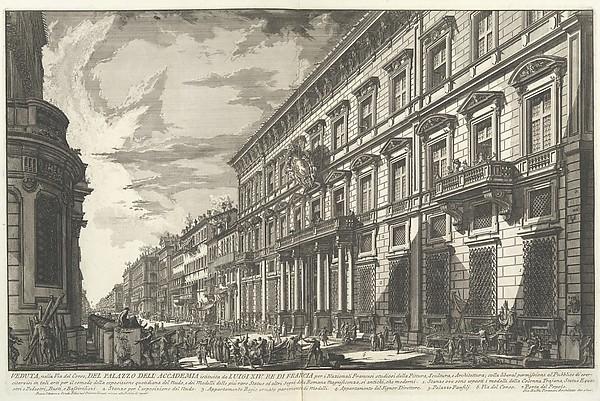
Vedute di Roma (Views of Rome), part I
ca. 1750–78 · Etching
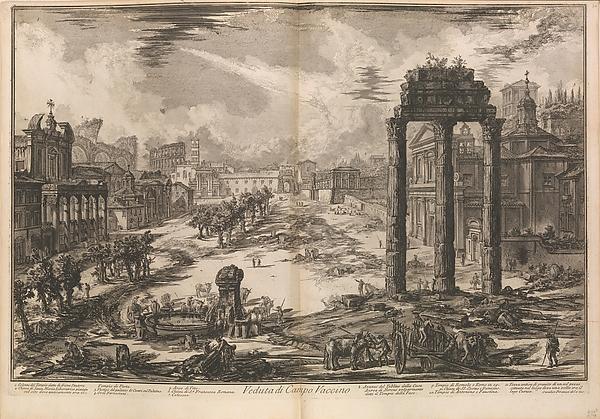
View of the Campo Vaccino (Roman Forum with the Temple of Castor and Pollux to right), from "Vedute di Roma" (Roman Views), part II
ca. 1750–78 · Etching; first state of four (Hind)
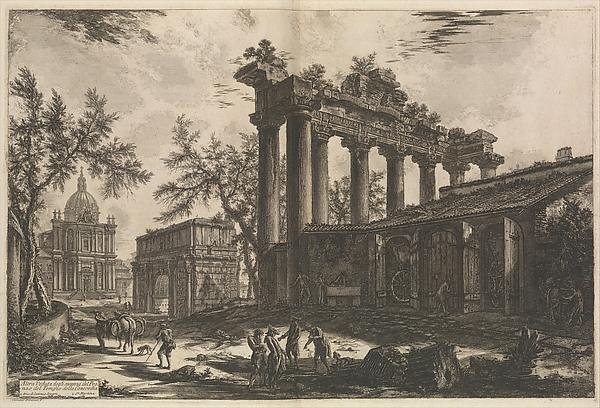
Another view of the remains of the Pronaos of the Temple of Concord (The Temple of Saturn with Arch of Septimius Severus in left background), from "Vedute di Roma" (Views of Rome), part I
ca. 1750–78 · Etching; first state of three (Hind)

View of the Flavian Amphitheater, called the Colosseum, from "Vedute di Roma" (Roman Views), part II
ca. 1750–78 · Etching; second state of four (Hind)
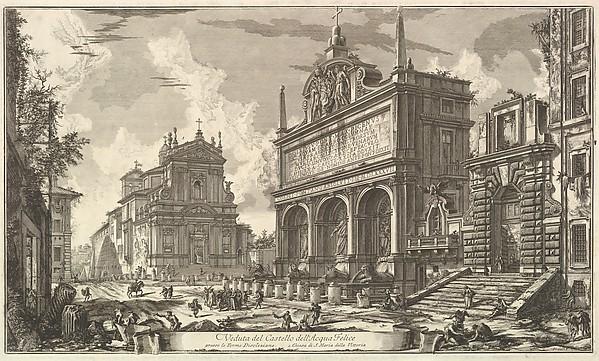
View of the Fountainhead of the Acqua Felice, from Vedute di Roma (Roman Views)
ca. 1751 · Etching; first state of five (Hind)
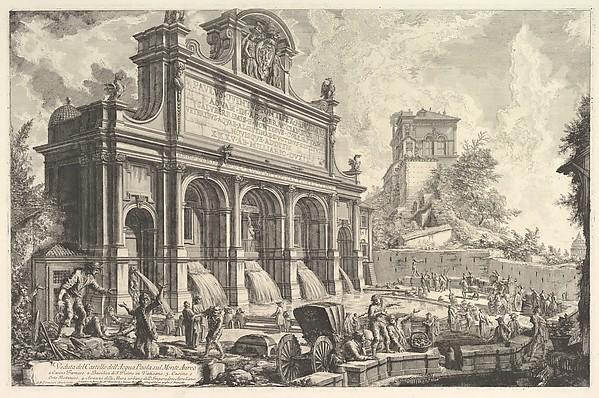
View of the Fountainhead of the Acqua Paola on Monte Aureo, from Vedute di Roma (Roman Views)
ca. 1751 · Etching
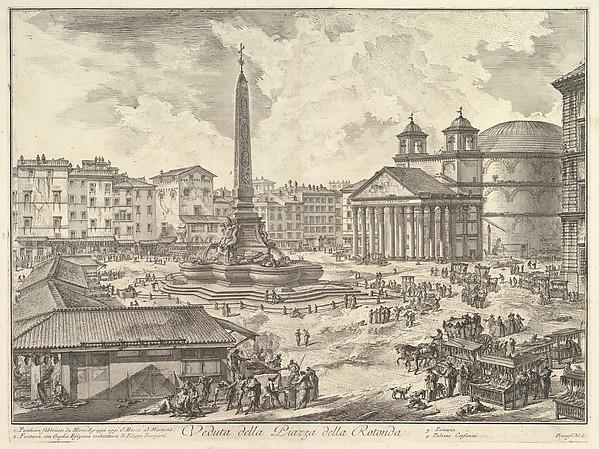
The Piazza della Rotonda, with the Pantheon and Obelisk (Veduta della Piazza della Rotonda), from "Vedute di Roma"
ca. 1751 · Etching
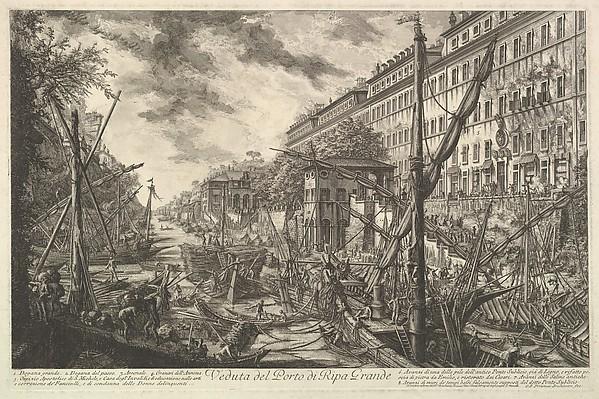
View of the Port of Ripa Grande, from Vedute di Roma (Roman Views)
ca. 1753 · Etching; first state of six (Hind)
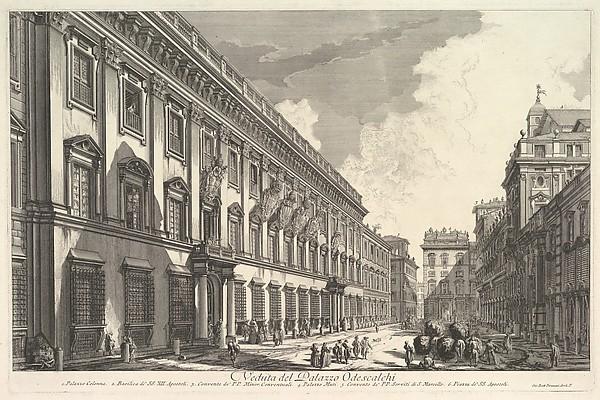
View of the Palazzo Odeschali, from Vedute di Roma (Roman Views)
ca. 1753 · Etching; before first state of five (Hind)
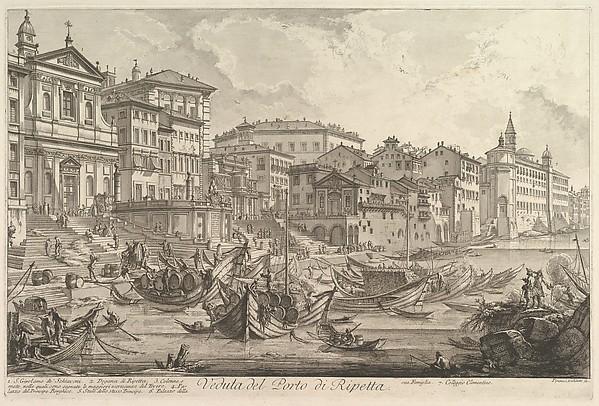
The smaller harbor, called the Porto di Ripetta (Veduta del Porto di Ripetta)
ca. 1753 · etching
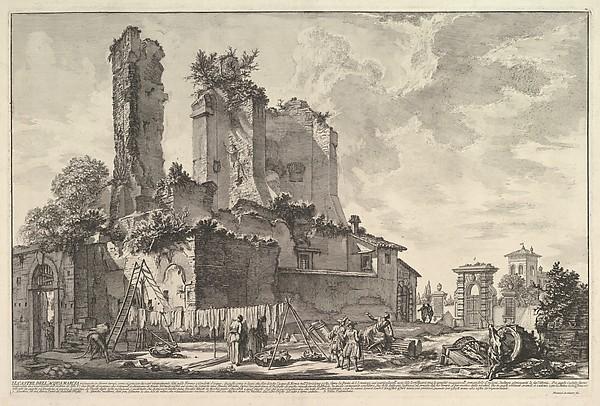
The Fontana dell'Aqua Giulia (Vedute dell'avanzo del Castello dell'Aqua Giulia)
ca. 1753 · etching
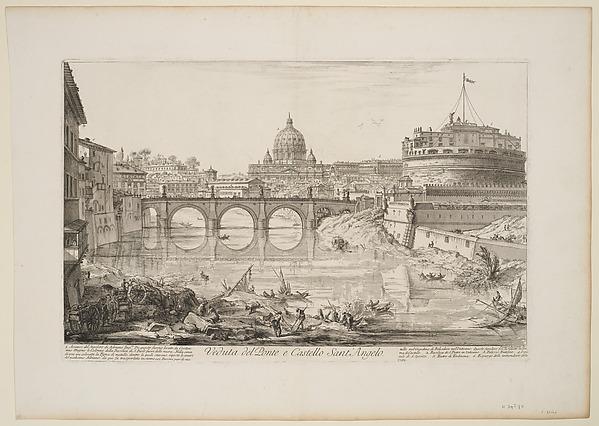
The Bridge and Castel S. Angelo (Veduta del Ponte e Castello Sant'Angelo)
ca. 1754 · Etching
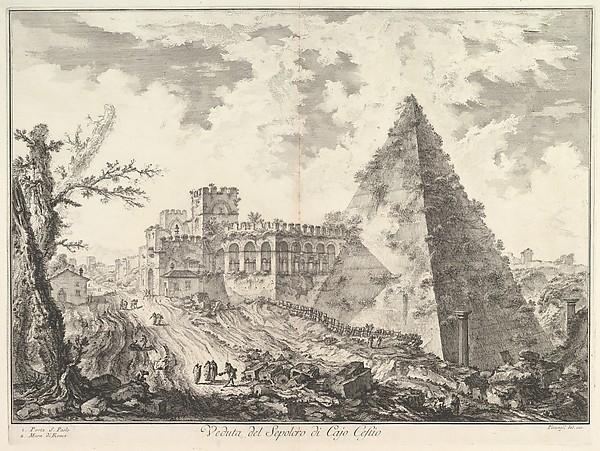
The Pyramid of Caius Cestius, with the Porta S. Paolo and adjoining road (Veduta del Sepolcro di Cajo Cestio), from "Vedute di Roma"
ca. 1755 · Etching
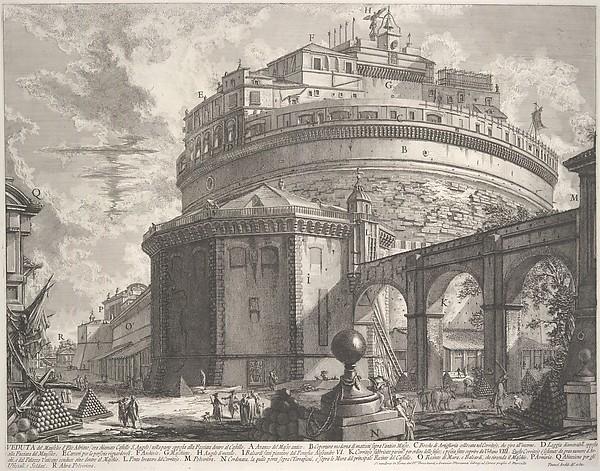
View of the Mausoleum of the Emperor Hadrian (now called Castel S. Angelo) from the rear, from Vedute di Roma (Roman Views)
ca. 1756 · Etching, undescribed first state with address of Bouchard
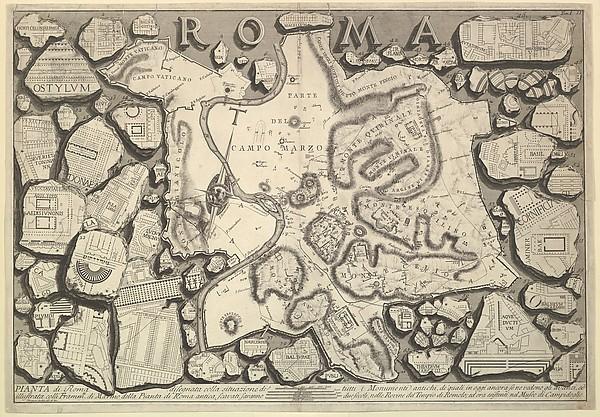
Plan of Rome, from "Le Antichità Romane"
ca. 1756 · Etching
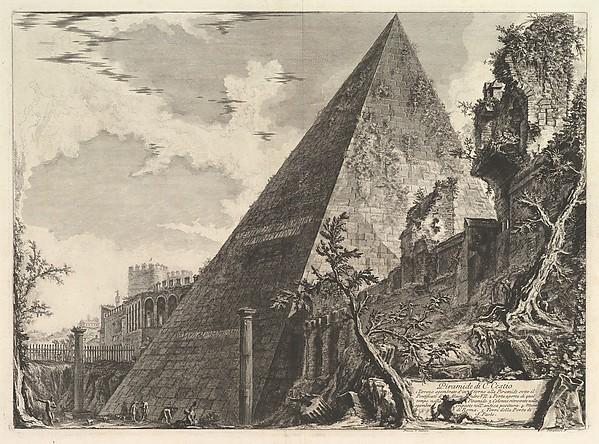
The Pyramid of Gaius Cestius, from Vedute di Roma (Roman Views)
ca. 1756 · Etching; first state of three (Hind)
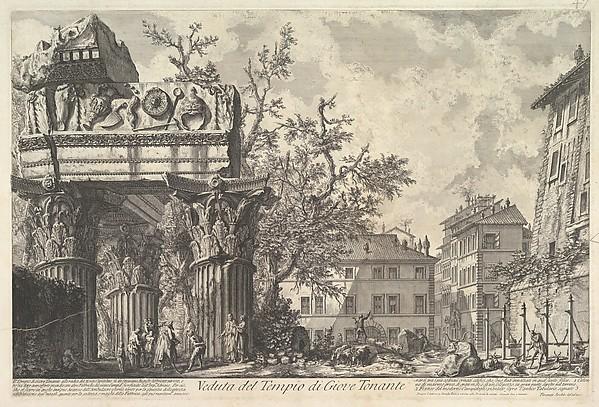
The Temple of Vespian (Veduta del Tempio di giove Tonante)
ca. 1756 · etching
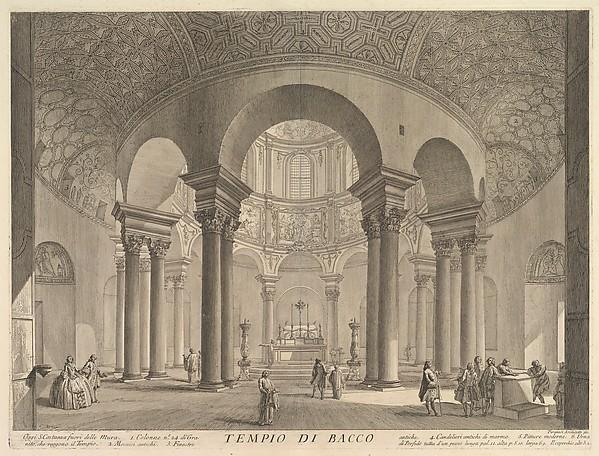
S. Constanza (erroneously callled Temple of Bacchus) (Veduta interna del Sepolcro di S. Constanza, fabbricato da Costantino Magno, ed erroneamente detto il Tempio di Bacco, inoggi Chiesa della medisme Santa), from "Vedute di Roma"
ca. 1756 · Etching
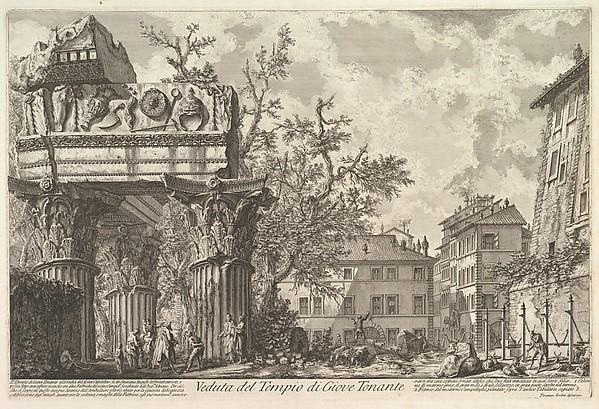
The Temple of Vespasian and Titus (Veduta del Tempio di Giove Tonante)
ca. 1756 · etching
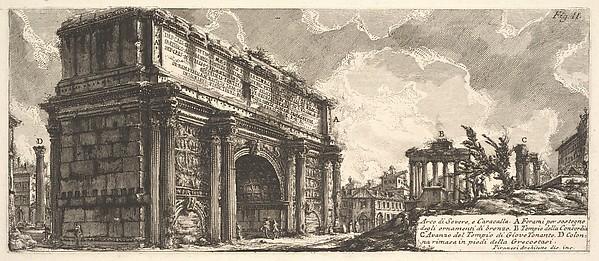
The Arch of Septimius Severus (Arco di Severo, e Caracalla)
ca. 1756 · Etching
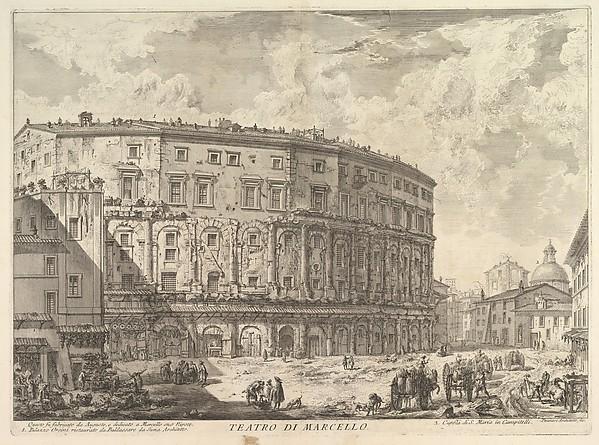
The Theatre of Marcellus (Teatro di Marcello), from "Vedute di Roma"
ca. 1757 · Etching
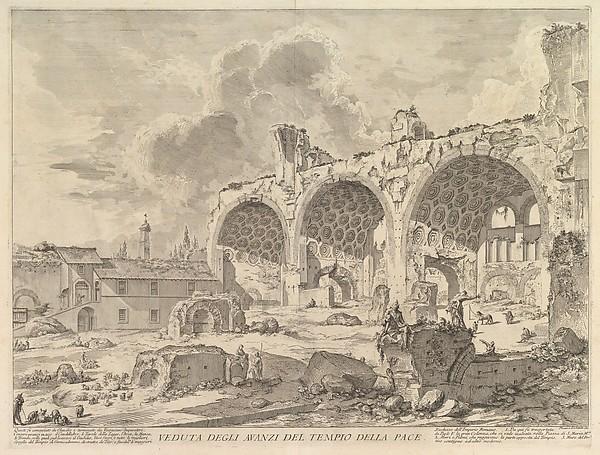
The Basilica of Constantine (Veduta degli avanzi della Casa aurea di Nerone, detti volgarmente il Tempio della Pace), from "Vedute di Roma"
ca. 1757 · Etching
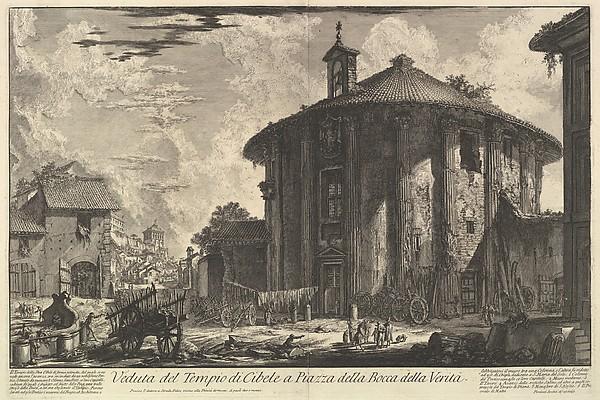
View of the Temple of Cybele in the Piazza of the Bocca della Verità
ca. 1758 · etching
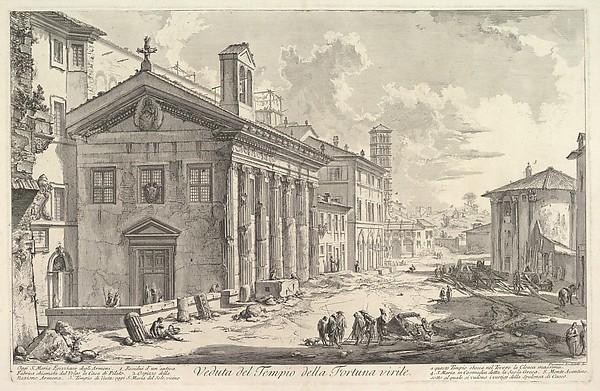
The so-called Temple of Fortuna Virilis (now Church of S. Maria Egizziaca) (Veduta del Tempio della Fortuna Virile)
ca. 1758 · etching
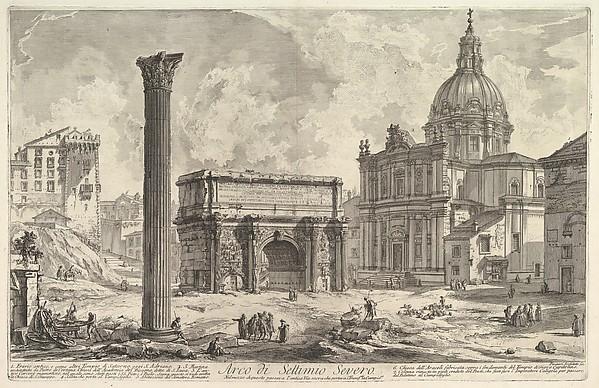
The Arch of Septimius Severus, with the Church of S. Martina on the right (Arco di Settimio Severo), from "Vedute di Roma"
ca. 1759 · Etching; first state
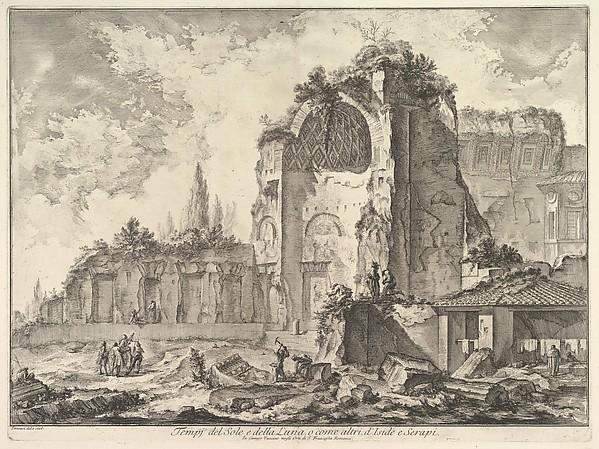
The Temple of Venus and Roma (erroneously called Temple of Sol and Luna) (Veduta degli avanzi di due triclini che appartenevano alla Casa aurea di Nerone), from "Vedute di Roma"
ca. 1759 · Etching
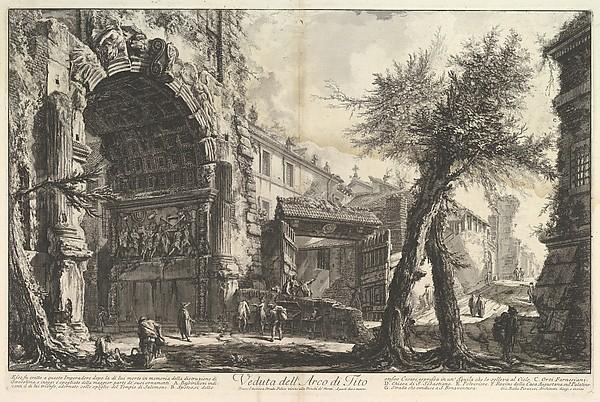
The Arch of Titus (Veduta dell'Arco di Tito)
ca. 1760 · Etching
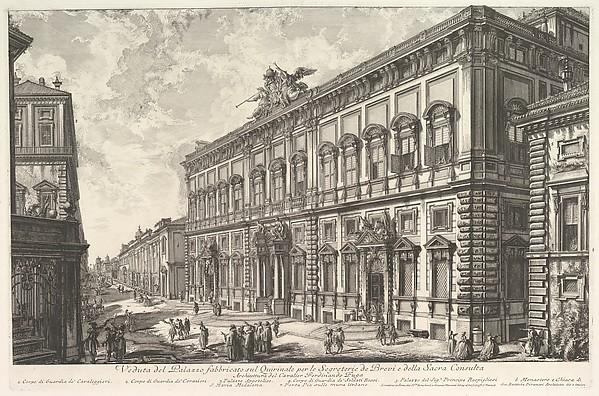
View of the Palazzo della Consulta on the Quirinal housing the Papal Secreteriat, from Vedute di Roma (Roman Views)
ca. 1760–78 · Etching; first state of six (Hind)
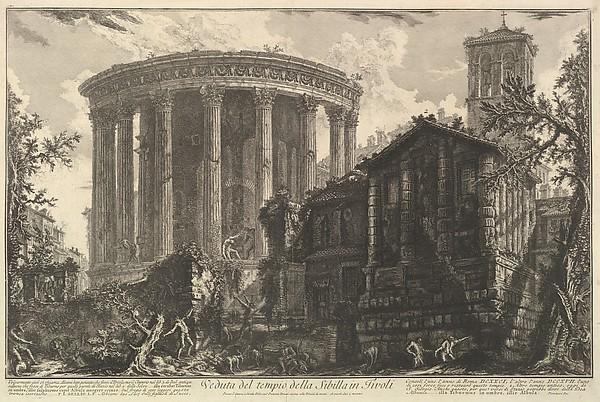
View of the Temple of the Sibyl at Tivoli, from Vedute di Roma (Roman Views)
ca. 1761 · Etching; first state of five (Hind)
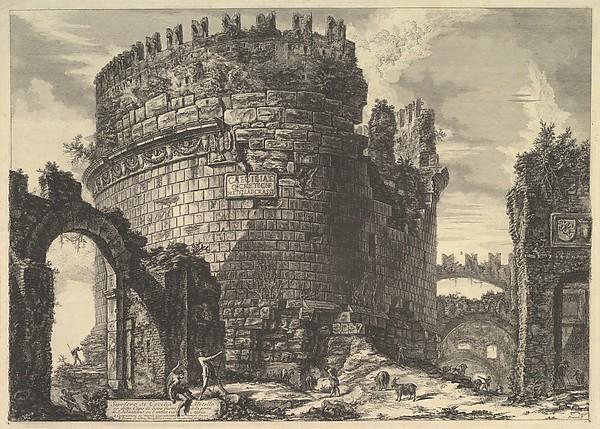
The Tomb of Caecilia Metella, from Vedute di Roma (Roman Views)
ca. 1762 · Etching; first state of five (Hind)
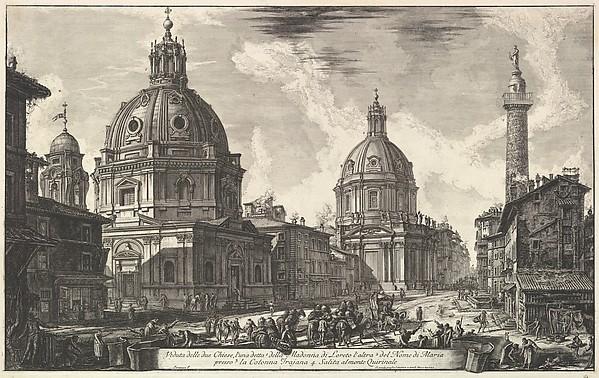
Two churches near Trajan's column, S. Maria di Loreto and Santissimo Nome di Maria (Veduta delle due chiesa, l'una detta della Madonna di Loreto, l'altra del nome di Maria, presso la Colonna Trajana)
ca. 1762 · etching
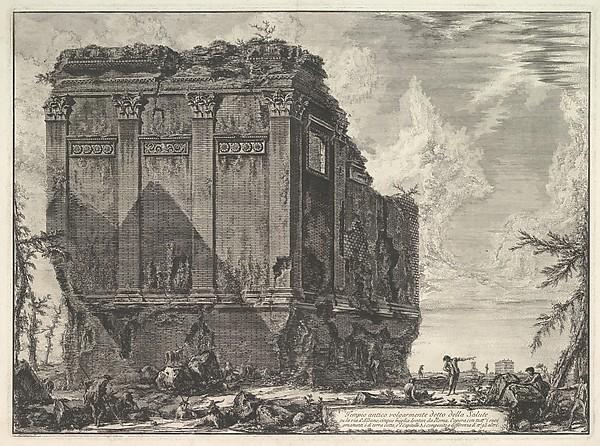
The so-called Temple of Salus, on the road to Albano (Tempio antico volgarmente detto della Salute)
ca. 1763 · etching
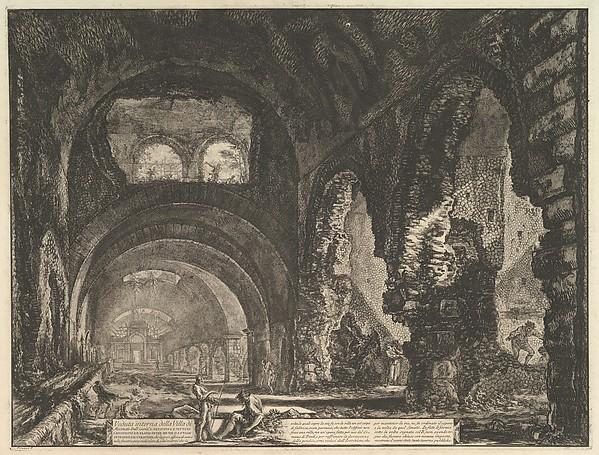
The so-called Villa of Maecenas at Tivoli. Interior with two figures in the opening of an arch above. (Veduta interna della Villa di Mecenate)
ca. 1764 · etching
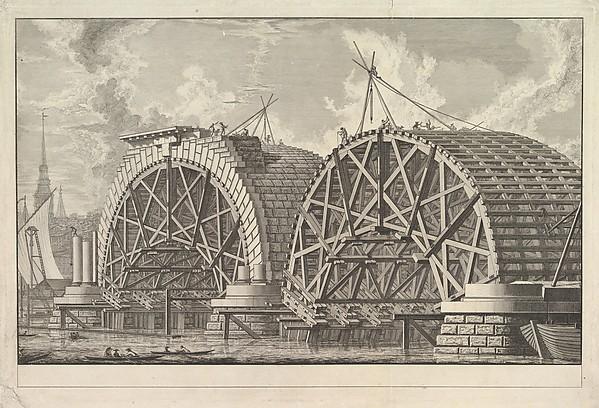
A view of part of the intended Bridge at Blackfriars, London (ca. 1764, Met-Objekt 4010)
ca. 1764 · Etching
A view of part of the intended Bridge at Blackfriars, London (ca. 1764, Met-Objekt 4012)
ca. 1764 · Etching
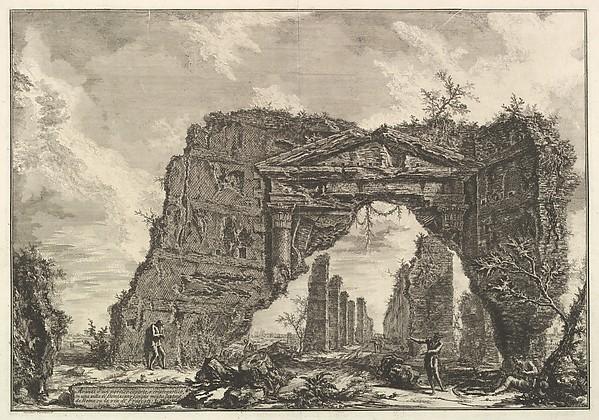
Remains of a covered portico, or a cryptoportiucus, in a villa of Domitian, five miles outside Rome on the Frascati road, from Vedute di Roma (Roman Views)
ca. 1766 · Etching; second state of four (Hind)
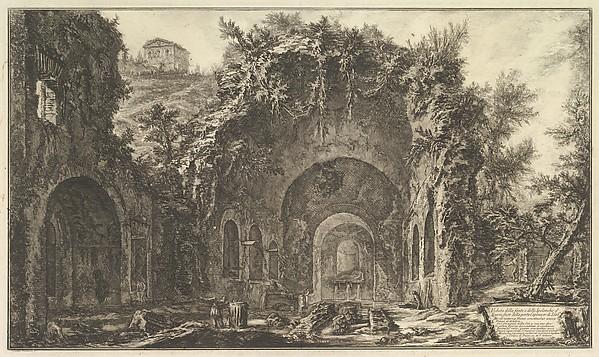
The so-called Grotto of Egeria (Veduta della fonte e delle spelonche d'Egeria fuor della Porta Capena)
ca. 1766 · Etching
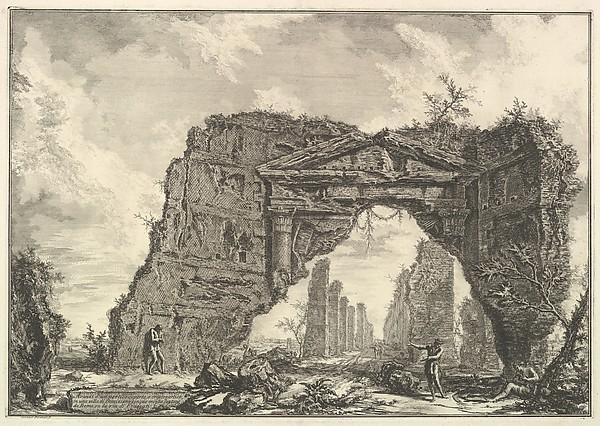
Remains of a covered portico, or a cryptoporticus, in a villa of Domitian, five miles outside Rome on the Frascati road, from Vedute di Roma (Roman Views)
ca. 1766 · Etching; first state of four (Hind)
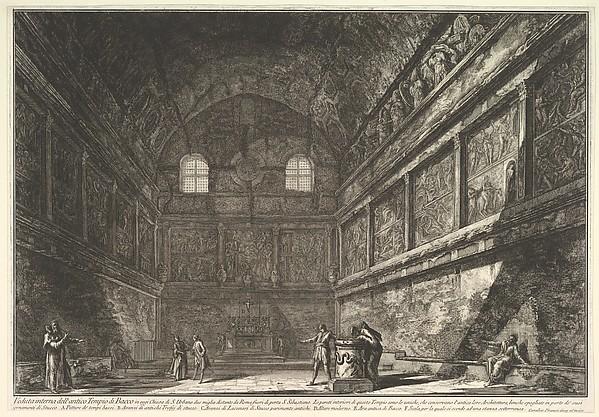
The so-called Temple of Bacchus, now the Church of S. Urban, interior (Veduta interna dell antico Tempio di Bacco, or. di S. Urbano)
ca. 1767 · Etching
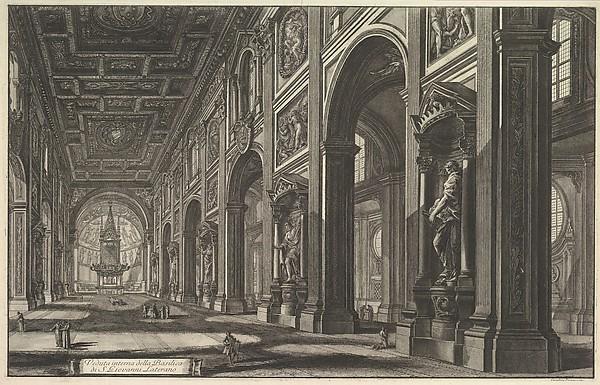
St. Giovanni in Laterano, Interior, from "Vedute di Roma" (Views of Rome)
ca. 1768 · Etching
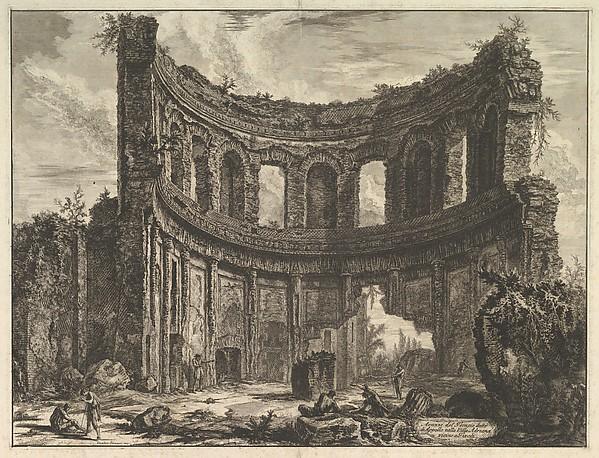
Avanzi del Tempio detto di Apollo nella Villa Adriana vicino a Tivoli (Hadrian's Villa. Remains of the Smaller Palace [Formerly called the Temple of Apollo])
ca. 1768 · Etching
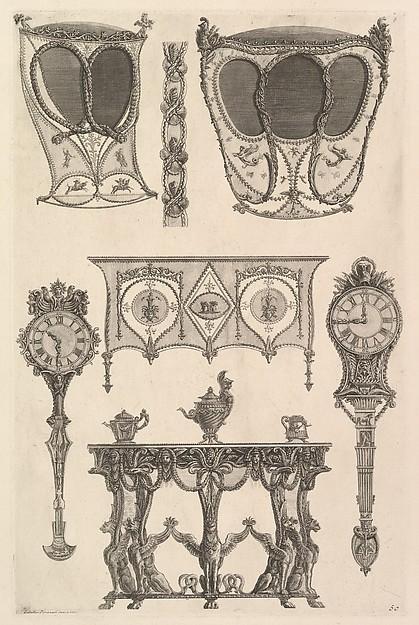
A sedan chair, a coach, a commode, a side table and two clocks (Deux ch. à porteurs v. de côté, une commode, une console, deux pedules, un meuble indét), from Diverse Maniere d'adornare i cammini ed ogni altra parte degli edifizi...(Different Ways of ornamenting chimneypieces and all other parts of houses)
ca. 1769 · Etching
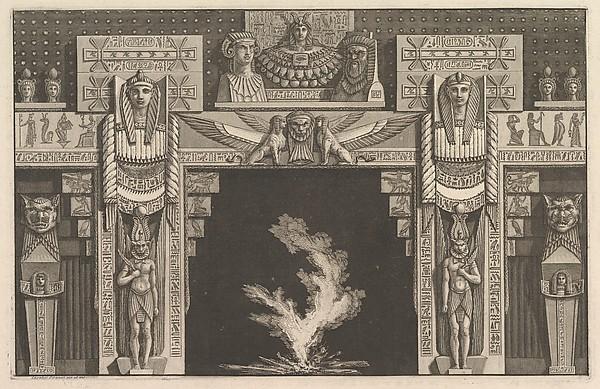
Chimneypiece in the Egyptian style, from Diverse Maniere d'adornare i cammini (...) (Different Ways of ornamenting chimneypieces and all other parts of houses)
ca. 1769 · Etching
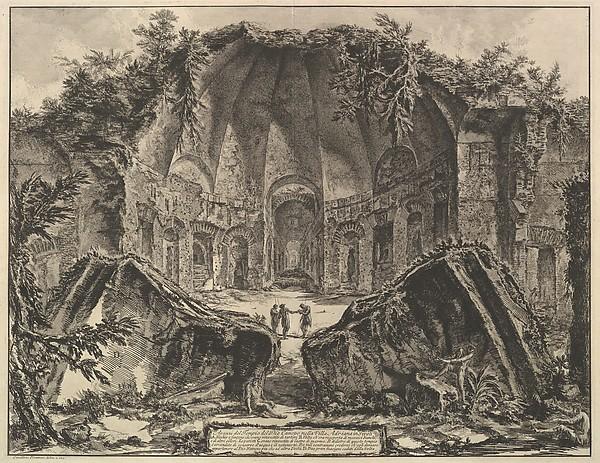
Hadrian's Villa: The Canopus (Avanzi del Tempio Dio Canopo nella Villa Adriana in Tivoli)
ca. 1769 · etching
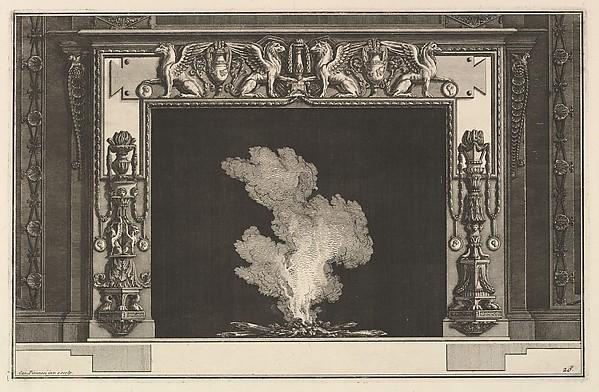
Chimneypiece: Affronted griffons on the lintel and candelabra on the jambs
ca. 1769 · Etching
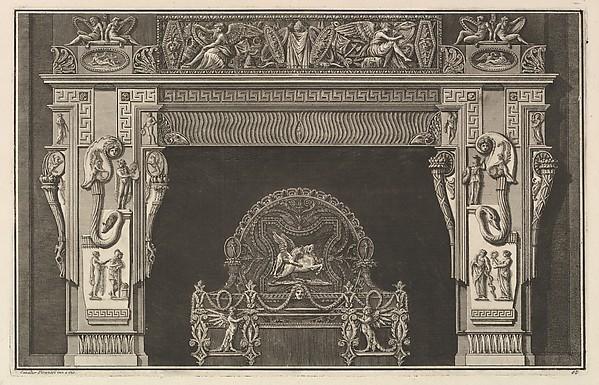
Chimneypiece: Frieze of trophies and winged Victories on the lintel, with cornucopias to either side of the jambs decorated with varied reliefs (Ch. décorée d'une grecque), from Diverse Maniere d'adornare i cammini ed ogni altra parte degli edifizi...(Different Ways of ornamenting chimneypieces and all other parts of houses)
ca. 1769 · Etching
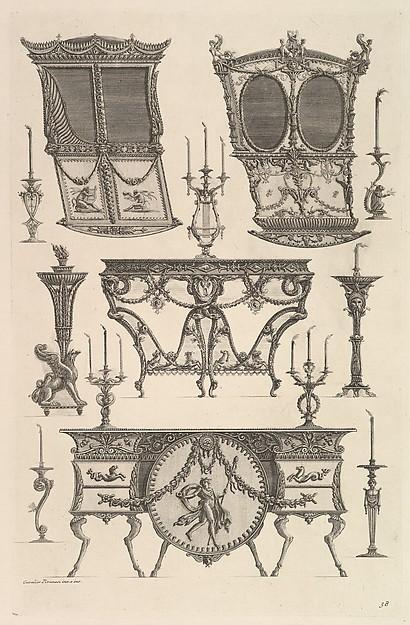
Miscellaneous furniture including two sedan chairs, a side table and a commode (Deux ch. à porteurs v. de côté, console, flambeau.), from Diverse Maniere d'adornare i cammini ed ogni altra parte degli edifizi...(Different Ways of ornamenting chimneypieces and all other parts of houses)
ca. 1769 · Etching
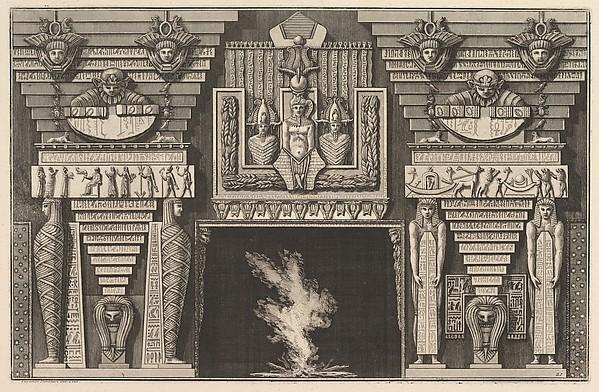
Chimneypiece in the Egyptian style: Two mummies in profile on the left and two figures bearing obelisks on the right (Ch. à l'ègyptienne), from Diverse Maniere d'adornare i cammini ed ogni altra parte degli edifizi...(Different Ways of ornamenting chimneypieces and all other parts of houses)
ca. 1769 · Etching
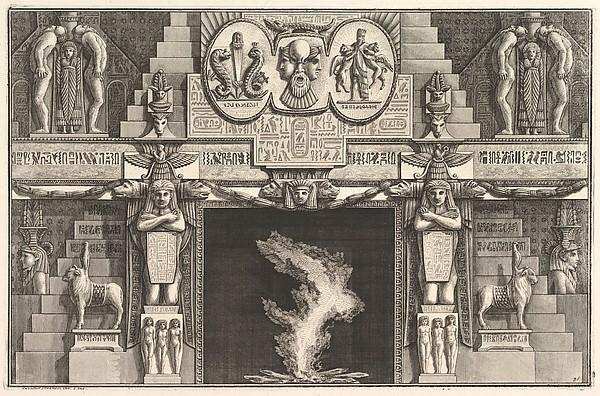
Chimneypiece in the Egyptian style: Groups of three female nudes at the base of each jamb, surmounted by larger kneeling figures
ca. 1769 · Etching
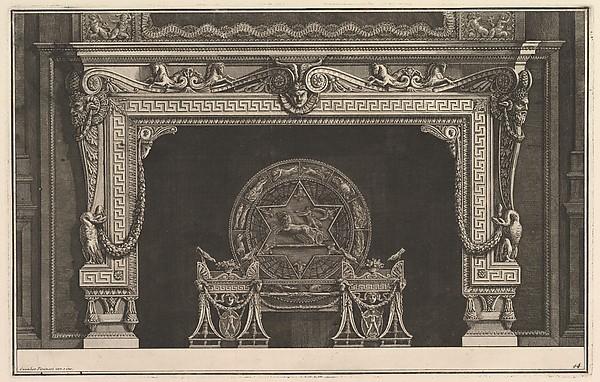
Chimneypiece: Architrave decorated with a Greek key motif and a circular fireback with figures of the zodiac
ca. 1769 · Etching
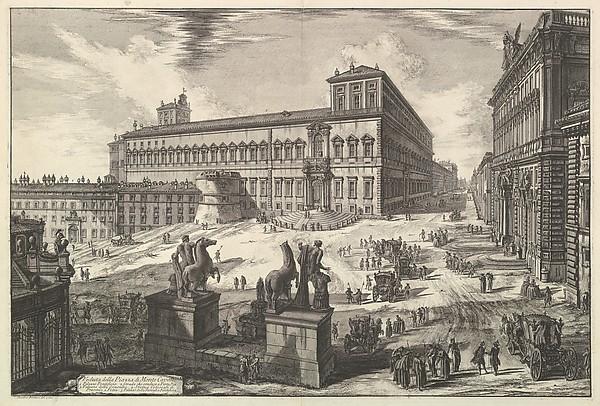
View of the Piazza di Monte Cavallo
ca. 1773 · Etching; first state of four (Hind)
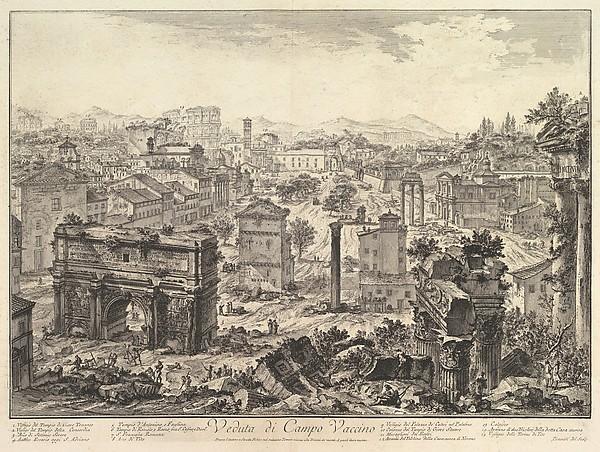
The Forum Romanum, or Campo Vaccino, from the Capitol, with the Arch of Septimius in the foreground left, Temple of Vespian right, and the Colosseum in the distance (Veduta di Campo Vaccino)
ca. 1775 · Etching
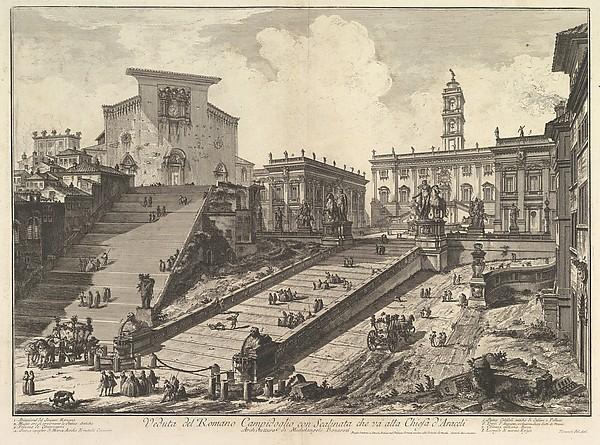
The Capitol and the steps of S. Maria in Aracoeli
ca. 1775 · etching
The Forum Romanum, or Campo Vaccino, from the capitol, with the Arch of Septimus Severus in the foreground left, Temple of Vespian right, and the Colosseum in the distance (Veduta di Campo Vaccino), from "Vedute di Roma"
ca. 1775 · Etching
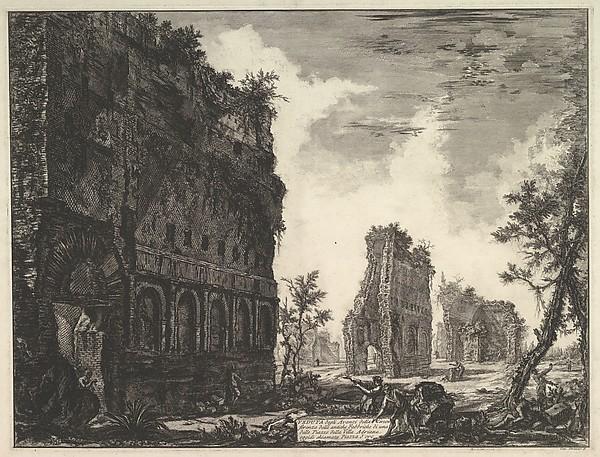
Hadrian's Villa: The Piazza d'Oro (Piazza of Gold) (Veduta degli Avanzi della Circonferenza delle antiche Fabbriche di una delle Piazze della Villa Adriana oggidi chiamata Piazza d'oro) (ca. 1776, Met-Objekt 4024)
ca. 1776 · Etching
Hadrian's Villa: The Piazza d'Oro (Piazza of Gold) (Veduta degli Avanzi della Circonferenza delle antiche Fabbriche di una delle Piazze della Villa Adriana oggidi chiamata Piazza d'oro) (ca. 1776, Met-Objekt 4027)
ca. 1776 · Etching
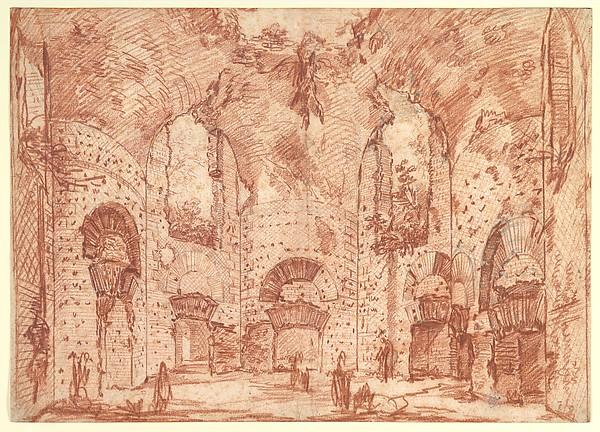
The Octagonal Room in the Small Baths at the Villa of Hadrian (Tivoli)
ca. 1777 · Red chalk over black chalk or charcoal with partly ruled construction
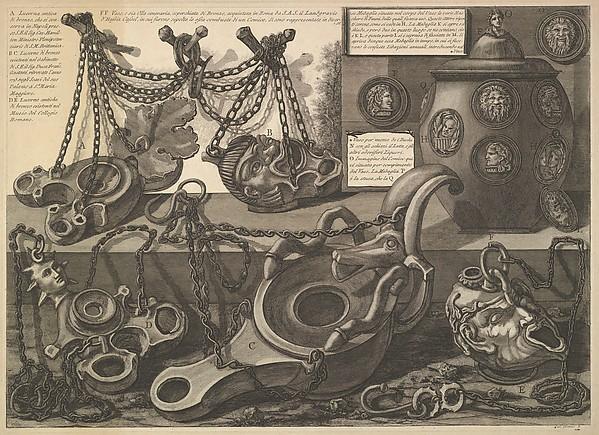
Various Lamps and a vase encrusted with cameos, from "Vasi, candelabri, cippi, sarcofagi, tripodi, lucerne, ed ornamenti antichi disegnati ed incisi dal Cav. Gio. Batt. Piranesi"
ca. 1778 · Etching
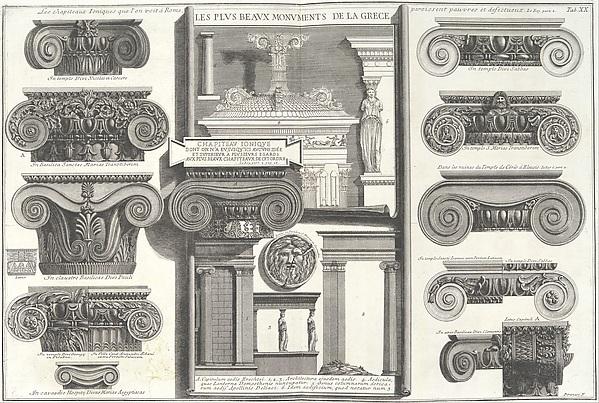
Various Roman Ionic capitals compared with Greek examples from Le Roy [S. Maria in Trastevere, S. Paolo fuori le Mura, S. Clemente, etc.], tab. 20 from 'Della Magnificenza e d'Architettura de'Romani'
mid-18th century · Etching
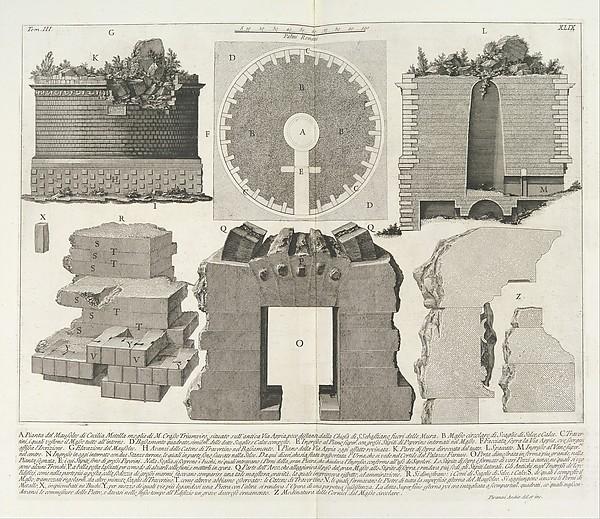
Plan of the Mausoleum of Caecilia Metella, wife of the Triumvir Marcus Crassus..., tome 3, tavola 49 from "Le Antichità Romane" (Roman Antiquities)
published 1756–57 · Etching
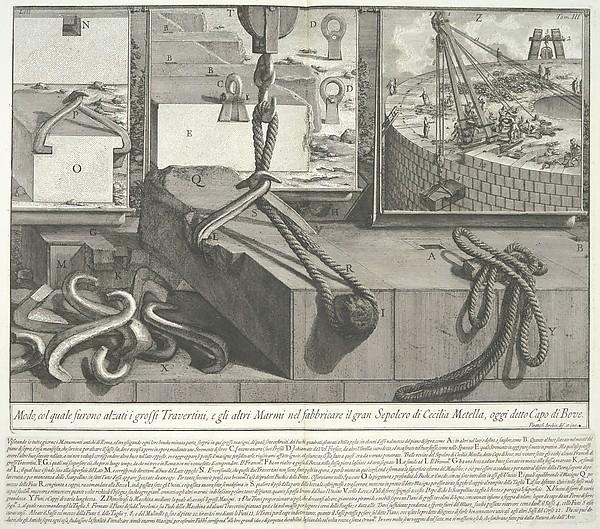
Means by which the large blocks of travertine and marble were lifted during the construction of the large Tomb of Caecilia Metella, tome 3, tavola 53 from "Le Antichità Romane" (Roman Antiquities)
published 1756–57 · Etching
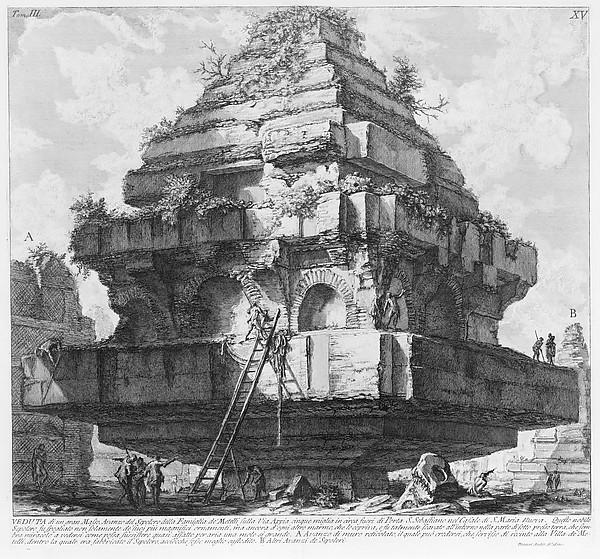
View of a large structure, remains of the Tomb of the Metelli on the Appian Way about five miles from Porta S. Sebastiano, in the village of S. Maria Nuova..., tome 3, tavola 15 from "Le Antichità Romane" (Roman Antiquities)
published 1756–57 · Etching