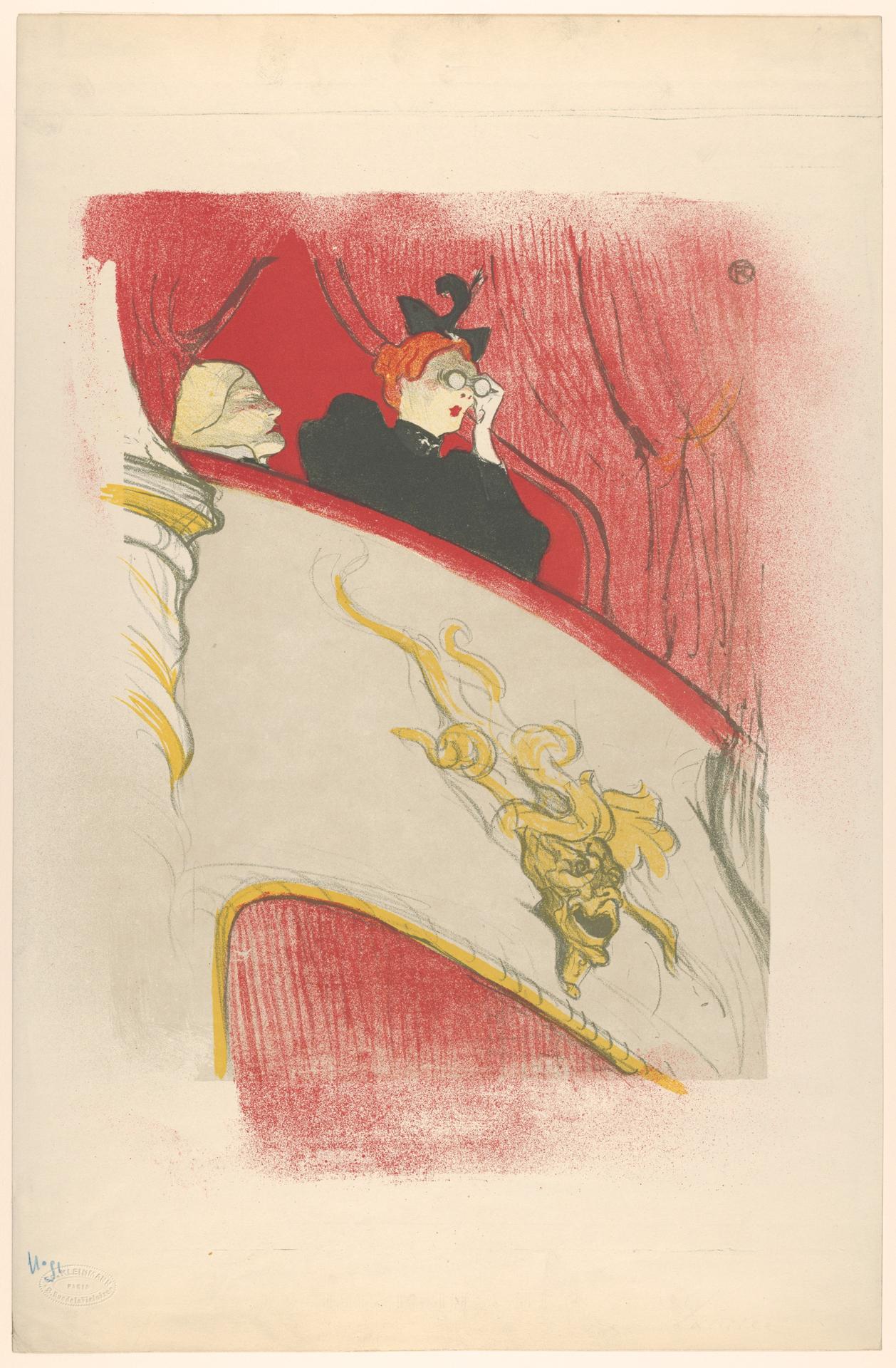
The Box with the Gilded Mask (1894, Met-Objekt 857)
Original title: The Box with the Gilded Mask
kurzbeschreibung
Henri de Toulouse-Lautrec produced this lithograph in 1894, printing it in five colors on wove paper. It captures a theater scene: two people in a box, with a golden mask below. The work survives as a single impression in only one state.
Description
Inside a theater box sit two figures: a woman with red hair, glasses, and a cigarette, dressed in a black gown and cap, alongside another person only partly visible. Behind them, red curtains fill the background. Beneath the box appears a golden, grinning head that resembles a mascot. Red, gold, and black dominate the palette, with white accents. Light falls from above, picking out the figures and the box.
Context
Toulouse-Lautrec made this print in Paris in 1894, during a period when he was deeply engaged with nightlife and entertainment culture. The lithograph belongs to his series of theater and cabaret scenes, where figures from the audience or stage often appear. The gilded mask can be linked to the tradition of masquerades and the artificial atmosphere of pleasure venues. That only one state is known suggests a limited edition or an experimental printing process.
Impact
Glowing red, gold, and black create an opulent, almost theatrical mood. The smoking woman with glasses feels immediate and everyday, while the golden mask adds a disturbing, symbolic note. The tensions between reality and masquerade make this sheet a compelling example of the Belle Époque.
Technique
The lithograph was executed with crayon, brush, and spatter technique, along with a scraper. The five colors were printed on wove paper, with the spatter technique producing a grainy, textured surface. The scraper allowed for fine highlights and contrasts.
AI-generated description text
Source: Metropolitan Museum of Art · Public Domain (CC0 1.0)