Au Pied du Sinaï
Original title: Au Pied du Sinaï
kurzbeschreibung
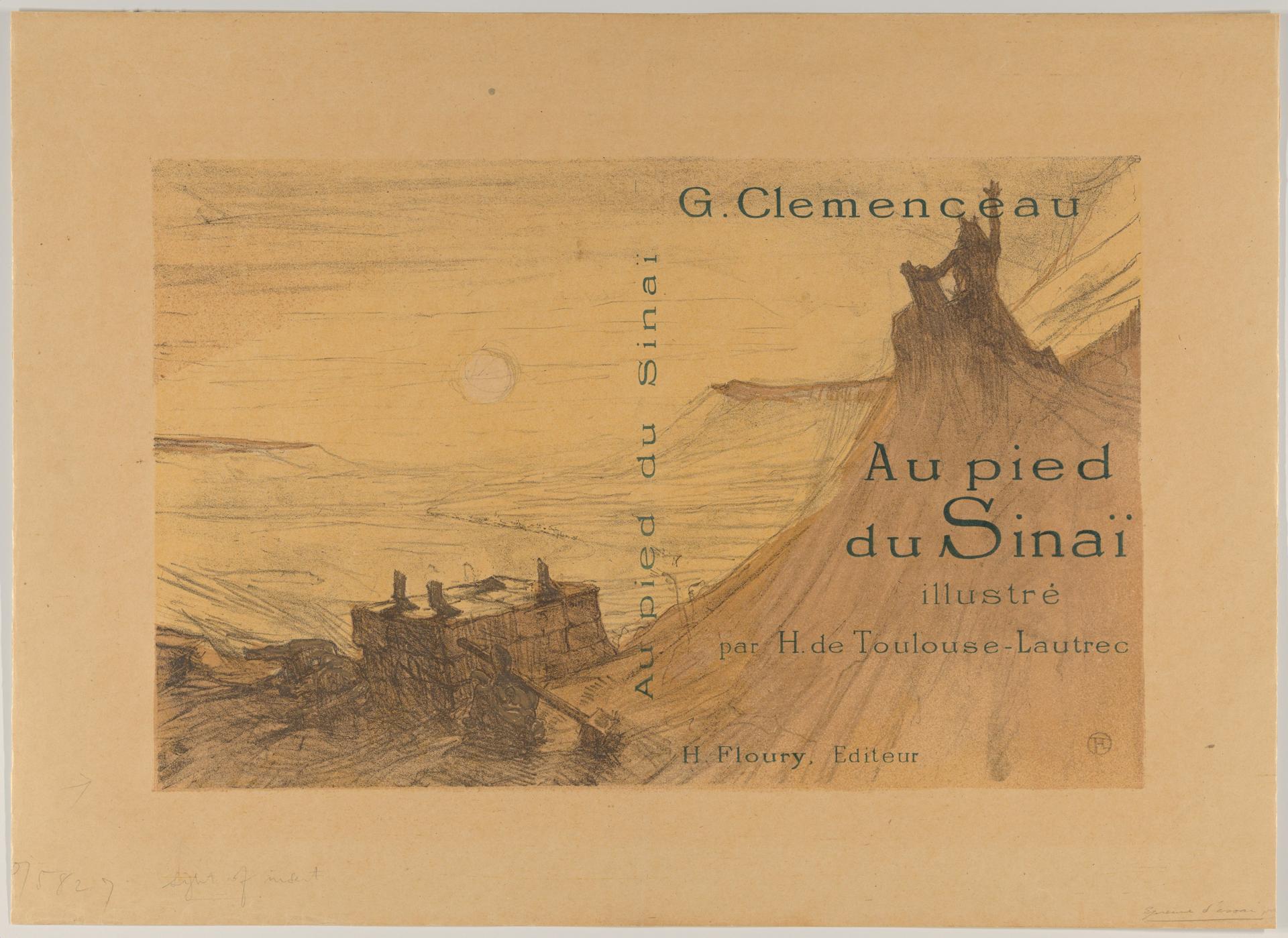
Unlike many of his posters for Parisian entertainment venues, Henri de Toulouse-Lautrec's 1897 lithograph "Am Fuße des Sinai" presents a vast desert landscape. Buildings stand in the foreground, with a mountain rising behind them. Printed in five colors on vellum, it accompanied an edition of a text by Georges Clemenceau.
Description
The sheet feels expansive: the mountain on the right, the structures in the left foreground. A sky in warm tones suggests early morning or late evening. Browns dominate the palette, emphasizing the dry barrenness of the desert. Inscribed into the view are the words "G. Clemenceau," "Au pied du Sinaï," "illustre par H. de Toulouse-Lautrec," and "H. Floury, Editeur."
Context
This lithograph was made in 1897 as an illustration for Georges Clemenceau's text "Au pied du Sinaï," published by H. Floury. By then, Toulouse-Lautrec was long established and known for posters and lithographs that often depicted Parisian nightlife.
Impact
The warm tones and calm arrangement give the image a meditative mood. Because almost only browns are used, the scene acquires an earthy weight that makes the barren desert palpable.
Technique
The motif was created as a lithograph in five colors on vellum. Delicate lines and shading reveal the process: drawn on the stone with greasy chalk and then printed.
AI-generated description text
Source: Metropolitan Museum of Art · Public Domain (CC0 1.0)