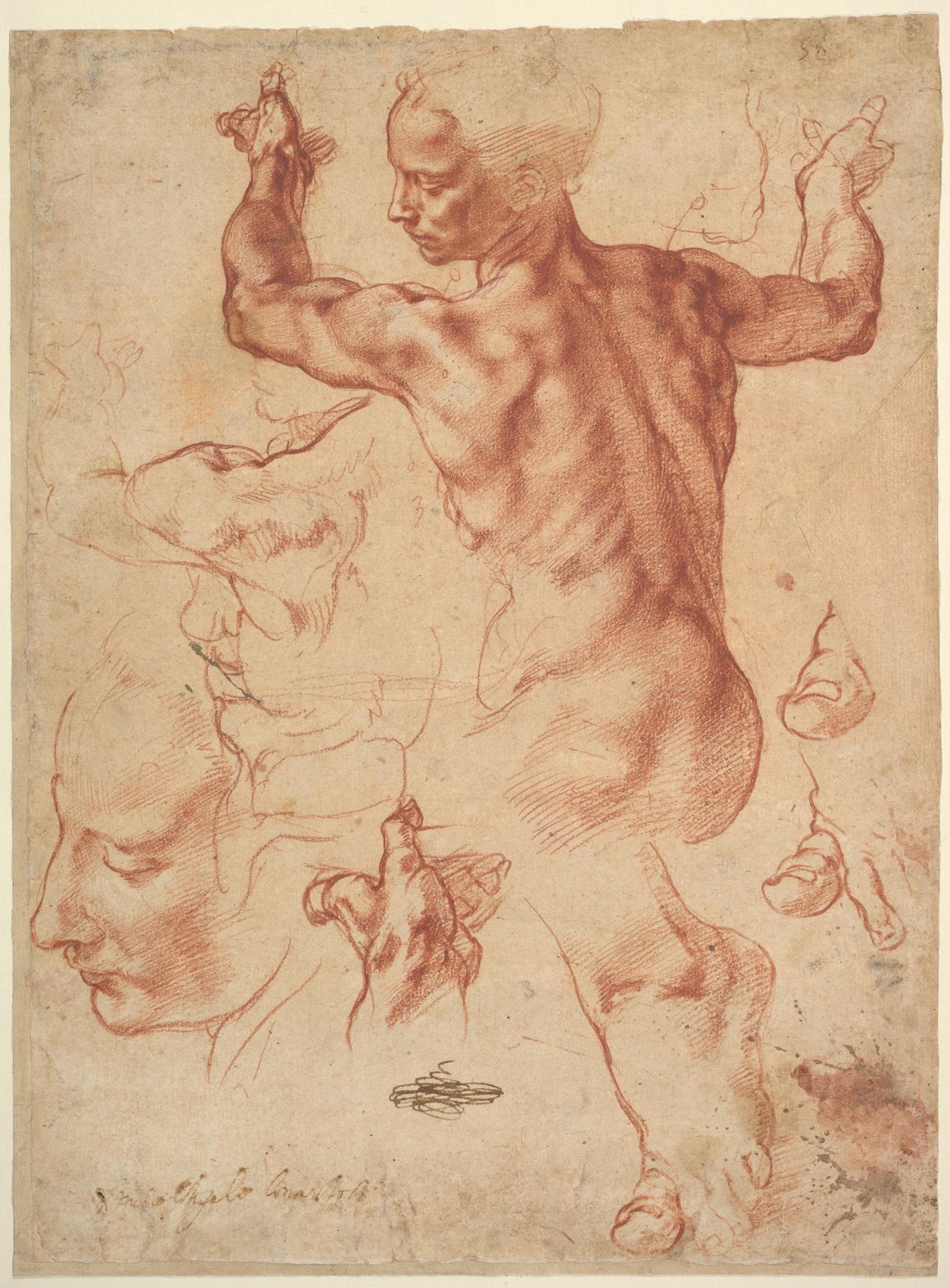
Studies for the Libyan Sibyl (recto); Studies for the Libyan Sibyl and a small Sketch for a Seated Figure (verso)
Original title: Studies for the Libyan Sibyl (recto); Studies for the Libyan Sibyl and a small Sketch for a Seated Figure (verso)
kurzbeschreibung
Michelangelo Buonarroti drew this study around 1510–11 as a preparatory work for the Libyan Sibyl in the ceiling fresco of the Sistine Chapel. The recto shows the figure in red chalk, with a few white chalk accents on the left shoulder. The verso carries further studies in soft black chalk, or less probably charcoal.
Description
A powerful male figure with raised arms and downcast gaze dominates the recto; beside it are a head-and-shoulder passage, another head sketch, and a small seated figure. The paper has a slightly rough, irregular surface. Red chalk prevails, with white accents on the shoulder of the main motif. Even light without cast shadows suggests work under calm indoor conditions.
Context
These sheets belong to Michelangelo's work on the Sistine Chapel ceiling, created between 1508 and 1512. The Libyan Sibyl is one of the five sibyls in the program. Such drawings served to prepare the monumental figure, dramatically turned in the chapel; Michelangelo planned anatomy and pose in numerous studies.
Impact
Forceful anatomy and the animated pose shape the impression and match Michelangelo's understanding of the figure. Precise muscle drawing alongside fleeting subsidiary studies opens an immediate view into the creative process. The warm red chalk and fine hatching give the sheet liveliness and expression.
Technique
The recto is executed in red chalk, with small white chalk accents on the shoulder of the main figure. The verso uses soft black chalk or rather charcoal. The slightly rough paper surface takes the chalk line well and creates a fine grain; delicate hatching models the musculature.
AI-generated description text
Source: Metropolitan Museum of Art · Public Domain (CC0 1.0)