Portrait of a Man (ca. 1655–60)
Original title: Portrait of a Man
kurzbeschreibung
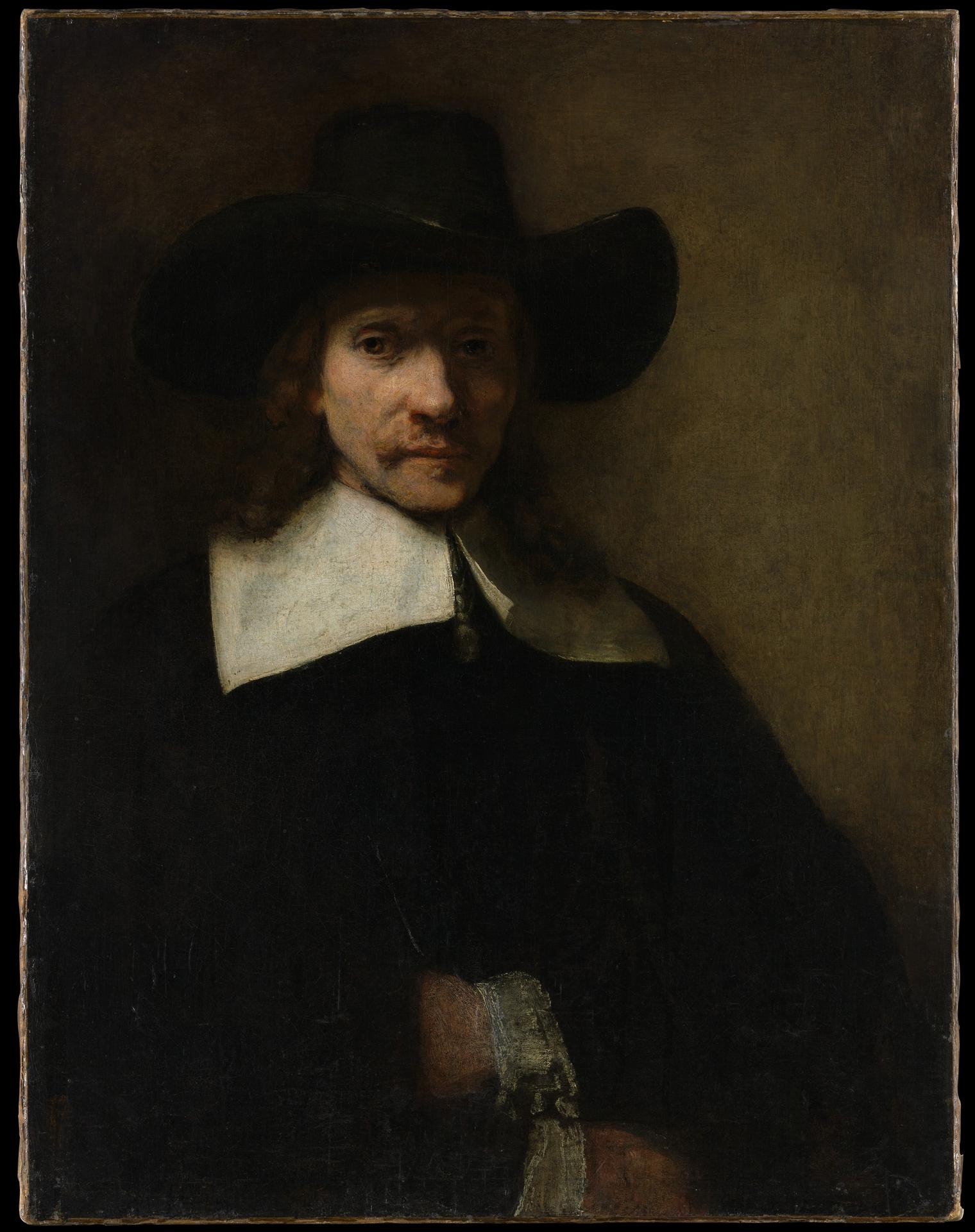
Rembrandt van Rijn painted this oil on canvas portrait of an unidentified man, dated around 1655 to 1660. The figure wears dark clothing, and his white collar stands out sharply against the equally dark background.
Description
A wide-brimmed black hat covers all of the man's hair, and his gaze, with a calm, motionless expression, is directed slightly to the side. The dark garment gains a bright spot from a white collar with a dark border; one hand rests in front of it, partly surrounded by dark fabric and partly by a light sleeve. The evenly dark ground recedes, making the figure stand out all the more clearly. Light falls mainly on the face and hands, creating a tense contrast. The tones remain muted and work with the opposition of light and dark.
Context
This portrait belongs to Rembrandt's late years, when he increasingly painted inward-looking, psychologically nuanced portraits. Who the man was is not recorded; presumably it was a commission from the wealthy bourgeoisie. Rembrandt was working in Amsterdam at the time, was in demand there as a portraitist, and at the same time struggled with financial problems. The restrained elegance of the clothing and the plain background follow the Protestant stylistic ideal of 17th-century Dutch painting.
Impact
The layout of the picture and the direction of the light bring the face immediately into view; its quiet composure conveys a calm presence. Because all accessories are reduced, the portrait feels timeless and almost monumental.
Technique
The picture is executed in oil on canvas, which allowed Rembrandt a nuanced gradation between light and shadow. In the face the colors are applied in pastose layers, while in the garment the paint remains more fluid, creating a lively surface texture. The targeted lighting and the dark underpainting are characteristic of his late manner.
AI-generated description text
Source: Metropolitan Museum of Art · Public Domain (CC0 1.0)