The Beheading of John the Baptist
Original title: The Beheading of John the Baptist
kurzbeschreibung
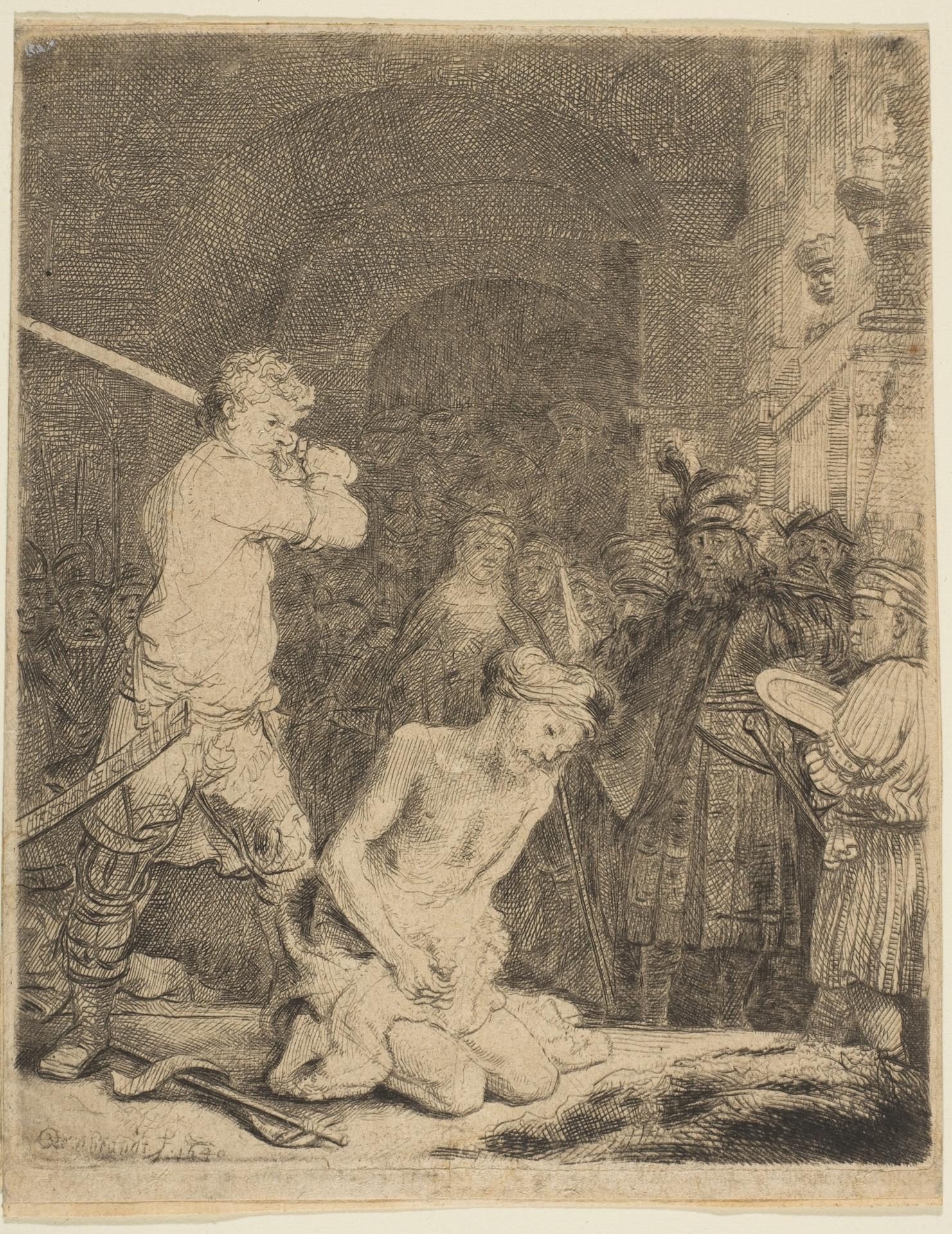
Rembrandt's etching of the Baptist's execution turns the biblical story into a shadowed interior. Undated, the print combines etching with drypoint, and its most striking feature is the deliberate control of light and dark.
Description
A man in plain clothes kneels in the foreground, utterly absorbed in pain or despair, while beside him a figure with a weapon stands ready to strike. The arrangement is noticeably off-balance. Further back appear other people, among them a woman in a long robe who tends to the kneeling man, and figures dressed as one expects in a biblical setting. Dim light falls on the kneeling man and the weapon, carrying the tension of the scene. The image stays monochrome in shades of grey, drawing out the texture of the clothing and the details of the figures.
Context
Rembrandt van Rijn took up biblical subjects in many etchings, sometimes as a series, sometimes as single sheets. The beheading of John the Baptist recurs often in Christian art and was widely familiar in the seventeenth-century Netherlands. The exact date of this print is not recorded; it is placed within Rembrandt's working years. In this phase he tested the effects of light and dark with particular intensity.
Impact
A sombre, tense mood arises from the concentrated light and the gloomy monochrome. The unbalanced layout draws the eye to the kneeling man and heightens the emotional force of the event. Closely observed figures and garments give the view a realistic, almost physical closeness.
Technique
For this etching the drawing was scratched into a metal plate and bitten with acid; drypoint was added for fine, forceful lines. The process allows graduated shading and a wide range of greys, used here for the play of light. Drypoint leaves soft, velvety lines that bring out the texture of clothing and facial features.
AI-generated description text
Source: Metropolitan Museum of Art · Public Domain (CC0 1.0)