Study of a Draped Figure
Original title: Study of a Draped Figure
kurzbeschreibung
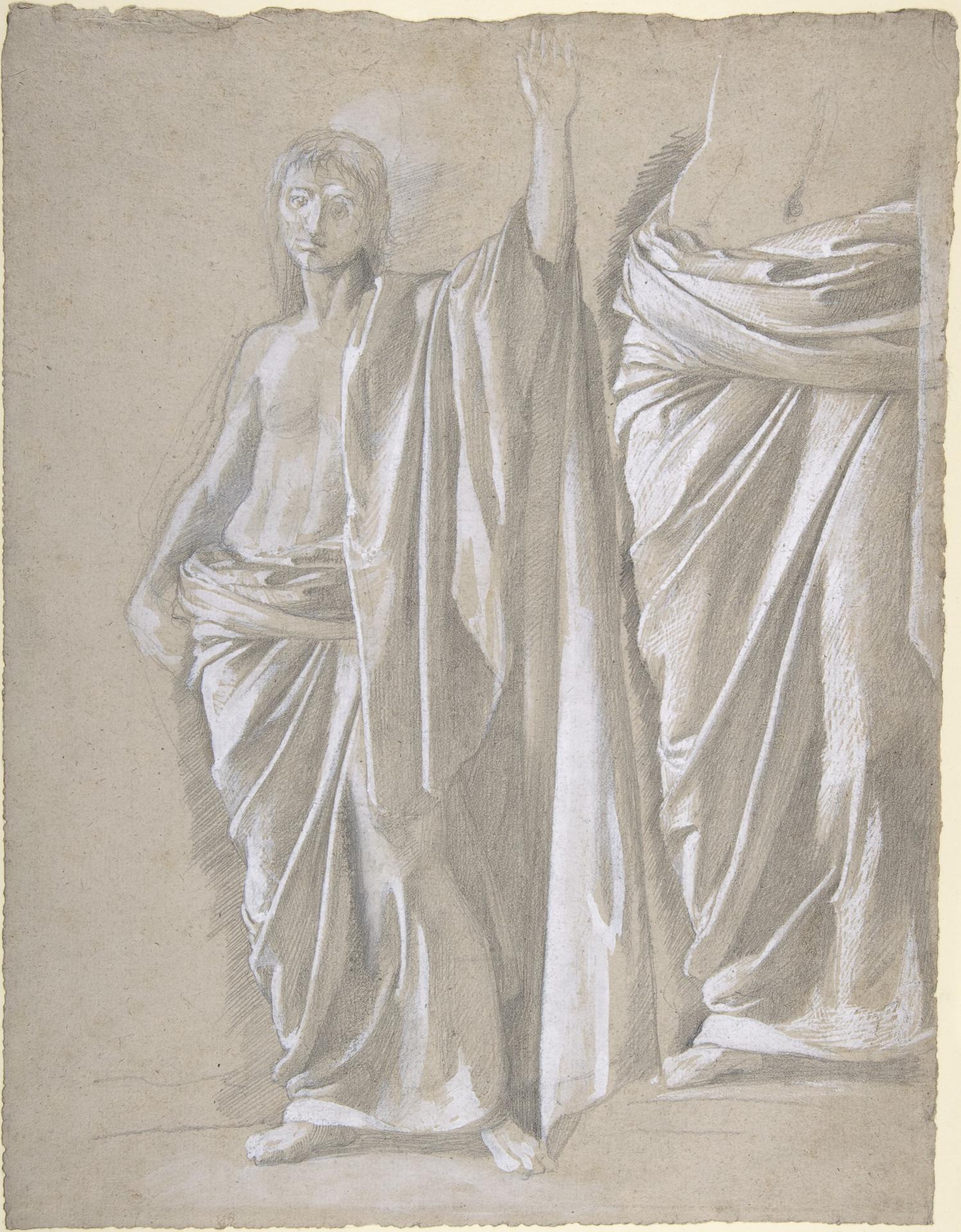
Edgar Degas drew this study of a draped figure in 1857–58. Executed in graphite heightened with white gouache on paper, it presents a male figure in antique garb raising his right hand.
Description
A long robe envelops the figure, its folds and shadows carefully worked out. The right hand is lifted, while the left stays close to the body. The face appears serious and thoughtful, the hair suggested with brief strokes. Behind the main figure, another draped form emerges only partially visible. The arrangement remains simple, directing attention to the figure and its clothing.
Context
During his stay in Italy, Degas engaged deeply with antiquity and the Renaissance. Drapery studies of this kind were part of his academic training and prepared history paintings. This work reveals the influence of classical sculpture on Degas's early output.
Impact
The drawing feels calm and collected. The folds give the figure a sculptural presence, reminiscent of statuary. Light and shadow create an almost monumental aura.
Technique
Graphite provides the foundation, while white gouache sets highlights and emphasizes the light areas. Fine hatching shapes folds and shadows with great precision. For academic studies of that time, this combination of graphite and gouache was common.
AI-generated description text
Source: Metropolitan Museum of Art · Public Domain (CC0 1.0)