Forty-eight Instructive Poems in Alphabetical Order (Ehon irohauta)
Original title: Forty-eight Instructive Poems in Alphabetical Order (Ehon irohauta) 絵本以呂波歌
kurzbeschreibung
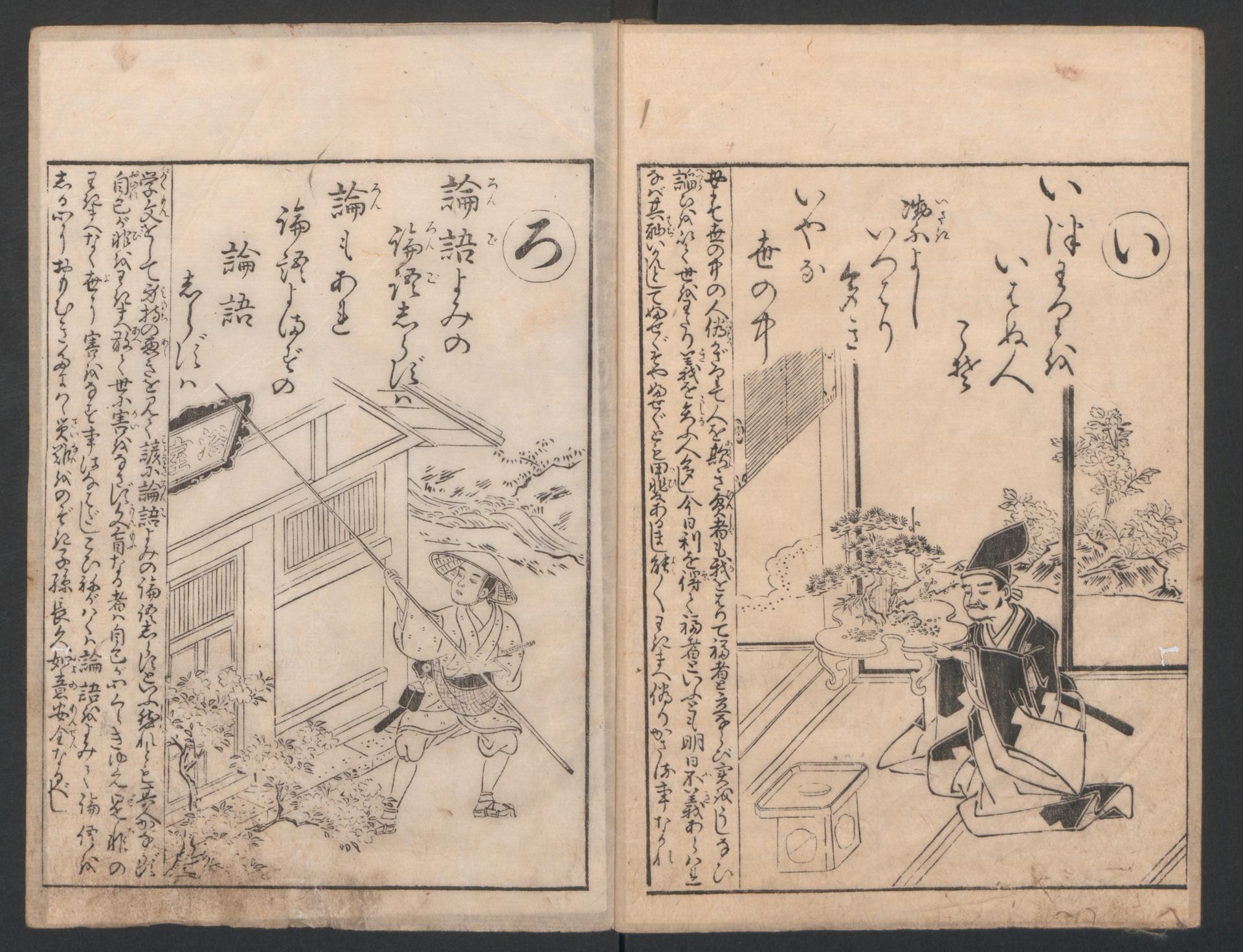
Suzuki Harunobu's 'Forty-Eight Instructive Poems in Alphabetical Order' (Ehon irohauta) appeared in 1788 as a three-volume set of ink drawings on paper. The volumes combine poems and pictures, with scenes drawn from Japanese everyday life arranged according to the alphabetical order of the Iroha poem.
Description
Two opened book pages are visible. On the left stands a figure in traditional dress with a hat and sash, pointing with a stick at a door or pillar. On the right, a seated person, also in traditional clothing and headwear, reads or holds something in their hands. Chinese characters and illustrations in the style of woodblock printing fill both pages; black and white predominate, with no shadows or special lighting effects.
Context
Suzuki Harunobu is counted among the important Japanese woodblock artists of the eighteenth century and became known for his multicolour prints (nishiki-e). The book was made during the Edo period, an era of cultural flourishing under a strict social order. It belongs to the ehon, illustrated books that were widespread at the time and often combined poems with images. The arrangement by the Iroha system served as a didactic aid to help readers access the poems.
Impact
The restrained black-and-white aesthetic creates a calm, collected mood and directs the eye to essentials. Everyday scenes feel close and at the same time distant, in the manner of the quiet elegance characteristic of Japanese book art.
Technique
The work was executed in ink on paper, presumably by woodblock printing. The lines are precise and detailed, as is usual in Japanese printmaking. The use of only black and white strengthens the graphic clarity and emphasises the pictorial structure.
AI-generated description text
Source: Metropolitan Museum of Art · Public Domain (CC0 1.0)