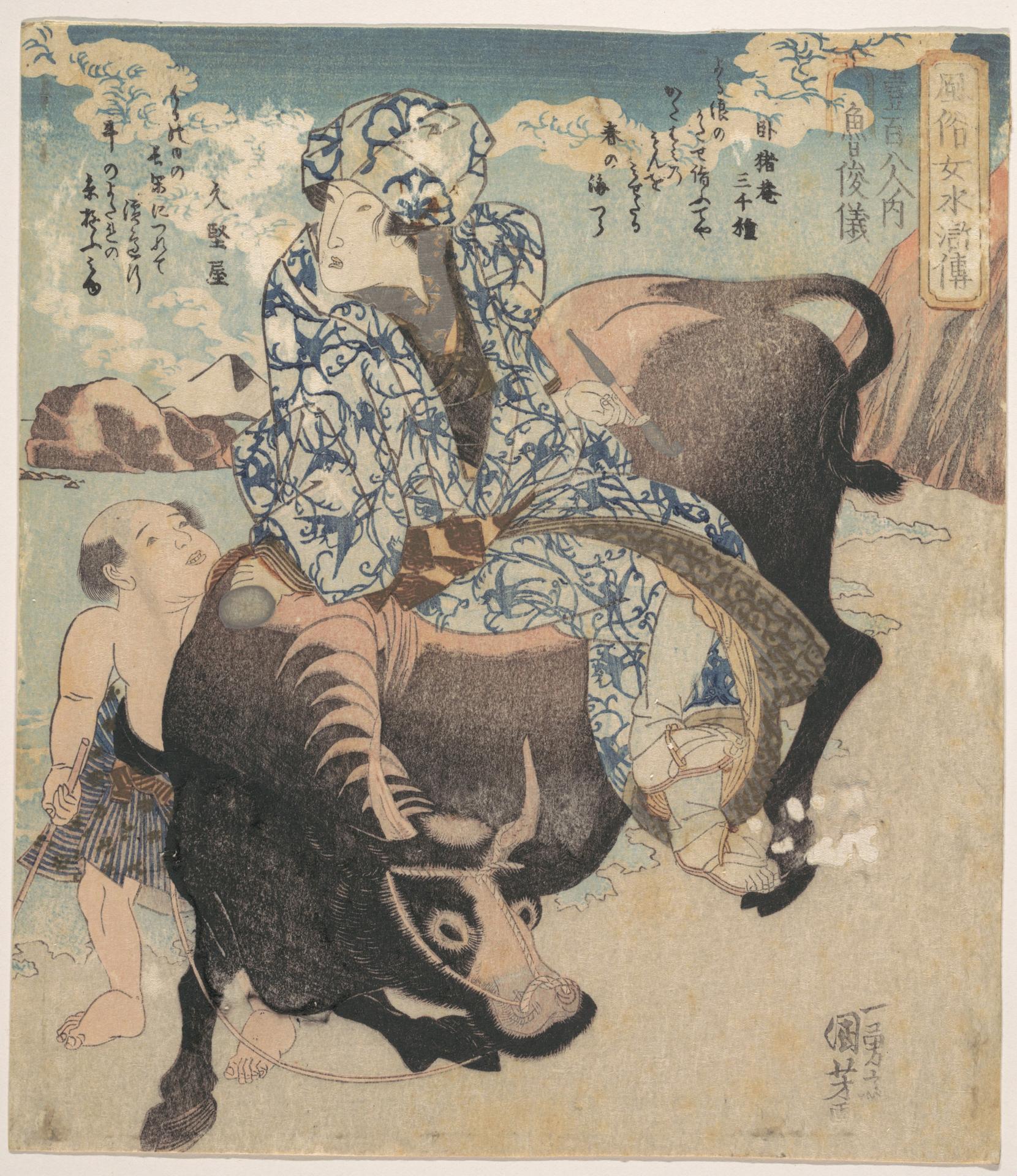
Roshungi (Chinese, Lu Zhunyi) as a Woman with a Pipe Riding on a Buffalo
Original title: Roshungi (Chinese, Lu Zhunyi) as a Woman with a Pipe Riding on a Buffalo
kurzbeschreibung
Utagawa Kuniyoshi portrays the Chinese figure Roshungi (Lu Zhunyi) as a pipe-smoking woman seated on a buffalo. The image is a surimono woodblock print in ink and color on paper, undated. The horizontal format measures 20.5 x 18.1 cm and belongs to the Japanese ukiyo-e print tradition.
Description
A woman in traditional Chinese garb with a blue pattern sits on a buffalo that appears to be moving. A small boy in conventional dress stands to the side, holding a stick. Clouds and mountains fill the background, suggesting a rural setting. Blue, brown, and white dominate the palette, distributed across garments and landscape. Even light without harsh shadows, clear contours, and closed color areas define the style of traditional woodblock prints. Characters in the image likely record names and descriptions of the figures or the scene.
Context
Kuniyoshi (1797–1861) is counted among the important Japanese woodblock artists of the Edo period; he became known for hero, historical, and fantasy subjects. A surimono is a privately commissioned congratulatory print, often made for New Year or theater occasions. The appearance of a Chinese figure like Roshungi (Lu Zhunyi) points to the Edo period's interest in Chinese myths and historical figures. A precise date is lacking, but the print likely dates from the mid-19th century, when Kuniyoshi was active.
Impact
The calm rural arrangement and the harmonized tones of blue and brown give the print a balanced, narrative character. The appearance of a woman with a pipe on the buffalo lends the view an unusual, slightly ironic touch and awakens curiosity. Clear lines and even color application create a quiet clarity characteristic of carefully executed surimono.
Technique
Several color blocks were used for this surimono print, transferring blue, brown, and white layer by layer. The process begins with cutting the design into woodblocks, followed by inking and pulling onto paper; fine lines and color gradations are rendered precisely. Ink and color on paper correspond to the usual working method of Japanese color woodblock prints, with surimono often featuring high-quality pigments and particularly careful printing.
AI-generated description text
Source: Metropolitan Museum of Art · Public Domain (CC0 1.0)