Horse with Jockey; Horse Galloping, Turning the Head to the Right, the Feet Not Touching the Ground
Original title: Horse with Jockey; Horse Galloping, Turning the Head to the Right, the Feet Not Touching the Ground
kurzbeschreibung
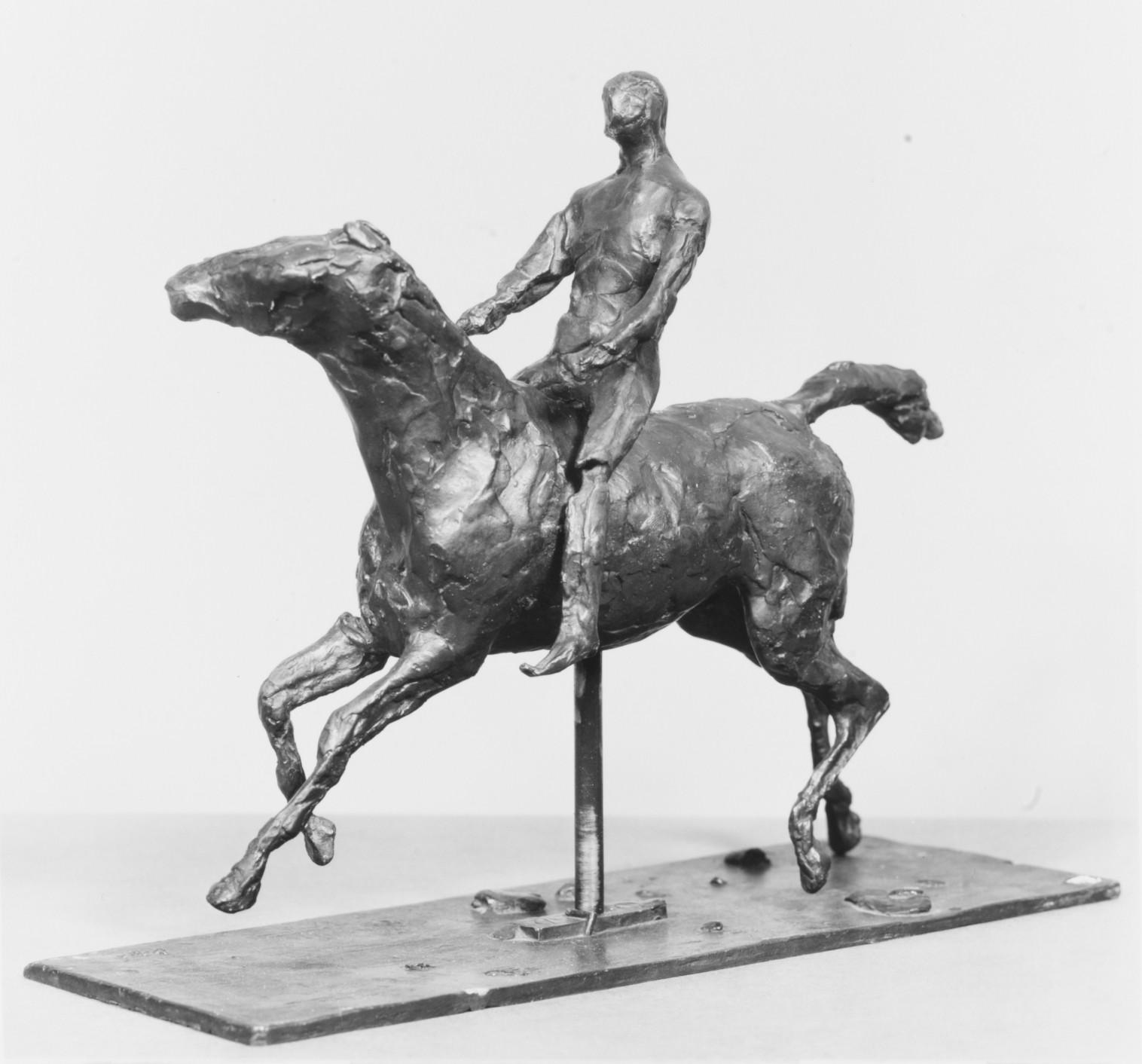
Unlike related horse depictions that often show the rider in a calm pose, Edgar Degas captures the instant of a gallop: a horse with a jockey sitting upright, modeled perhaps before about 1879 and cast in bronze in 1920. The sculpture combines the dynamics of movement with the precision of the equestrian figure.
Description
The horse is mid-gallop, head turned to the right, hind legs lifted, front legs stretched forward without touching the ground. The jockey sits upright and holds the reins. The bronze surface appears even and brings out the material's texture. Equally even lighting with no visible shadows suggests a controlled setting, such as a studio.
Context
The sculpture was made in the late 19th century, when Degas was deeply engaged with horses and horse racing. The bronze cast was made only in 1920, after the artist's death; during his lifetime he worked mainly in wax and clay. The subject of horse racing was widespread in French art of the time and reflects an interest in movement and fleeting moments.
Impact
The sculpture conveys a palpable dynamism and lightness that seems to hold the gallop in place. The precise modeling and the horse's elegant posture create a tension between movement and stillness.
Technique
The sculpture was executed in bronze, a material valued for its durability and fine detail. The cast was likely made using the lost-wax method, which produces delicate surface structures and an even patina.
AI-generated description text
Source: Metropolitan Museum of Art · Public Domain (CC0 1.0)