The Silver World (Gin sekai) 銀世界
Original title: The Silver World (Gin sekai) 銀世界
kurzbeschreibung
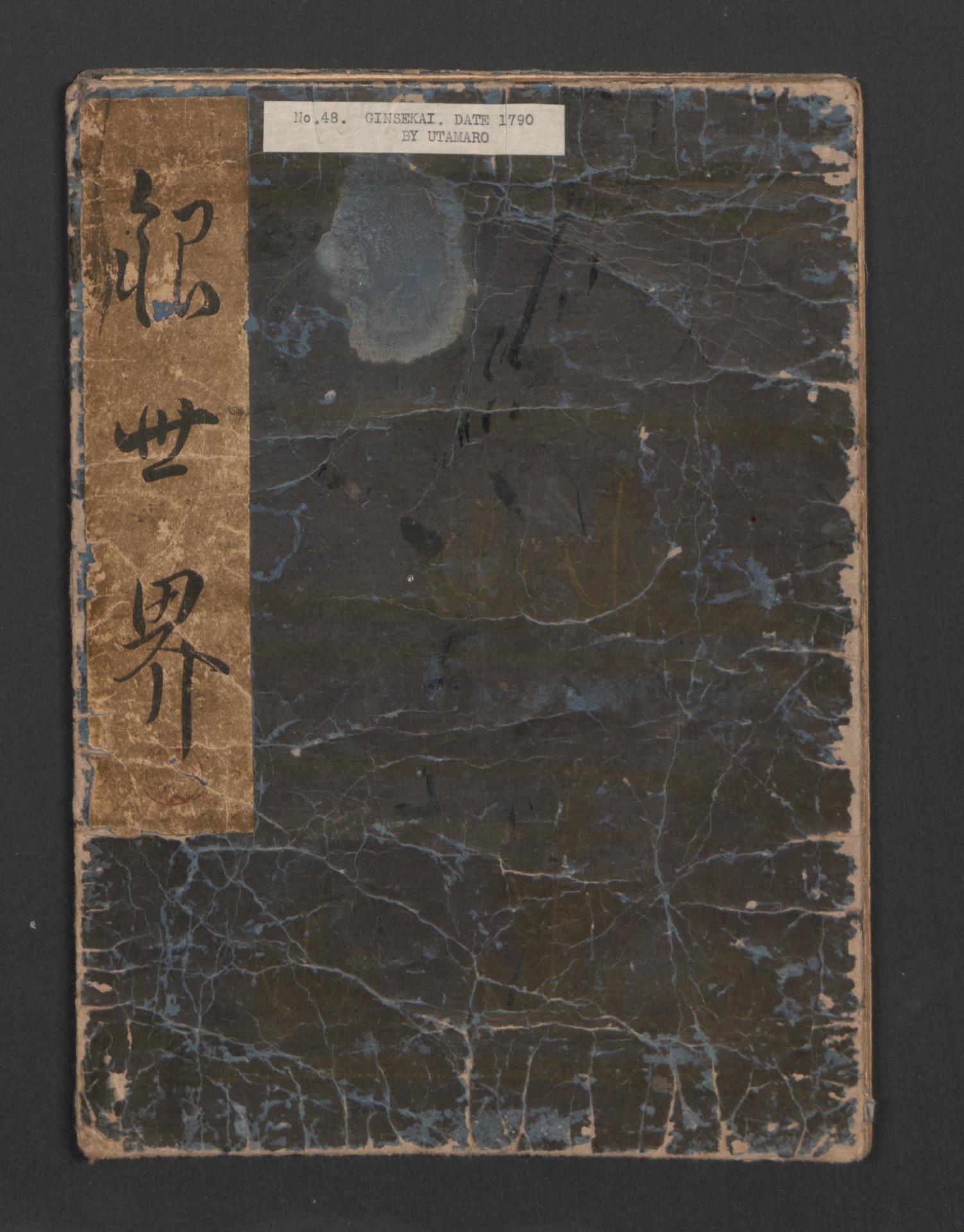
A vertical strip of Chinese characters runs down the left edge of a dark, marbled book page — the title of the work. This page was produced as a polychrome woodblock print for an illustrated book; Kitagawa Utamaro created it in 1790. It is printed with ink and colors on paper.
Description
The surface appears almost black, veined with a fine marbling that results from the pressure of several woodblocks. A narrow vertical strip with Chinese characters runs down the left side and gives the title. Scattered light spots brighten the dark area; they likely come from colored blocks. The grain of the wood is visible in the print and helps shape the layout. Wear shows at the edges, and a small label is stuck at the upper left — both signs of age.
Context
Utamaro was one of the defining ukiyo-e artists of the late eighteenth century; he became known above all for pictures of women and views of nature. In 1790, the year this work was made, woodblock books with elaborate printing methods were widespread. It is conceivable that the silver world refers to a winter landscape or stands as a symbol of purity and transience, as is often found in Japanese art.
Impact
A calm emanates from the almost monochrome dark sheet, nearly meditative. The marbling and visible wood grain give the page a tactile depth that draws the eye to the small details of the print.
Technique
Several woodblocks were used to reproduce the different colors — a polychrome woodblock print. The dark ground and the marbling arose from the interplay of these blocks, which were printed with ink and colors on paper. The grain of the wood visible in the print is one of the hallmarks of the process.
AI-generated description text
Source: Metropolitan Museum of Art · Public Domain (CC0 1.0)