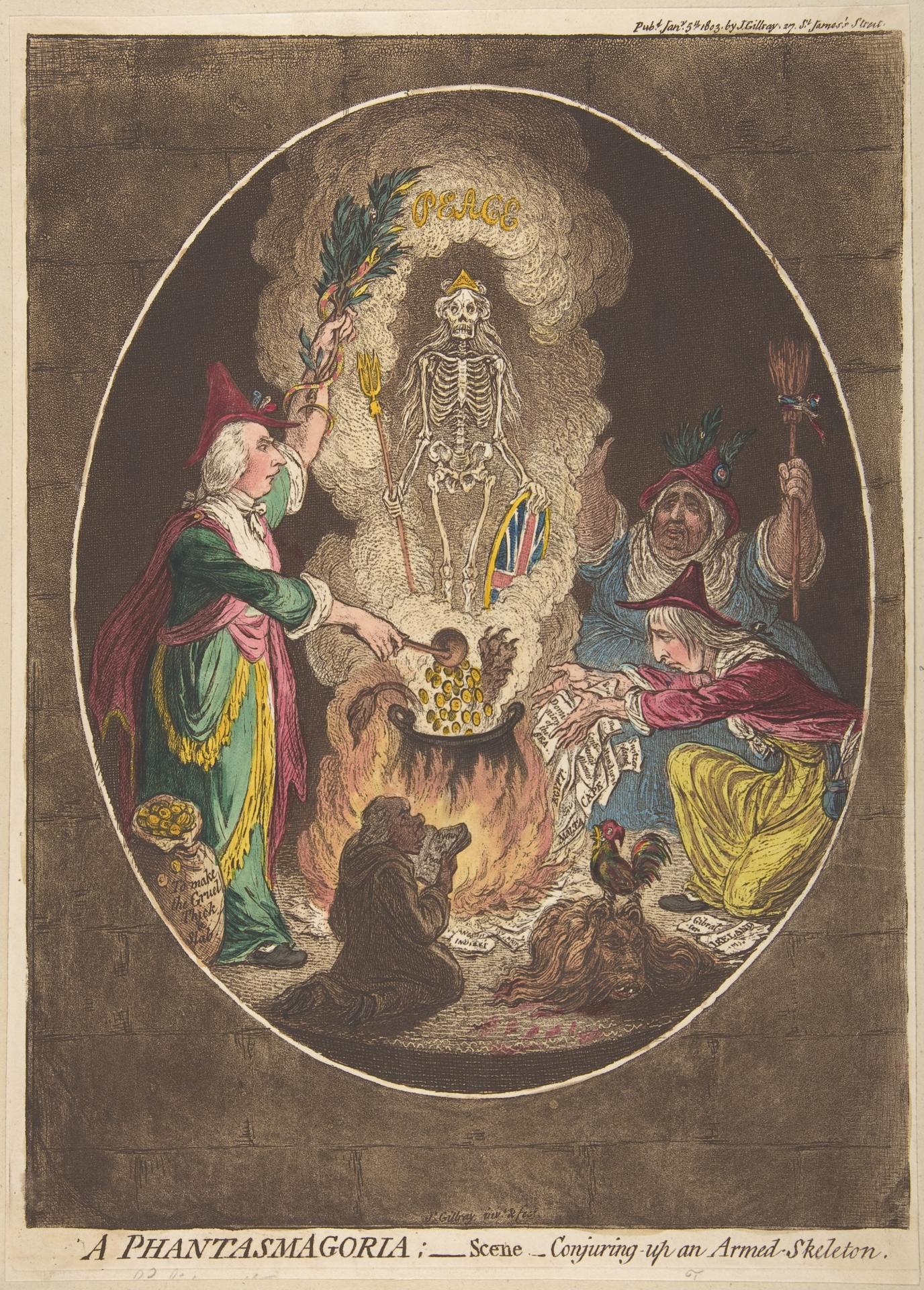
A Phantasmagoria; — Scene – Conjuring-Up an Armed-Skeleton
Original title: A Phantasmagoria; — Scene – Conjuring-Up an Armed-Skeleton
kurzbeschreibung
On January 5, 1803, James Gillray published the hand-colored etching A Phantasmagoria; – Scene – Conjuring-Up an Armed-Skeleton. The print stages a ghost-raising as satire: an armed skeleton emerges from a cloud bearing the word PEACE, surrounded by figures in historical dress. Gillray's political caricature draws on allusions of its time.
Description
A skeleton dominates the center of the oval image, wrapped in a cloud inscribed PEACE. Beside it stands a crowned figure in historical robes, holding a palm, an arrow and a sword. A second figure in traditional clothing holds a fan; a third, robed and hatted, carries a staff. In front, a person in red kneels before a burning cauldron, while further figures appear behind. Dark tones with red and gold accents define the color scheme, and the light draws the eye to the skeleton.
Context
The etching was made on January 5, 1803, during a period of political tension in Britain after the Napoleonic Wars. Gillray parodies contemporary peace negotiations, exposing them as mere illusion. The artist was known for his political caricatures, which often employed allegorical and grotesque means. The skeleton as a symbol of peace reflects skepticism toward the peace efforts of that era.
Impact
A menacing yet ironic mood emanates from the print, prompting reflection on the political situation. The high-contrast lighting and gloomy palette heighten the eerie character of the scene. The satirical exaggeration conveys the message clearly without resorting to blatant effects.
Technique
The etching was hand-colored after printing. This method allowed fine lines and at the same time added color accents that emphasize the composition. Hand-coloring was usually done in serial production to make the prints accessible to a broad public.
AI-generated description text
Source: Metropolitan Museum of Art · Public Domain (CC0 1.0)