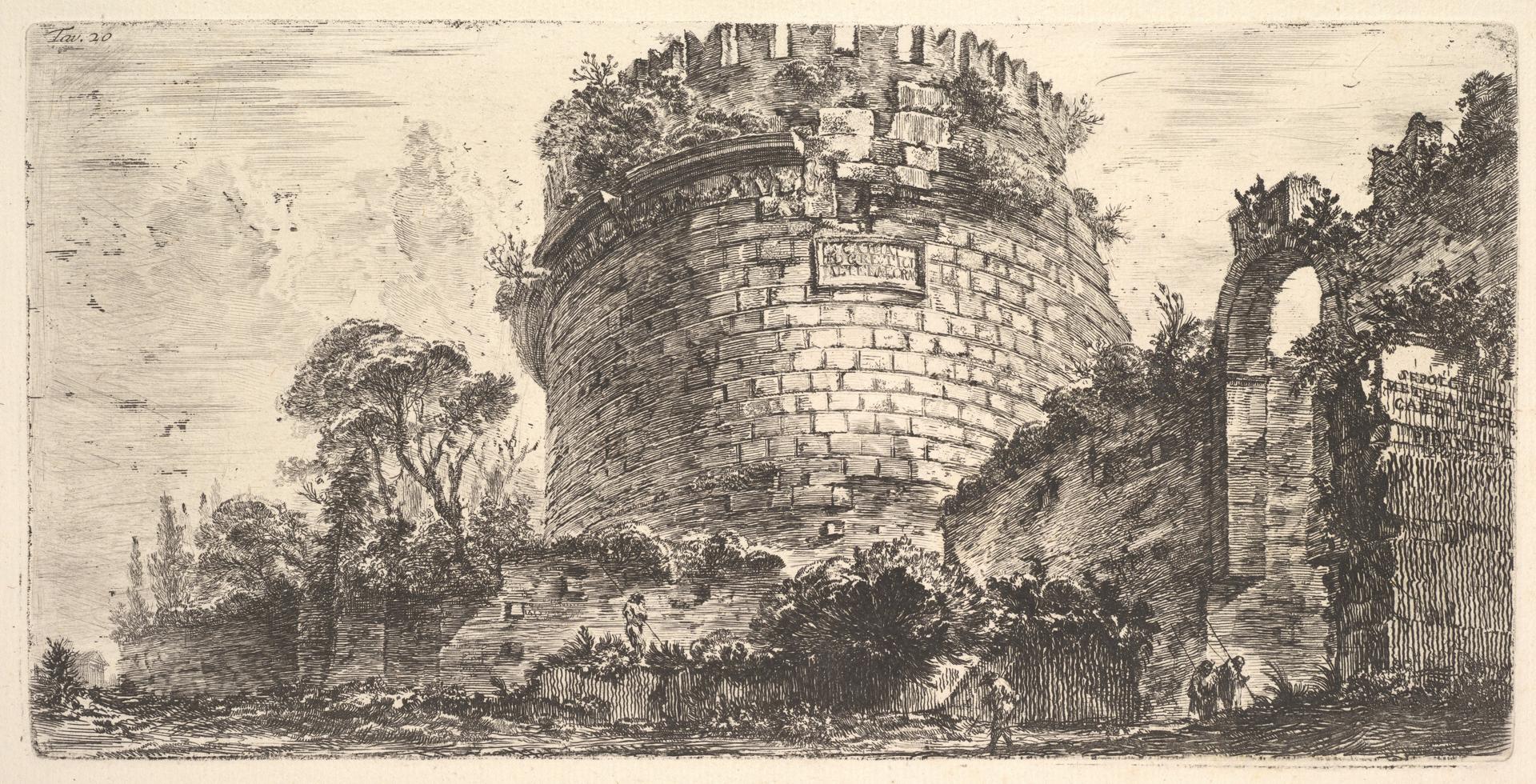
Plate 20: Tomb of Caecilia Metella called the Capo di Bove (Ox Head) (Sepolcro di Metela detto Capo di Bove), from "Alcune Vedute di Archi Trionfali ed altri monumenti inalzati da Romani parte di quali se veggono in Roma e parte per l'Italia"
Original title: Plate 20: Tomb of Caecilia Metella called the Capo di Bove (Ox Head) (Sepolcro di Metela detto Capo di Bove), from "Alcune Vedute di Archi Trionfali ed altri monumenti inalzati da Romani parte di quali se veggono in Roma e parte per l'Italia" (Some Views of Triumphal Arches and other monuments erected by the Romans, some of which are in Rome and some elsewhere in Italy)
kurzbeschreibung
Giovanni Battista Piranesi dedicated this etching of around 1748 to the tomb of Caecilia Metella on the Via Appia, popularly known as Capo di Bove. It belongs to his series 'Alcune Vedute di Archi Trionfali ed altri monumenti inalzati da Romani', which records Roman structures. The print brings the massive ruin into focus, surrounded by vegetation; two small figures in the foreground provide a sense of scale.
Description
The layout extends horizontally: at the center rises the circular tomb, flanked by a wall with a gate. In front, two people linger, populating the site. Trees and shrubs overgrow the surroundings, making the ruin appear embedded in a rural idyll. The etching remains monochrome; dense and loose hatching distinguishes stone surfaces from foliage. The varying density of the hatching creates a calm, clear light that brings out the contours.
Context
Around 1748 Piranesi was in Rome, engaged in recording ancient architecture. The tomb of Caecilia Metella, built in the 1st century BC, was regarded as an outstanding example of Roman funerary art. In the series 'Alcune Vedute' he published this plate alongside views of triumphal arches and other monuments; his aim was to convey the grandeur of these buildings.
Impact
A wistful stillness emanates from the print, arising from the encounter between the mighty ruin and encroaching nature. The careful linework lends the image detailed clarity and invites close looking. The small figures give the scene a sense of scale and thus heighten the impact of the ancient structure.
Technique
For this etching, lines were incised into a copper plate and bitten with acid. Piranesi used delicate and bold hatching to render light and shade as well as the texture of stone and plants. The process allowed precise reproduction of architectural details, characteristic of his vedute.
AI-generated description text
Source: Metropolitan Museum of Art · Public Domain (CC0 1.0)