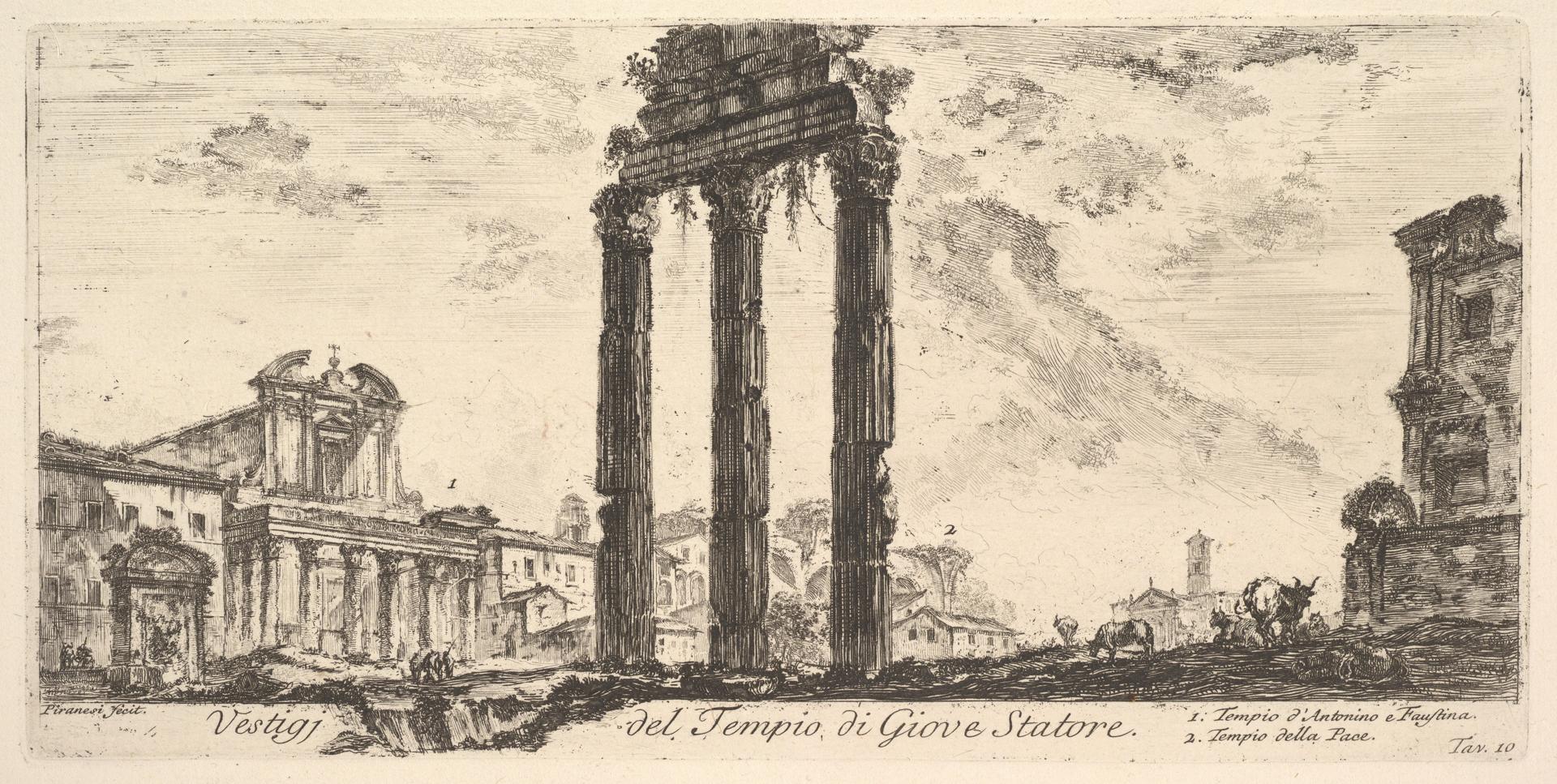
Plate 10: Ruins of the Temple of Jupiter Stator (Jupiter the Supporter). 1. Temple of Antoninus and Faustina. 2. Temple of Peace.
Original title: Plate 10: Ruins of the Temple of Jupiter Stator (Jupiter the Supporter). 1. Temple of Antoninus and Faustina. 2. Temple of Peace. (Vestigi del Tempio di Giove Statore. 1. Tempio d'Antonino e Faustina. 2. Tempio della Pace.), from "Antichità Romane de' Tempi della Repubblica, e de' primi Imperatori"
kurzbeschreibung
This sheet from Giovanni Battista Piranesi's series "Antichità Romane de' Tempi della Repubblica, e de' primi Imperatori" (around 1748) is given over to the remains of the Temple of Jupiter Stator, named for the god's support in battle. The neighbouring temples of Antoninus and Faustina and of Peace appear alongside it. It is a veduta of Roman architecture of the kind cultivated in eighteenth-century Italy, executed with great attention to detail.
Description
Half-buried column stumps and loose capitals of the Jupiter Stator temple fill the foreground. Behind them, on the left, the Temple of Antoninus and Faustina rises with its colonnade and surviving roof ridge. To the right the Temple of Peace is suggested, while further back a city silhouette with other buildings stretches beneath a clouded sky. The rendering stays monochrome, dominated by greys and whites that bring out the masonry of the ancient structures.
Context
By about 1748 Piranesi had begun to record Rome's ancient monuments systematically. With the "Antichità Romane" series he set out to confront a wider public with the sheer force of Roman building. Archaeological care went hand in hand with dramatic staging, so that the decay and the grandeur of the ruins came across in equal measure.
Impact
Precisely guided lines and an exact grasp of architectural form give the sheet a sober, almost documentary character. At the same time a muted, reflective mood lies over the ruins, pointing the viewer toward transience and former greatness.
Technique
For the etching the drawing was bitten into a copper plate, allowing fine strokes and hatching to capture a wealth of detail in the manner typical of Piranesi. The sheet was printed in black ink on paper; the varying tones of grey arise from the density of the hatching.
AI-generated description text
Source: Metropolitan Museum of Art · Public Domain (CC0 1.0)