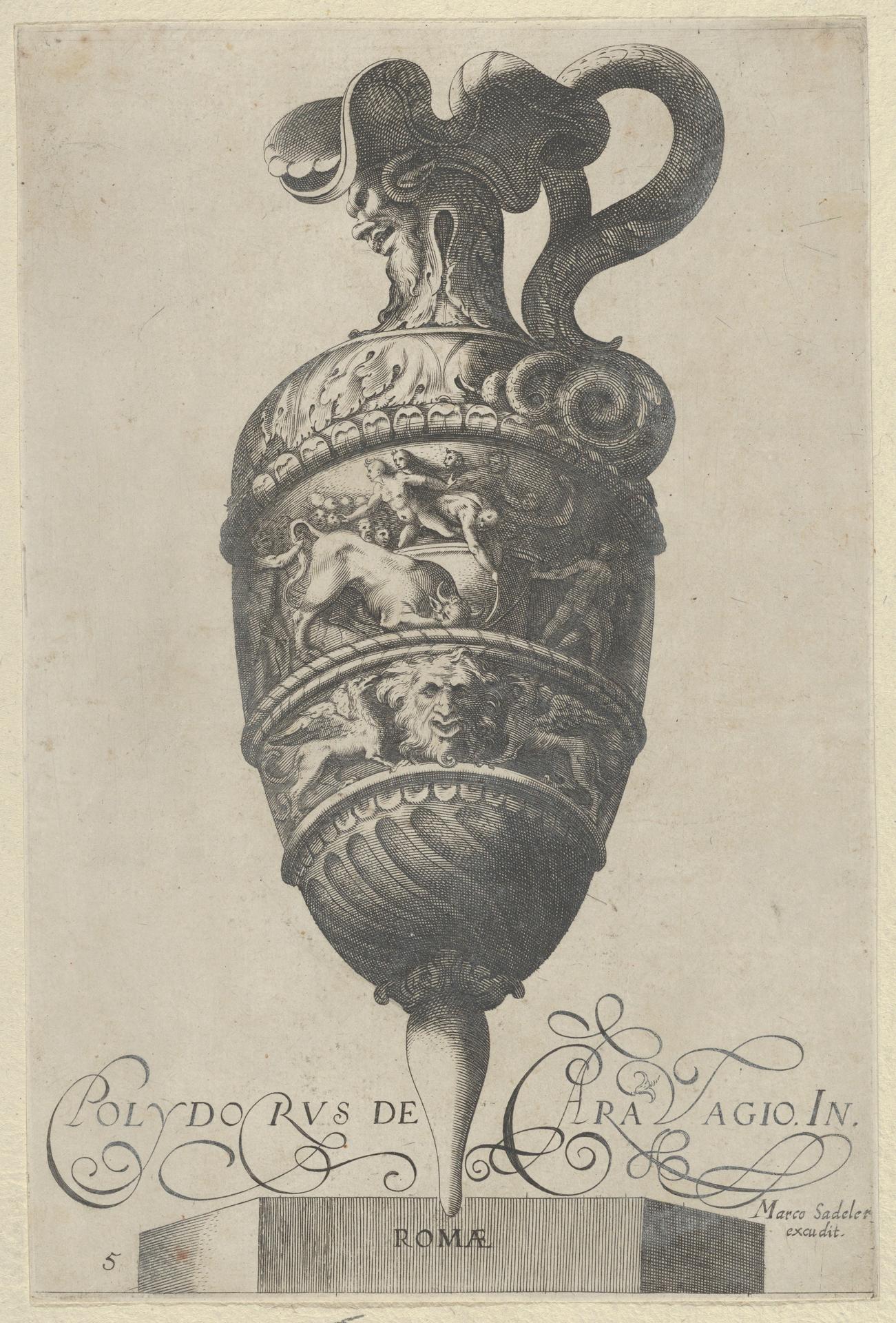
Plate 5: Vase or Ewer with a Double Frieze, the Top shows Men Wrestling a Bull, the Bottom contains a Mask and Two Griffins, from "Antique Vases" (Vasa a Polydoro Caravagino)
Original title: Plate 5: Vase or Ewer with a Double Frieze, the Top shows Men Wrestling a Bull, the Bottom contains a Mask and Two Griffins, from "Antique Vases" (Vasa a Polydoro Caravagino)
kurzbeschreibung
This etching and engraving by Aegidius Sadeler II dates from 1605 and reproduces an ornamental vase with two friezes. The sheet belongs to the series 'Antike Vasen' and survives in the second state of three (Bartsch). It measures 23.5 × 15.7 cm.
Description
Two friezes divide the vase. The upper one carries a turbulent scene in which men wrestle with a bull, one figure dressed as a warrior. Below, a mask sits at the middle, flanked by two griffins. Ornamental details decorate the vessel's shape, and the engraved lines are sharp and precise. The image is monochrome, as etchings usually are, and bears the inscription 'Polydorus de Caravagio in Romae', the number '5' and the publisher's note 'Marco Sadeler excudit'.
Context
The 'Antike Vasen' series goes back to designs by the Italian artist Polidoro da Caravaggio, known for his ornaments in the antique manner. Aegidius Sadeler II, a Flemish engraver, made these prints in Rome in the early seventeenth century, where he worked for Emperor Rudolf II. Marco Sadeler published the models, as the publisher's note confirms. Vase imagery of this kind formed part of the period's reception of antiquity and served craftsmen as models.
Impact
The clear division into two friezes and the delicate linework give the sheet a very balanced, decorative character. The dynamic bull scene contrasts with the symmetrical arrangement of mask and griffins below, producing an aesthetic that is calm and lively at once.
Technique
Etching combined with engraving allows for fine, precise lines. The method permits a detailed rendering of the ornamental structures and the figural scenes. The impression comes from the second state of three, which points to later reworking of the plate.
AI-generated description text
Source: Metropolitan Museum of Art · Public Domain (CC0 1.0)