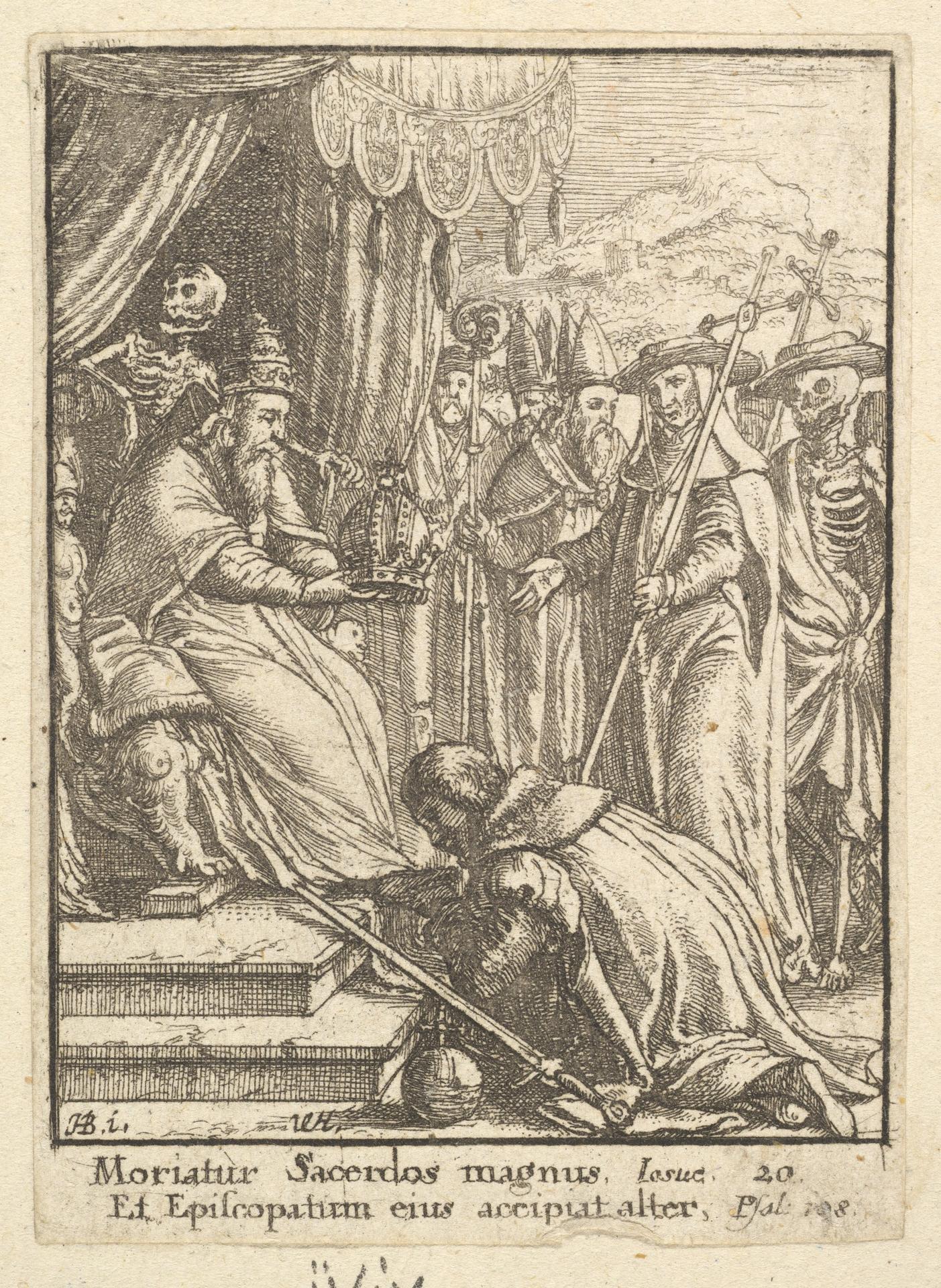
The Pope, from the Dance of Death
Original title: The Pope, from the Dance of Death
kurzbeschreibung
An etching from Wenceslaus Hollar's Dance of Death series, made around 1651, shows a pope seated among skeletons and clergy. This impression was printed in the late 18th century and represents the second of four states. A high-ranking church official sits enthroned, surrounded by bone figures and other clerics.
Description
A priest in elaborate vestments occupies a throne. Around him stand men in liturgical robes, identifiable as bishops or other high-ranking clergy. One skeleton stands on each side of the throne, and another appears farther back. A supplicant kneels before the priest, who holds a book. Fine lines and hatching create the monochrome effect; light falling from above accents contours and shadows.
Context
The Dance of Death motif spread from the late Middle Ages and emphasizes the equality of all ranks before death. Hollar, a Bohemian printmaker who worked in London and Antwerp, took up the theme in the mid-17th century. The etching was made at a time when vanitas imagery was widespread in Baroque art. That this print dates from the 18th century speaks to the motif's continued reception.
Impact
The precise linework and strong contrast between light and dark give the scene emphasis and a certain detachment. The skeletons contrast with the clergy's ornate clothing and evoke a memento mori mood, a reminder of mortality.
Technique
The etching relies on an etched plate whose lines were printed on paper. Hollar used fine hatching to bring out volume and shadow. This impression is the second of four states, suggesting later reworkings of the plate.
AI-generated description text
Source: Metropolitan Museum of Art · Public Domain (CC0 1.0)