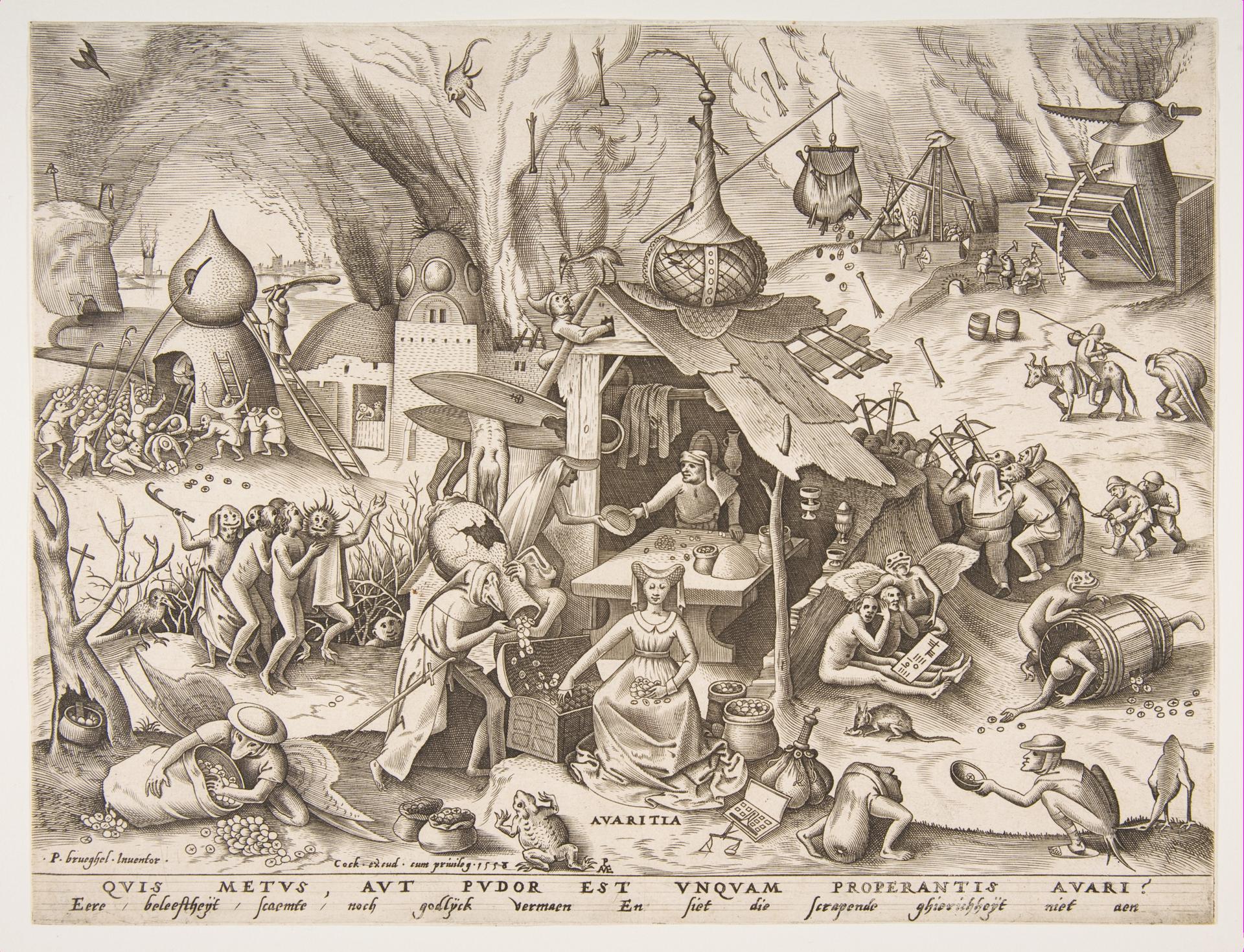
Avarice (Avaritia), from "The Seven Deadly Sins"
Original title: Avarice (Avaritia), from "The Seven Deadly Sins"
kurzbeschreibung
Pieter van der Heyden engraved the allegorical figure of Avaritia in 1558, setting her within a crowded scene. This copperplate engraving, the first of two states, derives from a design by Pieter Bruegel the Elder. The subject presents greed as a vice and reveals its social consequences.
Description
Avaritia sits enthroned as a woman at a table piled with gold coins. Around her, figures hoard wealth, drink, or consume prosperity. The layout feels compressed and layered; further scenes in the distance portray destruction and persecution. Extremely fine, sharp lines and carefully placed areas of light and shadow create depth. The monochrome image follows the Renaissance style with precise, detailed execution.
Context
The print was made in 1558 in the Netherlands, when moralizing and allegorical themes were widespread in art. Van der Heyden translated a drawing by Pieter Bruegel the Elder into engraving; Bruegel was known for his detailed portrayals of human vices. The series 'The Seven Deadly Sins' addressed an educated audience and aimed to instruct morally. Such engravings were often sold in sets and circulated widely across Europe.
Impact
The crowded arrangement and abundance of symbolic details demand close looking and expose the absurdity of greed. The precise graphic work establishes a cool, analytical distance that reinforces the moral message.
Technique
For the copperplate engraving, lines were cut into the plate with a burin. Printing was done in black on paper, resulting in the monochrome appearance. Fine, parallel hatching produces graduated gray tones and emphasizes the sculptural effect of the figures.
AI-generated description text
Source: Metropolitan Museum of Art · Public Domain (CC0 1.0)