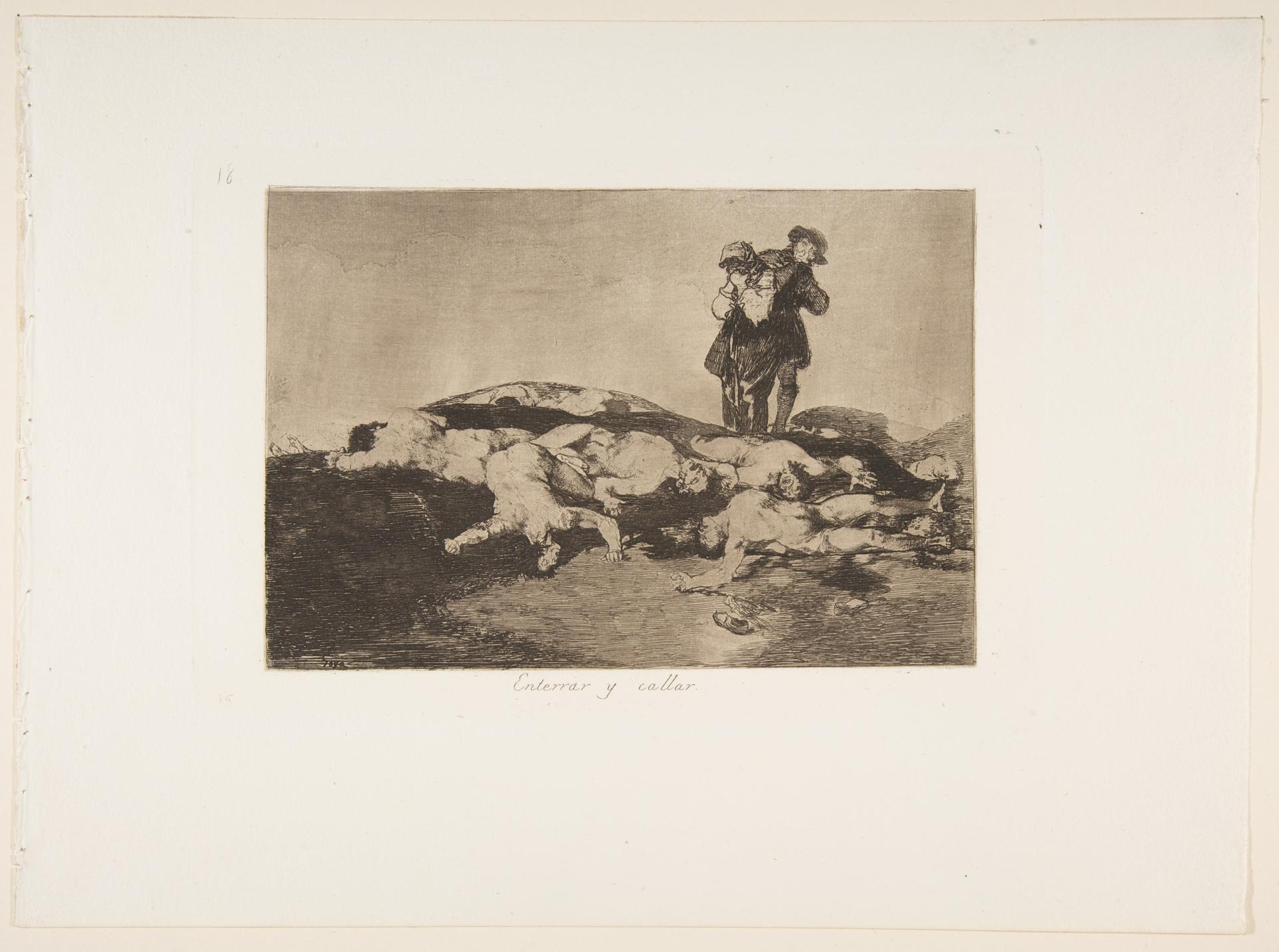
Plate 18 from "The Disasters of War" (Los Desastres de la Guerra): 'Bury them and keep quiet' (Enterrar y callar)
Original title: Plate 18 from "The Disasters of War" (Los Desastres de la Guerra): 'Bury them and keep quiet' (Enterrar y callar)
kurzbeschreibung
What sets this print apart from related depictions is its refusal of combat or execution: instead, 'Sie begraben und schweigen' (Enterrar y callar) centers on a wordless burial. It belongs to Francisco de Goya's etching series 'The Disasters of War' (Los Desastres de la Guerra). Goya made the etching in 1810; it was published only in 1863. The technique combines etching, burnished lavis, drypoint, and burin. Figures bend over dead horses, one holding a spade. The motif points to the aftermath of the Spanish War of Independence against Napoleon.
Description
A group of figures leans over a row of motionless horse carcasses. Two people stand in front, one carrying a spade. The background stays flat and dark, deepening the grim mood. The clothing suggests a historical period. The image is monochrome in various grays, produced by etching and lavis. Sharp, clear lines emphasize detail. Beneath the image appears the caption 'Enterrar y callar', which carries the political and moral undertone.
Context
Between 1810 and 1820, Goya created the series in response to the atrocities of the Spanish War of Independence (1808–1814) and the subsequent restoration. Not until 1863, 35 years after Goya's death, did the Real Academia de Bellas Artes de San Fernando in Madrid publish the prints. This sheet belongs to the first group of the series, which deals with the immediate consequences of war. Civilian victims and the call for silence reflect the censorship and repression under the rule of Ferdinand VII.
Impact
The dark, flat background and the motionless horse carcasses create an oppressive, hopeless atmosphere. Sharp lines and sparse lavis direct the eye to the silent action of the figures; from this emerges a quiet but insistent grief. The caption reinforces the resigned effect and makes the sheet a cautionary document of human suffering.
Technique
For this print, Goya used etching, then worked the plate further with burnished lavis, drypoint, and burin. The lavis produces fine gradations of gray, while drypoint and burin bring out sharp lines and details. Combining these techniques on the copper plate allows a rich tonal range from deep black to delicate gray, which supports the somber mood.
AI-generated description text
Source: Metropolitan Museum of Art · Public Domain (CC0 1.0)