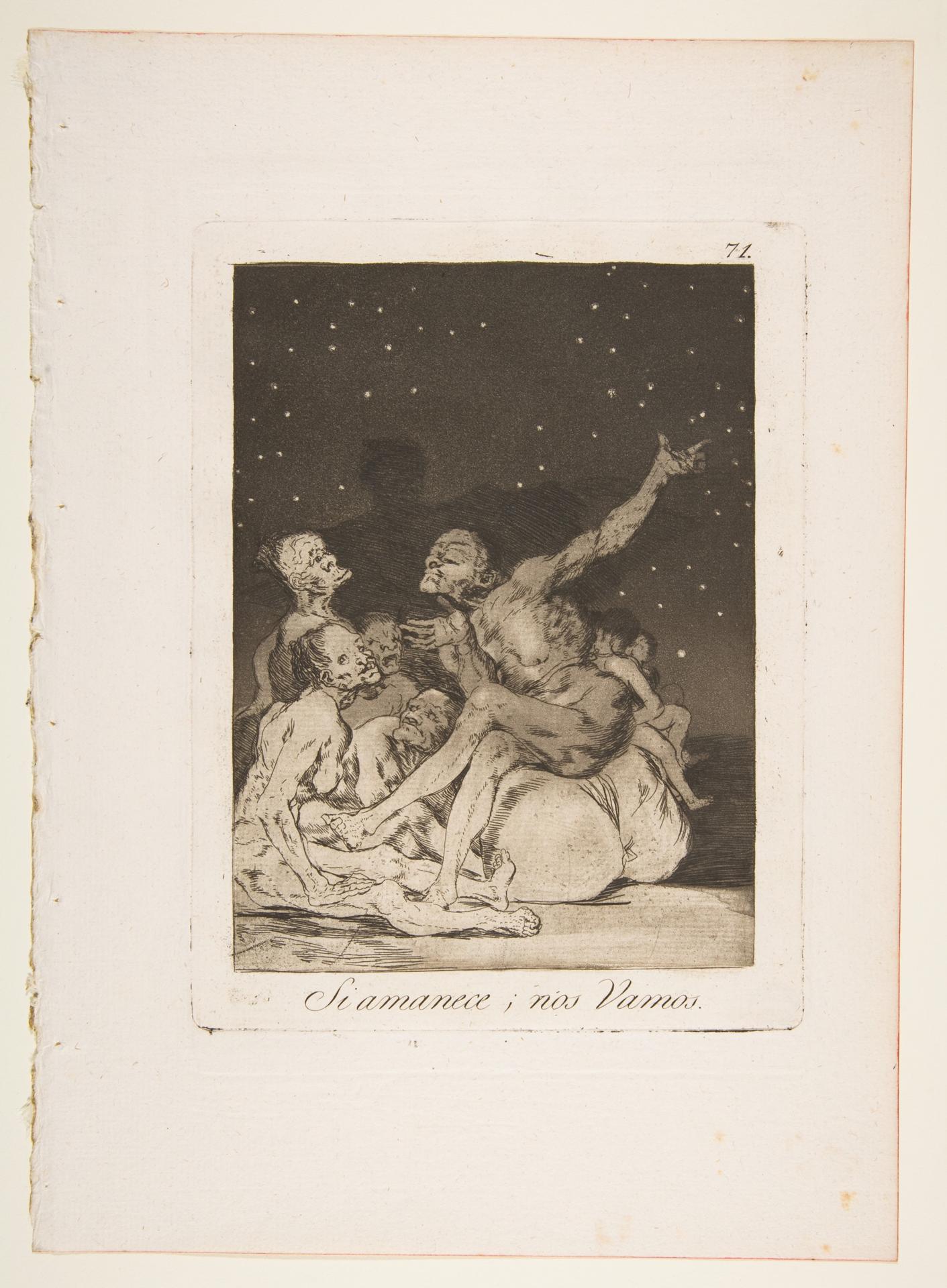
Plate 71 from "Los Caprichos": When day breaks we will be off (Si amanece; nos Vamos)
Original title: Plate 71 from "Los Caprichos": When day breaks we will be off (Si amanece; nos Vamos)
kurzbeschreibung
Unlike many sheets from Goya's Los Caprichos that sharpen into biting satire, 'Wenn es tagt, gehen wir' (Si amanece; nos Vamos) captures a moment of pause. The 1799 etching presents a cluster of weary figures in a nighttime setting, waiting for daybreak. The print combines etching with aquatint and burin.
Description
A man has settled on a rock and points upward with an outstretched arm, while others around him sit or huddle close. Weariness or disappointment marks the dark, drawn faces. Above the group, a gloomy sky studded with stars reinforces the nocturnal mood. The figures are rendered in a terse, almost sketchy manner characteristic of etching. Gray tones dominate and thicken the somber atmosphere; at the lower edge one reads the title 'Si amanece; nos Vamos'.
Context
Los Caprichos took shape at the end of the 18th century, when social and political conditions in Spain were shifting. In it, Goya turned a critical eye on superstition, social ills, and human folly. This print belongs to a series of 80 etchings published together in 1799. What the scene means exactly remains uncertain; it is often read as a comment on illusions and escape from reality.
Impact
The dark tonality and exhausted faces evoke an uneasy, melancholic mood. At the same time, the nighttime scene with its stars feels poetic and threatening, prompting the viewer to reflect on hope and futility. Through its sketch-like handling, the sheet gains something immediate, almost documentary.
Technique
Goya combined etching, burnished aquatint, and burin to achieve fine lines and tonal gradations. Aquatint allowed soft, flat areas of gray, while the burin set precise details. The print was pulled on paper; the plate measures about 19.6 × 14.9 cm.
AI-generated description text
Source: Metropolitan Museum of Art · Public Domain (CC0 1.0)