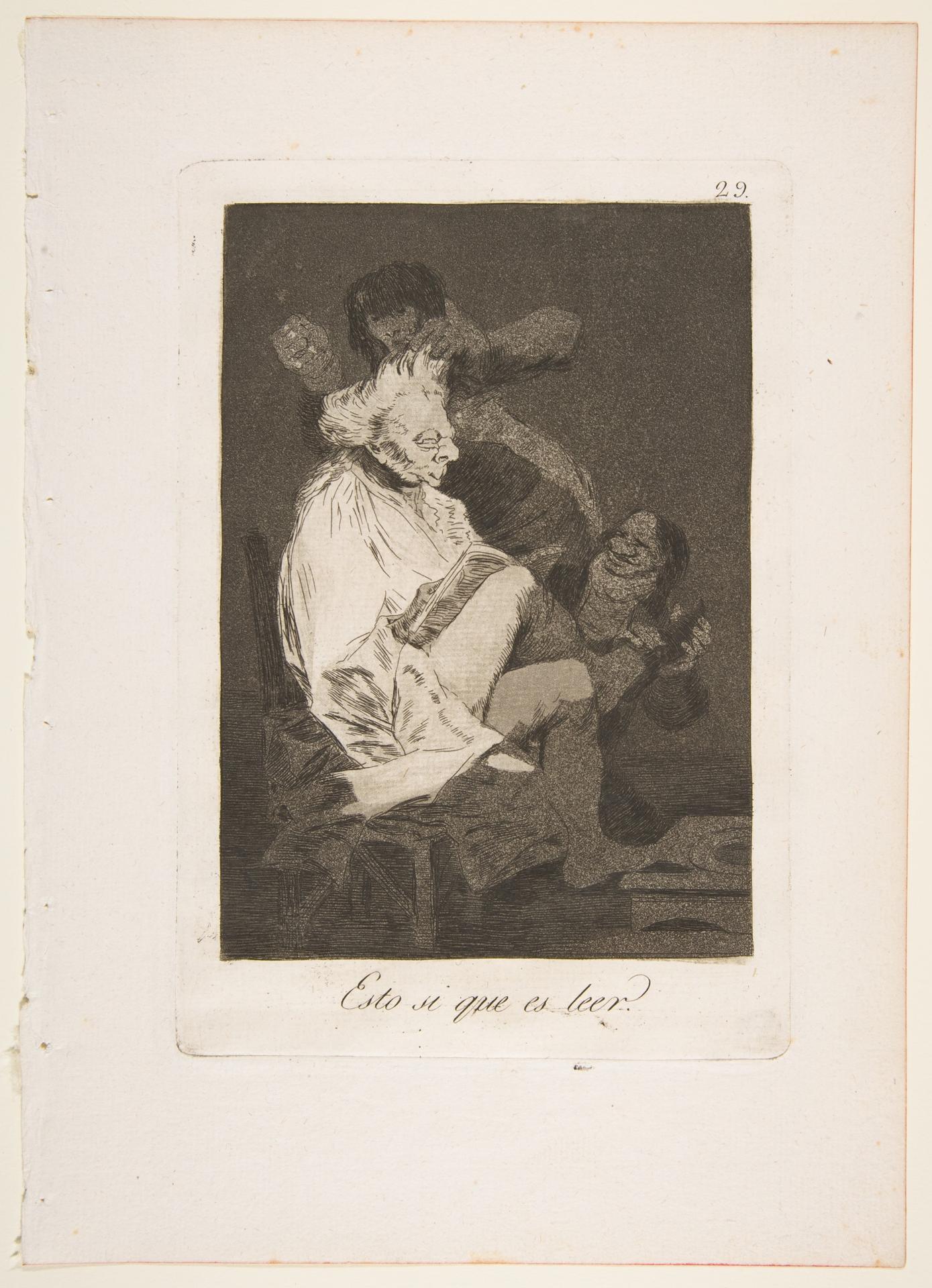
Plate 29 from "Los Caprichos": That certainly is being able to read (Esto si que es leer)
Original title: Plate 29 from "Los Caprichos": That certainly is being able to read (Esto si que es leer)
kurzbeschreibung
A man absorbed in his book, leaning back comfortably — that is the subject of plate 29 from Goya's Los Caprichos, titled Esto si que es leer (This is indeed reading). The 1799 etching combines etching, burnished aquatint and drypoint into a dense, darkly toned image.
Description
A man sits on a chair, an open book before him, deep in concentration. His posture seems relaxed, yet his face carries something tired, absent. Behind him an indistinct figure dissolves into vagueness — perhaps a child, perhaps an animal. He wears a simple, light-grey robe, his dark hair tied in a ponytail. The book is rendered with many details; below the figure, the words Esto si que es leer appear in Latin letters. The arrangement leads toward the reader, while the light remains gloomy and falls almost entirely on him.
Context
Between 1797 and 1799 Goya worked on Los Caprichos, eighty etchings in which he satirically attacked social ills and human follies. Plate 29 was made in 1799 and appeared in an edition of 300. Within the series it belongs to those prints that deal with ignorance and self-important erudition. Because of its sharp criticism of nobility and clergy, the series was withdrawn shortly after its publication.
Impact
The dark lighting and the arrangement directed entirely at the reader give the print something insistent, thoughtful. The blurred figure in the background creates a disturbance that lingers in the viewer's mind. Realistic observation and symbolic condensation interlock in such a way that the image retains its impact across time.
Technique
The plate was executed as an etching, using etching, burnished aquatint and drypoint. Aquatint allows soft tonal gradations, while drypoint sets strong lines alongside. The paper measures 29.5 × 20.9 cm, the plate 21.3 × 14.7 cm.
AI-generated description text
Source: Metropolitan Museum of Art · Public Domain (CC0 1.0)