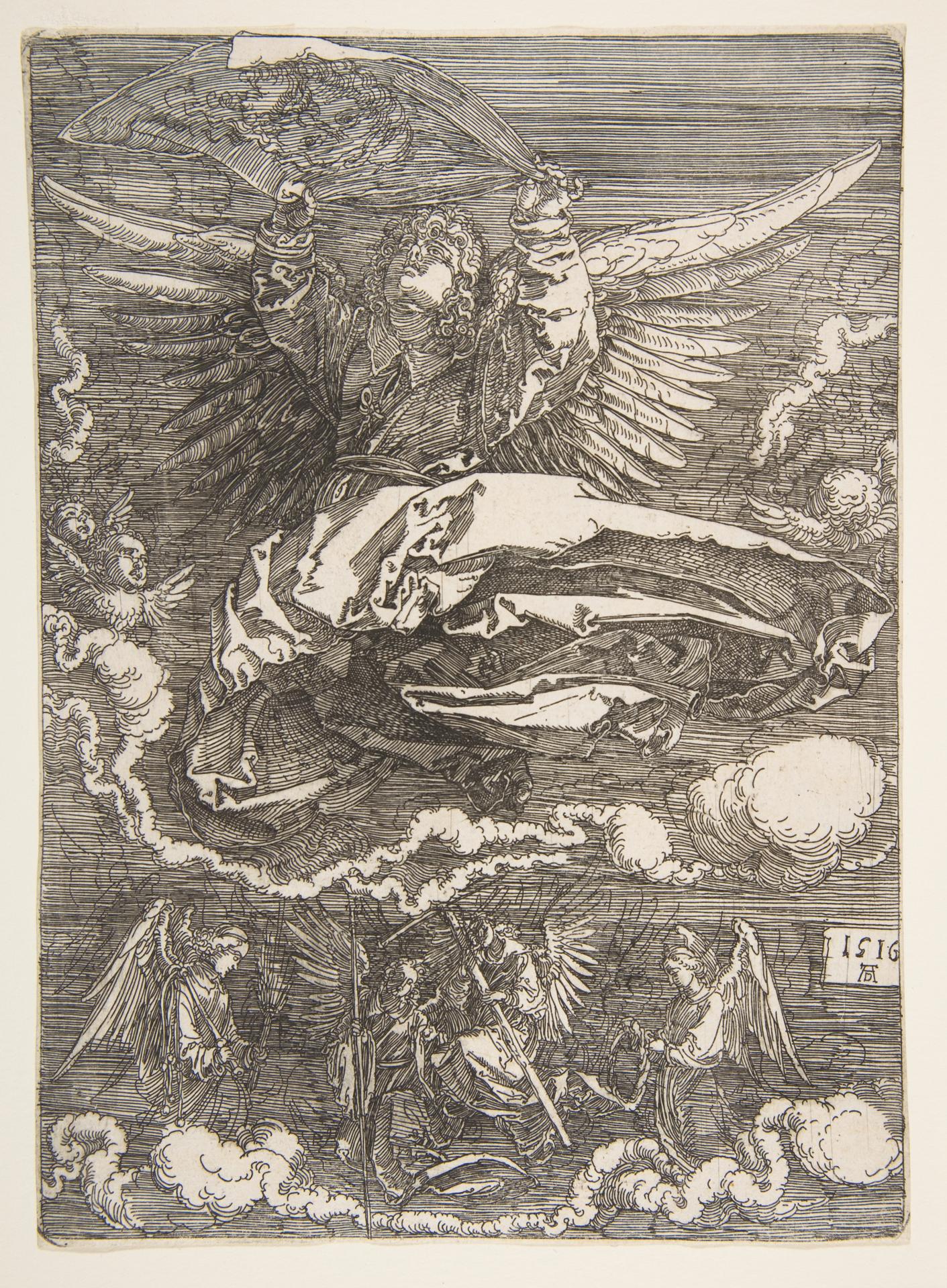
The Sudarium Displayed by an Angel
Original title: The Sudarium Displayed by an Angel
kurzbeschreibung
Albrecht Dürer's 1516 etching depicts an angel displaying the Sudarium, the cloth believed to bear the face of Christ. The composition centers on the large angel holding the cloth aloft, surrounded by smaller angelic figures amid clouds. This work exemplifies Dürer's mastery of printmaking during the Northern Renaissance.
Description
A large angel dominates the upper center, wings spread wide, holding a voluminous cloth that cascades in intricate folds. Smaller cherub heads and figures float around the main angel, some with wings. In the lower area, a group of angels includes one holding a spear and looking upward. Dense cloud formations fill the background and lower portion, creating a celestial setting.
Context
Dürer created this etching in 1516, a period when he was deeply engaged with religious themes and printmaking innovations. The Sudarium, associated with the Veil of Veronica, was a popular devotional subject in late medieval and Renaissance art. Dürer's choice to depict it with an angel reflects contemporary devotional practices and the growing demand for printed religious imagery.
Impact
The etching conveys a sense of divine revelation and solemnity through the angel's prominent pose and the dramatic display of the cloth. The intricate folds and cloud formations draw the viewer's eye upward, enhancing the spiritual atmosphere. The monochrome palette focuses attention on the intricate linework and the emotional gravity of the subject.
Technique
Dürer employed etching, a technique that allowed for finer lines and greater detail than engraving. The work is printed in monochrome on white paper, with the design created by exposing the metal plate to acid. The varied line thickness and cross-hatching demonstrate Dürer's technical skill in rendering texture and depth.
AI-generated description text
Source: Metropolitan Museum of Art · Public domain (CC0)