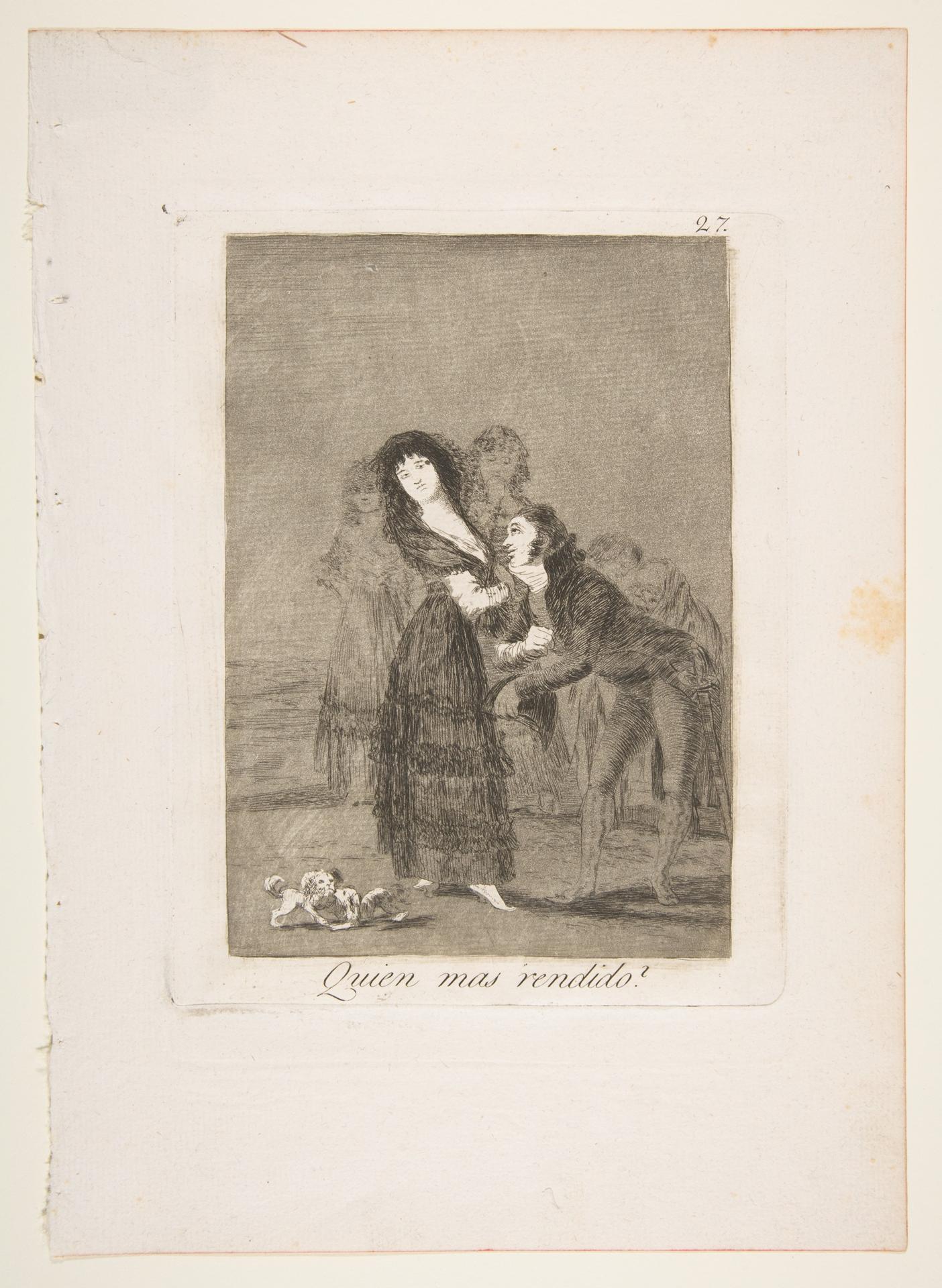
Plate 27 from "Los Caprichos": Which of them is the more overcome? (Quien mas rendido?)
Original title: Plate 27 from "Los Caprichos": Which of them is the more overcome? (Quien mas rendido?)
kurzbeschreibung
In plate 27 of Francisco de Goya's etching series 'Los Caprichos' (1799), a woman in dark clothing holds a man who clasps her waist with a submissive gesture. The etching, executed with aquatint and drypoint, presents an ambiguous encounter in which power and mockery intertwine.
Description
A woman in a dark dress has her arms around a man whose hands grip her waist and whose posture expresses submission. Behind them, other figures are visible, including someone carrying a child. Engraved below the scene is the title 'Quien mas rendido?' (Who is more submissive?). The gradations of gray and harsh light-dark contrasts sharpen the outlines of the figures and give the image a dramatic tension.
Context
Created between 1797 and 1799, the series 'Los Caprichos' was first published in 1799. It ranks among the critical examinations of social ills, superstition, and follies of Spanish society at the end of the 18th century. Plate 27 belongs to a group of plates dealing with love affairs and gender roles. Goya used printmaking to spread his critical observations with biting satire.
Impact
The viewer is seized by a disturbing tension between intimacy and submission that prompts reflection on the relationship shown. Because the figures are rendered realistically and the subtitle breaks ironically, the effect of the plate remains ambivalent.
Technique
Aquatint and drypoint are added to the etching. These techniques allow fine tonal gradations and soft transitions, used here for dramatic lighting. The plate measures 19.1 × 14.8 cm, the sheet 29.3 × 20.7 cm.
AI-generated description text
Source: Metropolitan Museum of Art · Public Domain (CC0 1.0)