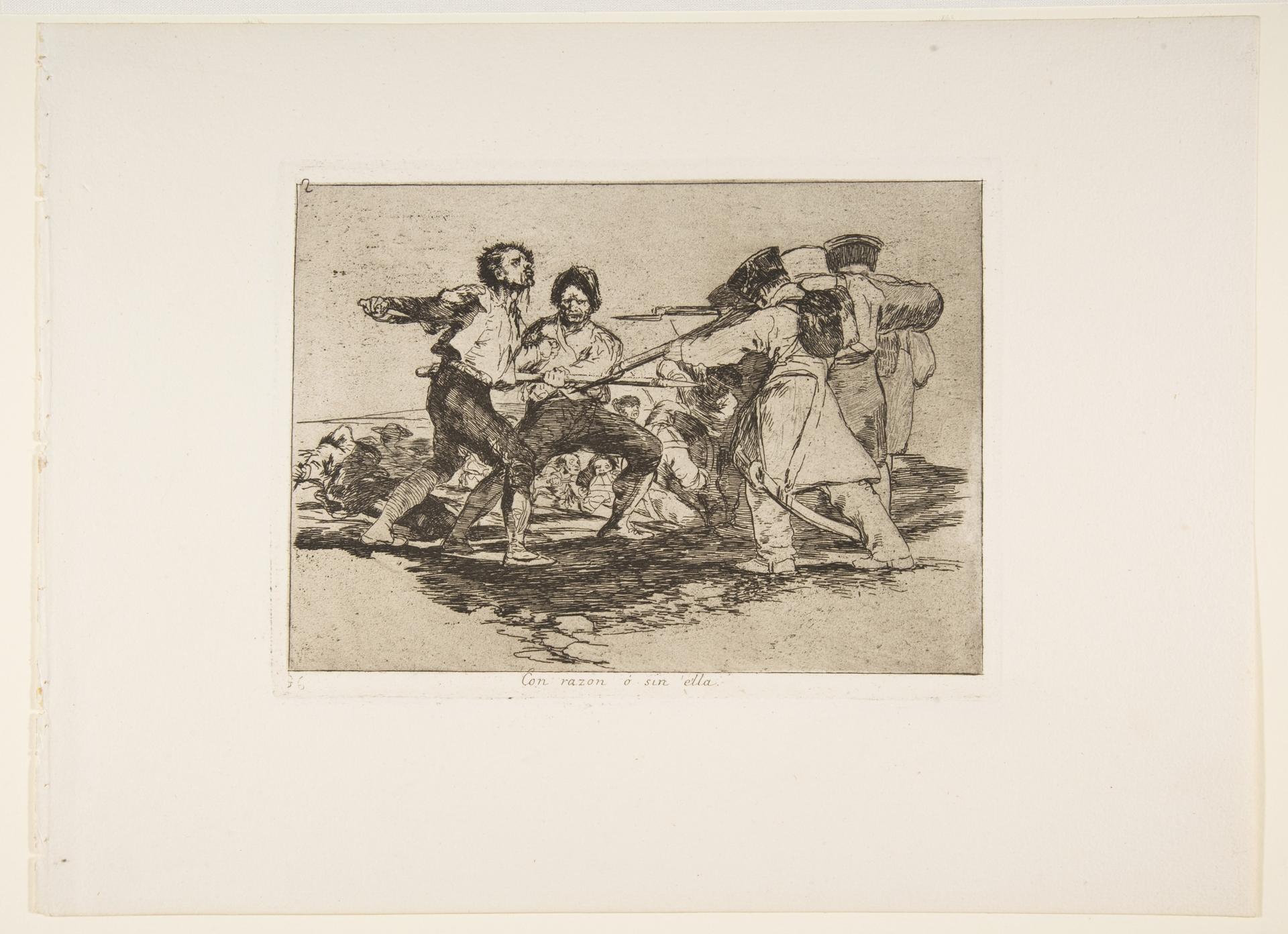
Plate 2 from "The Disasters of War" (Los Desastres de la Guerra): 'Rightly or wrongly' (Con razon ó sin ella)
Original title: Plate 2 from "The Disasters of War" (Los Desastres de la Guerra): 'Rightly or wrongly' (Con razon ó sin ella)
kurzbeschreibung
This etching by Goya, from the series The Disasters of War, was made in 1810 but not published until 1863. It shows a violent struggle in an open, barren landscape. Titled With or Without Reason (Con razon ó sin ella), the print is among the earliest artistic responses to the Peninsular War.
Description
Two men grapple in the foreground, one wielding a long stick or staff. A third man throws his arms wide as if to stop the fight. Behind them, others stand watching or approach. Sparse vegetation, scattered trees, and a hill form the backdrop; the figures wear traditional clothing. Black and white with even lighting define the image, which records movement and emotion with detachment.
Context
Between 1810 and 1820, Goya created these etchings in response to the horrors of Napoleon's occupation of Spain. This sheet was made during the Peninsular War but only published posthumously in 1863. The title With or Without Reason points to the senselessness of violence that needs no justifying cause. The series is one of the first major examples of modern war depiction in art history.
Impact
The dynamic layout and expressive postures of the figures create immediate tension. Because color is absent, the event feels all the more grim and brutal; the viewer is strongly moved. The motif seems timeless and evokes compassion for the victims of war and violence.
Technique
The etching combines lavis, drypoint, burin, and burnisher. With these tools Goya achieved fine tonal gradations and precise lines. The plate measures 15.3 × 20.5 cm, the sheet 25.2 × 34.3 cm.
AI-generated description text
Source: Metropolitan Museum of Art · Public Domain (CC0 1.0)