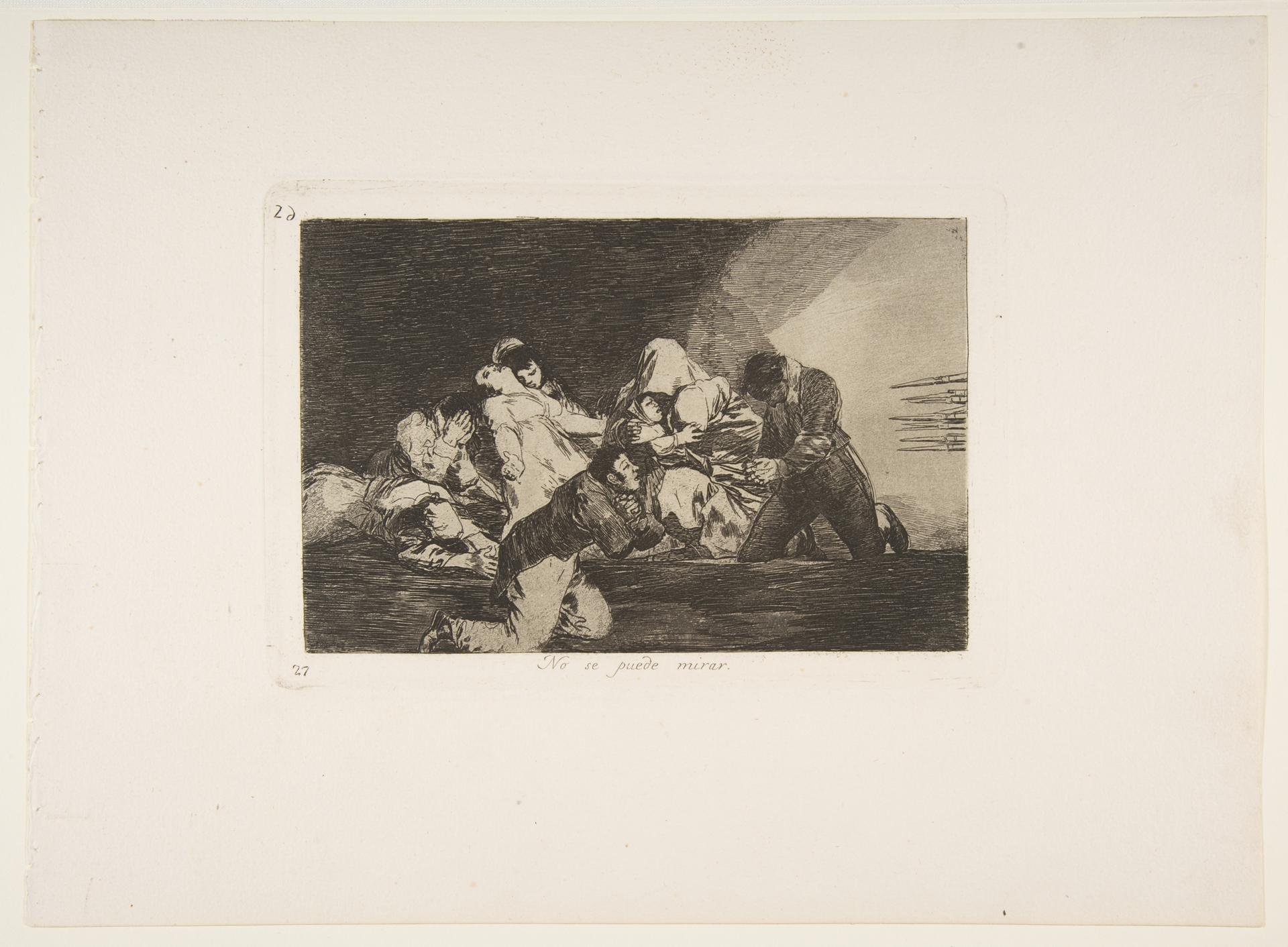
Plate 26 from "The Disasters of War" (Los Desastres de la Guerra): 'One can't look' (No se puede mirar)
Original title: Plate 26 from "The Disasters of War" (Los Desastres de la Guerra): 'One can't look' (No se puede mirar)
kurzbeschreibung
Francisco de Goya's etching 'No se puede mirar' (One Cannot Look) is plate 26 from his series 'The Disasters of War', made in 1810 and published in 1863. The technique combines etching, burnished lavis, drypoint and burin. Measuring 14.5 × 21 cm (plate), it stands as one of the most forceful testimonies to the horrors of war.
Description
Light enters from the right, casting the bodies of a tightly packed group into hard shadows. Several figures kneel or lie on the ground, wounded or dying. At the center, one person holds a child, while the faces of those around reflect fear and pain. Arrows or stabs, pointing from right to left, suggest violence and injury. The entire image focuses on this group; the monochrome gray tonality and the fine hatching of the etching heighten the oppressive mood.
Context
Between 1810 and 1820, Goya created the 82-plate series as a response to the Napoleonic Wars in Spain (1808–1814) and the subsequent restoration. Only in 1863, 35 years after Goya's death, did the Royal Academy of San Fernando in Madrid publish the prints. Plate 26 belongs to the first group of the series, which directly addresses the events of the war; its title names the unbearability of what is shown.
Impact
The dense arrangement and expressive faces draw the viewer immediately into the scene and provoke a strong emotional response. The deliberate restriction to gray tones and the harsh lighting increase the impression of hopelessness and human suffering, without pathos or heroization.
Technique
Several intaglio techniques come together: fine etched lines for contours, drypoint for strong accents, and burin for precise details. The burnished lavis (a kind of tonal plate) creates soft gray gradients that support the somber atmosphere. The plate measures 14.5 × 21 cm, the paper 25.2 × 34.3 cm, indicating careful printing in the later publication.
AI-generated description text
Source: Metropolitan Museum of Art · Public Domain (CC0 1.0)