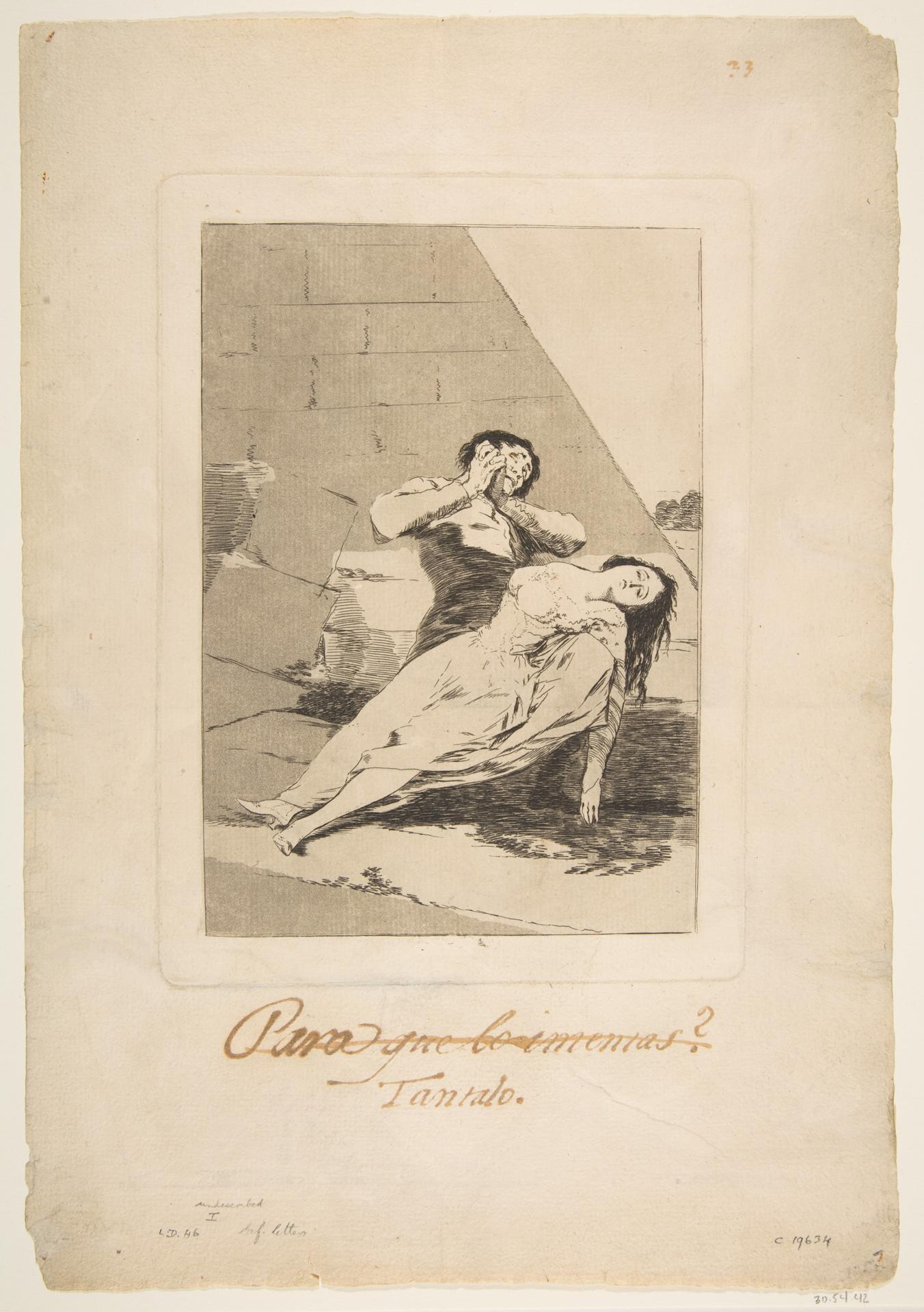
Plate 9: Tantalus (Tantalo), from "Los Caprichos"
Original title: Plate 9: Tantalus (Tantalo), from "Los Caprichos"
kurzbeschreibung
Unlike many plates in the Caprichos that put human folly on direct display, Goya's ninth etching dresses its critique in the robe of ancient myth. Made around 1798–99, the print ties the figure of Tantalus to a scene that could just as easily come from the present day. It belongs, then, to the moralizing and satirical works that drive the series.
Description
A woman in light clothing lies stretched out on the ground, arms flung wide, head slightly raised, her face marked by despair. Behind her stands an upright figure in dark robes, looking back over one shoulder, one hand lifted as if to address or touch the woman. A pyramid in the distance gives the image a mythical or oriental flavor. The text inserted below the motif, "Para que lo imitas? Tantalo", forges the link to the Tantalus legend. The whole is grim and expressive, with strong contrasts of light and dark and deep shadowed areas.
Context
Between 1797 and 1799 Goya created the Caprichos as a critical reckoning with superstition, social ills, and human vices. They were first published in 1799, but the artist soon withdrew the series, presumably because of its sharp social criticism. Plate 9 refers to Greek mythology, in which Tantalus is punished for his transgressions in the underworld with eternal hunger and thirst. Goya uses the figure to hint at the insatiability and suffering of human desires.
Impact
An oppressive, melancholy mood emanates from the etching, brought on by the dark tonality and dramatic lighting. The despair of the lying woman and the enigmatic gesture of the second figure invite interpretation without the scene ever being clearly resolved.
Technique
Etching with burnished aquatint, which allows fine tonal gradations and deep shadows. The aquatint was partially burnished to achieve light areas, giving the print a painterly effect. The plate measures 20.5 × 15 cm and is printed on a sheet of 32.2 × 22.2 cm.
AI-generated description text
Source: Metropolitan Museum of Art · Public Domain (CC0 1.0)