The Caprices (Los Caprichos), plates 1-80
Original title: The Caprices (Los Caprichos), plates 1-80
kurzbeschreibung
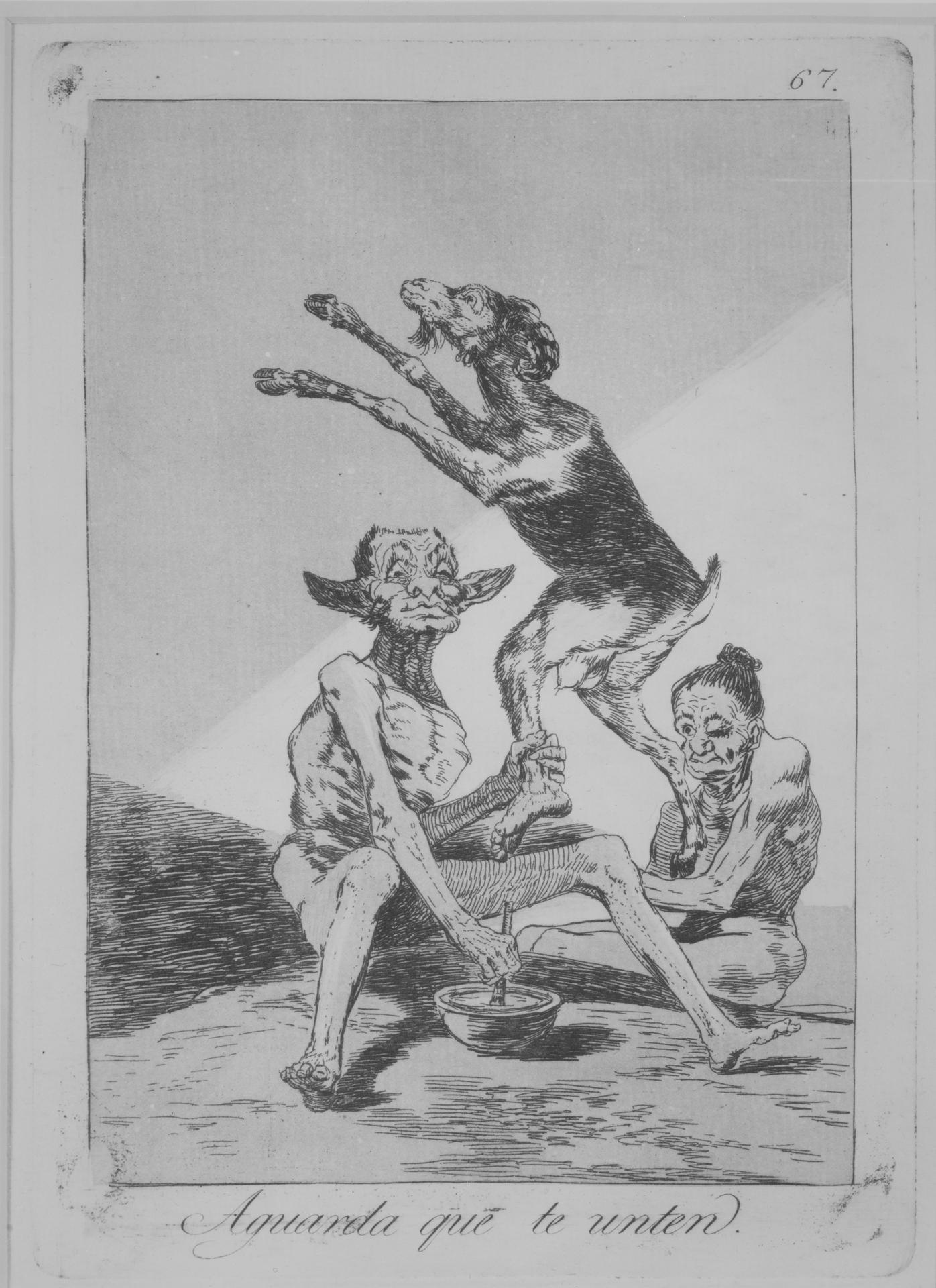
Unlike many print cycles of its day, Goya's Los Caprichos, published in 1799 with its 80 plates, fuses social indictment with fantastic invention. The mix of etching, aquatint, drypoint, and burin serves a critique of superstition, abuse, and human folly. One analyzed plate presents two figures in a ritual pose while a dog leaps up.
Description
Two figures—the left with an animal head, perhaps a donkey or sheep—squat on one leg, dipping a brush into a bowl. The right one kneels and also wields a brush. Both appear gaunt and utterly absorbed in their task. A dog springs up as if disturbed or impressed by the proceedings. The dark, unadorned ground thrusts the figures into view; everything remains in black and white. Caption: "Aguarda que te untem" (Wait until they anoint you).
Context
The Caprichos emerged during a period of upheaval in Spain shaped by the Enlightenment and the Inquisition. In them, Goya processed his criticism of superstition, corruption, and the ills of the era. The collection appeared in 1799 but was withdrawn soon after, likely because of its sharp social critique. The etchings testify to Goya's struggle with reason and human irrationality.
Impact
The grotesque figures and somber mood create an unsettling, satirical tension. An animal head combined with human action feels disturbing and prompts reflection. The restriction to black and white intensifies the print's serious, critical tone.
Technique
The plate was executed in a combination of etching, aquatint, drypoint, and burin. These techniques allow both fine lines and soft tonal gradations, used here for a gloomy effect. Aquatint provides flat areas of gray, while drypoint and burin ensure precise details.
AI-generated description text
Source: Metropolitan Museum of Art · Public Domain (CC0 1.0)