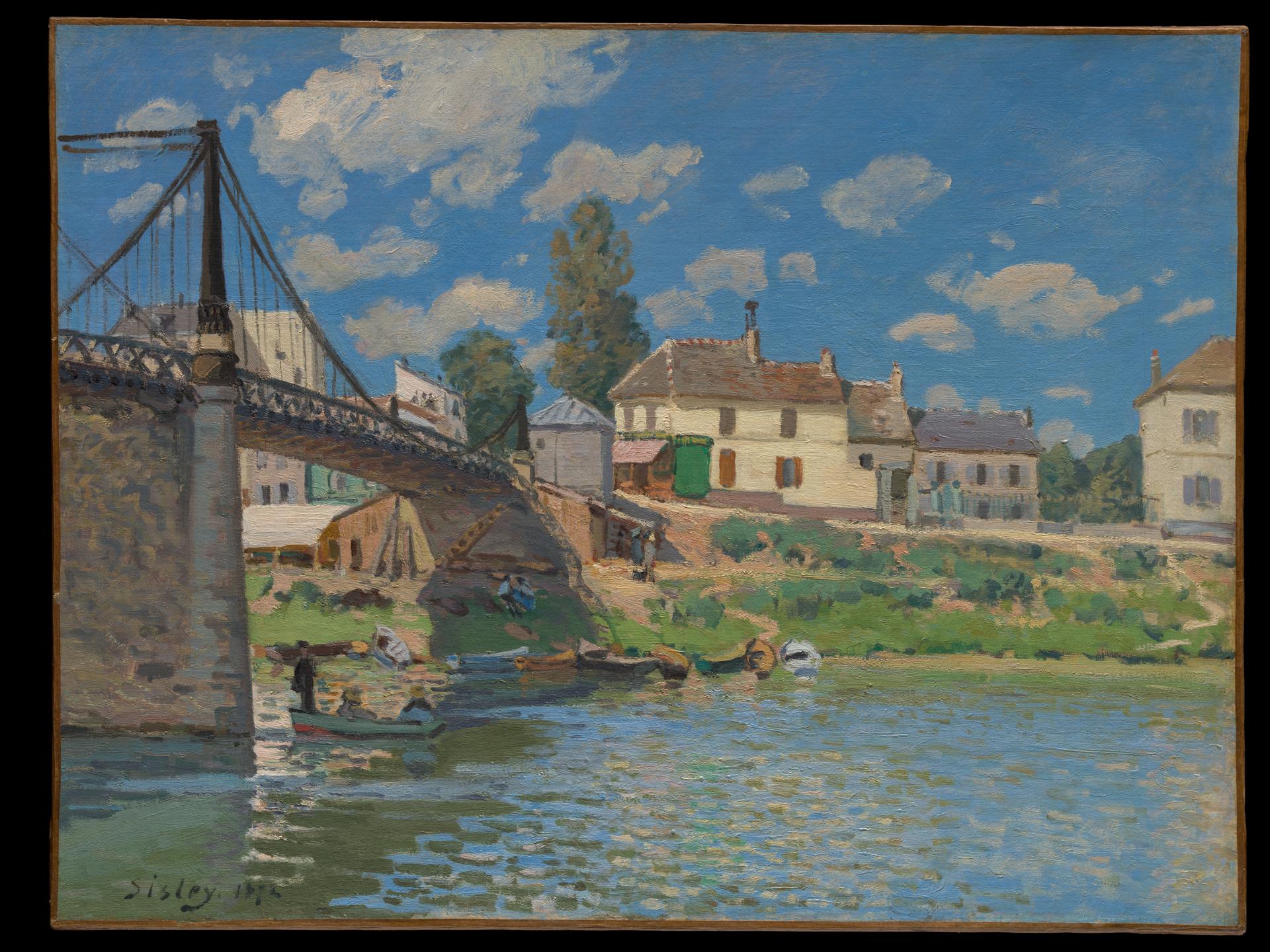
The Bridge at Villeneuve-la-Garenne
Original title: The Bridge at Villeneuve-la-Garenne
kurzbeschreibung
Alfred Sisley's 'Die Brücke von Villeneuve-la-Garenne' from 1872 stands apart from other river landscapes of its time by pairing a modern iron bridge with a quiet waterside scene. In oil on canvas, a suspension bridge spans the river while a boat carrying several figures drifts beneath it; on the right, bank trees and houses close off the view. Light and atmosphere take priority, as is typical of Impressionism.
Description
A suspension bridge crosses the river, its metal cables and posts clearly visible on the left. In the foreground, a boat with several occupants glides over the water. On the right, houses and trees line the bank. The sky glows blue with a few clouds; the colors are vivid, the light effects bright and clear.
Context
Sisley painted this picture in 1872 in Villeneuve-la-Garenne, northwest of Paris on the Seine. In the early 1870s he belonged to the Impressionist movement, which turned away from academic painting. The bridge was a modern structure and testified to the region's industrialization. Sisley lived nearby at the time and found motifs again and again in the river landscapes of the surroundings.
Impact
Lively colors and clear light give the view an immediate atmosphere. The viewer feels transported into a calm, sunny scene that seems to capture a fleeting moment. The layout leads the eye across the water to the bridge and balances technology and nature harmoniously.
Technique
Oil paint on canvas, 49.5 × 65.4 cm. The Impressionist handling shows visible brushstrokes that suggest light and movement. The palette is bright and fresh, as is typical for the Impressionists' open-air painting.
AI-generated description text
Source: Metropolitan Museum of Art · Public Domain (CC0 1.0)