III. Pessima
Original title: III. Pessima
kurzbeschreibung
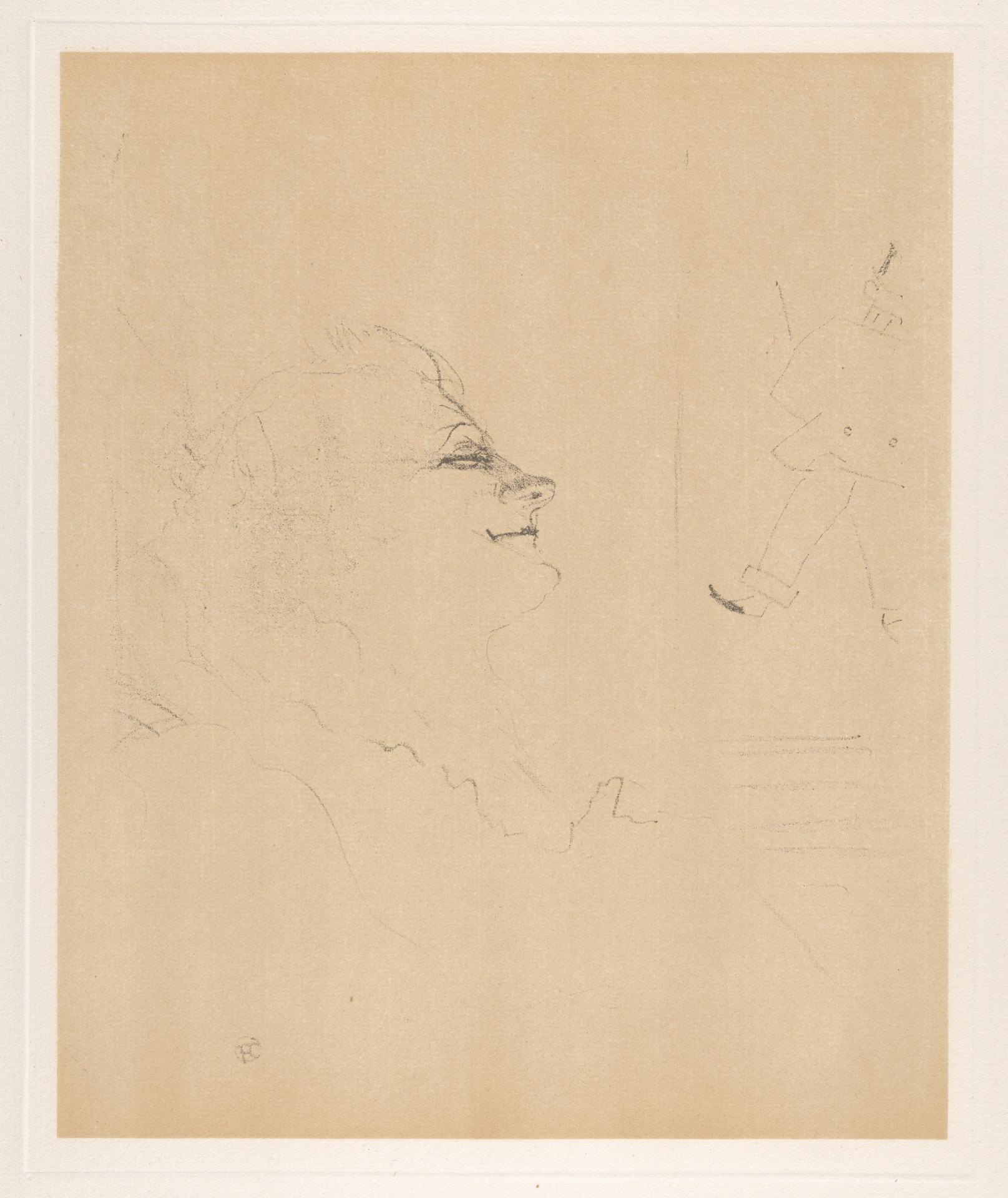
A stylized figure turned to the left, drawn in terse lines, defines III. Pessima, an 1898 lithograph by Henri de Toulouse-Lautrec. Printed with a beige tint stone on laid paper, it measures 47.3 x 37.8 cm.
Description
The main figure looms large in the foreground, captured with sparse, draftsmanlike strokes and no fully rendered interior forms. Behind it, a more fleeting sketch hints at another person or an object. Beige tones dominate the color scheme, accented by restrained grays, a result of the beige tint stone. The layout remains clear and focused on essentials, with no additional colors or lighting effects.
Context
This lithograph dates from 1898, a time when Toulouse-Lautrec devoted himself increasingly to printmaking. It belongs to a series whose title Pessima suggests a dark or pessimistic mood. The artist was then working in Paris and was known for his depictions of nightlife and human depths. Its creation falls in a phase when his health was already severely compromised and he concentrated more and more on graphic works.
Impact
The spare linework and the restriction to a few tones convey a calm, almost melancholic atmosphere. Because the motif remains sketchy, the print feels immediate and spontaneous; the viewer's gaze is drawn to the essence of the figure.
Technique
For this print, Toulouse-Lautrec used lithography, printed with a beige tint stone on laid paper. The process allows both fine drawn lines and an even, restrained field of color. The tint stone produces the characteristic warm beige tone through which the paper shows.
AI-generated description text
Source: Metropolitan Museum of Art · Public Domain (CC0 1.0)