A Farm in Brittany
Original title: A Farm in Brittany
kurzbeschreibung
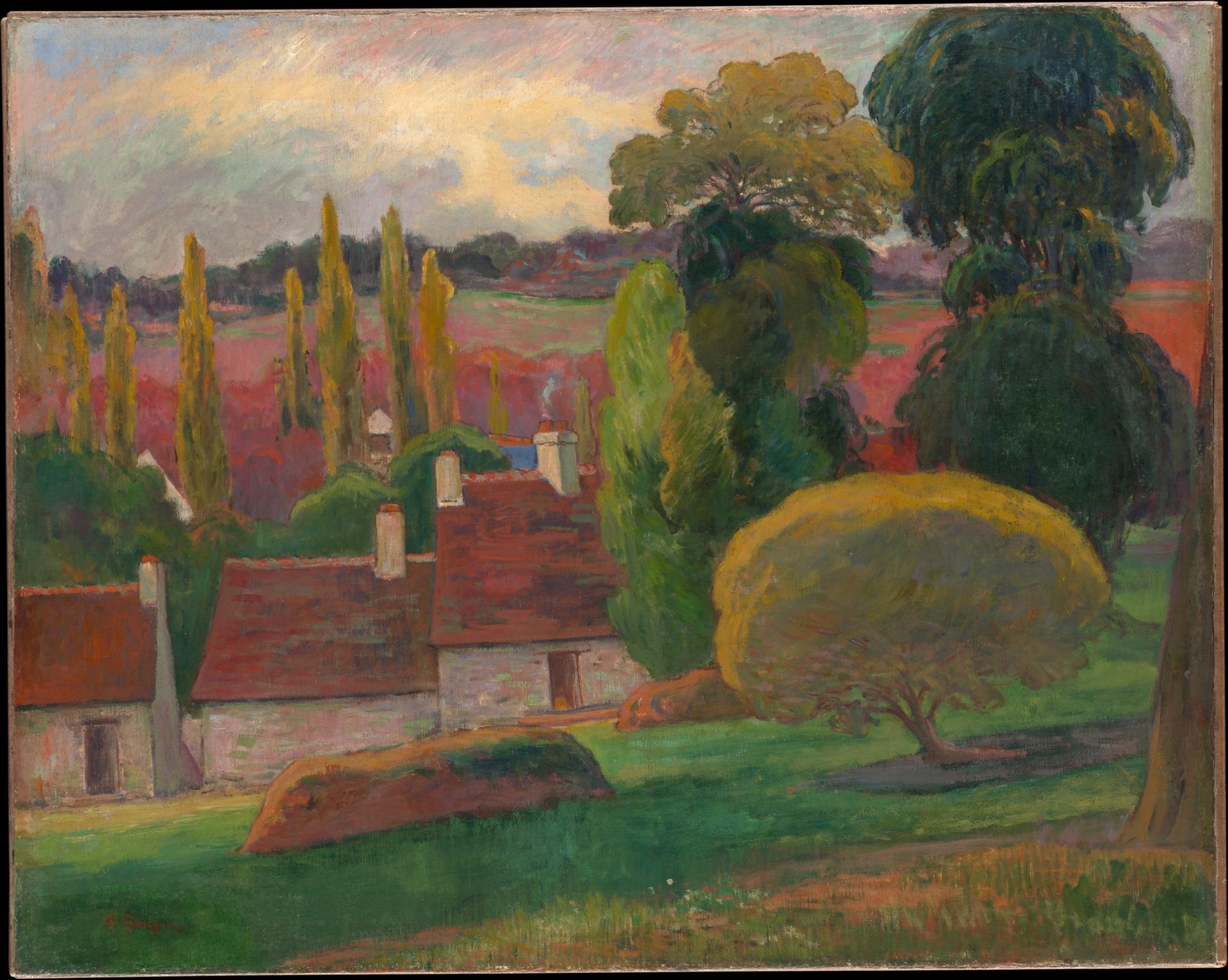
Paul Gauguin's 'A Farm in Brittany,' painted around 1894, leads the viewer into a rural part of France. Two whitewashed houses with red roofs occupy the scene. Executed in oil on canvas, the picture radiates a calm, peaceful mood.
Description
Two plain, white-painted houses with red roofs and chimneys dominate the foreground. They are surrounded by green lawn, on which sit a small tree and a large round hill. Several tall, slender trees rise behind them; the sky shifts from blue to pink to yellow, suggesting dawn or sunset. The colors are strong, and the oil paint reveals its texture.
Context
During the 1890s, Gauguin stayed several times in Brittany and worked in villages such as Pont-Aven. This painting likely dates from one of those stays; the region was known for its traditional farming and distinctive architecture. Gauguin sought simple, primal motifs there to give his art a different modernity.
Impact
Bright colors meet a calm layout and create a quiet, contemplative atmosphere. Rural life appears idyllic and removed, yet not idealized—rather a stylized nature that draws the viewer into a peaceful world.
Technique
Gauguin painted in oil on canvas, applying the colors in visible, impasto layers. This gives the surface a tangible texture and strengthens the expressive impact of the color areas.
AI-generated description text
Source: Metropolitan Museum of Art · Public Domain (CC0 1.0)