The Day of God
Original title: The Day of God
kurzbeschreibung
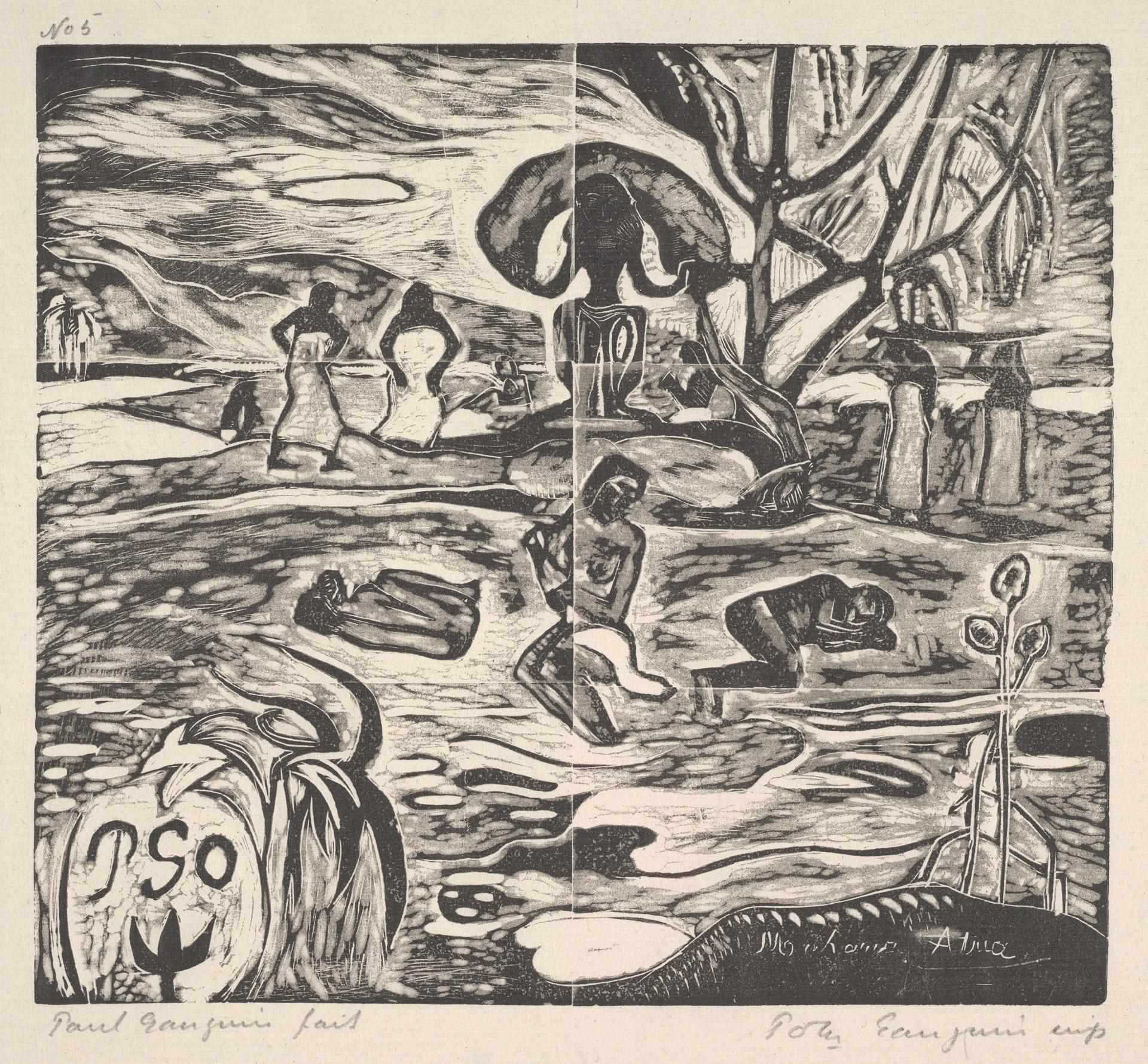
Figures in traditional dress populate a rural scene: Paul Gauguin's woodcut "Der Tag Gottes" dates from 1894–95 and was printed in black on china paper. The block measures 18.3 x 20.3 cm.
Description
In the foreground, some figures kneel while others stand upright or rest on the ground. Black and white dominate without intermediate tones. Trees and a broad landscape close the background, conveying calm. The layout stretches widely from left to right. Light falls evenly across everything; shadows and gradations are absent.
Context
During his second stay in Tahiti, Gauguin devoted himself intensively to local culture and religion. In this period he tested new artistic means and used the woodcut to express his South Seas experiences. The rural setting with its figures reflects his idealized notion of simple life.
Impact
The few colors and clear outlines give the sheet something archaic, almost ritualistic. Because the figures are arranged calmly along the horizontal, a meditative mood arises that draws the viewer into the peaceful landscape.
Technique
The woodcut was printed with black ink on china paper. This process yields strong lines and areas without halftones, heightening the expressive impact. The block-like structure of the print emphasizes flatness and simplifies the forms.
AI-generated description text
Source: Metropolitan Museum of Art · Public Domain (CC0 1.0)