Christ on the Cross
Original title: Christ on the Cross
kurzbeschreibung
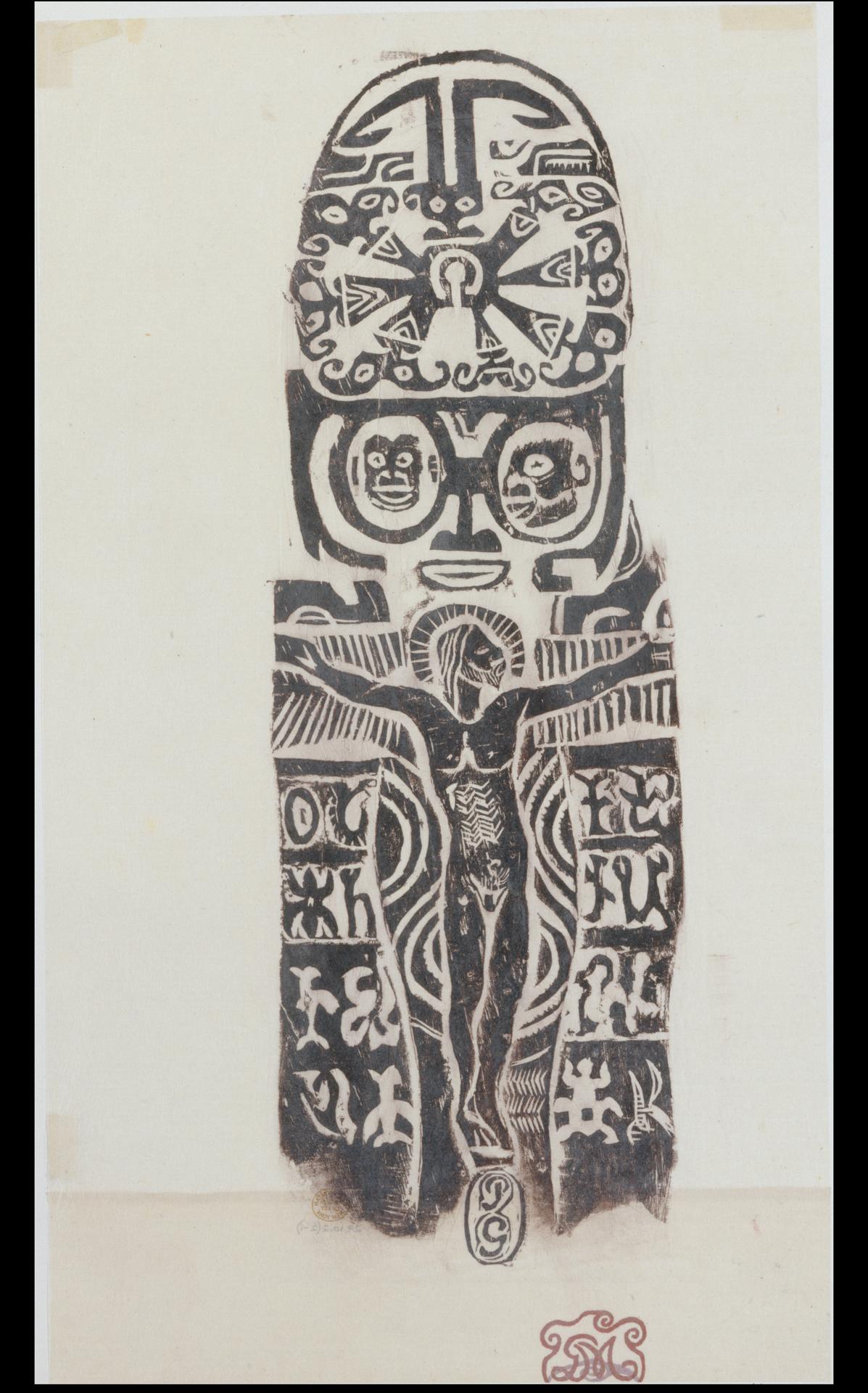
Paul Gauguin's 1926 sheet is a rubbing on Japan paper. It shows a crucifixion in which Christ appears only as a symbolic figure, surrounded by other emblems.
Description
A radically simplified figure runs down a vertical line. Above it stands a cross, equally abstracted. Geometric fields and symbolic patterns enclose the figure and point to religious or spiritual connections. Set in black on white, the outlines stand out clearly, and the individual forms seem distinctly separated from one another.
Context
The sheet dates from 1926, three years after Gauguin's death. It was probably made posthumously as a rubbing from a woodblock by those around him. During his lifetime, Gauguin had worked extensively with woodcut and experimented with various printing methods. The dating suggests that this is a later reproduction or posthumous product based on his designs.
Impact
The few tonal values and the highly simplified formal language tend toward a meditative, almost archaic effect. Clear lines and a symmetrical layout give the sheet a calm, solemn severity; the viewer is invited to linger and reflect.
Technique
For this rubbing – a frottage – the surface of a relief plate was rubbed with pencil or charcoal onto Japan paper. The sharp contours and even impression suggest a carefully worked relief plate, probably of wood or linoleum. The Japan paper used is thin yet tear-resistant, which allows for fine details.
AI-generated description text
Source: Metropolitan Museum of Art · Public Domain (CC0 1.0)