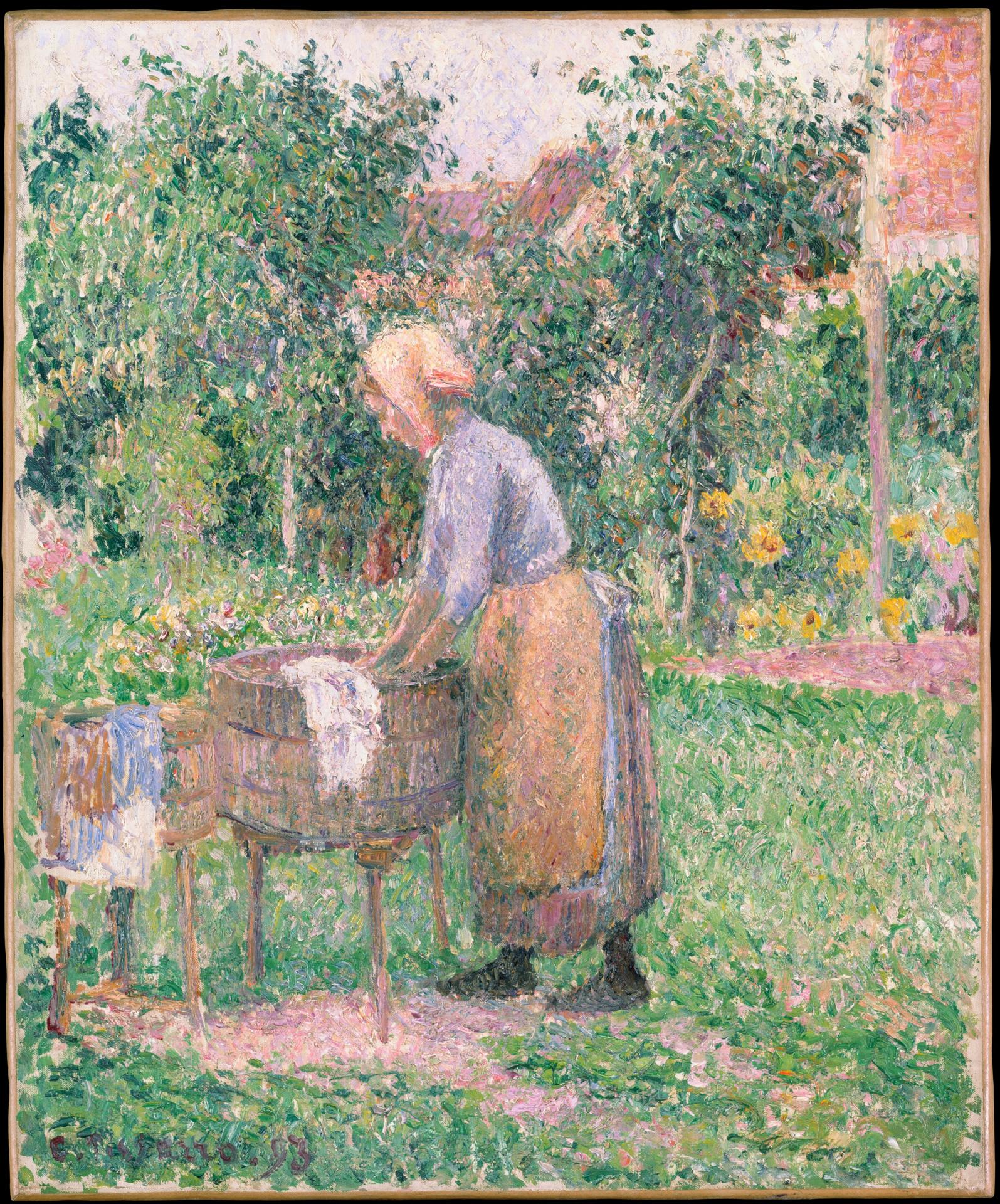
A Washerwoman at Eragny
Original title: A Washerwoman at Eragny
kurzbeschreibung
Painted in 1893, Camille Pissarro's oil on canvas captures a woman bent over a basin draped with fabric, washing clothes. It belongs to his impressionist portrayals of rural life.
Description
Leaning over the basin, the woman works, her yellow apron and yellow hat defining her appearance. Other cloths lie on a table to the side. Trees and flowers suggest the village setting. Bold colours and loose brushstrokes shape the impressionist delivery, while daylight falling from the front evenly brightens the surface.
Context
From 1884 Pissarro lived in Eragny, a village in Normandy, where he repeatedly recorded scenes of peasant labour. Washerwomen were among the common subjects in the 19th century, reflecting the era's interest in the life and work of rural people. This painting falls at a time when Pissarro was turning more strongly back to his impressionist starting point.
Impact
The bright daylight and strong colours give the everyday task a calm, almost idyllic mood. The eye drifts into the rural surroundings without the woman's activity being exaggerated or dramatised.
Technique
The picture is executed in oil on canvas, with visible, loose brushstrokes characteristic of impressionism. Paint is applied to capture light and atmosphere; the yellow areas of the woman's clothing draw the eye.
AI-generated description text
Source: Metropolitan Museum of Art · Public Domain (CC0 1.0)