The Pioneer
Original title: The Pioneer
kurzbeschreibung
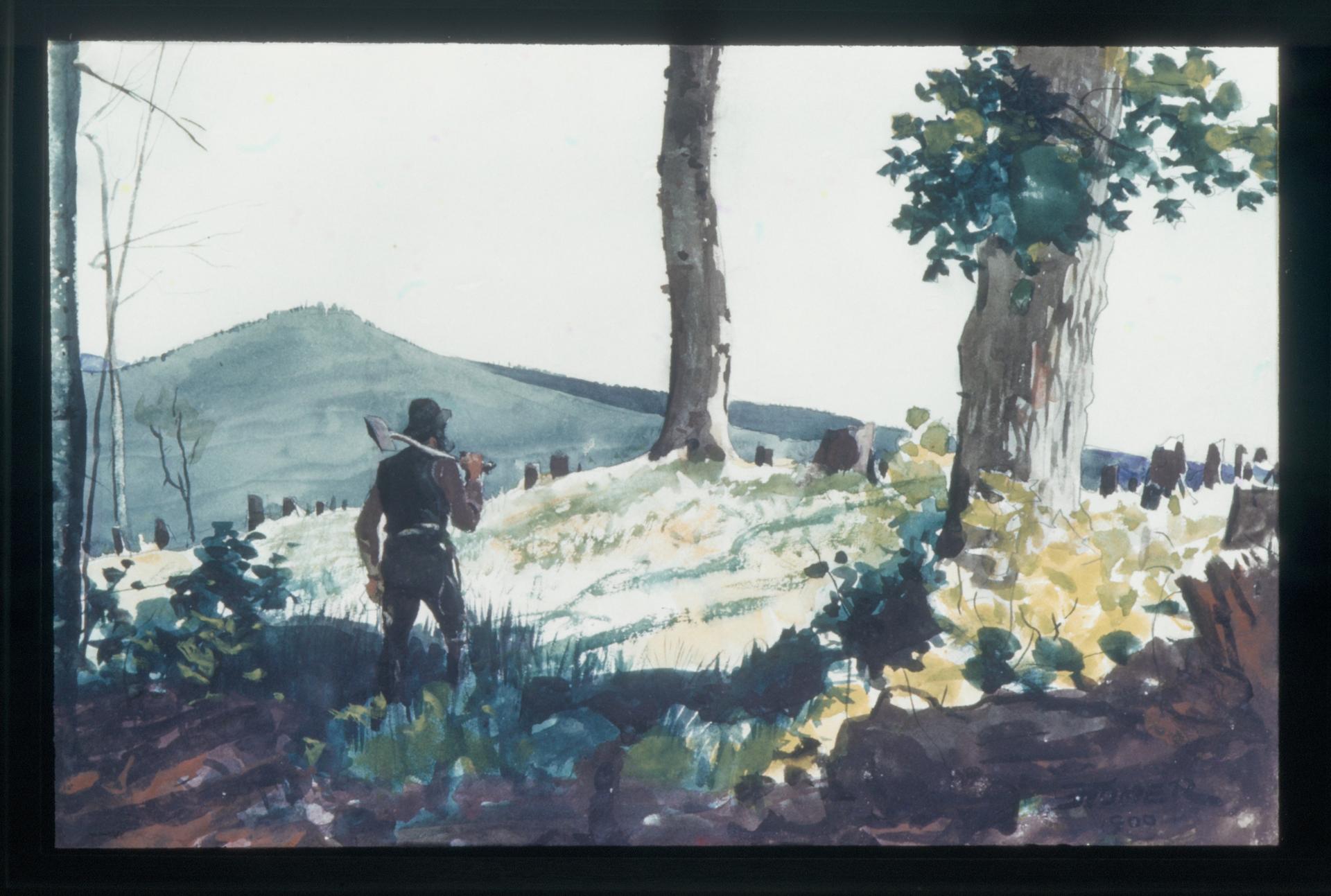
Winslow Homer's watercolor Der Pionier, painted in 1900, places a man with a spade on a hilltop in a broad landscape. Where many landscapes of the period leave people out, Homer puts the laborer at the heart of the picture. The sheet is executed in watercolor and graphite on white wove paper, joining close observation of nature with impressionistic effects of color.
Description
A man seen from behind, a spade over his shoulder, anchors the image. He stands on a hill bordered by trees and shrubs, with more hills rolling away beneath a clear sky. Blues, grays and greens set the palette. The layout stretches horizontally, and the areas of color read as flat and diffuse, without sharp accents of light.
Context
Homer made the work in 1900, during a period when he was absorbed in the American landscape and the people who inhabit it. The title alludes to the settlement of the American West. Homer was living in Prouts Neck, Maine, at the time and worked often in watercolor. A lone worker set within nature belongs to themes he returned to repeatedly in his later years.
Impact
The calm, muted color and the spare arrangement produce a quiet, contemplative mood. Seeing the figure from the back invites the viewer to identify with the pioneer. The broad, even washes give the picture a meditative stillness.
Technique
Watercolor is combined with graphite drawing on white wove paper. The washes are laid down in thin, transparent layers, while graphite lines give structure to the forms and supplement the fields of color. This method allowed Homer to make quick, atmospheric studies directly from nature.
AI-generated description text
Source: Metropolitan Museum of Art · Public Domain (CC0 1.0)