The Grâces au Bain (The Graces at the Bath)
Original title: The Grâces au Bain (The Graces at the Bath)
kurzbeschreibung
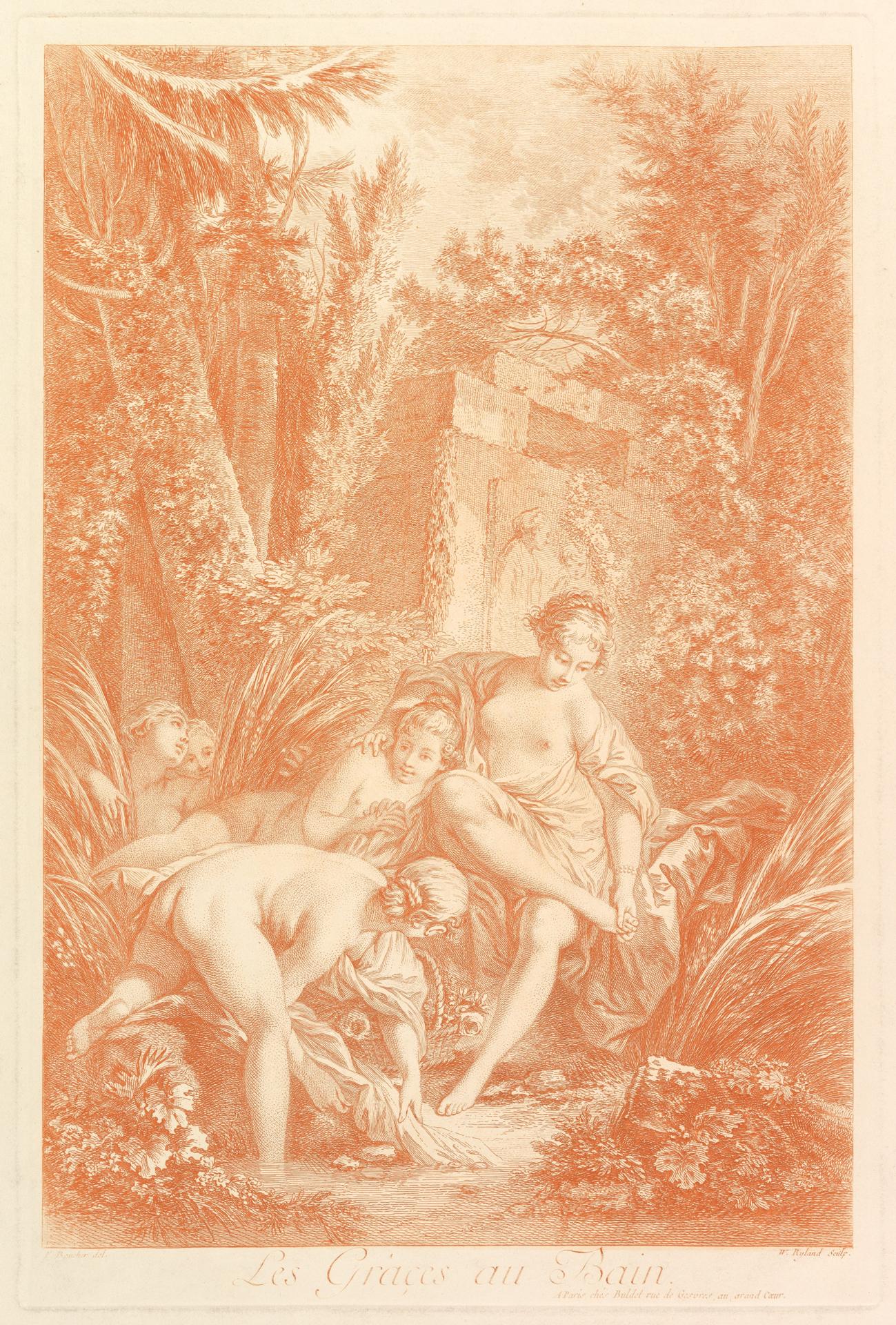
Three female figures recline in a landscape bordered by trees and antique ruins — the Graces, rendered by William Wynne Ryland in 1756 as an etching and engraving printed in red ink. Mythological narrative meets a setting drawn from nature.
Description
At the front a woman turns toward a child, a second figure standing beside them. She goes barefoot, her light garment falling across her leg. A little deeper into the picture another barefoot figure appears in plain dress. Trees and shrubs frame the action, while ruins emerge in the distance, hinting at an ancient or mythical world. The red printing ink dominates the overall impression, bathing every area in warm reddish tones.
Context
The Englishman William Wynne Ryland worked as an engraver in the eighteenth century. In 1756, the year this sheet was made, Rococo aesthetics, with its fondness for grace and nature, shaped the arts. The three Graces, the Charites of Greek mythology, ranked among the most popular subjects of the period.
Impact
The red ink and softly drawn lines create a warm, intimate mood. Figures in open nature feel idyllic and balanced, in keeping with the character of the eighteenth century.
Technique
Etching and engraving were combined to bring out fine lines and details. The sheet was printed in red ink on paper, which gives it its unusual chromatic effect.
AI-generated description text
Source: Metropolitan Museum of Art · Public Domain (CC0 1.0)