Goose Girl (1888, Met-Objekt 643)
Original title: Goose Girl
kurzbeschreibung
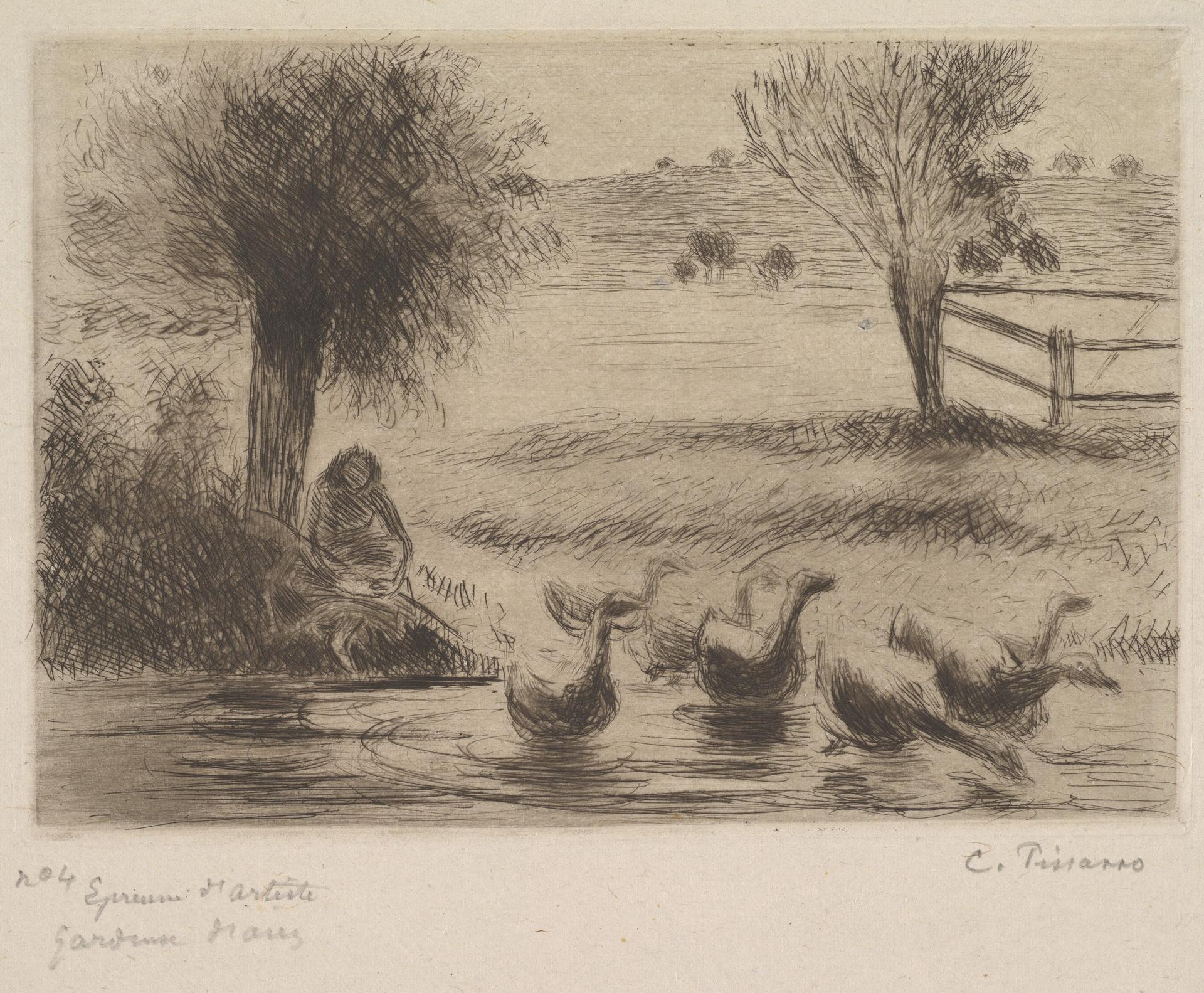
Camille Pissarro made this etching and drypoint, Gänsemädchen, in 1888 on china paper; it is the first of three states. A river landscape unfolds with ducks, trees, and a seated figure who can be read as a goose girl.
Description
A seated figure on a bench, leaning slightly forward and only sketchily defined, forms the left-hand accent. Before her flows a river where three ducks swim. Two larger trees frame the scene at either side, while behind them gentle hills with isolated trees stretch away. The arrangement stays monochrome; various greys and fine hatching model the forms.
Context
The etching dates from 1888, a time when Pissarro was deeply engaged with printmaking and testing different technical possibilities. The subject of a shepherdess with animals draws on a rural motif that was frequently taken up in the nineteenth century. As an Impressionist, Pissarro was interested in depicting simple country life and natural atmosphere.
Impact
The soft light and graduated greys give the sheet a calm, peaceful presence. The only vaguely discernible figure and the open landscape create a quiet, almost meditative mood that invites lingering.
Technique
Pissarro executed the motif as an etching with drypoint and worked in three states; the present one is the first. The lines and hatching were bitten into the copper plate and then reworked with a drypoint needle to achieve soft, painterly effects. Printing was done on thin china paper, which brings the delicate lines out clearly.
AI-generated description text
Source: Metropolitan Museum of Art · Public Domain (CC0 1.0)