The Fountain
Original title: The Fountain
kurzbeschreibung
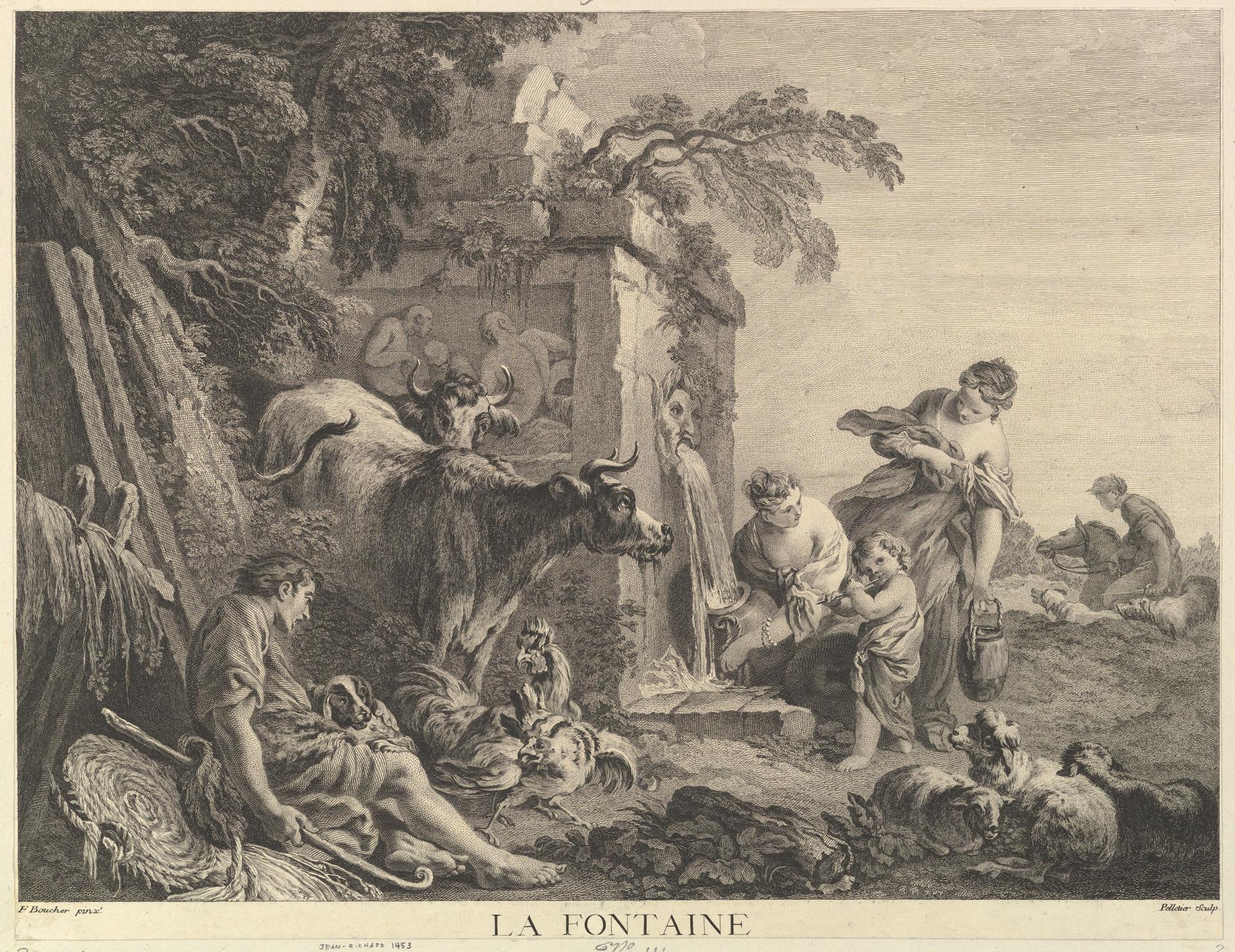
Jean Pelletier made this rural well scene in the 18th century as an etching with engraving. Numerous figures and animals are set into an idyllic landscape. The sheet measures 34.2 x 44.5 cm and stays entirely in shades of grey.
Description
A well structure topped by a statue forms the focal point, with water trickling from it. People are scattered around: a woman with a child, a seated man with a dog, and others. Ruined temple architecture occupies the rear space, where more figures appear, while cows and sheep enliven the area. The layout is symmetrical, and the light falls evenly across everything, contributing to the peaceful mood.
Context
Pelletier, an 18th-century French engraver, was best known for landscapes and genre scenes. His etching belongs to an era when arcadian landscapes and idyllic subjects were in demand. This reflected the widespread interest in nature and country life that shaped the Enlightenment and Rococo.
Impact
The even arrangement and calmly distributed light give the sheet a harmonious and contemplative feel. Following the many figures and animals one by one, the viewer can wander through the peaceful landscape, as it were. Thus a nostalgic pull toward an idealized rural world emerges.
Technique
Etching and engraving interlock, allowing both delicate lines and precise details. The tonal values arise in the printing process itself: etched and engraved strokes model the depth and surface texture of the scene. At 34.2 x 44.5 cm, the paper matches a format common for 18th-century printmaking.
AI-generated description text
Source: Metropolitan Museum of Art · Public Domain (CC0 1.0)