The Cheerful Cupids
Original title: The Cheerful Cupids
kurzbeschreibung
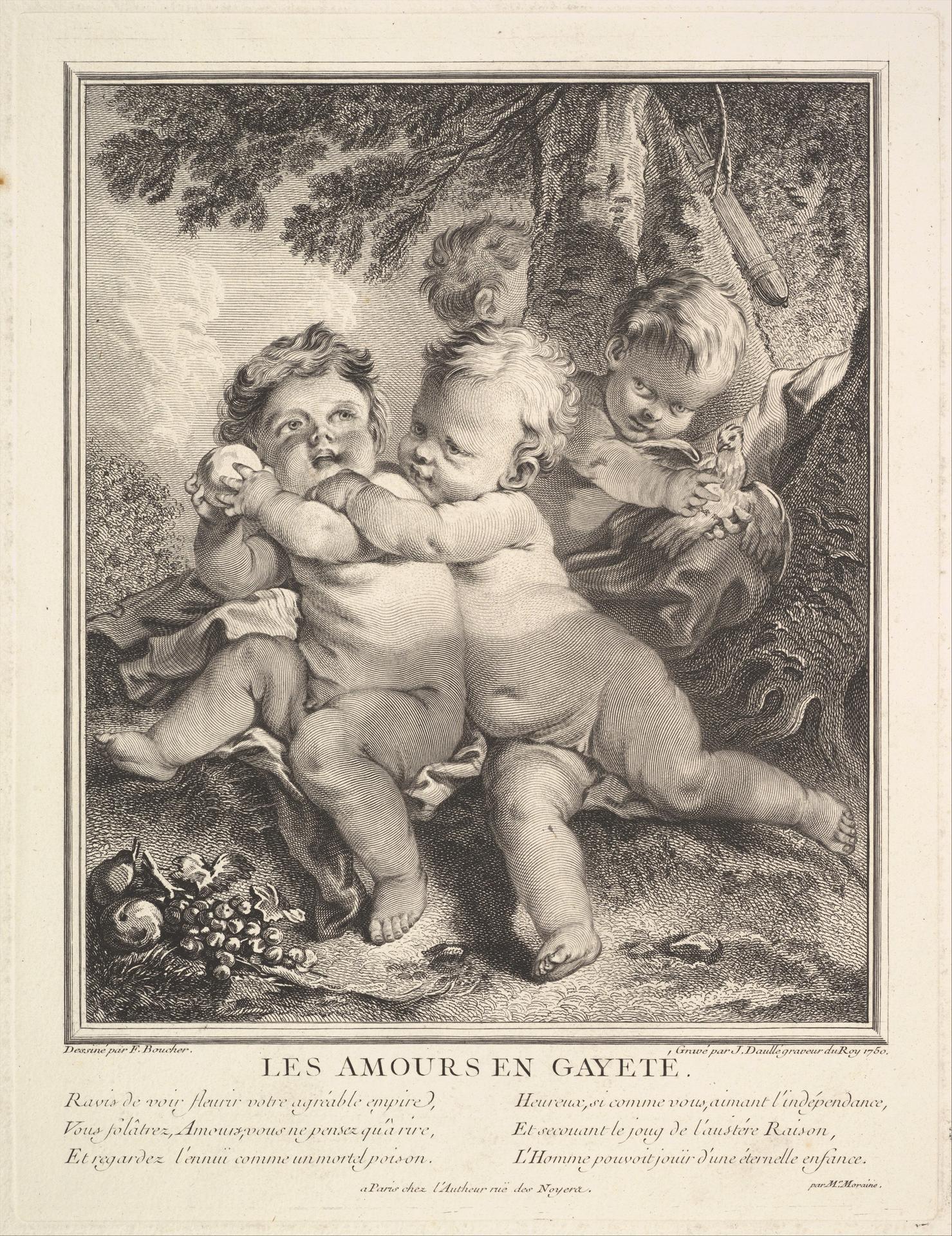
Jean Daullé made this etching, Die fröhlichen Putten, in 1750. It shows three naked putti playing in an idyllic landscape. One of them holds a bird, while fruit and leaves lie on the ground. The print is executed in etching and engraving.
Description
Unlike many contemporary putti depictions that are set within architectural frames, Daullé places his three figures entirely in a natural setting of trees and leaves. One holds a bird; the other two are absorbed in play. Barefoot and wearing only simple garments, they stand above a pile of fruit and leaves. Careful linework and detailed hatching define the image and reflect the traditional style of the period.
Context
Jean Daullé, an eighteenth-century French copper engraver, became known mainly for reproductive engravings. Made in 1750, this work falls in a period when mythological and allegorical subjects were highly popular in French art. Cheerful putti at play were a common Rococo motif, often serving decorative purposes.
Impact
The print feels cheerful and carefree, thanks to the playing putti and the natural surroundings. Its delicate linework and detailed execution give it an elegant yet lively presence that draws the viewer into the idyllic scene.
Technique
Etching and engraving were both used for this work printed on paper. The process allows fine lines and hatching, which are employed for the detailed rendering of the figures and the setting. The monochrome black-and-white execution emphasizes the graphic quality of the print.
AI-generated description text
Source: Metropolitan Museum of Art · Public Domain (CC0 1.0)