Trees and Houses Near the Jas de Bouffan
Original title: Trees and Houses Near the Jas de Bouffan
kurzbeschreibung
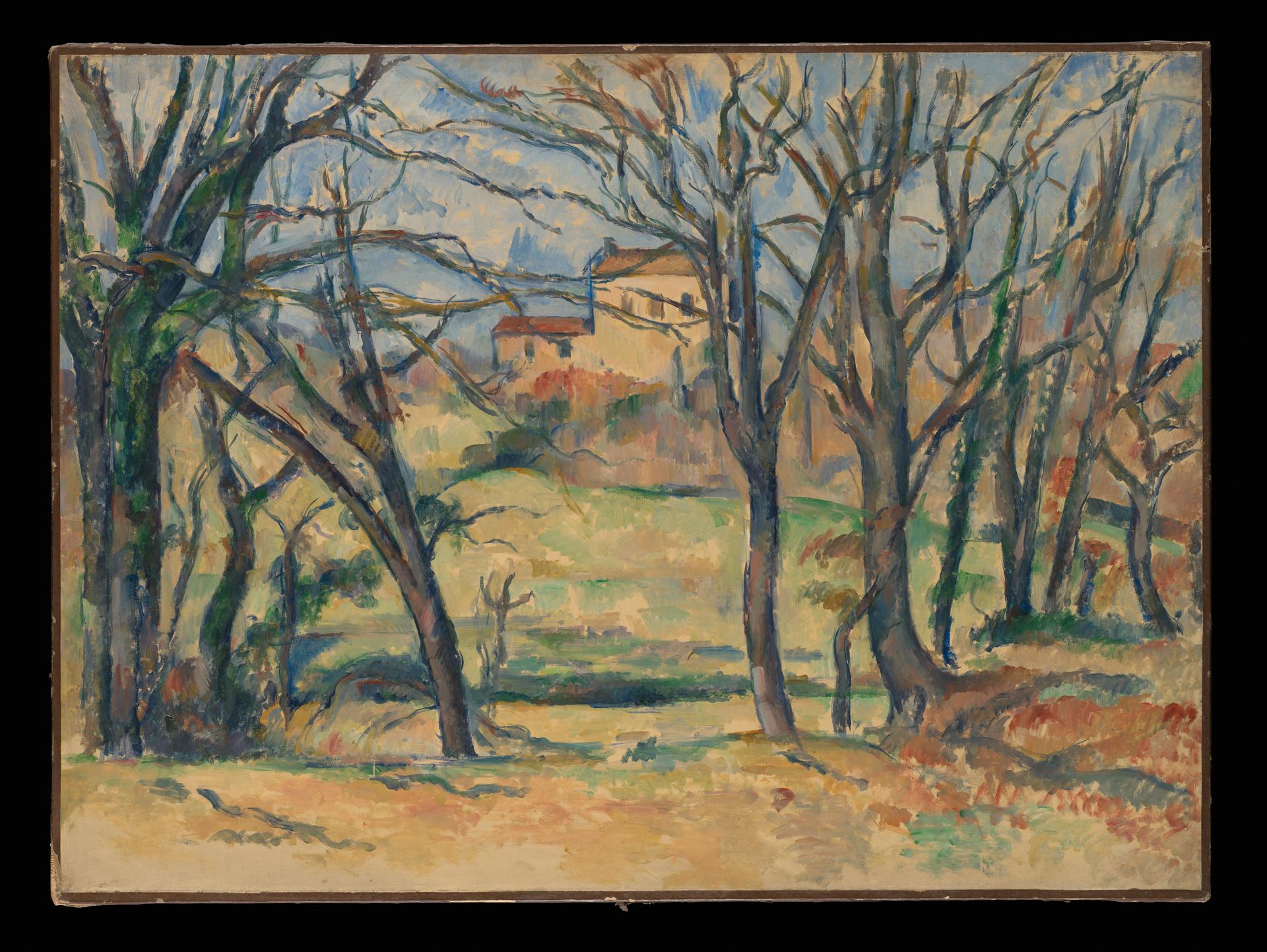
Paul Cézanne painted Bäume und Häuser bei Jas de Bouffan in 1885–86 in oil on canvas. The picture presents a landscape with bare trees in the foreground and houses on a rise behind them. It belongs to a series of views of the family estate in Aix-en-Provence.
Description
Several leafless trees stand in front, their branches reaching widely across the surface. On a hill behind, houses with roofs stand out against a cloudy sky. Blues, greens, and browns dominate the palette, creating a calm, natural mood. The light appears soft and diffuse, suggesting late afternoon or early evening.
Context
Between 1885 and 1886, Cézanne painted this view multiple times, during a period of intense engagement with the landscape around his parents' property, Jas de Bouffan. The motif of bare trees and the houses behind them captures the rural surroundings of Aix-en-Provence. The artist was living reclusively in Provence at the time, systematically devoting himself to observing nature. The painting is one of several works that testify to Cézanne's personal attachment to this place.
Impact
The broadly spreading branches in front and the quiet houses behind create a tense balance between near and far. The muted colors and soft light give the image a still, reflective mood. The viewer is drawn into the scene without a dominant focal point directing perception.
Technique
Cézanne worked in oil on canvas, applying color in visible, sometimes impasto brushstrokes. The texture of the paint remains clearly evident, emphasizing the material presence of the painting. The horizontal arrangement of the picture's elements follows a clear, calm structure.
AI-generated description text
Source: Metropolitan Museum of Art · Public Domain (CC0 1.0)