Dish of Apples
Original title: Dish of Apples
kurzbeschreibung
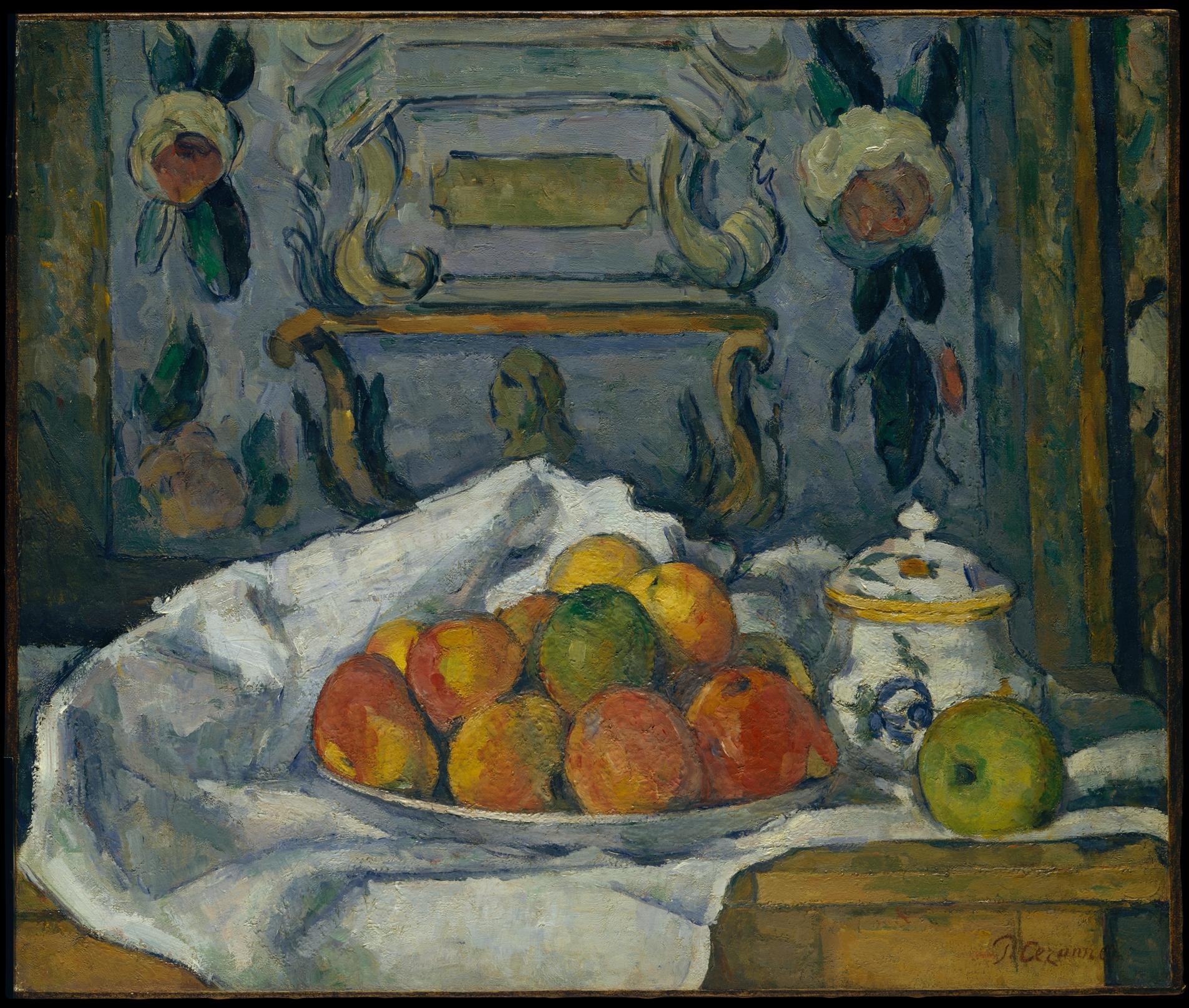
Around 1876–77, Paul Cézanne painted the still life "Schale mit Äpfeln." A bowl of apples sits on a light-colored cloth. The oil on canvas combines Impressionist color with close observation of light and surfaces.
Description
A bowl of apples in green, red, and yellow rests on a nearly white cloth. Part of a mirror with gilded ornament and floral motifs, along with a white vessel with a gold-colored rim, appears to the right in the background. Light entering from the left brings out the colors and textures of the apples and cloth. Visible brushstrokes give the painting a lively texture.
Context
Cézanne worked on this still life during a phase in which he engaged deeply with Impressionist painting while also seeking his own paths in simplifying forms. Apples served as his central practice ground for studying light, color, and volume. The painting was presumably made in Paris or in Provence, where Cézanne regularly worked.
Impact
The layout feels calm and balanced. The vivid colors of the apples create accents against the light cloth. The visible brushstrokes give the image a sensuous, almost tactile quality that draws the viewer closer to the painting's surface.
Technique
Cézanne applied oil paint to canvas in visible, sometimes parallel brushstrokes. Colors were not blended but placed side by side in small touches to model light and shadow. This creates a dense, structured surface typical of his still lifes.
AI-generated description text
Source: Metropolitan Museum of Art · Public Domain (CC0 1.0)