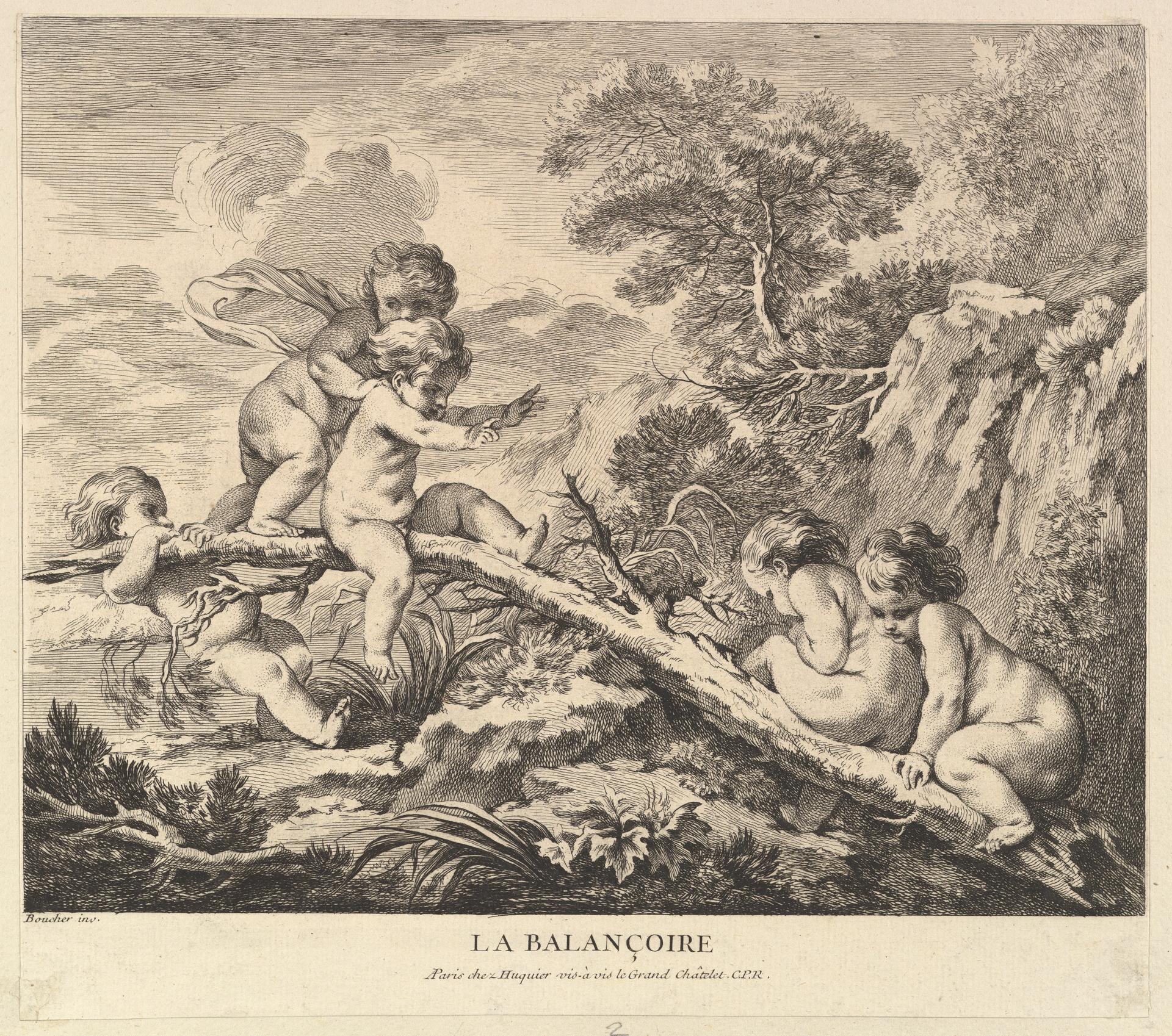
The Seesaw
Original title: The Seesaw
kurzbeschreibung
Pierre Alexandre Aveline's etching Die Wippe dates from around 1738. It gathers several putti in a rural setting. Two of them balance on a fallen tree trunk, while further figures join in and enliven the playful activity.
Description
Two putti have settled on an overturned tree trunk and turn toward each other. A third putto raises a branch and looks upward, while a fourth crouches on the ground holding something in his hand. Trees and rocks frame the action; the loose arrangement of figures guides the eye across the sheet. Hatching and line create gradations of light and shadow.
Context
Aveline, an eighteenth-century French engraver, was prized for his careful landscapes and figure scenes. This print belongs to the Rococo period, when cheerful and rural motifs were in demand. Putti pieces of this kind often served as models for interior decoration or as collector's items.
Impact
A calm, playful mood pervades the image, matching the light-hearted tone of the Rococo. The animated grouping of putti and the natural-looking landscape form a lively whole that is at the same time balanced.
Technique
Etching and supplementary engraving come together here; this process allows fine lines and precise shading. Aveline used it to render figures and landscape in detail. The black-and-white execution emphasizes the drawing's design and its handling of light.
AI-generated description text
Source: Metropolitan Museum of Art · Public Domain (CC0 1.0)