Saint Thomas (1726)
Original title: Saint Thomas
kurzbeschreibung
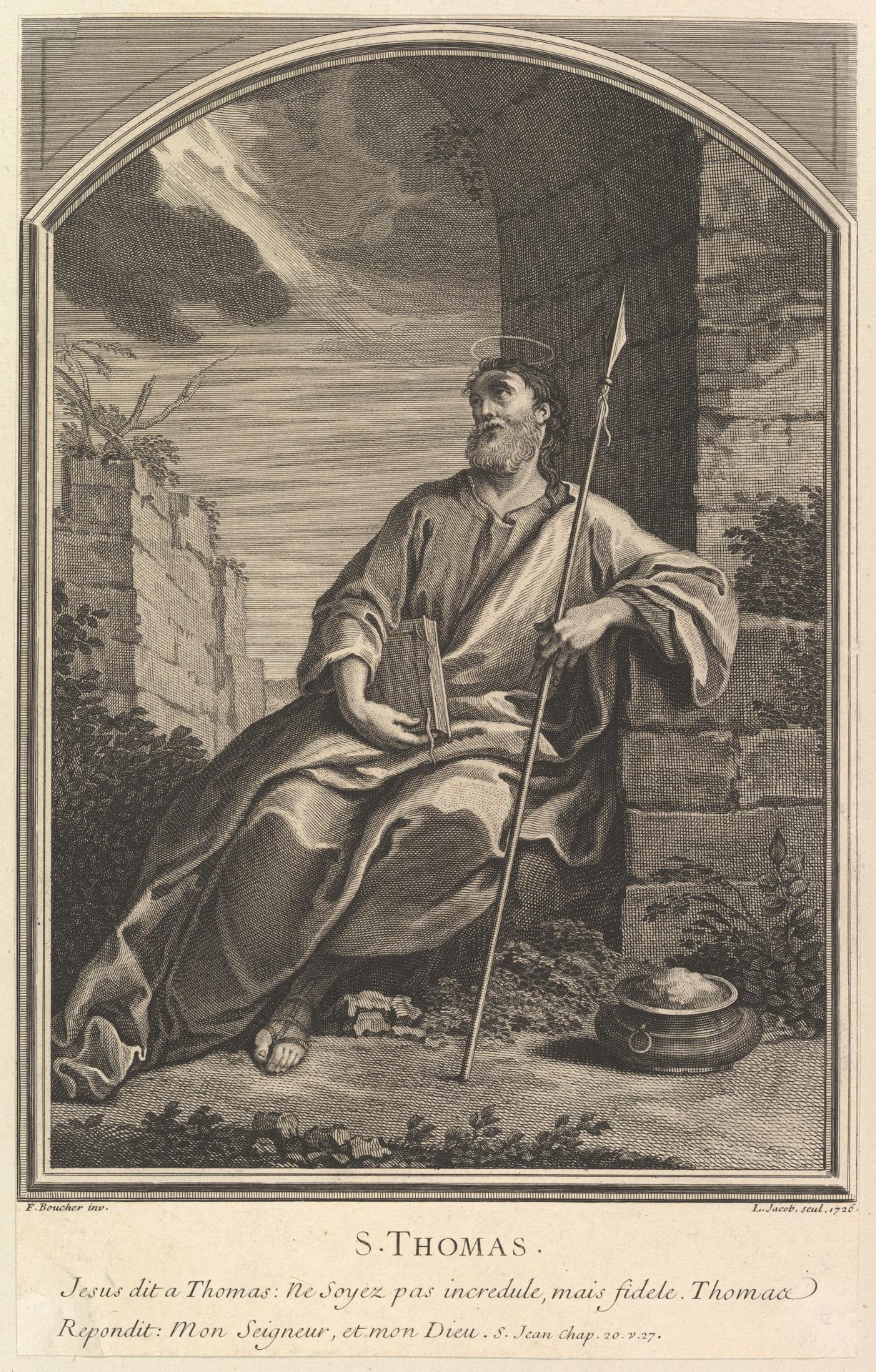
Saint Thomas stands with a lance in his hand, dressed in biblical robes and set within a landscape. Louis Jacob made this print in 1726 as an etching finished with engraving. Religious imagery meets the printmaking of those years.
Description
Seated on a bench, the apostle rests among trees and shrubs. A bright ring encircles his head and marks the figure's holiness. Above him the sky opens with clouds, and a ray of light falls down. The long robe wraps his body, the lance lies in his hand. Beneath the image runs a Latin quotation from the Gospel of John (20:27), addressed to the doubting Thomas.
Context
Louis Jacob, an eighteenth-century French engraver, was known above all for religious subjects. This sheet dates from 1726, a period when the Catholic Church promoted the veneration of saints through printed images. Showing Thomas with the lance and often in open landscape follows a fixed iconographic tradition and points to his missionary work. Etching together with engraving was then a common method for devotional prints.
Impact
The saint sits quietly, and the clear lighting gives the image a solemn, contemplative tone. The landscape stays dark while the ray falls bright from above; this contrast draws the eye to Thomas. The line of text ties the print to the biblical story and opens a space for reflection.
Technique
The plate was etched first and then reworked with the burin. This allowed fine lines and graduated shading of the kind visible in the garments and the landscape. The approach was standard for eighteenth-century printmaking and helped the motif circulate widely.
AI-generated description text
Source: Metropolitan Museum of Art · Public Domain (CC0 1.0)