Epic Poetry
Original title: Epic Poetry
kurzbeschreibung
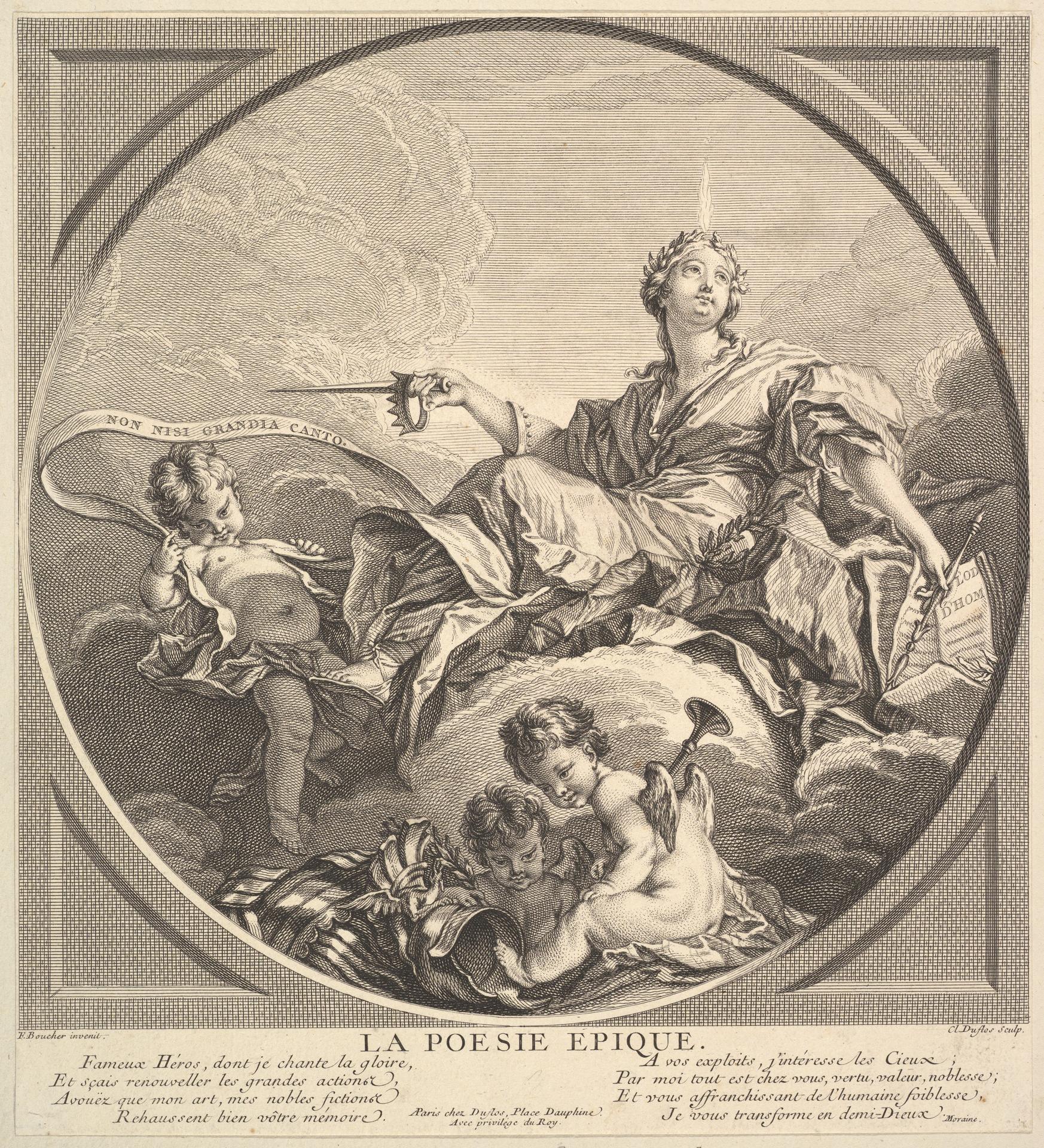
Claude Augustin Duflos le Jeune produced this print, Epische Dichtung, around 1741 using etching and engraving; it measures 26 by 23.6 centimetres. An allegory of epic poetry unfolds here: a female figure crowned with laurel and holding a sword sits elevated, accompanied by two putti.
Description
A symmetrical layout carries the motif: at the centre a figure in a long robe, sword in her right hand and laurel on her brow. Two putti hover to either side, one with a sword, the other with a horn. Clouds and a patch of sky form the ground, lending the scene a quality beyond the earthly. Below, the title LA POESIE EPIQUE is engraved together with a accompanying poem that interprets the meaning of epic poetry. The print remains monochrome, with light evenly distributed, as was usual for etchings of those years.
Context
Duflos le Jeune, an eighteenth-century French engraver, was known for meticulous reproductions and allegorical subjects. The print was made around 1741, a time when allegories enjoyed wide currency in French art. Such prints served as illustrations for literary works or as independent collectibles. The female embodiment of epic poetry with sword and laurel wreath belongs to a fixed iconographic tradition.
Impact
The balanced arrangement and calm disposition give the sheet a solemn, dignified presence. Sword and laurel together emphasise the heroic and triumphant aspects of epic poetry. The cloudy backdrop heightens the lofty impression and invites reflection on the art of poetry.
Technique
Etching and engraving interlock here, allowing precise linework with fine shading. In this monochrome print, evenly distributed light and dark bring the figures into relief. Etched and engraved lines combine to produce a detailed surface characteristic of eighteenth-century printmaking.
AI-generated description text
Source: Metropolitan Museum of Art · Public Domain (CC0 1.0)