Jewel cabinet with watch
Original title: Jewel cabinet with watch
kurzbeschreibung
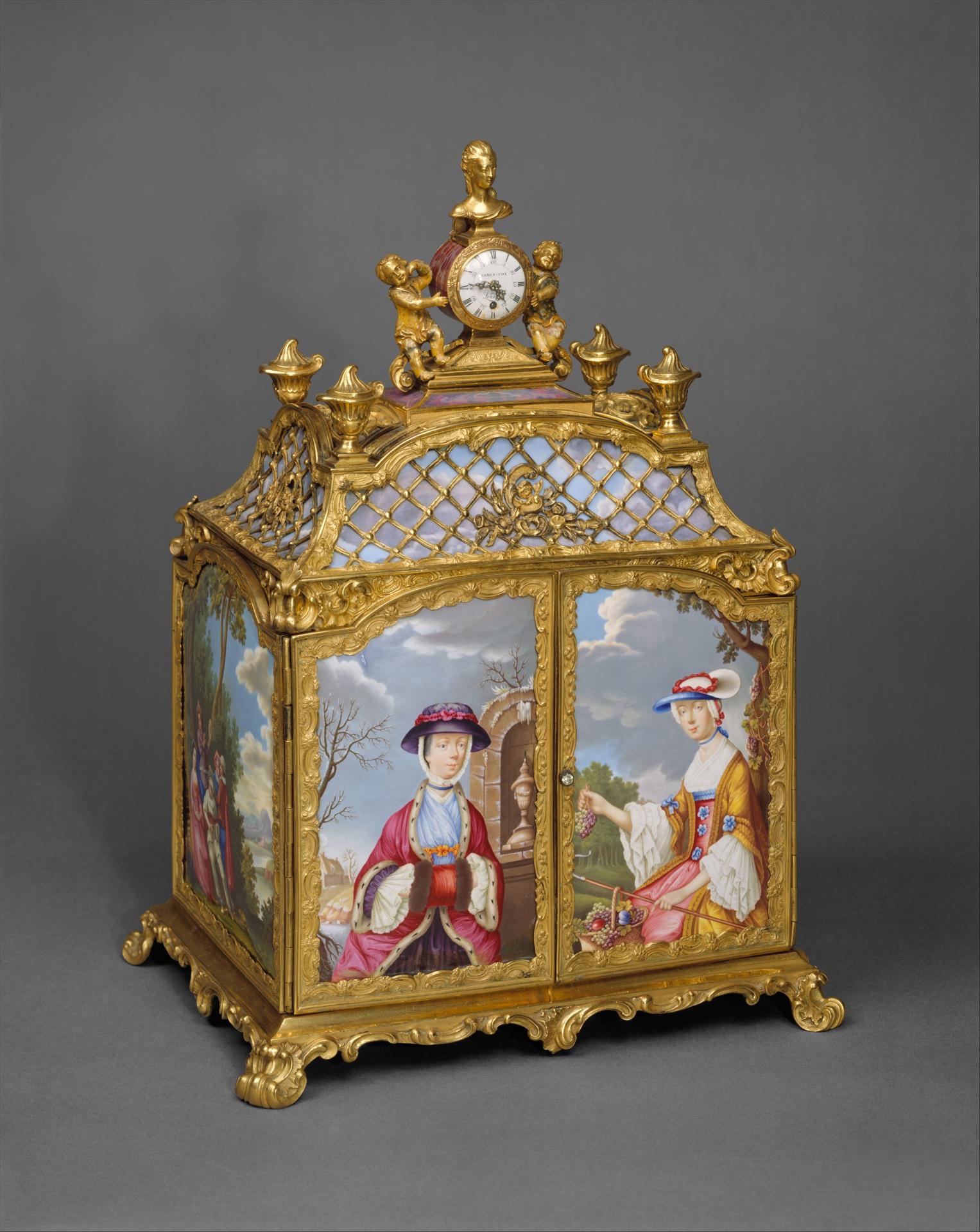
A jewellery cabinet with a clock, made by the British goldsmith and inventor James Cox, probably between 1765 and 1770. The case is agate set in gilded copper and brass, with painted enamel plaques on copper and a white enamel dial. Designed to hold jewellery, the box pairs a luxury object with a timekeeping instrument.
Description
Two doors with enamel painting dominate the front of the cabinet: on one, a woman in a red gown sits in a landscape; on the other, a woman in yellow holds an object in her hand. Above them, on the roof, rises a clock crowned by gilded putti. Gold, blue, red, yellow and white define the palette, created by enamel painting and gilding. Even light brings out the details of the ornament.
Context
The London entrepreneur James Cox made mechanical luxury objects in the 18th century, often exported to East Asia, especially China and India. Jewellery cabinets with built-in clocks were prestige pieces that let owners display wealth and technical sophistication. Agate and gilded metals reflect late Rococo taste.
Impact
The sumptuous combination of materials and the symmetrical arrangement of doors and clock give the cabinet a ceremonial character. The fine enamel painting and gilded putti create a playful yet precious feel that invites a closer look.
Technique
Agate forms the shell, framed in gilded copper and brass; the doors carry painted enamel plaques on copper, and the dial is white enamel. Fruitwood is also used, presumably for the interior or for structural parts. Bringing stone, metal and enamel together required precise craftsmanship and several stages of work.
AI-generated description text
Source: Metropolitan Museum of Art · Public Domain (CC0 1.0)