The Schoolmaster
Original title: The Schoolmaster
kurzbeschreibung
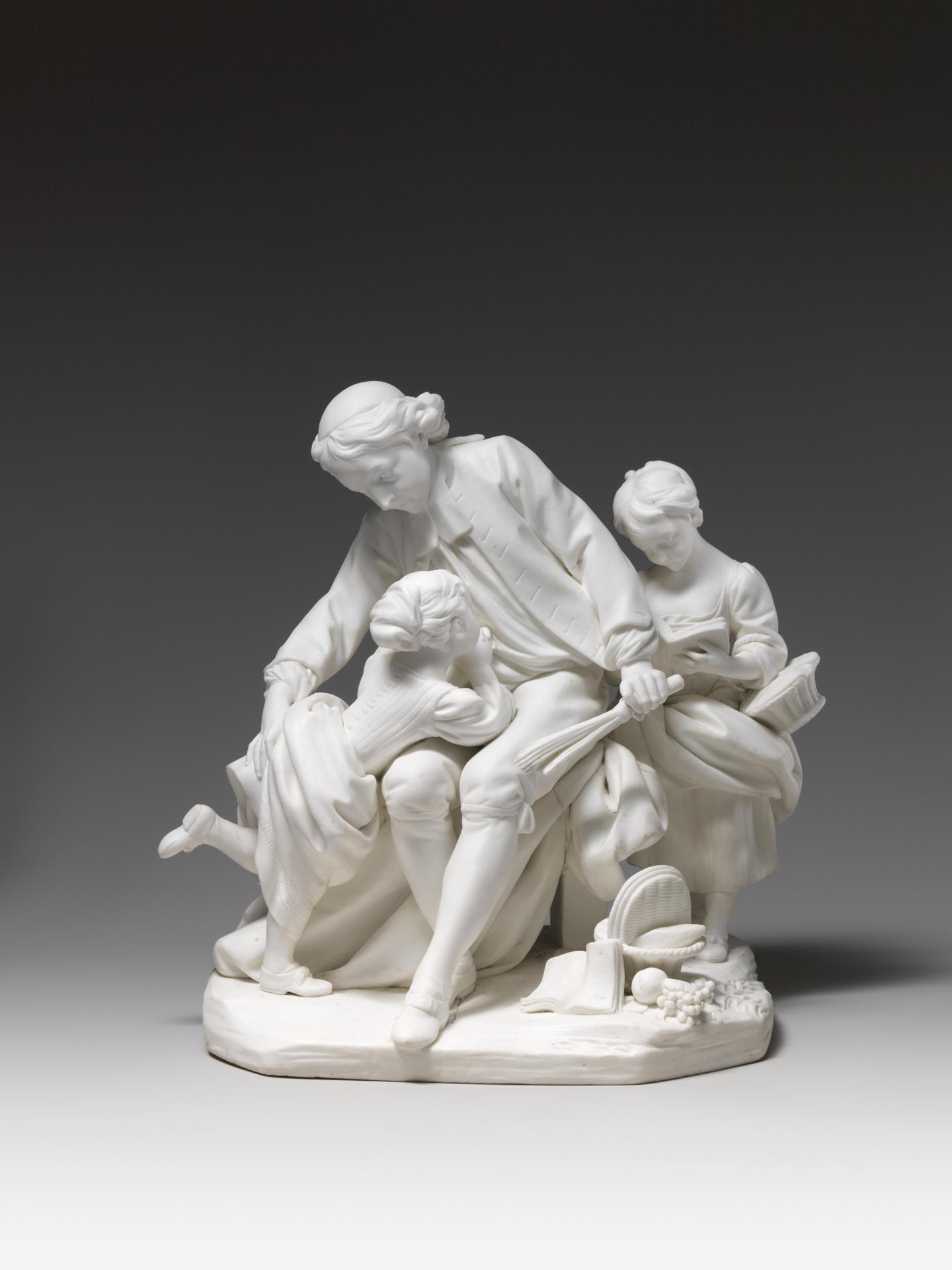
An adult bends toward a seated boy while a second boy stands nearby — this teaching scene was shaped in soft-paste biscuit porcelain at the Manufacture de Sèvres around 1762. The group belongs to the tradition of eighteenth-century figurative porcelain.
Description
Three figures make up the arrangement: the adult leans over the seated boy, and the standing second boy holds a bowl in his hands. All three wear clothing typical of the eighteenth century. The picture lives from the attentiveness between the figures, whose glances and postures answer one another. The material stays a uniform white; light teases out faces and passages of drapery.
Context
The Manufacture de Sèvres held high esteem in the eighteenth century for fine porcelain work. From the 1750s onward, unglazed fired biscuit porcelain was used there for sculptural figures. This group also dates from a time when courtly and middle-class circles kept porcelain figures as decoration.
Impact
Calm and classical is the matte white surface of the biscuit. Carefully modelled, the figures gain a lively presence that draws the viewer's eye into the scene.
Technique
Made from soft-paste biscuit porcelain, fired without glaze, the process allows a fine surface texture. Folds of cloth and facial features can be reproduced with precision.
AI-generated description text
Source: Metropolitan Museum of Art · Public Domain (CC0 1.0)