The Four Seasons
Original title: The Four Seasons
kurzbeschreibung
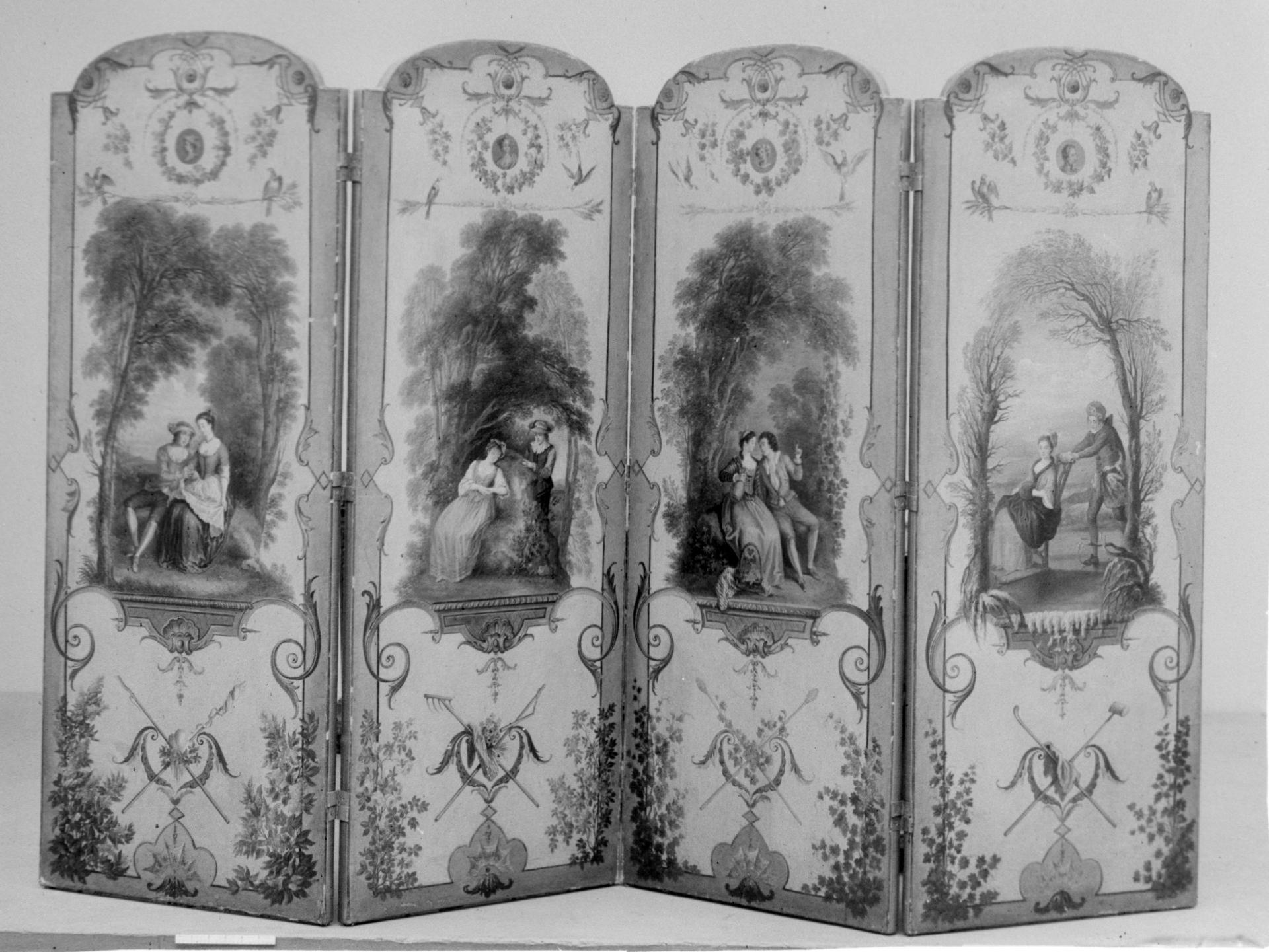
Figures in traditional dress are spread across four panels of a folding screen. Antoine Watteau painted this four-part work in the second quarter of the eighteenth century, using oil on canvas with a damask backing. Each of the four scenes represents a different season.
Description
Trees and plants frame the figures, who move through settings that feel close to nature. The screen divides into four sections, each with its own seasonal scene. A muted, grey-toned palette dominates the image, suggesting an early execution. The layout feels balanced, with figures at the centre while floral and ornamental flourishes decorate the lower edges.
Context
As a French Rococo painter, Antoine Watteau is best known for his fêtes galantes. Nothing is recorded about the exact commission for this work. The screen with its damask backing points to a high-quality piece, implying a wealthy patron. Seasonal cycles were popular in the eighteenth century and were often treated allegorically or as genre scenes.
Impact
Calm and contemplation emanate from the muted tones and the balanced arrangement. Human interaction and nature are interwoven, creating a harmonious, idyllic mood that is entirely in keeping with Watteau's style.
Technique
Oil paint on canvas, mounted on a folding screen, forms the base. The reverse is covered in damask, indicating elaborate craftsmanship. The colours appear subtle and possibly faded with time, which underlines the historical character.
AI-generated description text
Source: Metropolitan Museum of Art · Public Domain (CC0 1.0)