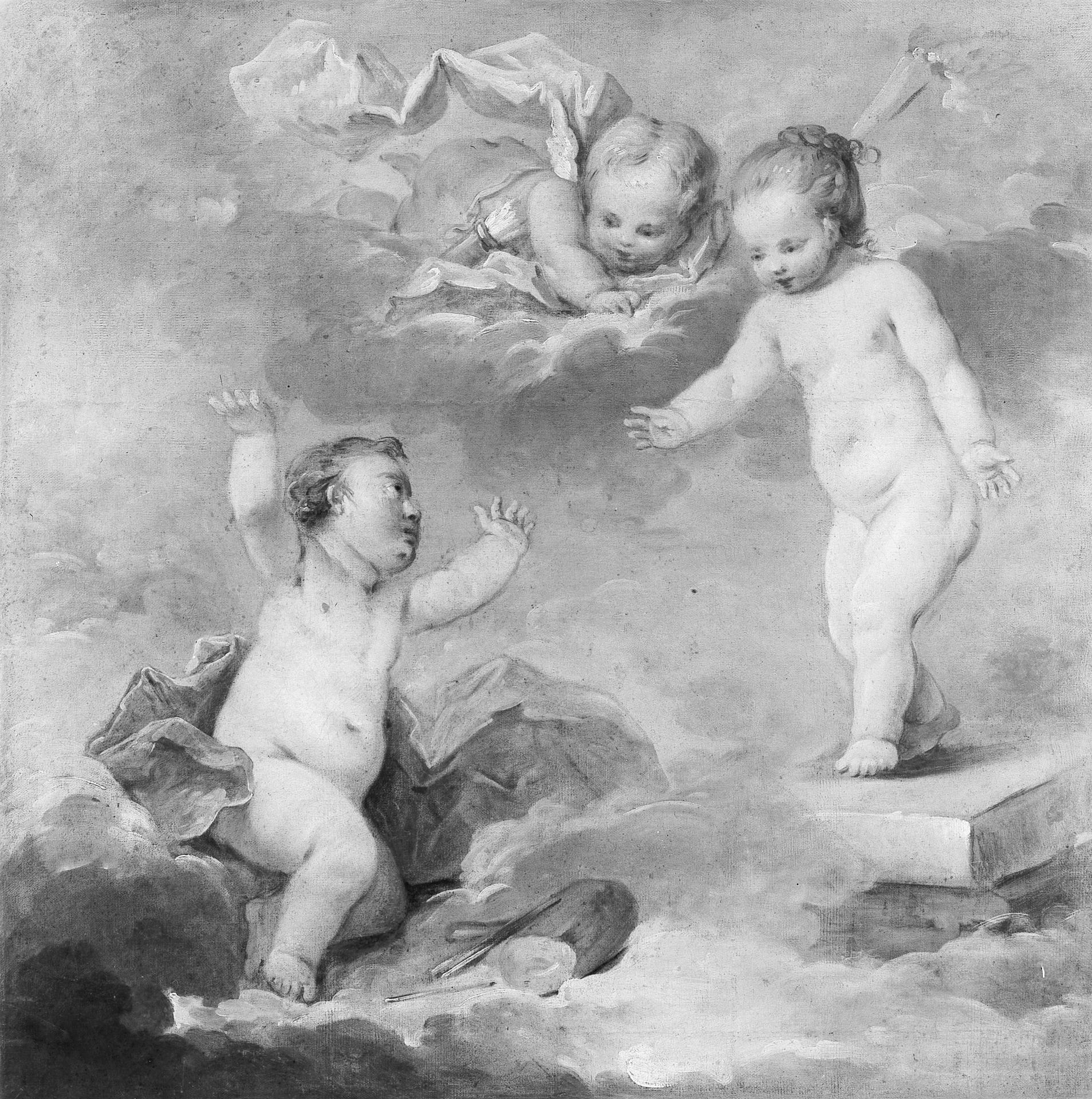
Pygmalion and Galatea as Infants
Original title: Pygmalion and Galatea as Infants
kurzbeschreibung
Pygmalion and Galatea appear here as children in a heavenly setting. An 18th-century French painter made the picture in oil on canvas. The mythological pair is shown in a playful, Baroque-inflected visual language.
Description
Three naked child figures populate a sky filled with clouds. Two stand on a pedestal, while the third sits on a rock and draws the others' gazes. One figure has its arms raised as if floating, which adds movement and dynamism. The palette is mostly gray; light falling from above emphasizes the clouds and figures.
Context
The painting comes from 18th-century France, when mythological subjects were common in painting. Showing Pygmalion and Galatea as children is an unusual interpretation of the classical myth, though it appears occasionally in art history. The painter is not known by name, which suggests a workshop or lesser fame. The Baroque style points to influences from the previous era that lingered in French art of the 18th century.
Impact
The child figures and the floating pose give the scene something playful and light. The largely gray coloring creates a calm, almost monochrome atmosphere that draws attention to the picture's structure. The Baroque emphasis on movement produces a dynamic tension.
Technique
Oil on canvas, a common technique in the 18th century, forms the basis. The gray tones suggest an underpainting or a deliberate reduction of the palette, possibly in the manner of a grisaille. The lighting directed from above and the soft transitions in the clouds show careful glazing technique.
AI-generated description text
Source: Metropolitan Museum of Art · Public Domain (CC0 1.0)