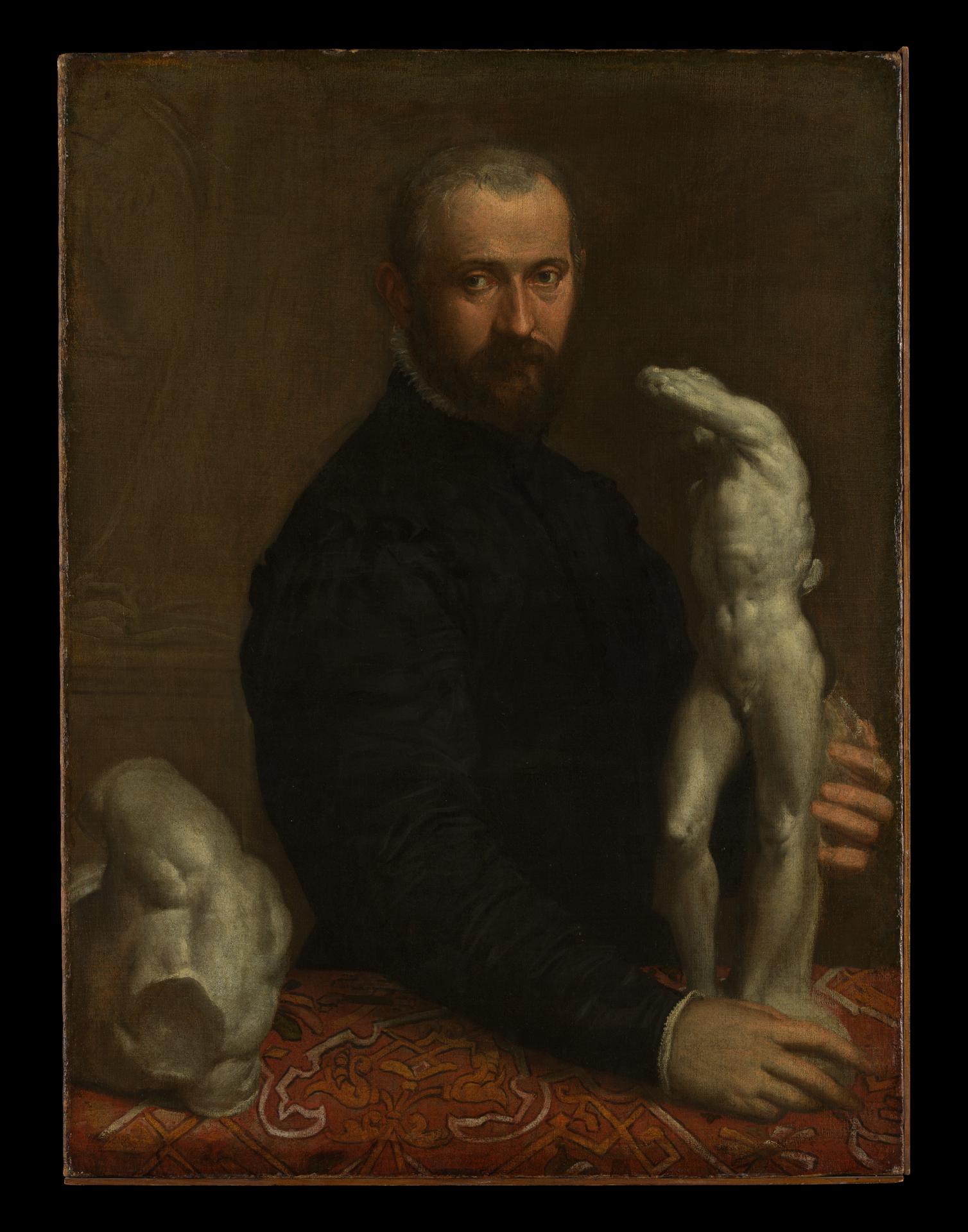
Portrait of Alessandro Vittoria
Original title: Alessandro Vittoria (1525–1608)
kurzbeschreibung
Paolo Veronese (Paolo Caliari) painted the Venetian sculptor Alessandro Vittoria around 1580, apparently as a self-portrait. This oil on canvas, measuring 110.5 x 81.9 cm, shows the artist seated in dark clothing, surrounded by sculptures that allude to his profession.
Description
Alessandro Vittoria sits at the center, dressed in a dark, heavily folded garment. His right hand clasps a small sculpture of a nude boy; another piece rests on the table before him. The background stays dark and plain, making the figure and the sculptures stand out clearly. Light falls specifically on the artist's face and hands as well as on the sculptures, creating a dramatic effect. The palette overall is muted, with finely graded shadows and textures.
Context
Alessandro Vittoria (1525–1608) was a leading Venetian sculptor who worked closely with Paolo Veronese. The portrait dates from around 1580, when Veronese was at the height of his career and executing numerous commissions for churches and palaces in Venice. Portraying artists with their works was a common 16th-century means of emphasizing the sitter's social standing and manual skill. Today the painting belongs to the Metropolitan Museum of Art's collection of European painting.
Impact
The high-contrast lighting and the sitter's calm, concentrated pose create an atmosphere of intimacy and seriousness. The sculptures underscore Vittoria's authority as craftsman and artist without being obtrusive. All in all, the portrait conveys a dignified yet personal aura.
Technique
Oil on canvas—a medium typical of 16th-century Venetian painting—forms the basis of this picture. Veronese used fine brushstrokes and careful shading to render the texture of the clothing and the surfaces of the sculptures realistically. The layout is centered on the main figure, with light and shadow deliberately employed to create depth.
AI-generated description text
Source: Metropolitan Museum of Art · Public Domain (CC0 1.0)