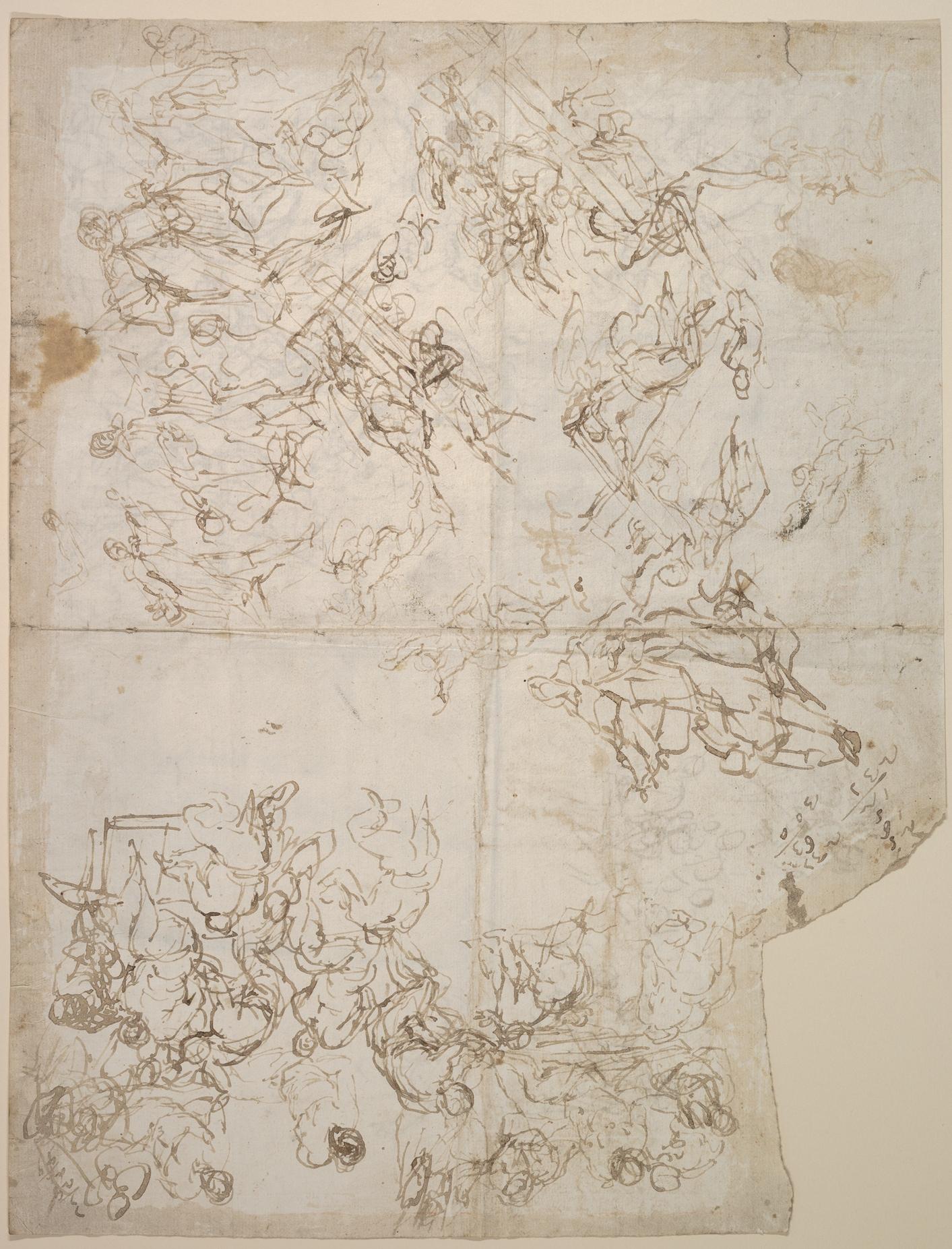
Sketches for Compositions and Groups of Figures (recto and verso)
Original title: Sketches for Compositions and Groups of Figures (recto and verso)
kurzbeschreibung
Paolo Veronese, born Paolo Caliari, made this sheet between about 1568 and 1588. The recto and verso carry several figure groups, sketched rapidly. They are executed in pen and brown ink, and with brush and brown wash. In all likelihood this is a preparatory study for a larger painting.
Description
The drawing falls into four areas, each side presenting different figures and groupings. The figures appear in varying poses: some in motion, others upright or seated. The line is loose and fluid, underscoring the sketch's provisional character. Brown tones dominate the palette, and the paper shows clear signs of age.
Context
Veronese made these sketches during his mature period, while producing many large-scale paintings for Venetian churches and palaces. He used study sheets like this to prepare figure compositions, often for works with religious or allegorical subjects. The drawing belongs to the Venetian tradition of working with ink and wash to test effects of light and shadow.
Impact
The sheet offers an immediate view into Veronese's working process, marked by spontaneous, lively line. The loosely placed figures create a sense of movement that lets the viewer share in the artist's act of creation. Brown ink and wash give the drawing a warm, intimate mood.
Technique
Veronese worked with pen and brown ink and with brush and brown wash on paper. By combining precise pen strokes with soft washes, he could quickly sketch contours and shading. The sheet has the spontaneity typical of studies, in which the artist captured various ideas directly.
AI-generated description text
Source: Metropolitan Museum of Art · Public Domain (CC0 1.0)