Ecce Homo (17th century)
Original title: Ecce Homo
kurzbeschreibung
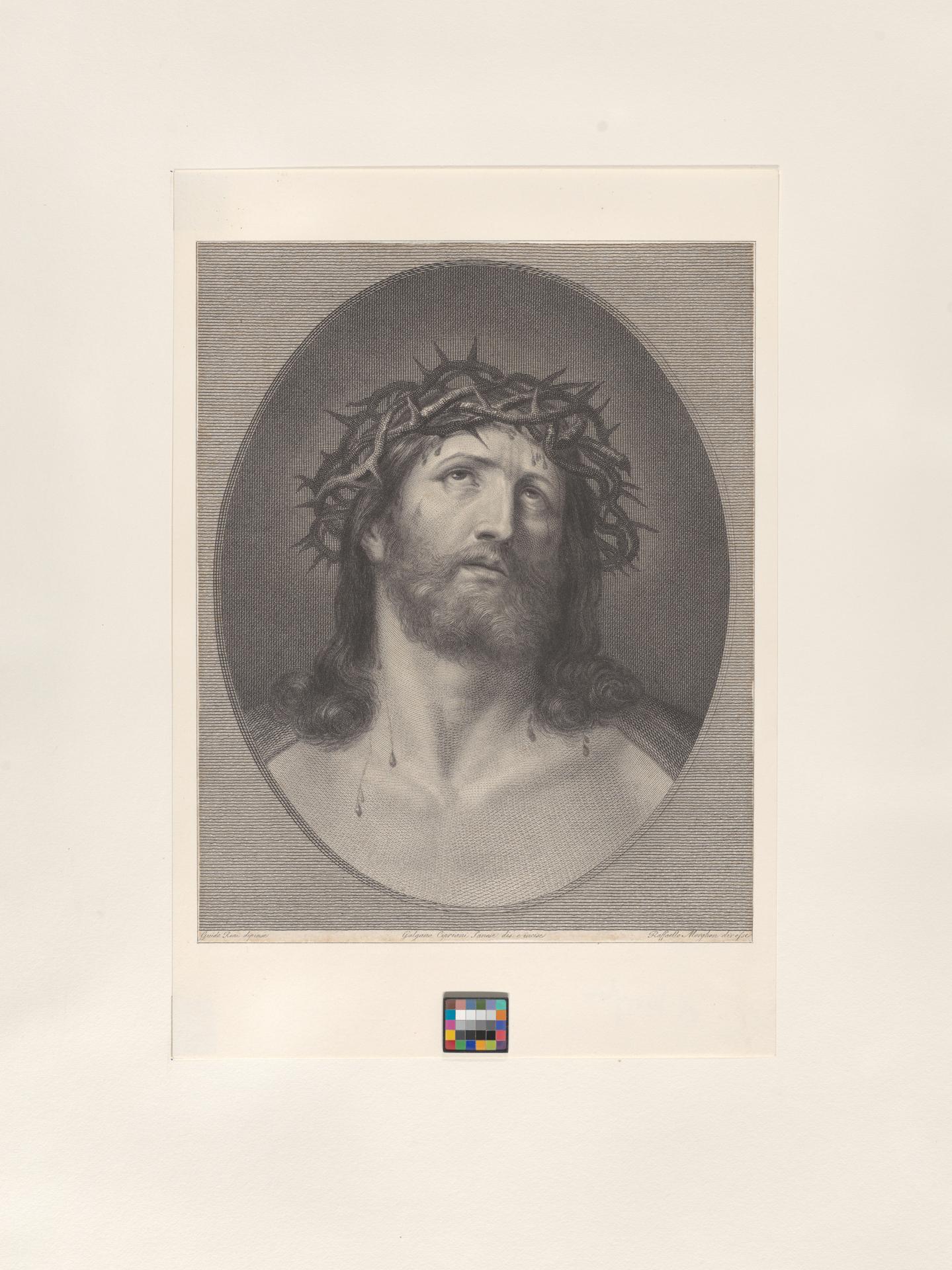
Galgano Cipriani made the engraving Ecce Homo in the seventeenth century. It shows Christ wearing a crown of thorns and weeping. This devotional image brings the Man of Sorrows close to the viewer.
Description
A male figure with long, curly hair and a crown of thorns appears. His gaze turns to the left, and tears shine on his forehead. The flat dark background makes the figure stand out. The layout is central, and the lighting is even, without strong shadows or highlights. Crisp contours and the precise rendering of hair and crown recall Renaissance engravings.
Context
Little is known about the life of Galgano Cipriani, an Italian copperplate engraver of the seventeenth century. The Ecce Homo motif (“Behold the man”) spread widely in Catholic art of the Counter-Reformation and was devoted to prayer and the Passion of Christ. Such prints were often produced in larger editions and circulated as single sheets or in prayer books.
Impact
The close view and dark background give the print an immediate, intense appeal. The tears and sorrowful expression stir compassion and invite quiet contemplation. The even lighting and delicate linework lend the work a calm, dignified mood.
Technique
The lines were engraved into a metal plate and then printed on paper—a copper engraving. Fine, sharp contours and varied hatching create a sense of volume and detailed textures, as in the hair and the crown of thorns.
AI-generated description text
Source: Metropolitan Museum of Art · Public Domain (CC0 1.0)